6 Best Functional 3D Prints To Organize, Repair, and Upgrade Your Home
A single roll of filament costs less than a takeout dinner, yet it can produce dozens of parts that solve real problems in a kitchen, garage, or home office. That is the quiet math behind the 3D printing boom sweeping ordinary households in 2026. Printers that once lived in hobbyist workshops now sit on kitchen counters, churning out replacement parts and storage solutions faster than most people can order them online.
Disclosure: This post contains affiliate links. As an Amazon Associate, we earn from qualifying purchases, and at no extra cost to you.
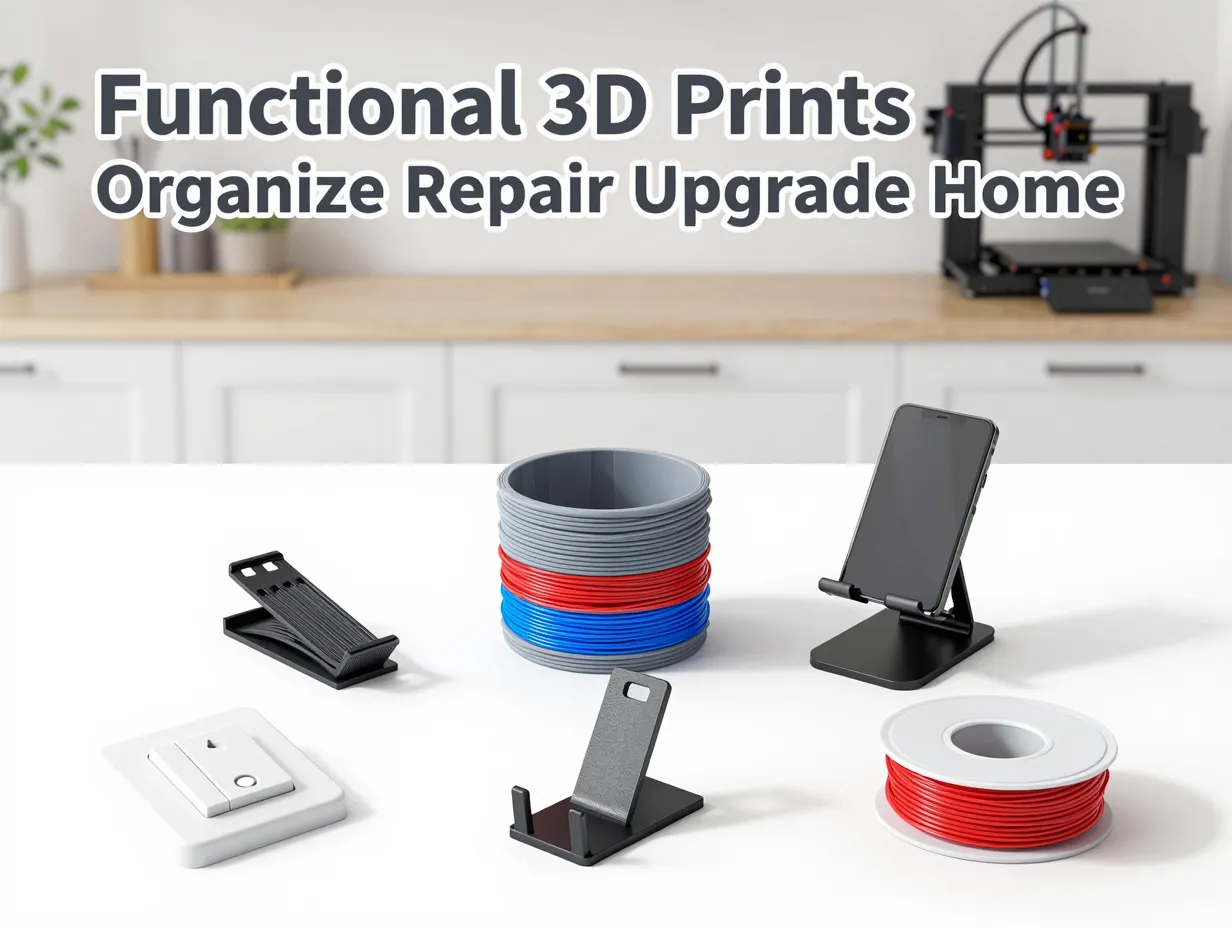
This guide breaks down the 6 best functional 3D prints to organize, repair, and upgrade your home, based on patterns seen across top 2026 roundups, maker communities, and influencer favorites lists. These are not decorative trinkets. Every item on this list solves a specific household headache, from tangled cables to broken switch plates, and each one can be printed on a budget desktop machine in a single afternoon.
Key Takeaways
- The 6 best functional 3D prints to organize, repair, and upgrade your home fall into three clear categories: organization, repair, and everyday upgrades.
- Cable management clips and modular bin systems consistently top 2026 “must-print” lists for home organization [3][4].
- Simple repair prints like light switch covers, hooks, and corner protectors solve common wear-and-tear problems without a hardware store trip [6][7].
- Material choice matters: PLA suits rigid indoor parts, PETG handles moisture and heat, and TPU is best for flexible, impact-resistant pieces.
- Parametric and modular designs are the biggest 2026 trend, letting one print file scale to fit dozens of different spaces [8].
Why These 6 Best Functional 3D Prints To Organize, Repair, and Upgrade Your Home Matter
There is no single official ranking of the best functional 3D prints. Instead, 2026 has produced a consistent pattern across dozens of independent roundups, video breakdowns, and maker platform trends [1][2][5][9][10]. When the noise is filtered out, the same three goals keep surfacing: organize cluttered spaces, repair small household damage, and upgrade everyday convenience items.
This consistency matters for anyone new to home 3D printing. Instead of guessing which files are worth the plastic and print time, this list distills the recurring winners into six categories that cover almost every room in a house. Printer brands themselves have caught on, curating their own “starter project” libraries around these exact themes to keep new owners engaged with their ecosystem [8].
1. Modular Cable Management Clips
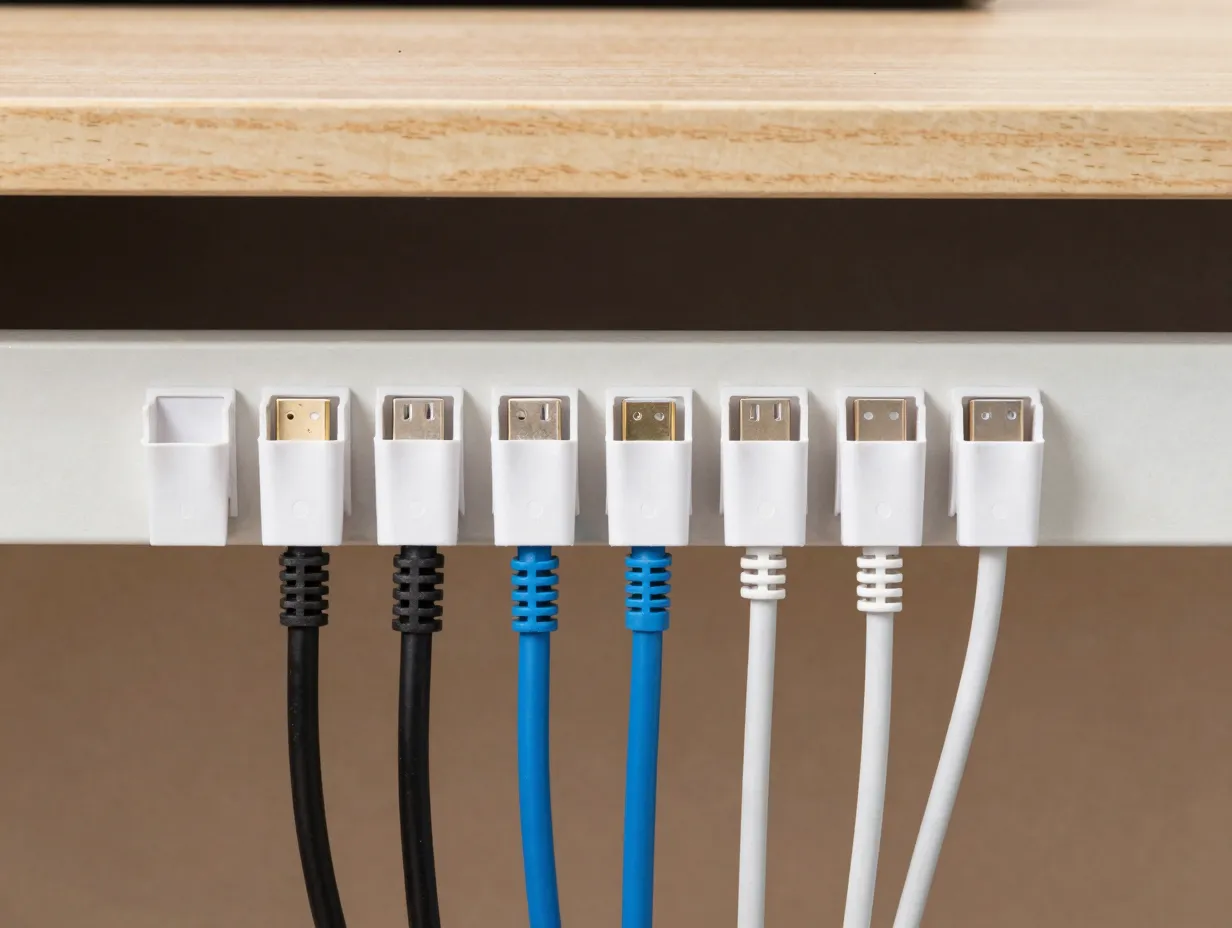
Loose cables behind a desk or entertainment center are one of the most universally hated household problems, which is why cable clips appear near the top of nearly every functional 3D print list published in 2026 [3][6]. These small, low-material prints snap or adhere to the underside of desks, walls, or baseboards, and they route power cords, HDMI cables, and charging wires into neat, non-tangling channels.
What makes this category stand out is the sheer variety of parametric designs available. Model platforms host effectively infinite variants, letting users adjust clip width, mounting style, and cable capacity to match their exact setup instead of settling for a generic size [7]. A single print job on a standard desktop printer can produce ten or more clips using only a few grams of filament, making this one of the most cost-efficient upgrades on the list.
Best practices for printing cable clips:
Print in PLA for stiff, snap-fit clips that hold their shape on desks and shelves. Switch to TPU if the clip needs to flex around thicker bundles of cords without cracking. Use adhesive-backed mounting tabs for drywall, and screw-through holes for wood furniture where a stronger hold is needed.
2. Stackable Drawer and Bin Organization Systems
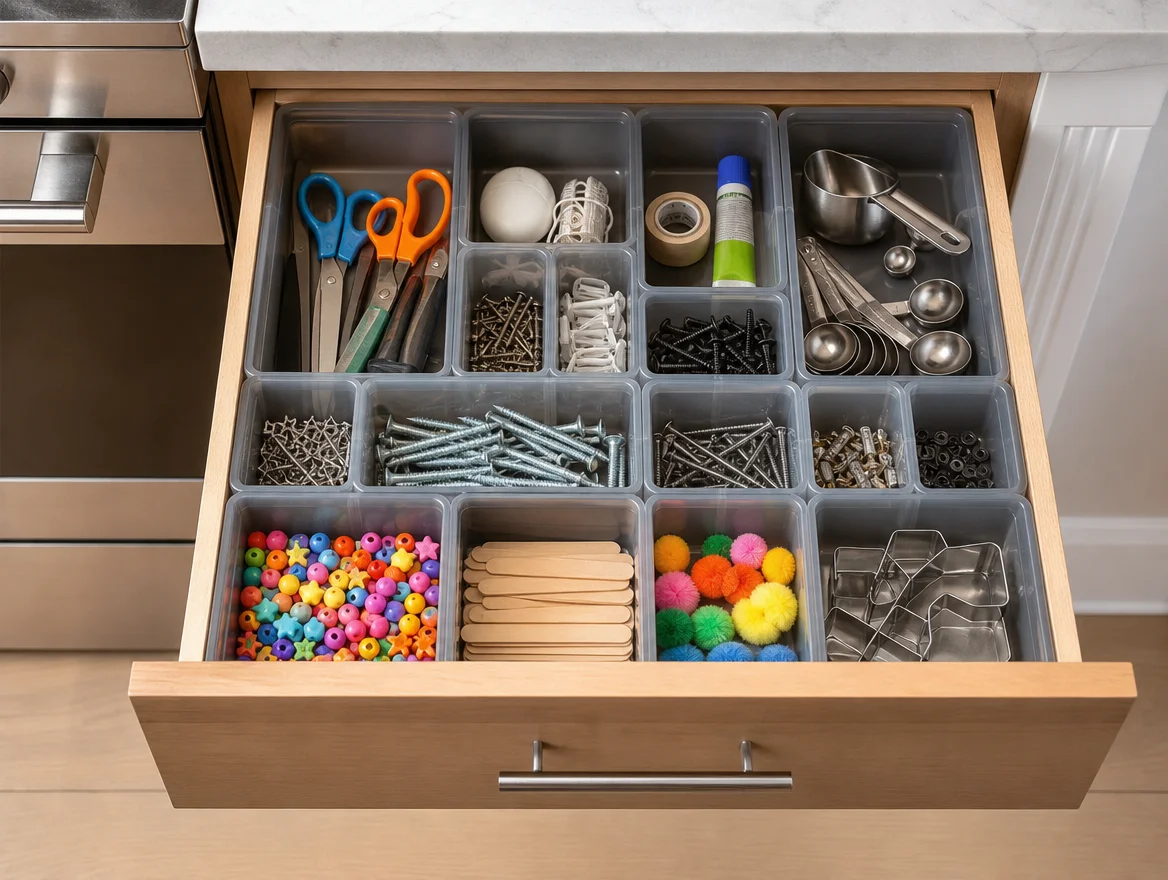
Home organization prints dominate nearly every “best of” list reviewed for 2026, and stackable bin systems are the clearest example of why [3][4]. These modular boxes snap together, stack vertically, or slot into drawers to divide junk drawers, craft supplies, kitchen utensils, and garage hardware into clearly separated compartments.
The appeal is structural. Unlike store-bought organizers that come in fixed sizes, printed bin systems are typically parametric, meaning the same base design can be resized to match a specific drawer depth or cabinet width down to the millimeter [8]. This eliminates the wasted space that plagues generic plastic organizers from big box stores.
Household organizer accounts and 3D printing influencers frequently list these bin systems among their “can’t live without” prints, citing real-world use in kitchens, workshops, and bathrooms [6][9]. The most popular versions include:
Interlocking small-parts bins for screws, nails, and craft beads.
Drawer dividers that slide and lock into custom widths.
Stackable pantry containers with snap-on lids for dry goods.
Under-sink modular trays that fit around pipes and plumbing.
Material Considerations for Organization Prints
PETG is often recommended for kitchen and bathroom bins because it resists humidity and mild heat better than standard PLA, while PLA remains the easier and cheaper choice for garage or office organizers that never see moisture [6].
3. Light Switch Covers and Small Repair Parts
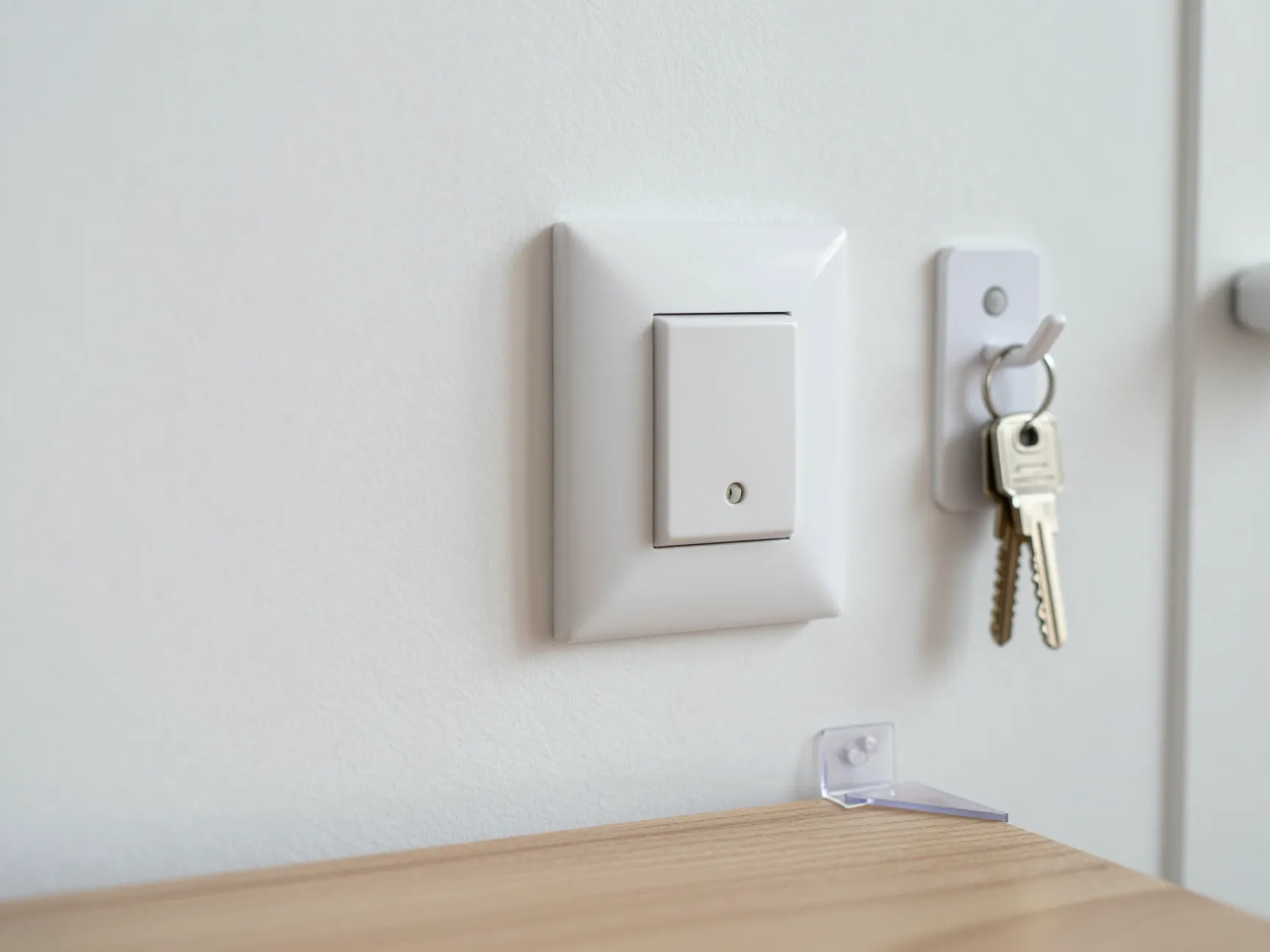
Household repairs make up one of the most practical categories in the research behind this list, and light switch covers are the standout example [6][7]. Cracked, yellowed, or mismatched switch plates are a common eyesore in older homes, and replacing them with a printed cover takes minutes and costs a fraction of a hardware store version.
This category extends beyond switch plates. Broken cabinet hinges, snapped drawer handles, and stripped screw anchors are all frequently cited as proven 3D printing use cases because the replacement part rarely needs to be structurally perfect, just functional and close enough in dimension to fit the existing opening [3][6].
The repair category also includes corner protectors and edge guards, which are frequently mentioned in childproofing and furniture protection contexts. These small, quick prints snap onto sharp table edges or wall corners to prevent chips, scratches, and minor injuries, and they take less than thirty minutes to produce on most home printers [7].
Common household repair prints worth trying:
Light switch and outlet cover plates in custom colors or finishes.
Cabinet and drawer hooks to replace snapped originals.
Furniture corner and edge protectors for tables and countertops.
Small clips and brackets to reattach loose blinds or curtain hardware.
Repair prints tend to use PLA because the parts are rigid and rarely bear heavy mechanical stress, but any piece near a doorway or high-traffic area benefits from the added toughness of PETG.
4. Phone Stands and Device Holders

Everyday upgrade prints round out the practical side of this list, and phone stands consistently rank among the most searched and printed designs across 2026 content [6][7][9]. A printed stand turns a phone into a hands-free video call station, a kitchen recipe display, or a bedside alarm clock dock without buying a separate accessory.
What separates the best designs from generic stands is adjustability. Many current models include tilt-adjustable arms, cable pass-through slots for charging while docked, and multi-device compatibility so the same stand works for a phone, tablet, or e-reader [8]. This flexibility is part of a broader shift toward parametric, system-compatible designs that reduce the need to print a new model every time a device changes.
Device holders extend into other everyday upgrades as well, including tablet wall mounts for kitchens, headphone stands for desks, and remote control caddies for living rooms. Influencer lists frequently cite these as “quality of life” prints that get used daily long after novelty prints are forgotten [9][10].
| Print Category | Primary Goal | Recommended Material | Typical Print Time |
|---|---|---|---|
| Cable clips | Organize | PLA or TPU | 20 to 40 minutes |
| Stackable bins | Organize | PETG or PLA | 2 to 5 hours |
| Switch covers and hooks | Repair | PLA | 15 to 45 minutes |
| Phone and device stands | Upgrade | PLA | 1 to 2 hours |
| Cord and hook wall mounts | Organize | PLA or TPU | 30 to 60 minutes |
| Printer accessories | Upgrade | PETG | 1 to 3 hours |
5. Wall-Mounted Hooks and Cord Organizers
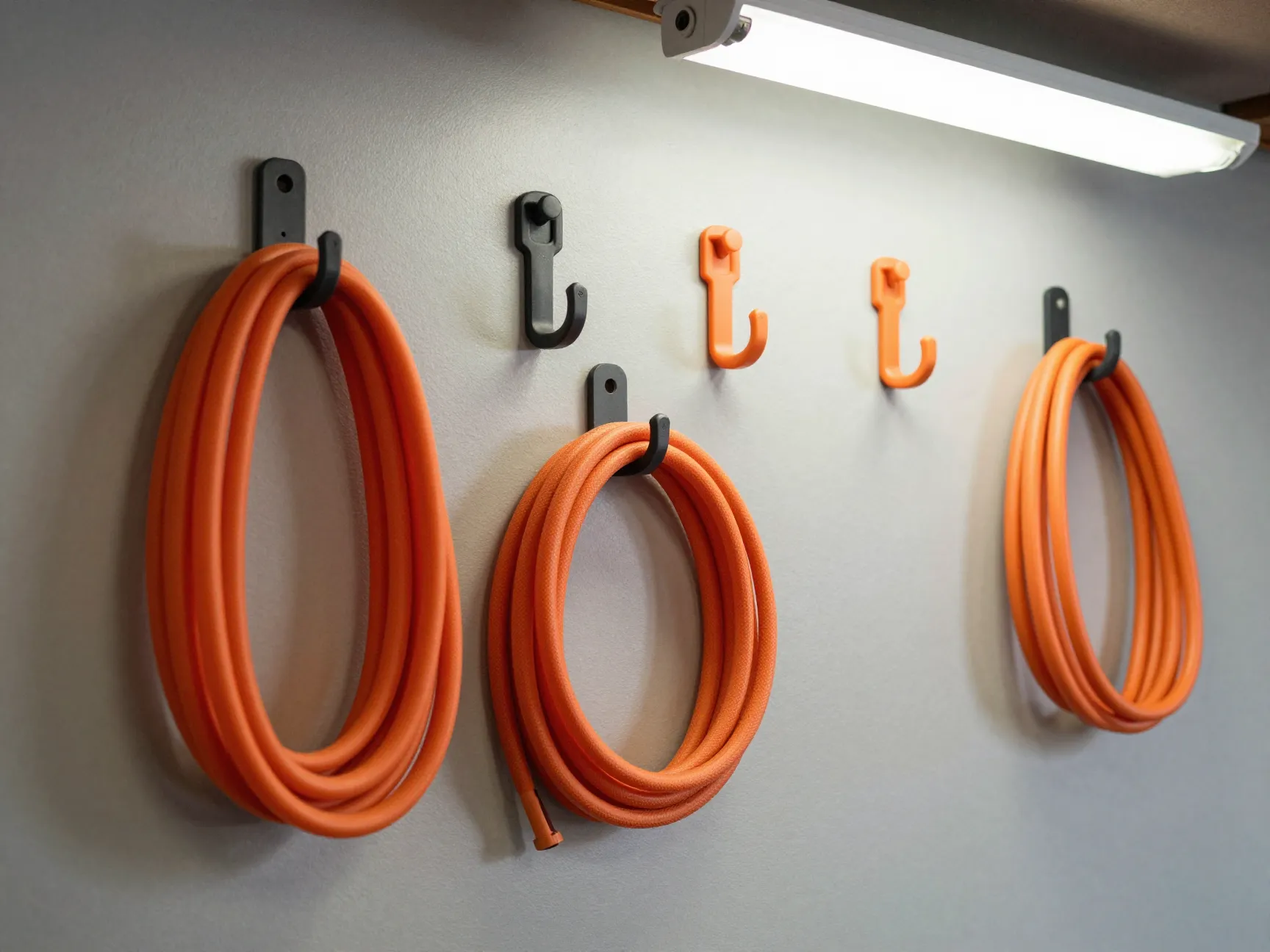
Hooks are deceptively simple, but they solve an enormous range of household clutter problems, which is why they show up repeatedly across snap manufacturing guides and household 3D file collections reviewed for this list [3][4]. A printed hook can hold coats by an entryway, mugs under a cabinet, cleaning tools in a garage, or extension cords in a shed.
The advantage over store-bought hooks is customization. Printed versions can be sized to match a specific mounting surface, angled to prevent items from sliding off, or shaped to hold an oddly sized tool that a generic hook cannot accommodate [7]. Because they use very little material, a batch of ten different hook styles can be printed for the cost of a single store-bought multi-pack.
Cord organizers built around the same hook concept are especially popular for garages and workshops, where extension cords, hoses, and power tool cables need dedicated wall space to avoid becoming trip hazards. These prints are frequently included in curated “starter project” libraries that printer brands publish to guide new users toward practical first projects [8].
Ideal hook and cord organizer applications:
Entryway coat and bag hooks near a front door.
Garage wall hooks for extension cords and hoses.
Under-cabinet mug or utensil hooks in kitchens.
Bathroom hooks for towels or hair tools.
6. Printer and Home Office Accessories
The sixth category closes the loop by focusing on the tools that make future printing and home office work easier. Printer accessories such as filament guides, spool holders, nozzle cleaning tools, and cable spool organizers are commonly listed as high-value prints because they directly improve the reliability of every future print job [4][6].
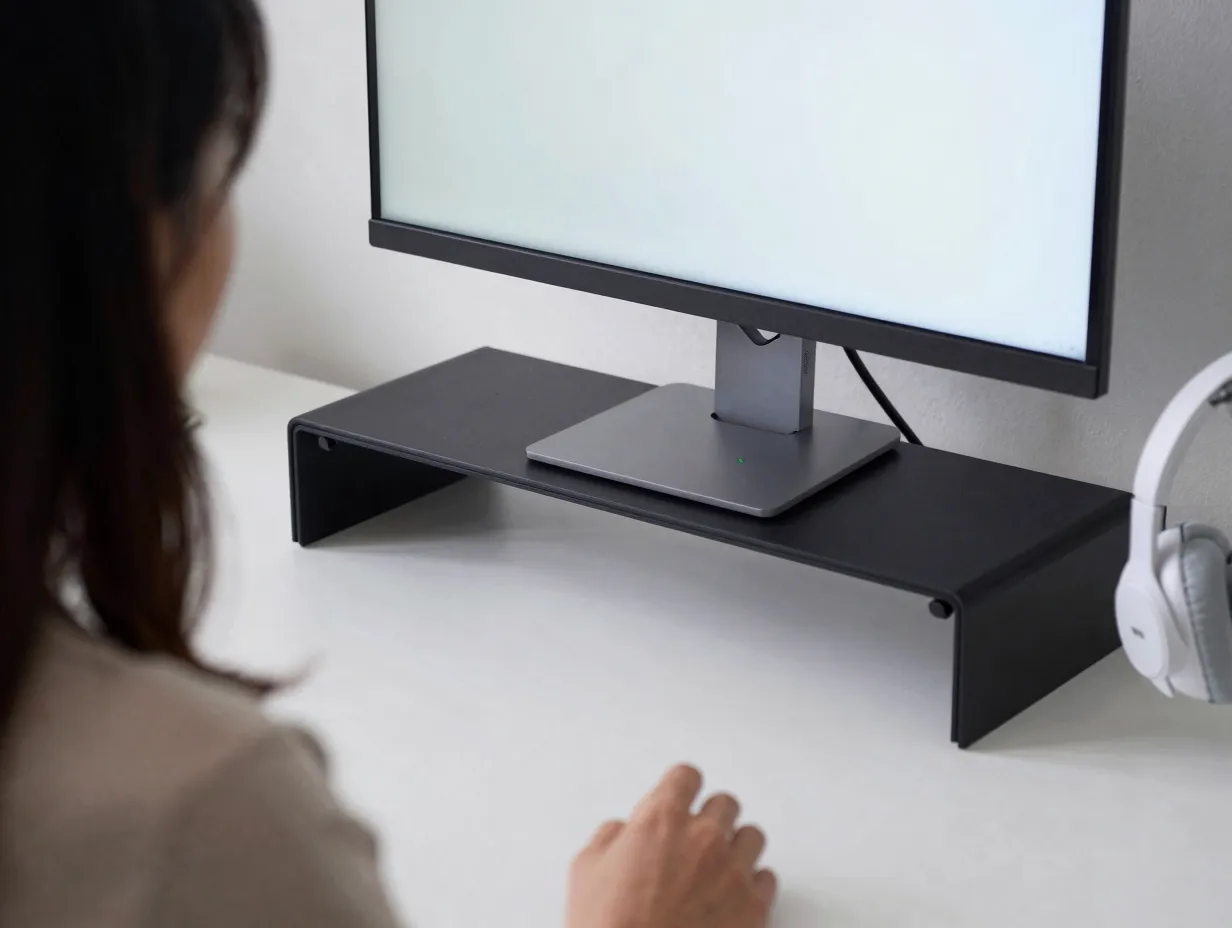
Home office upgrades round out this category. Monitor risers, headset hangers, laptop stands, and cable channel covers for a desk setup are all frequently cited in “everyday upgrade” sections of 2026 functional print lists [6][7]. These prints tend to combine organization and upgrade goals in a single object, which is part of why they remain popular among both beginners and experienced makers.
A few printer and office accessories worth prioritizing:
Filament spool holders that reduce tangling and uneven feed tension.
Cable channel covers that route desk wiring cleanly to the wall.
Monitor or laptop risers that improve ergonomics during long work sessions.
Headset and cable hangers that keep desks clear of loose gear.
Material Choice and Durability: Getting It Right
Material selection is often the difference between a print that lasts for years and one that cracks within weeks. PLA remains the default choice for beginners because it prints easily and holds fine detail, but it becomes brittle under repeated stress or in hot environments like a car dashboard or a sunny windowsill. PETG offers a middle ground, handling moisture, mild heat, and light impact far better than PLA, which makes it the preferred material for kitchen, bathroom, and outdoor-adjacent prints [6]. TPU is the flexible option, ideal for parts that need to bend, absorb shock, or grip a surface without slipping, such as phone cases, cord wraps, or non-slip pads.
Choosing the wrong material for a given job is one of the most common mistakes new printer owners make. A rigid PLA hook holding a heavy winter coat, for example, is far more likely to snap than the same design printed in PETG. Matching material to the actual mechanical demands of the part is just as important as picking the right design file.
The Trend Toward Parametric and Modular Design
The clearest pattern across 2026 sources is the shift toward parametric, modular, and system-compatible designs [8]. Instead of downloading a fixed-size file and hoping it fits, users increasingly rely on customizable templates where a single design adjusts to match a drawer’s exact depth, a specific cable diameter, or a particular mounting surface.
This shift matters because it turns the 6 best functional 3D prints to organize, repair, and upgrade your home from a static list into a flexible toolkit. The same underlying bin design might serve a kitchen drawer today and a garage toolbox next month, simply by changing a few dimensions before printing. Brands have leaned into this trend by building ecosystem-style libraries around modular systems, encouraging repeat use of a printer well beyond the first novelty project [8].
Getting Started: A Simple Printing Checklist
Anyone new to home 3D printing can follow a short checklist to avoid wasted filament and failed prints:
Identify the specific problem first, such as tangled cables or a broken hook, rather than browsing designs randomly.
Match the material to the part’s real-world stress, moisture, and heat exposure.
Check bed size and printer tolerances before downloading a parametric file, since oversized parts may need splitting.
Start with a small test print when trying a new design to confirm fit before committing a full spool.
Keep a small library of go-to files for hooks, clips, and bins, since these get reprinted most often.
Conclusion
The 6 best functional 3D prints to organize, repair, and upgrade your home are not exotic projects reserved for hobbyists with expensive machines. Cable clips, stackable bins, switch covers, phone stands, wall hooks, and printer accessories are accessible, low-cost, and genuinely useful in almost every room of a house. They solve the kind of small daily frustrations that store-bought products often fail to fix precisely, because a printed part can be sized, shaped, and customized to fit one specific space.
The next step is simple. Pick the single most annoying clutter or repair problem at home right now, search for a parametric version of a matching design, and run a quick test print before committing a full spool of filament. Building a small personal library of trusted files for hooks, bins, and clips pays off fast, turning a printer from a novelty gadget into one of the most practical tools in the house.
References
[1] Watch – https://www.youtube.com/watch?v=sMnGc0zF9j8&vl=en-US
[2] Watch – https://www.youtube.com/watch?v=mHGoxXdsbLM
[3] 50 Most Useful Things To 3d Print – https://snapmanufacturing.com/50-most-useful-things-to-3d-print/
[4] Household 3d Print File – https://www.crealitycloud.com/collection/household-3d-print-file
[5] Watch – https://www.youtube.com/watch?v=36X0XCTLJLo
[6] Functional 3d Printing Ideas For Everyday Use 2025 – https://sovol.eu/blogs/new/functional-3d-printing-ideas-for-everyday-use-2025
[7] Useful 3d Prints For Your Home – https://www.ka3dp.com/useful-3d-prints-for-your-home/
[8] Best Functional Prints 2026 – https://www.3dprinterstuff.com/workshop/best-functional-prints-2026
[9] Watch – https://www.youtube.com/watch?v=A8m141R1zZU
[10] Watch – https://www.youtube.com/watch?v=MgN-xhD_V7A