6 Beginner 3D Printing Projects To Build Your Confidence
Roughly 30 percent of new desktop 3D printer owners abandon the hobby within their first three months, not because the machines fail, but because early prints do. A warped corner. A stringy mess. A part that never fits. The fix is not a better printer. It is a smarter starting order.
Disclosure: This post contains affiliate links. As an Amazon Associate, we earn from qualifying purchases, and at no extra cost to you.
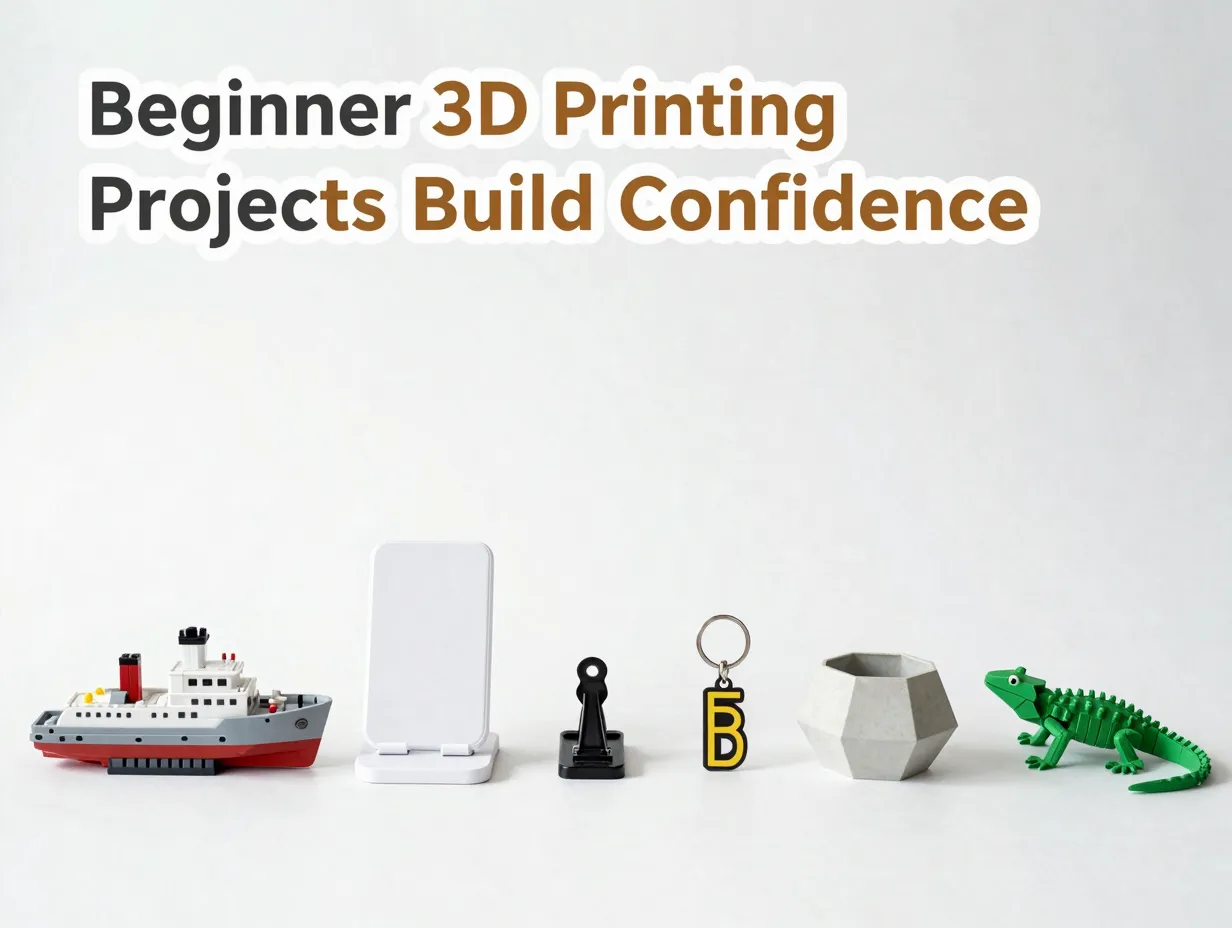
This guide walks through 6 Beginner 3D Printing Projects To Build Your Confidence, chosen because they share three traits experts keep repeating: short print times, forgiving tolerances, and a payoff you can see or use immediately [1][9]. Each project below builds on the last, moving from pure calibration to functional objects to a small creative flourish that proves the printer, and the person running it, are ready for bigger things.
Key Takeaways
- Start with calibration prints like 3DBenchy and test cubes before attempting anything functional, since printer setup problems show up fastest on simple shapes [2][7].
- Functional items such as phone stands and cable clips deliver visible daily utility, which reinforces motivation more than decorative prints alone [3][8].
- Small, fast prints “stack” wins quickly; finishing five short jobs in a weekend builds more confidence than one long overnight print [4][10].
- Keychains and trinkets are widely cited as the simplest path from an empty build plate to a finished, giftable object [1][8].
- Print-in-place articulated toys and simple puzzles serve as the natural “next step” once the basics of adhesion, supports, and settings are under control [9][10].
Why Beginner-Friendly Projects Matter Before You Chase Complexity
New printer owners often jump straight to the model that inspired the purchase in the first place, a detailed miniature, a cosplay helmet, a full-size vase. That instinct is understandable, but it skips the step every experienced maker recommends: learning what the printer actually does before asking it to do something hard [3][7].
Beginner guides across the hobby converge on the same underlying logic, even though there is no single official checklist. Educational resources aimed at classrooms echo it too, framing early prints as tools for building student confidence through visible, quick success rather than technical perfection [5]. The pattern holds because 3D printing success depends on dozens of small variables, bed leveling, first-layer height, nozzle temperature, cooling, and retraction, and small test objects expose problems in minutes instead of hours [2][7]. A failed 20-minute print is a lesson. A failed 14-hour print is a setback that can end the hobby before it starts.
The six projects in this article are ordered deliberately. They move from diagnostic prints, to fast trinkets, to functional desk items, to more expressive shapes, ending with a mechanism-based project that rewards everything learned along the way. Each entry below is numbered as part of the core list of 6 Beginner 3D Printing Projects To Build Your Confidence.
The Core List: 6 Beginner 3D Printing Projects To Build Your Confidence
The following six projects appear, in some form, across nearly every beginner roundup, hobbyist forum thread, and manufacturer guide reviewed for this article [1][2][3][4][6][8][9][10]. They are not ranked by difficulty alone but by how well they teach a specific skill while staying fast and low-risk.
1. Calibration Cube And 3DBenchy Test Print
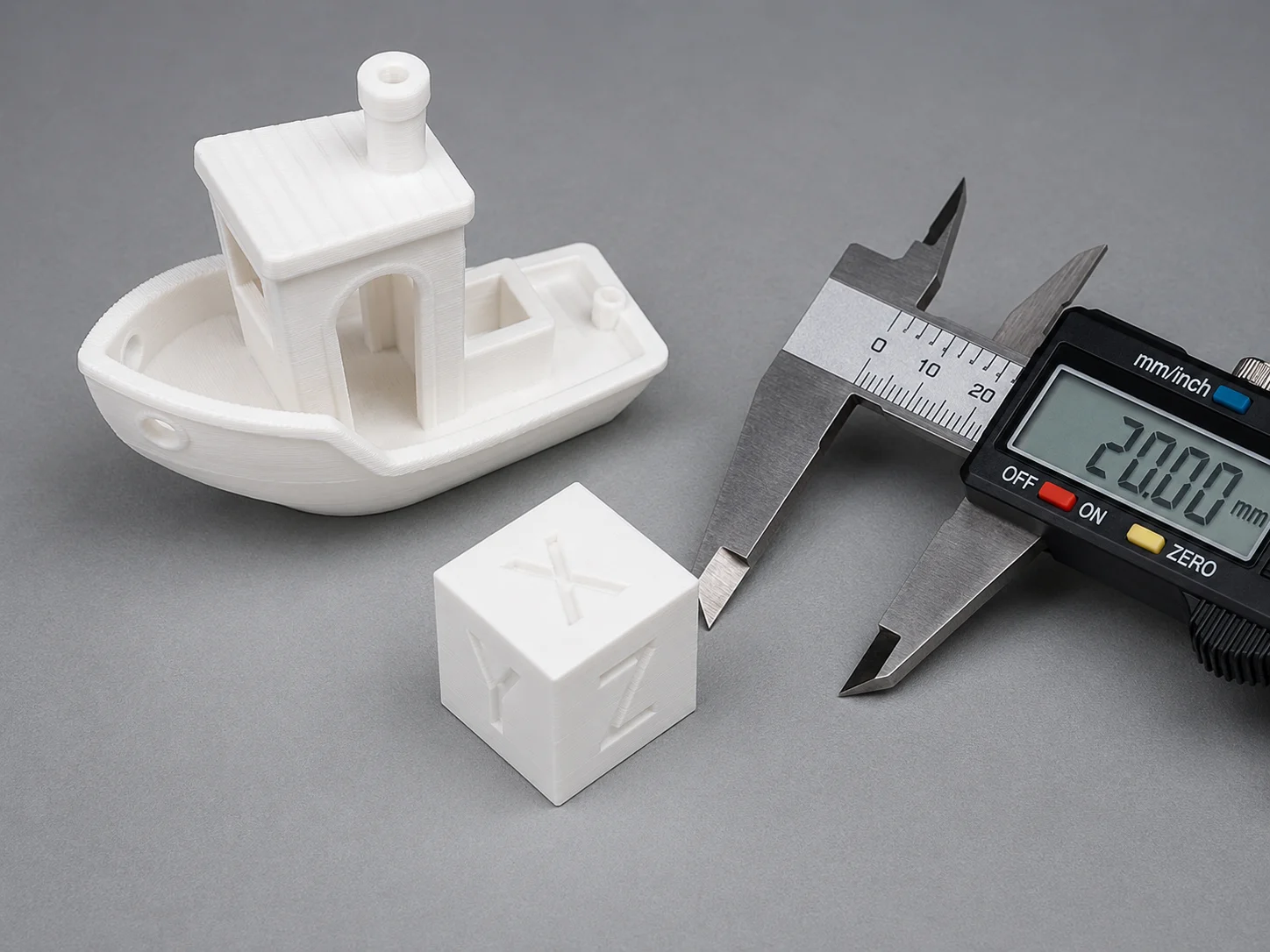
Every experienced printer will say the same thing before anything else gets printed: run a calibration cube and a 3DBenchy first [2][7]. The cube is a simple 20mm block used to check dimensional accuracy, and the Benchy is a small tugboat model designed specifically to reveal bridging, overhangs, and cooling issues in under an hour [6][7].
These prints are not exciting, and that is the point. They generate fast, honest feedback about whether the printer is dialed in. A slightly warped cube corner points to bed leveling. Stringy rigging on the Benchy points to retraction settings or cooling fan speed [7]. Fixing these issues now prevents wasted filament and wasted evenings later.
Practical tips for this first project:
Print at the manufacturer’s default profile before adjusting anything. Measure the cube with calipers if available, but even a ruler check on all three axes catches major problems. Keep the finished Benchy as a benchmark; reprinting it after firmware updates or nozzle changes is a quick way to confirm the machine is still healthy [6].
2. Simple Phone Or Tablet Stand
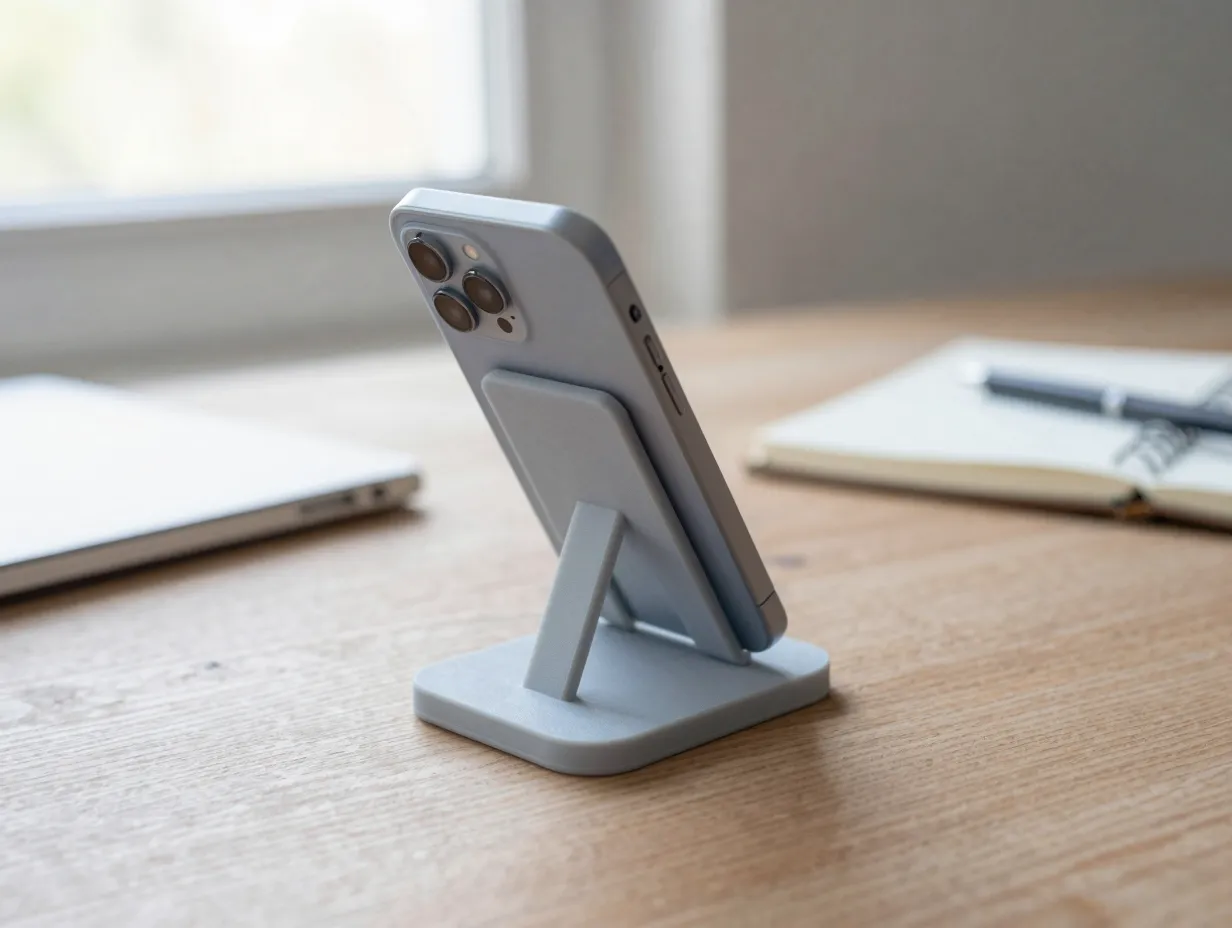
Once the printer is behaving, the second project should be something used every single day. Phone stands are cited repeatedly as the quintessential first functional print because they are geometrically simple, print flat with no supports, and solve a real problem sitting on almost everyone’s desk [3][8][9].
A basic stand typically prints in under two hours, uses minimal filament, and requires no advanced slicer settings. Because the design is mostly flat with a shallow angle, it also introduces beginners to the concept of print orientation, laying the part down correctly can eliminate the need for supports entirely, teaching an important lesson in efficient design choices [1][3].
“Visible utility is the fastest route to printer confidence. When a print sits on your desk holding your phone every day, it stops being a test object and starts being proof the machine works.” This idea runs through nearly every beginner-focused guide reviewed, even when phrased differently [8][9].
Choose a stand with a wide, flat base for the best first-layer adhesion, and pick one designed for your specific phone or a universal size if you switch devices often.
3. Cable Clips And Small Desk Organizers
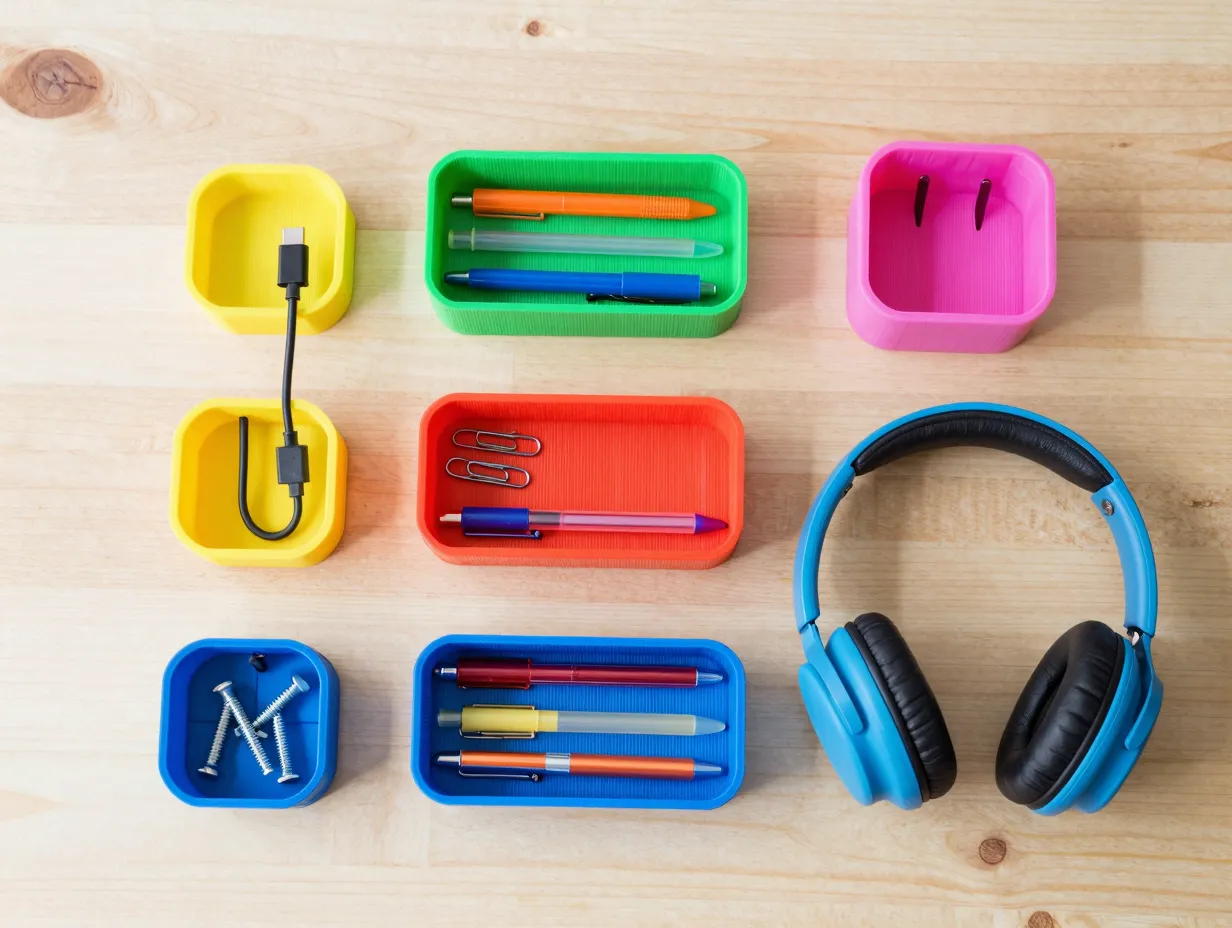
The third entry in this list of 6 Beginner 3D Printing Projects To Build Your Confidence is less about one object and more about a category: small, single-purpose organizers. Cable clips, cord holders, cup-holder trays, and tiny parts bins are consistently recommended because they print in fifteen to forty-five minutes and immediately clean up a workspace [4][8].
The psychological value here is compounding. Printing five different clips in an afternoon produces five separate finished objects, five separate successes, rather than one long print with one outcome. Beginner-focused writers describe this as “stacking wins,” a deliberate strategy to keep motivation high while skills are still developing [4][10].
Below is a quick comparison of common desk-organizer prints and what each one teaches:
| Project | Typical Print Time | Skill Reinforced |
|---|---|---|
| Cable clip | 10 to 20 minutes | Snap-fit tolerances |
| Cord organizer tray | 20 to 40 minutes | Flat-surface adhesion |
| Small parts bin | 30 to 60 minutes | Basic infill settings |
| Headphone hook | 15 to 30 minutes | Wall-mount strength |
These objects are also excellent for testing new filament colors or brands without committing to a long print, which matters because filament behavior varies between spools and manufacturers [1].
4. Custom Keychains And Trinkets
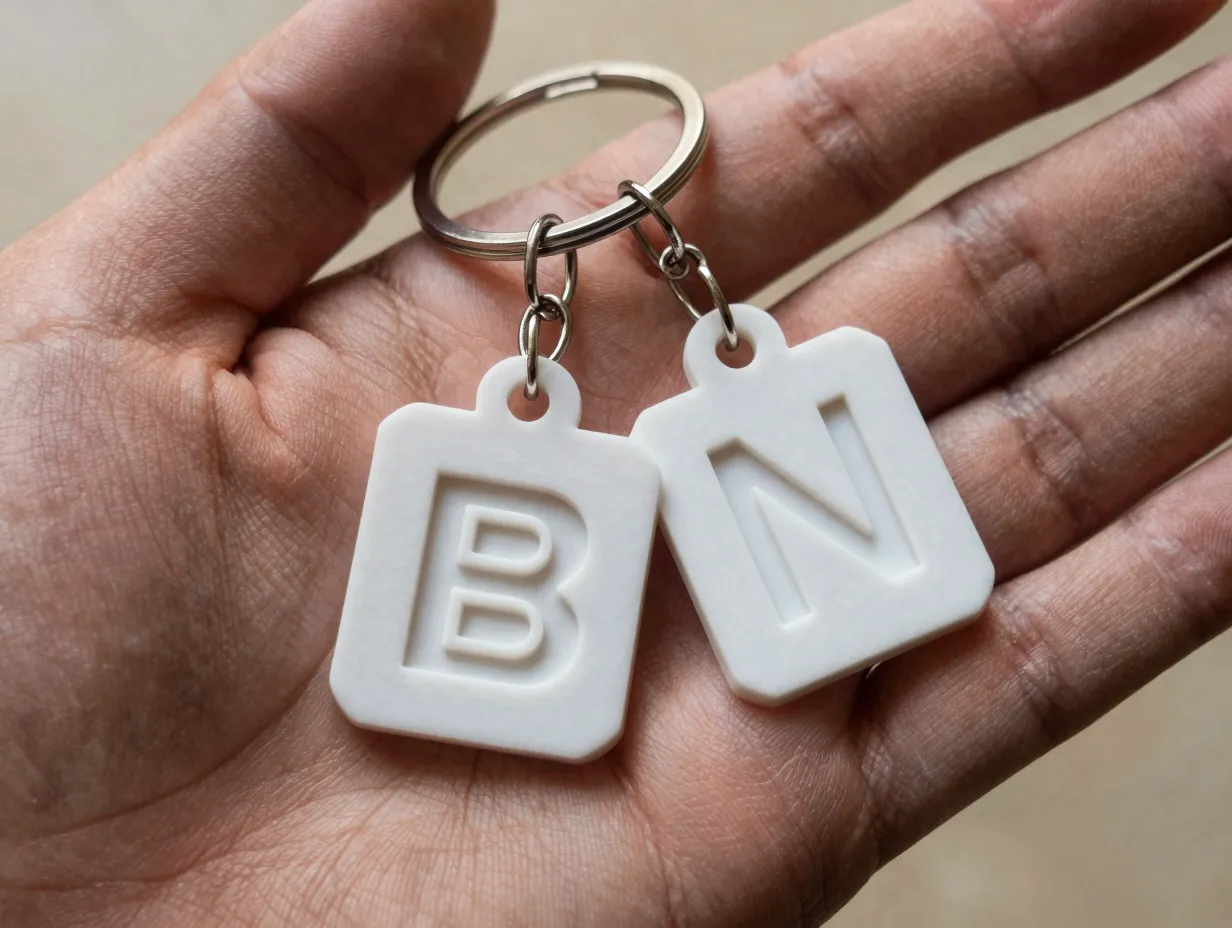
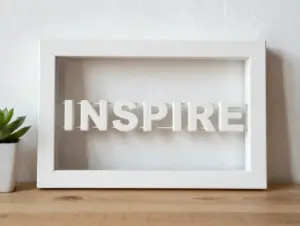
Nothing moves a beginner from “person who owns a 3D printer” to “person who makes things” faster than a keychain. Guides across the hobby single out keychains and small trinkets as the simplest possible path from an empty build plate to a finished, tangible, often giftable object [1][8].
Keychains work as a confidence project for several structural reasons. They are small enough to print in under thirty minutes, they use very little filament, and they tolerate minor surface imperfections because nobody expects a keychain to be flawless. Many keychain designs also introduce beginners to lightweight customization, adding initials, a name, or a simple logo, without requiring any 3D modeling skill, since most slicers or online generators handle text embossing automatically [3][4].
For a slightly more advanced version of this project, look for keychains with two-color designs that use a simple filament swap partway through the print. This introduces multi-material printing on a low-stakes object before attempting it on something larger.
5. Small Planter Or Decorative Vase
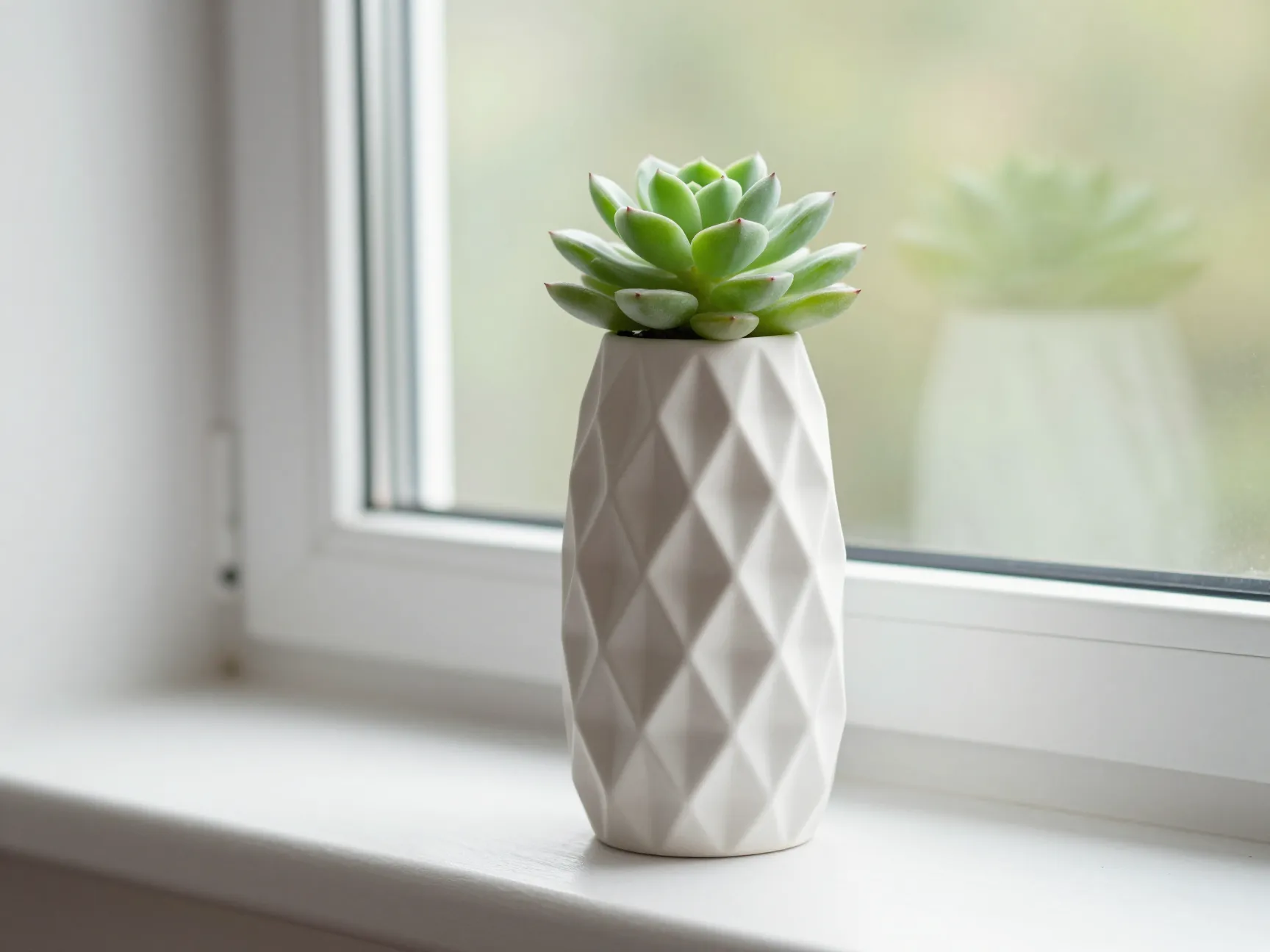
The fifth project shifts from purely functional to visually rewarding. Small planters and vases are repeatedly highlighted because they deliver a strong “wow” result relative to how little effort they require [1][4]. Many vase-style objects use a single continuous wall printed in spiral or “vase mode,” which means no infill, no retraction issues from layer changes, and dramatically shorter print times than a solid object of the same size.
This project matters for a different reason than the earlier four. It reintroduces creativity into the process. After several rounds of pure function, printing something purely for looks, a geometric planter, a textured vase, a small succulent pot, reminds beginners why they wanted a 3D printer in the first place [4][8]. It also teaches print-speed tradeoffs, since vase-mode prints often run faster but require careful attention to wall thickness to remain sturdy enough to hold soil or water.
A quick note on finishing: many small planters benefit from a light sanding or a coat of sealant if they will hold moisture, since raw PLA is not naturally waterproof over long periods.
6. Print-In-Place Articulated Toy Or Simple Puzzle
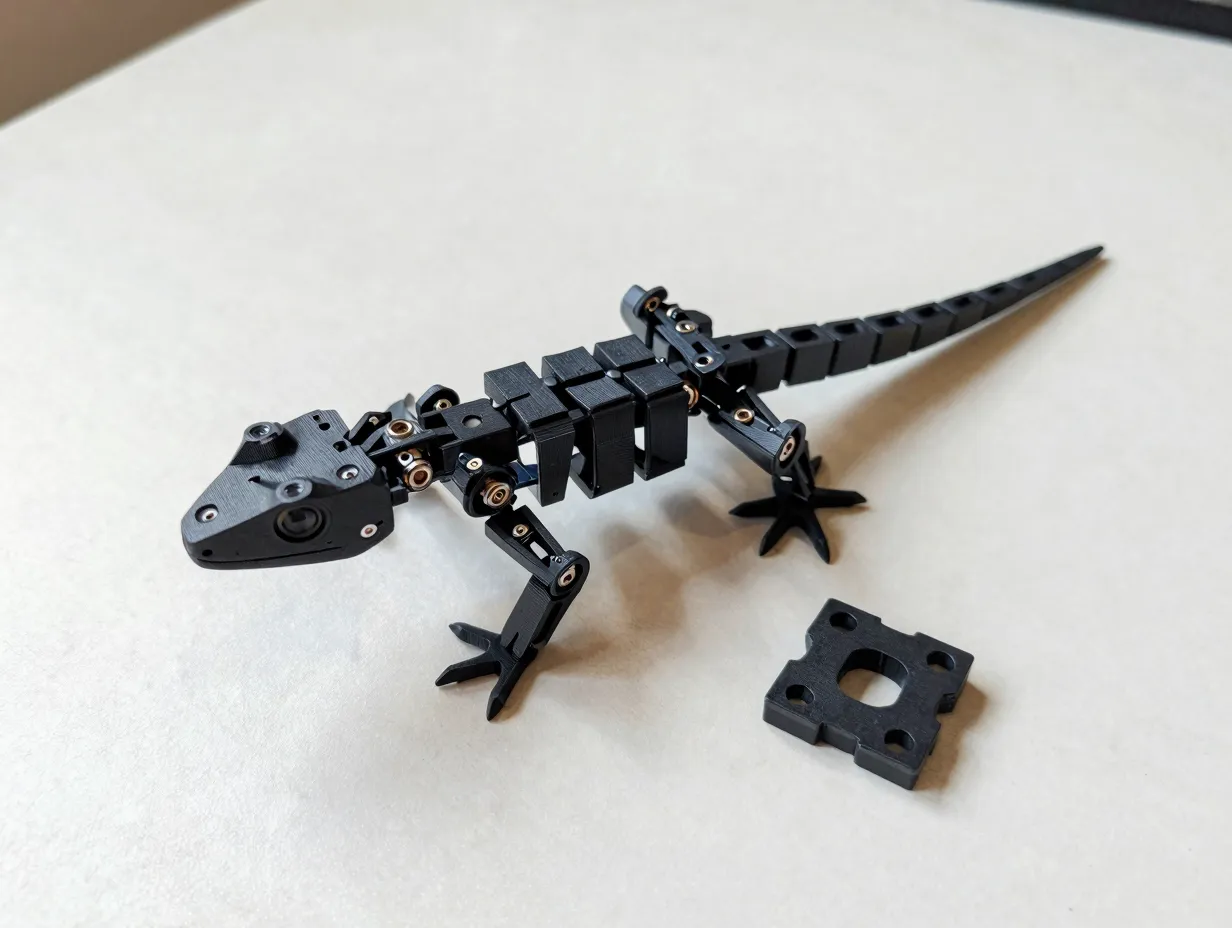
The final project on this list of 6 Beginner 3D Printing Projects To Build Your Confidence is the natural graduation point. Print-in-place articulated toys, small animals or figures with joints that move right off the build plate, and simple interlocking puzzles are widely framed as the “level-up” project once the fundamentals are solid [9][10].
These designs are more demanding than anything earlier on this list. They require correctly tuned first layers to prevent joints from fusing, and they benefit from proper cooling to keep small connecting points from drooping. But because the underlying mechanics were already practiced through the calibration cube, the Benchy, and the desk organizers, most beginners find these prints achievable rather than intimidating [9].
Success here delivers a different kind of confidence than the earlier projects. It proves the printer and the operator can handle moving parts, tight tolerances, and a design that fails completely if any single setting is off. That is a meaningful threshold, and crossing it is usually the moment hobbyists start looking at more ambitious builds.
How To Choose Which Confidence-Building Project To Start With
Not every beginner needs to follow the list in strict order. The right starting point depends on available print time, filament on hand, and personal motivation.
Consider time budget first. Anyone with only an hour or two per session should stick to keychains, cable clips, and calibration prints before attempting anything with articulated joints [4][8]. Consider filament supply next. A single small spool is enough to complete the first four projects on this list several times over, which matters for anyone testing the waters before buying more material [1].
Motivation type matters just as much as logistics. Some beginners are driven by usefulness and should prioritize the phone stand and desk organizers. Others are driven by finished aesthetics and should move toward the planter or vase sooner. Educational settings, where the goal is building confidence in a group of students rather than a single hobbyist, tend to favor the fastest wins first, keychains and small organizers, before introducing anything with moving parts [5].
A practical selection checklist:
Pick a project that finishes in under an hour for the very first attempt. Confirm the model requires no supports or minimal supports for the second attempt. Choose an object with an obvious daily use for the third attempt, to reinforce why the process is worth repeating. Save anything with joints, hinges, or multi-part assembly for after at least three to five successful prints.
Common Mistakes That Undermine Early Confidence
Even with a strong project list, certain habits derail beginners before they get through the first few items. Rushing bed leveling is the most frequent issue cited across guides, since an unlevel bed causes failures that look like filament or temperature problems but are actually mechanical [2][7]. Skipping the calibration step entirely and jumping straight to a decorative print is the second most common misstep, because it hides setup problems until they show up on something the beginner actually cares about [7][9].
Overloading the first print with fine detail is another frequent error. A keychain with intricate lettering or a planter with delicate lattice walls may look appealing in photos, but detail increases the odds of stringing, layer shifts, and warping precisely when a beginner has the least experience diagnosing those issues [1][8]. Choosing simpler geometry first, even if it looks plainer, produces a higher success rate and a stronger sense of progress.
Finally, many new users change too many settings at once when a print fails. Adjusting nozzle temperature, print speed, and cooling simultaneously makes it nearly impossible to know which change actually fixed the problem. Guides consistently recommend adjusting one variable at a time, especially during the calibration and cable-clip stages of this list [2][7].
What Comes After These 6 Beginner 3D Printing Projects To Build Your Confidence
Completing all six projects signals readiness for more ambitious builds, but the transition should still be gradual. Natural next steps include multi-part assemblies that snap or bolt together, functional brackets or mounts that carry real mechanical load, and models that require supports on overhangs steeper than the Benchy’s test bridges [6][9].
Many hobbyists use the skills from the articulated toy project as a bridge into more complex print-in-place mechanisms, gears, working hinges, or small kinetic sculptures. Others move from the planter project toward larger decorative pieces that require multiple print sessions and assembly. The specific direction matters less than the underlying principle carried over from this entire list: choose the next project based on which single new skill it teaches, rather than how impressive it looks [4][10].
Vendors and community guides refreshed in 2026 largely reaffirm this same beginner sequence rather than replacing it, which suggests the six-project structure reflects durable printing fundamentals rather than a passing trend. The tools have improved, faster printers, better default profiles, more forgiving filaments, but the psychological logic of starting small, functional, and fast still holds.
Conclusion
Confidence in 3D printing is not built by owning a capable machine. It is built by finishing things, repeatedly, in a sequence that matches skill to challenge. The 6 Beginner 3D Printing Projects To Build Your Confidence outlined here, calibration prints, a phone stand, cable clips and organizers, keychains, a small planter, and a print-in-place articulated toy, cover the core skills nearly every beginner guide agrees on: bed leveling, orientation, fast wins, light customization, creative payoff, and mechanical complexity, in that order [1][2][3][4][8][9].
The next step is simple. Pick the first project from this list, keep the settings close to default, and resist the urge to skip ahead to something impressive. Finish it, look at it, and move to the next one. Six short projects stand between an empty build plate and a printer that finally feels like it belongs to its owner.
References
[1] Best 3d Printing Ideas For Beginner – https://www.creality.com/blog/best-3d-printing-ideas-for-beginner
[2] Beginner Projects – https://3dprintingstreet.com/printing-basics/beginner-projects/
[3] Beginner 3d Printing Projects – https://us.qidi3d.com/blogs/news/beginner-3d-printing-projects
[4] 10 Easy And Fun 3d Printing Projects For Beginners – https://ilove3dprinting.com/10-easy-and-fun-3d-printing-projects-for-beginners/
[5] 3d Printing Projects Students – https://feeds.makersasylum.com/blog/3d-printing-projects-students
[6] Watch – https://www.youtube.com/watch?v=eHbxC7Rppmo
[7] forum.sovol3d – https://forum.sovol3d.com/t/3d-printing-projects-for-beginners/5588
[8] 3d Printing Ideas For Beginners – https://3dprintinggeek.com/3d-printing-ideas-for-beginners/
[9] 3d Printing Ideas For Beginners – https://www.snapmaker.com/blog/3d-printing-ideas-for-beginners/
[10] 6 Easy Diy 3d Printing Projects – https://beckystern.com/2023/05/14/6-easy-diy-3d-printing-projects/