8 DIY Phone Case Design Ideas With Paint For An Aesthetic Touch
Over 1.5 billion smartphone cases are sold globally every year, yet the majority are mass-produced designs that look identical on every other commuter, student, and desk. A hand-painted case costs a fraction of a custom order and delivers something no factory run can replicate: a design that is entirely your own. These 8 DIY phone case design ideas with paint for an aesthetic touch cover everything from beginner-friendly gradient fades to more advanced galaxy swirls, giving creators at every skill level a clear starting point.
Disclosure: This post contains affiliate links. As an Amazon Associate, we earn from qualifying purchases, and at no extra cost to you.
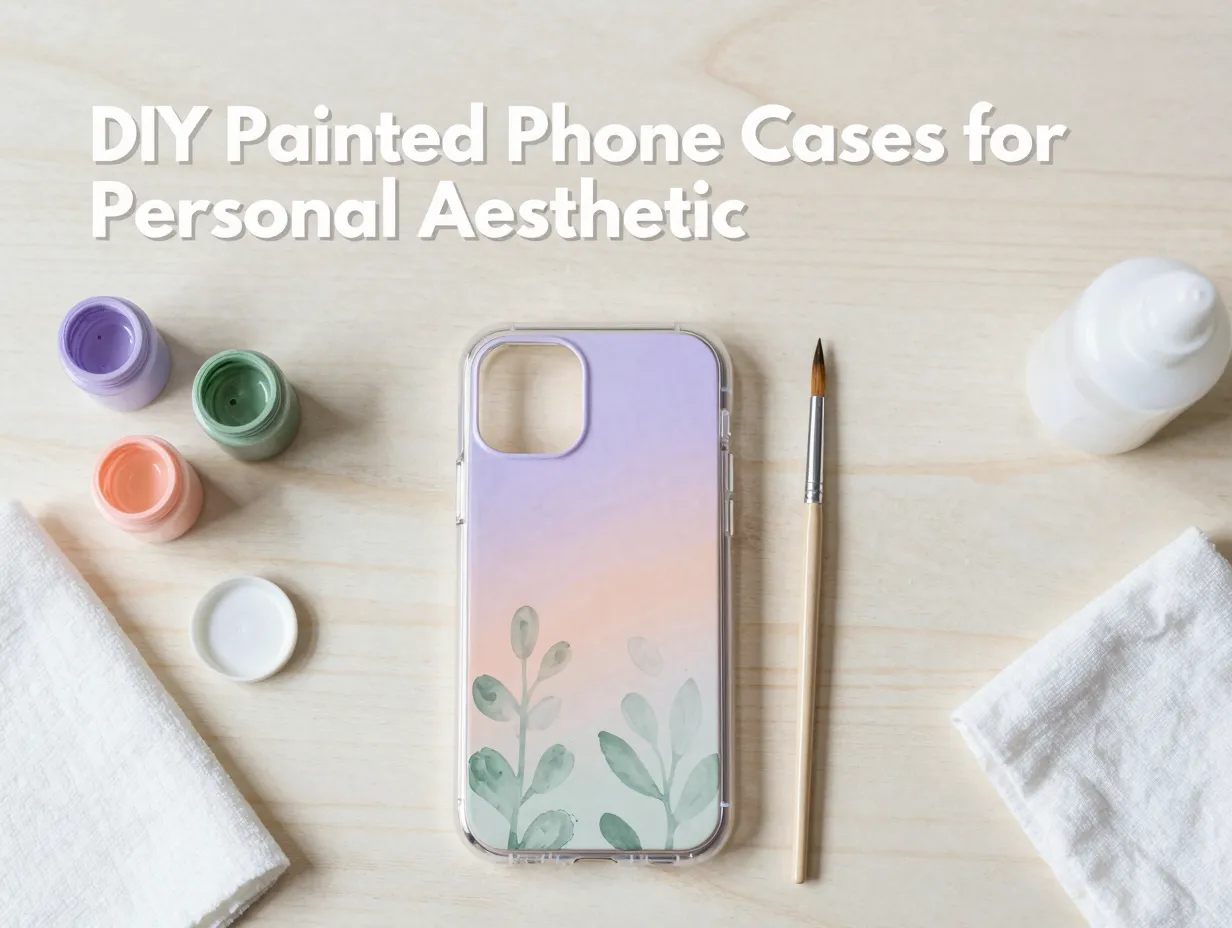
Whether the goal is a soft, Instagram-worthy pastel look or a bold, eye-catching statement piece, painted phone cases have surged in popularity across 2025 and 2026 tutorials and roundups. The techniques are accessible, the materials are affordable, and the results are genuinely striking. The following guide walks through each of the 8 DIY phone case design ideas with paint for an aesthetic touch, complete with technique tips, material recommendations, and finishing advice.
Key Takeaways
- Clean the case thoroughly with rubbing alcohol before painting to ensure paint adhesion and longevity.
- Apply paint in thin, even coats and allow full drying between layers for a professional finish.
- A clear enamel or acrylic sealer applied in two light coats dramatically extends the life of any painted design.
- Pastel gradients, floral watercolors, galaxy swirls, and minimal line art are among the most on-trend aesthetic directions in 2026.
- Clear phone cases work especially well as canvases because they allow reverse-painting techniques and light to interact with the design.
Essential Preparation Before Starting Any Painted Phone Case
Before exploring the 8 DIY phone case design ideas with paint for an aesthetic touch, getting the preparation right is non-negotiable. Skipping this step is the single most common reason painted cases peel, chip, or look uneven within days.
Surface cleaning is the foundation. Oils, fingerprints, and dust all prevent paint from bonding properly to the case surface. Wiping the case down thoroughly with rubbing alcohol and allowing it to dry completely is considered a crucial first step by multiple tutorials [11]. For clear plastic or TPU cases, this step is especially important because the surface is naturally smooth and non-porous.
Priming is optional but recommended for bold or opaque designs. A thin white acrylic primer coat gives paint something to grip and makes colors appear more vivid. For transparent or reverse-painted designs, skip the primer entirely.
Paint selection matters more than most beginners expect. Acrylic paints are the standard choice because they adhere well to plastic, dry quickly, and are available in a vast range of colors. Specialty paints such as puffy paint or fabric paint can add texture but require longer drying times.
Sealing is the final and arguably most important step. Applying two light coats of clear enamel or acrylic sealer, rather than one heavy coat, produces a more durable and even finish. Allowing the paint to cure for approximately 48 hours before regular use gives the best long-term results [5].
| Supply | Purpose | Notes |
|---|---|---|
| Rubbing alcohol | Surface cleaning | 70% isopropyl works well |
| White acrylic primer | Base coat | Optional for transparent designs |
| Acrylic paint | Main design | Wide color range, fast drying |
| Fine detail brushes | Precise line work | Sizes 0 and 00 recommended |
| Clear enamel sealer | Protective topcoat | Apply two light coats |
| Painter’s tape | Masking edges | Keeps lines clean |
The 8 DIY Phone Case Design Ideas With Paint For An Aesthetic Touch
The following eight ideas are drawn from widely referenced tutorials and roundup guides updated through 2026 [1][2][4][5][6][7][9][10]. Each idea includes a brief technique overview, difficulty rating, and finishing tip.
1. Pastel Ombré Gradient
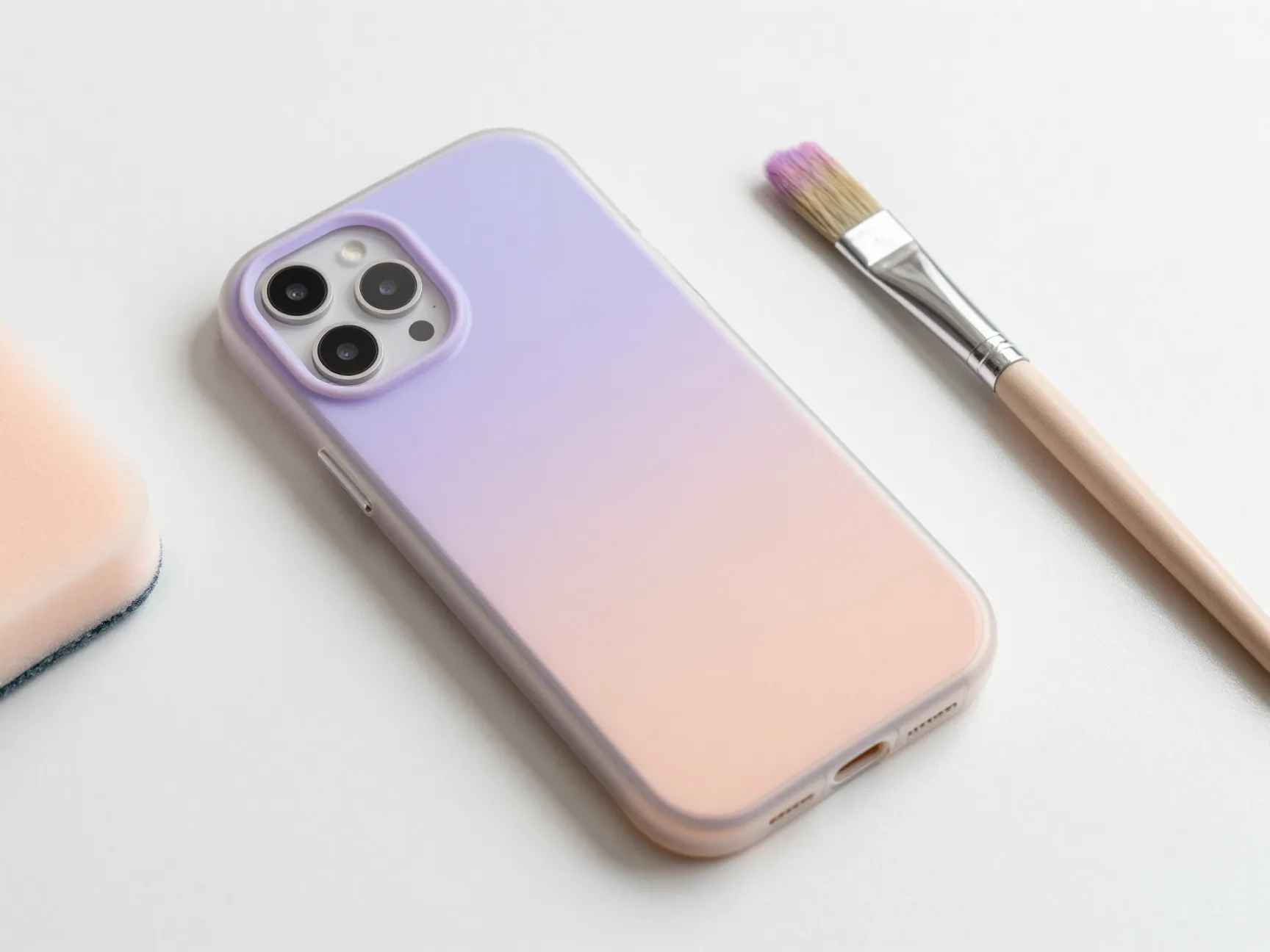
The pastel ombré gradient is consistently one of the most recommended beginner designs across 2025 and 2026 tutorials. The technique involves blending two or more soft pastel colors directly on the case surface to create a seamless fade. Popular color combinations include lavender to peach, mint to white, and blush pink to sky blue.
Technique: Apply the lighter color first across the top half of the case. While still wet, apply the darker color to the bottom half and blend the two together in the middle using a dry sponge or a wide, flat brush. Work quickly to prevent the paint from drying before blending is complete. A sponge is particularly effective for achieving a soft, diffused transition [7][4].
Difficulty: Beginner
Finishing tip: Seal with two coats of matte finish enamel to preserve the soft, understated look that defines the ombré aesthetic.
2. Galaxy and Nebula Swirls
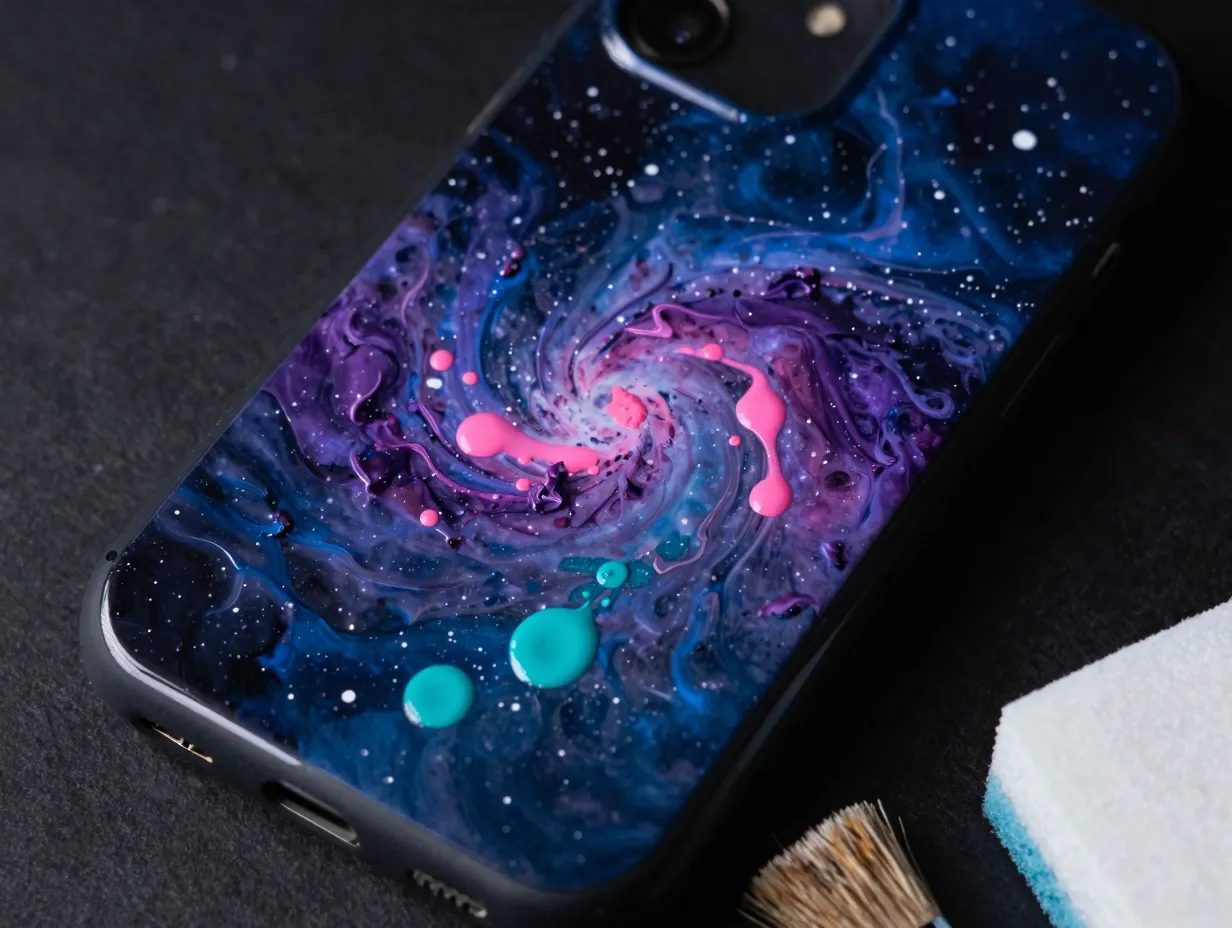
Galaxy-themed cases remain a high-impact design choice that looks far more complex than it actually is. The technique layers deep blues, purples, pinks, and whites over a black base to mimic the appearance of a nebula or star field [4][6].
Technique: Start with a black base coat and allow it to dry fully. Using a small sponge, dab on patches of dark blue and deep purple, blending edges softly. Add smaller patches of pink and teal on top. Flick white paint lightly with a stiff brush or toothbrush to create star-like spatter across the surface. A fine brush can add individual bright stars for detail.
Difficulty: Beginner to intermediate
Finishing tip: Use a gloss sealer to enhance the depth and luminosity of the colors, making the galaxy effect appear more vivid and three-dimensional.
3. Floral Watercolor Motifs
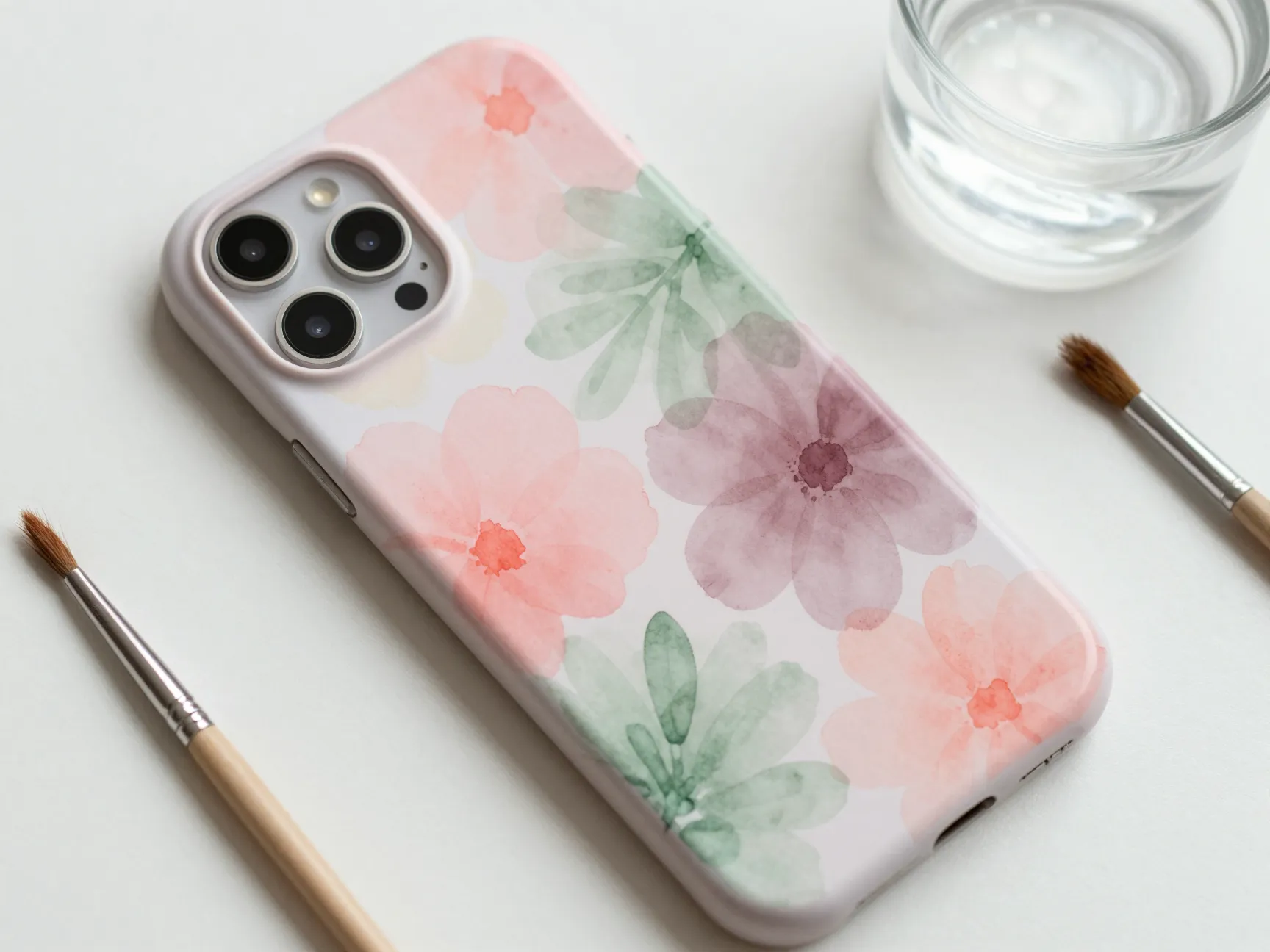
Floral and botanical designs painted in a loose, watercolor style are among the most prominent aesthetic directions in 2026 content [8][9]. These designs use diluted acrylic paint to mimic the soft, translucent quality of true watercolor on paper.
Technique: Thin acrylic paint significantly with water until it reaches a near-transparent consistency. Apply loose petal shapes and leaf forms with a round brush, allowing colors to bleed slightly into each other for an organic, painterly effect. Blush pink, sage green, dusty mauve, and soft coral are popular palette choices. Layering is key: start with the lightest tones and build depth gradually.
Difficulty: Intermediate
Finishing tip: A satin finish sealer best replicates the soft sheen of watercolor paper and complements the delicate nature of the design.
4. Abstract Minimal Line Art
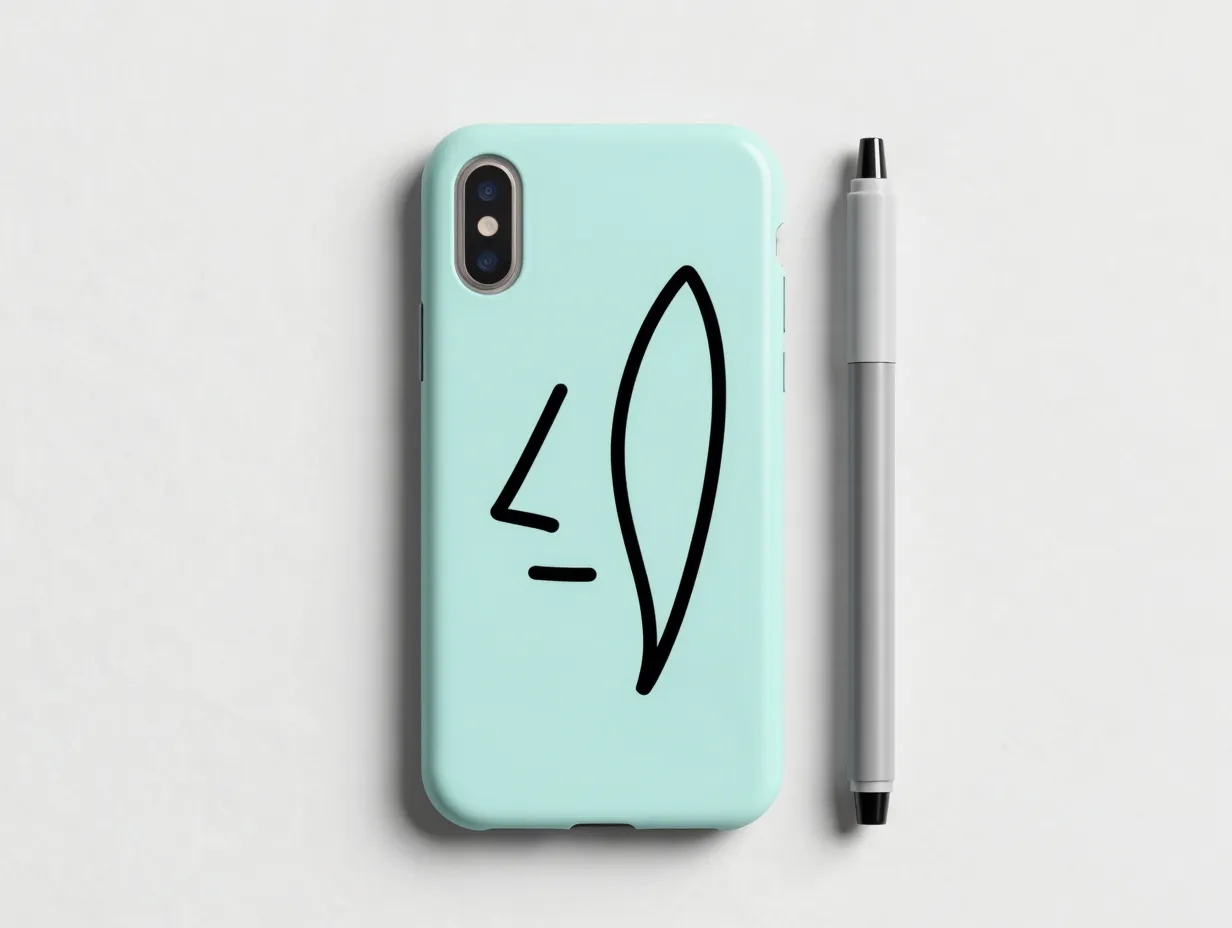
Minimal line art has become a defining aesthetic in phone case design, particularly among creators targeting a clean, modern, Instagram-style look. Abstract faces, botanical outlines, and geometric line patterns are all popular variations [5][9].
Technique: Apply a thin, even pastel base coat first and allow it to dry completely. Using a fine-tipped brush (size 0 or 00) or a paint pen, draw simple continuous line forms: an abstract face with a single flowing line, a minimalist leaf, or a series of overlapping geometric shapes. The key is confident, unhesitating strokes. Stencils can assist with repeated shapes such as waves, arches, or cloud forms [5].
Difficulty: Intermediate
Finishing tip: A matte sealer preserves the clean, graphic quality of line work without adding unwanted shine that can distract from the minimal aesthetic.
5. Paint Splatter and Drip Effects
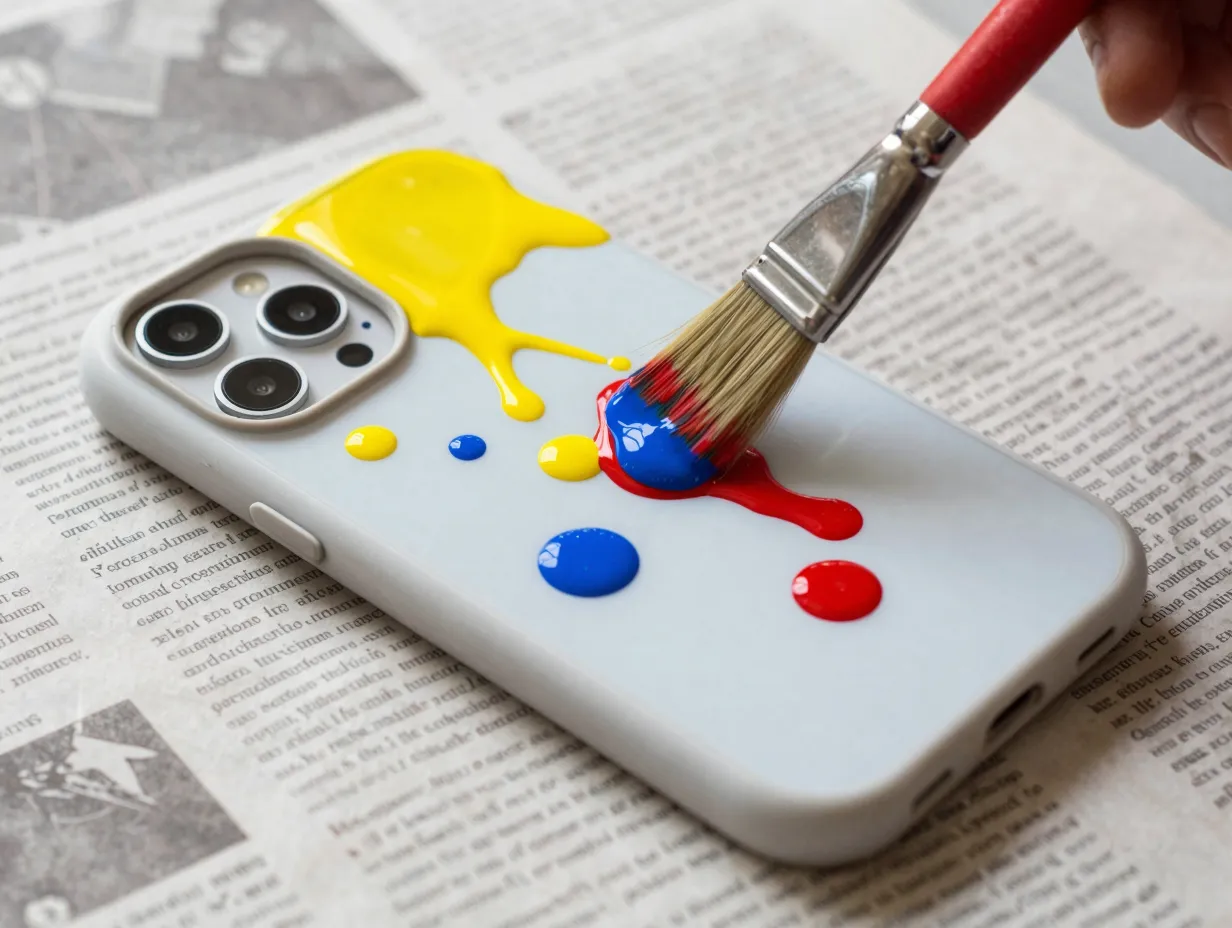
Paint splatter and drip designs are bold, expressive, and require almost no drawing skill, making them accessible to complete beginners while still producing visually striking results [2][1].
Technique for splatter: Load a stiff-bristled brush with thinned acrylic paint and flick or tap it over the case surface. Varying the distance between the brush and the case changes the size of the splatter droplets. Using multiple colors in sequence creates a layered, dynamic effect.
Technique for drips: Hold the case vertically and apply small pools of thinned paint along the top edge, allowing gravity to pull the paint downward in controlled drips. Working with contrasting colors over a solid base coat creates the most visual impact.
Difficulty: Beginner
Finishing tip: Seal carefully with two light coats once the drips are fully dry and set. Heavy sealer application can cause drips to run again if the paint has not cured completely.
6. Celestial and Butterfly Focal Points
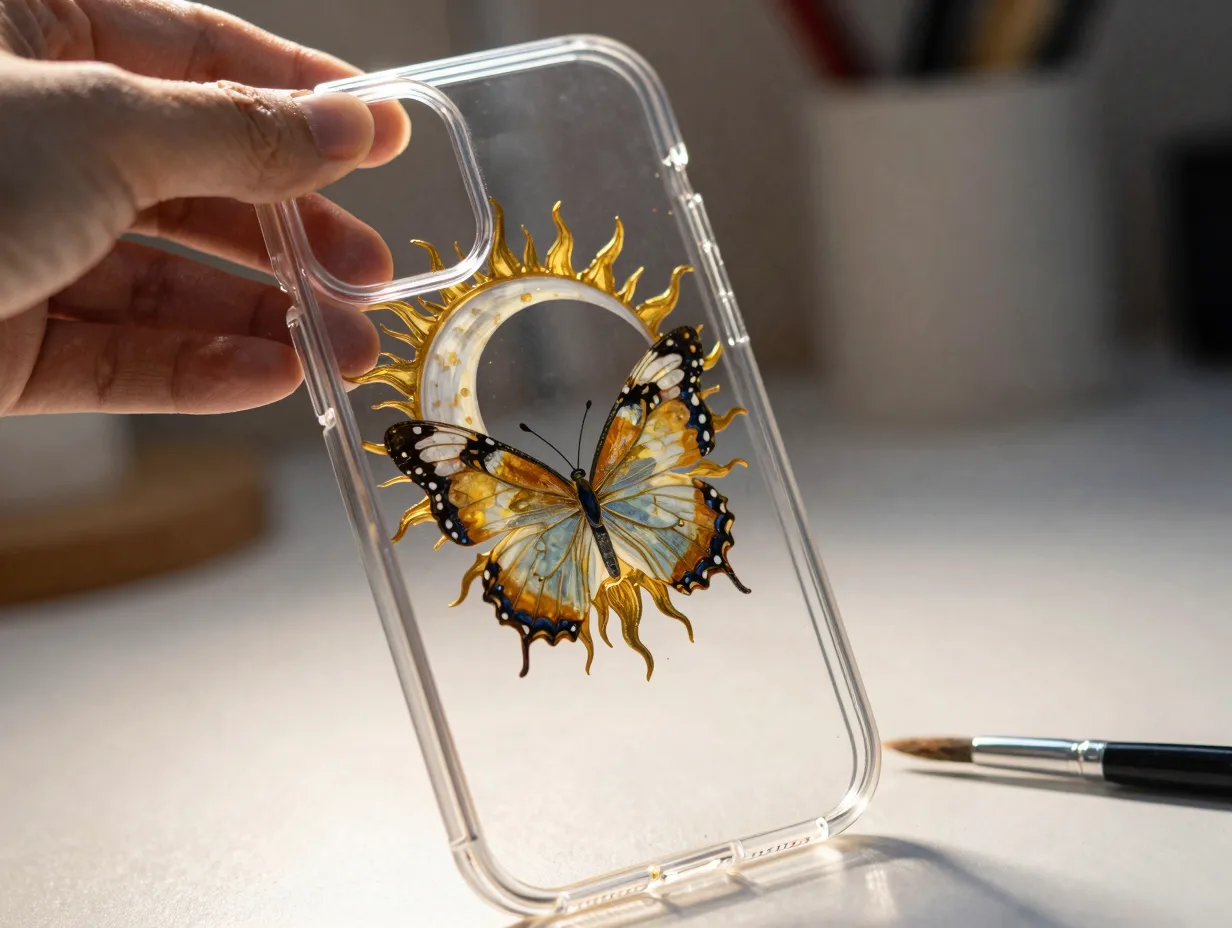
Celestial motifs, including sun-and-moon combinations, stars, and constellation maps, as well as butterfly designs, have emerged as trending focal points in 2026 tutorial content [12][3]. These designs work particularly well on clear cases, where the motif appears to float against the phone’s own color.
Technique: For a sun-and-moon design on a clear case, paint the motifs directly onto the inside surface of the case using acrylic paint. This reverse-painting technique protects the design between the case and the phone, eliminating the need for a sealer on the painted surface itself. For butterfly designs, use reference images and a fine brush to build up the wing patterns in layers, starting with the base color and adding detail veins and highlights on top.
Difficulty: Intermediate
Finishing tip: For reverse-painted clear cases, no sealer is needed on the painted surface. For standard front-painted designs, use a gloss sealer to enhance the richness of the colors.
7. Van Gogh-Inspired Abstract Painting
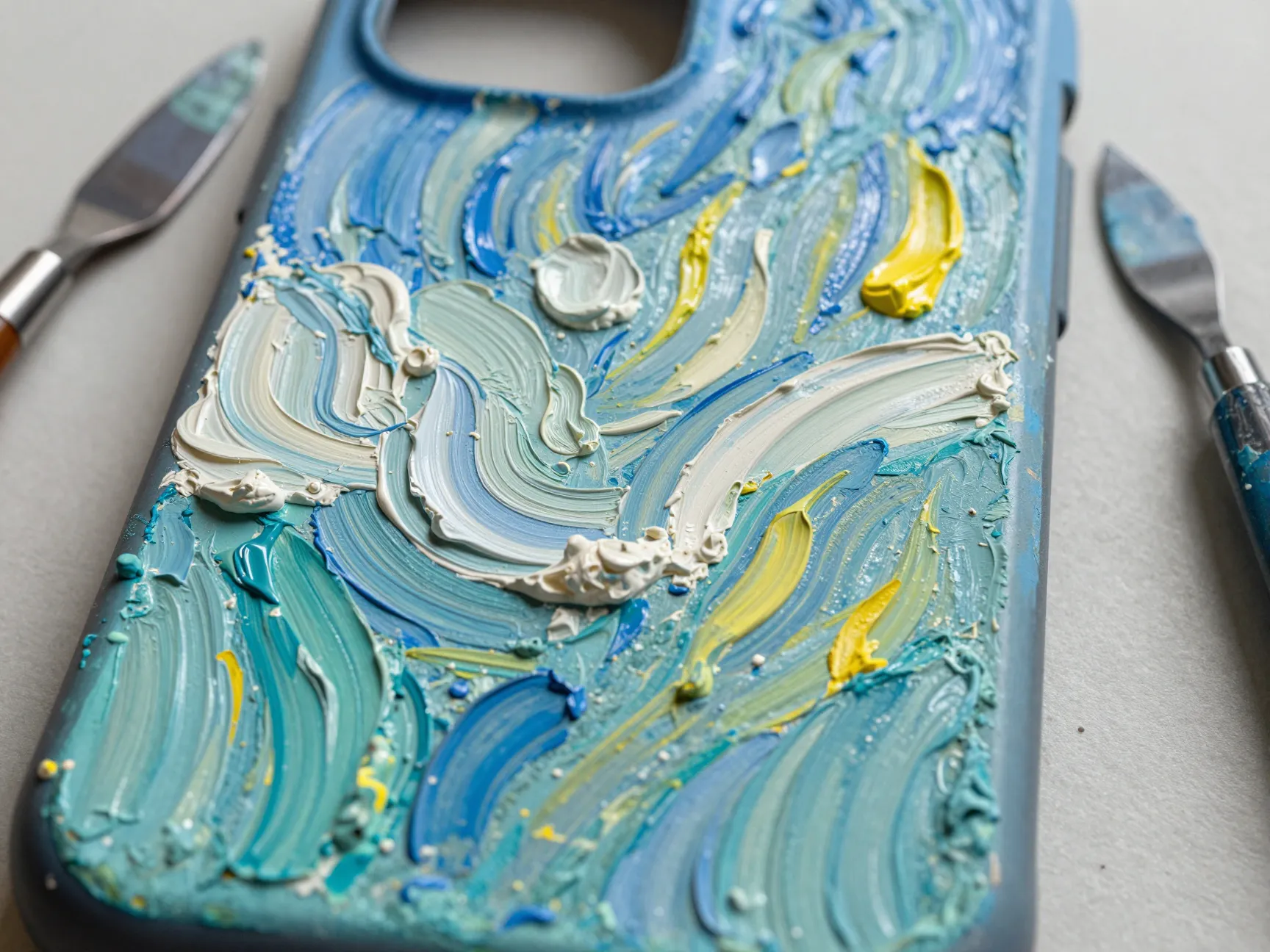
Art-inspired phone cases that reference iconic painting styles, particularly Van Gogh’s swirling impasto technique, offer a sophisticated aesthetic that stands apart from more common geometric or floral designs [6][4]. The result is a wearable miniature artwork.
Technique: Use a small palette knife or a stiff, short-bristled brush to apply thick strokes of blue, teal, white, and yellow acrylic paint in swirling, directional patterns across the case surface. The key is to mimic the visible, textured brushwork that characterizes Post-Impressionist painting. Layering colors wet-on-wet creates natural blending and depth. Allow sections to dry partially before adding the next layer to prevent colors from becoming muddy.
Difficulty: Intermediate to advanced
Finishing tip: Because this technique involves thicker paint application, allow a full 48-hour cure time before sealing. Apply two light coats of gloss sealer to protect the raised texture without flattening it [5].
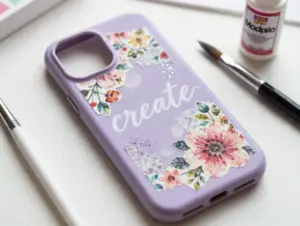
8. Monogram and Lettering Over a Painted Base
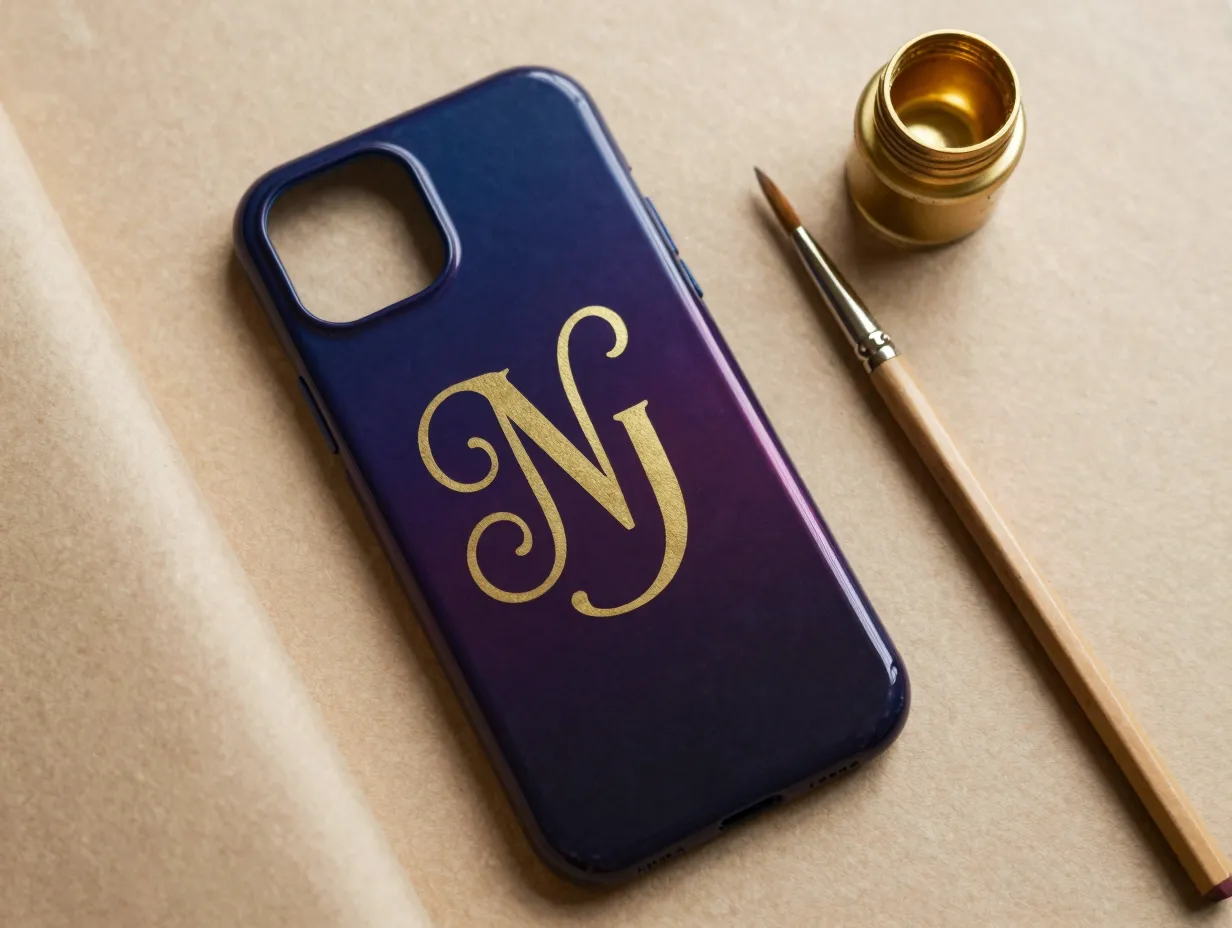
Monogram and personalized lettering designs combine the visual impact of a painted background with the individuality of typography, creating a case that is both aesthetic and deeply personal [10]. This approach works well as a gift and is highly adaptable to different styles.
Technique: Begin by painting a solid or gradient base coat in the chosen color palette. Once fully dry, use a fine brush or a paint pen to write a monogram, name, or short phrase over the base. For clean, consistent letterforms, lightly pencil the letters first and trace over them with paint. Serif fonts painted in gold or white over a deep jewel-toned base are particularly striking. Alternatively, a simple block initial over a pastel gradient creates a softer, more understated result [10][13].
Difficulty: Beginner to intermediate
Finishing tip: Allow the lettering to dry completely before sealing, as paint pens in particular can smear if sealed too soon. A matte finish sealer complements minimalist monogram designs, while a gloss finish suits bolder, more decorative lettering styles.
Durability, Safety, and Longevity Tips
Producing a beautiful painted case is only half the challenge. Making it last through daily use requires attention to a few key practices that are consistently emphasized across 2025 and 2026 tutorials [5][13][11].
Thin coats outperform thick ones. Applying paint in multiple thin layers, with full drying time between each, produces a more durable bond than a single thick application. Thick coats are prone to cracking and peeling, particularly on flexible TPU cases.
Sealer application technique matters. Holding the spray can approximately 30 centimeters from the case and applying two light, even coats rather than one heavy coat prevents drips, bubbling, and uneven coverage [5].
Cure time is not the same as dry time. Paint may feel dry to the touch within an hour but continues to harden and bond for up to 48 hours. Placing the case back on the phone before the paint has fully cured risks damaging the design.
Protect functional areas. Keeping paint and sealer away from camera cutouts, charging ports, and speaker grilles prevents interference with the phone’s functionality. Painter’s tape applied before painting makes this straightforward [13][11].
Handle with care during the first week. Even well-sealed painted cases benefit from gentle handling in the first few days after completion. Avoiding keys, coins, and abrasive surfaces in the same pocket or bag extends the life of the design significantly.
Choosing the Right Case Material
Not all phone case materials respond equally well to paint. Understanding the differences helps avoid frustration and wasted materials.
Clear TPU (thermoplastic polyurethane) cases are the most popular choice for painted designs in 2026 tutorials. They are flexible, inexpensive, and widely available. The smooth surface accepts acrylic paint well after cleaning, and their transparency enables reverse-painting techniques [11].
Hard plastic (polycarbonate) cases provide a rigid, stable surface that is ideal for detailed work and textured designs. Paint adheres reliably and the surface is less prone to flexing, which can cause paint to crack over time.
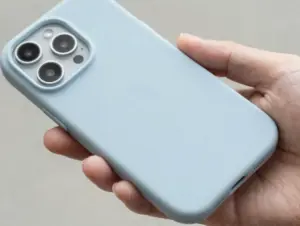
Silicone cases are the most challenging material for painting. The flexible, slightly tacky surface makes paint adhesion difficult, and the constant flexing during use causes paint to crack and peel relatively quickly. If using a silicone case, a flexible acrylic medium mixed into the paint can improve adhesion.
Leather and faux-leather cases accept paint well when a leather primer is applied first. Leather-specific acrylic paints, rather than standard craft acrylics, produce the best results on these surfaces.
Conclusion
The 8 DIY phone case design ideas with paint for an aesthetic touch covered in this guide represent a range of styles, skill levels, and creative directions, from the effortless simplicity of a pastel ombré gradient to the rich complexity of a Van Gogh-inspired swirl. What connects all eight is the same principle: thoughtful preparation, patient layering, and proper sealing transform an ordinary phone case into a genuinely personal accessory.
Actionable next steps:
- Select a clear or hard plastic case as the starting canvas.
- Clean the surface thoroughly with rubbing alcohol and allow it to dry completely.
- Choose one of the eight designs above based on skill level and available materials.
- Apply paint in thin coats, drying fully between each layer.
- Finish with two light coats of the appropriate sealer and allow a full 48-hour cure before use.
Starting with a simpler design such as the paint splatter or pastel gradient builds confidence and technique before moving on to more detailed work like line art or Van Gogh-style painting. The investment in materials is minimal, the creative reward is significant, and the result is a phone case that no one else in the world has.
References
[1] Diy Phone Cases Ideas – https://wonderfuldiy.com/diy-phone-cases-ideas/
[2] Trendy Diy Phone Cases – https://wonderfuldiy.com/trendy-diy-phone-cases/
[3] Watch – https://www.youtube.com/watch?v=dVDeBxfCak8
[4] Phone Case Painting Ideas – https://designconundrum.com/phone-case-painting-ideas/
[5] Diy Phone Case Ideas For Unique Personal Style – https://nerdbot.com/2025/10/21/diy-phone-case-ideas-for-unique-personal-style/
[6] Phone Case Painting Ideas – https://awesomestuff365.com/phone-case-painting-ideas/
[7] The Best Phone Case Painting Ideas 3 Unique Designs From Artistro – https://artistro.com/blogs/news/the-best-phone-case-painting-ideas-3-unique-designs-from-artistro
[8] Phone Case Diy – https://www.diytomake.com/phone-case-diy/
[9] Diy Phone Case Ideas – https://ideasforahappylife.com/diy-phone-case-ideas/
[10] Painted Phone Case – https://www.susieharrisblog.com/painted-phone-case/