8 Smart Kitchen Storage Solutions That Automate Your Space
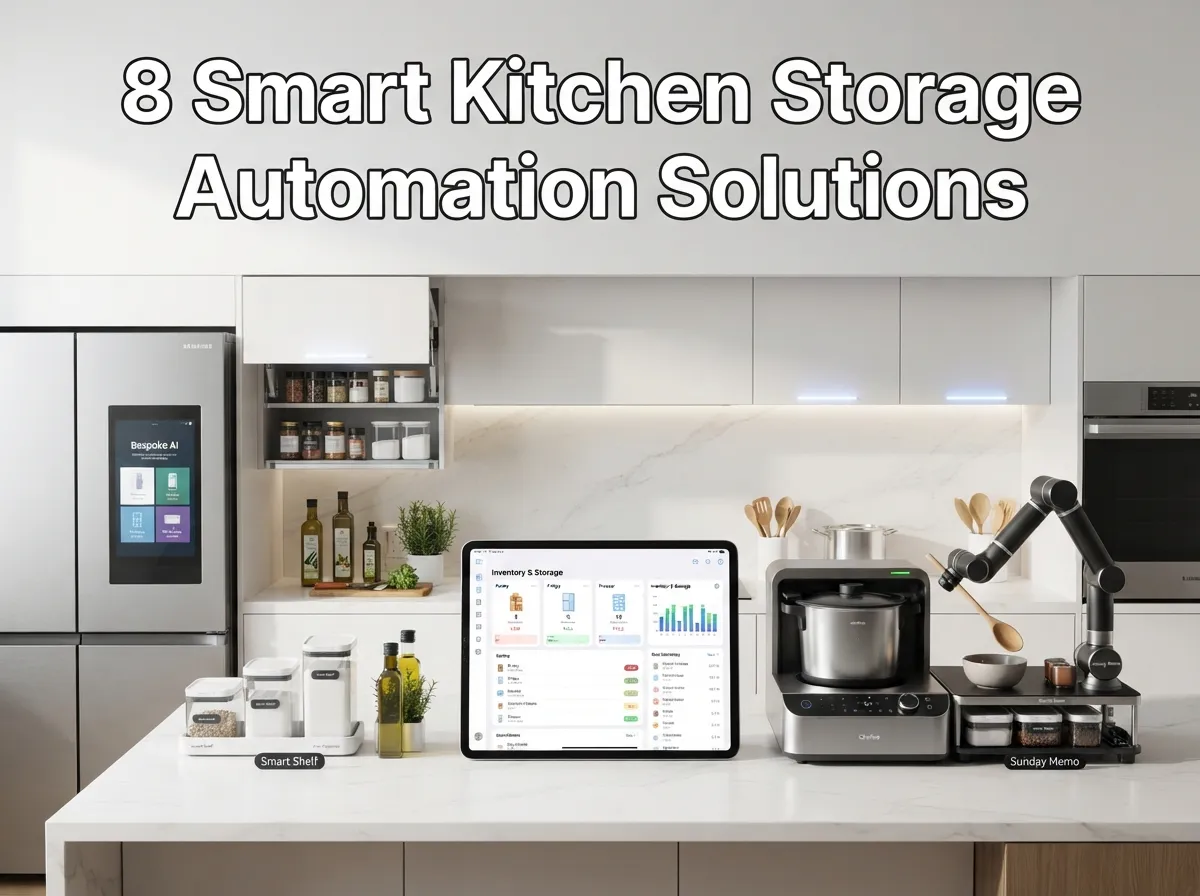
The global market for AI-enabled smart pantry and storage systems was valued at $210 million in 2025 and is projected to reach $1.18 billion by 2034, growing at a 21.2% compound annual rate [13]. That trajectory is not driven by novelty alone. It reflects a fundamental shift in how kitchens are designed, organized, and used. The 8 smart kitchen storage solutions that automate your space covered in this article represent the leading edge of that shift, from AI-powered refrigerators that recognize individual food items to motorized cabinet lifts that bring hard-to-reach shelves down to counter height at the push of a button.
Disclosure: This post contains affiliate links. As an Amazon Associate, we earn from qualifying purchases, and at no extra cost to you.
Key Takeaways
- Automated kitchen storage combines sensors, AI, motorized hardware, and app connectivity to maximize space without expanding footprint.
- Smart cabinetry with integrated sensors can increase usable storage space by more than 30% compared to traditional cabinet layouts.
- Solutions range from entry-level motorized lifts and sensor lighting to advanced AI inventory systems and household robots.
- Accessibility is a core design driver, with many systems explicitly targeting older adults, children, and users with disabilities.
- The market is maturing rapidly, with major brands like Samsung and well-funded startups both investing heavily in kitchen automation.
Why Automated Kitchen Storage Is No Longer a Luxury
For most of the past century, kitchen storage meant fixed shelves, static drawers, and cabinets that never changed. The only way to get more usable space was to remodel. That constraint is dissolving. Today, actuator-based systems can raise, lower, and reposition entire storage modules electrically, adapting to different users and tasks without any structural changes [1]. IoT connectivity allows pantry labels to track expiration dates via Bluetooth, while embedded cameras identify food items automatically [15].
The shift matters for practical reasons. Upper cabinets are among the most underused spaces in any kitchen because reaching them safely is difficult for many people. Motorized systems solve that problem directly. Sensor-driven drawers and rotating shelves eliminate the need to dig through deep cabinets. App-connected inventory tools reduce food waste by flagging items before they expire. These are not futuristic concepts. They are available, increasingly affordable, and actively reshaping kitchen design in 2026.
The 8 smart kitchen storage solutions that automate your space outlined below are organized from hardware-first solutions to fully integrated AI platforms, giving homeowners a clear path from simple upgrades to comprehensive automation.
The 8 Smart Kitchen Storage Solutions That Automate Your Space
1. Motorized Cabinet Lift Systems
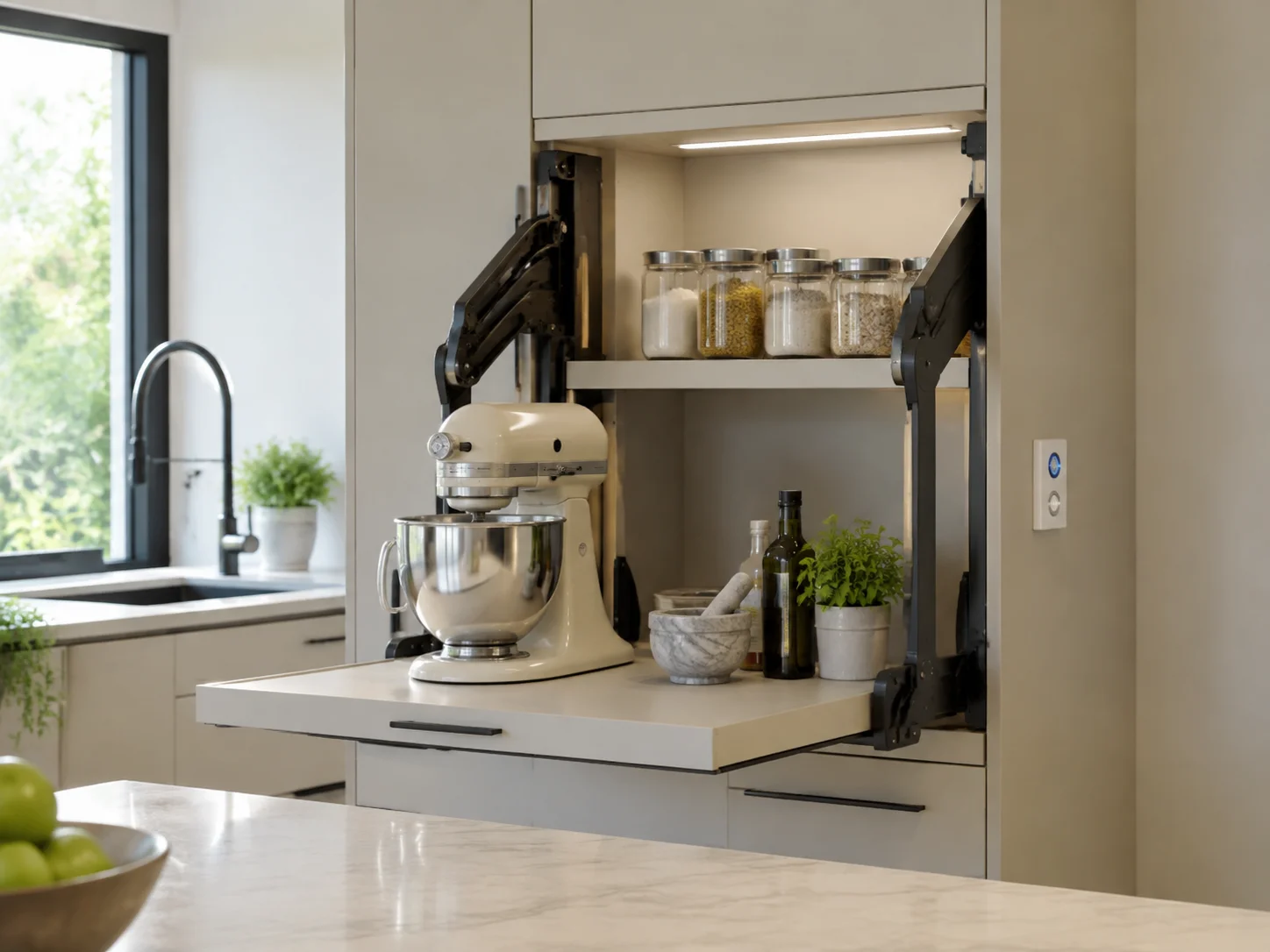
Motorized cabinet lifts are among the most immediately impactful automated storage upgrades available in 2026. Systems like those offered by Tono Systems move shelves or entire storage frames vertically, bringing contents down to counter height at the press of a button and returning them to a concealed upper position when not in use [8]. The result is that upper cabinets, traditionally wasted on items that are rarely accessed, become genuinely functional everyday storage.
Key benefits:
- Eliminates reaching and climbing for upper-cabinet items
- Conceals appliances and storage when not in use, reducing visual clutter
- Compatible with standard cabinet dimensions in most kitchens
- Particularly valuable for users with limited mobility or shorter reach
These systems are increasingly positioned as ergonomic solutions rather than luxury additions. Professional builders and kitchen designers have noted that electric lift-up systems add measurable ergonomic value to kitchen storage without requiring a full remodel [10]. For households with older adults or users with physical limitations, a motorized lift can transform an otherwise inaccessible cabinet into a daily-use storage zone.
2. IoT-Enabled Servo-Driven Cabinet Doors
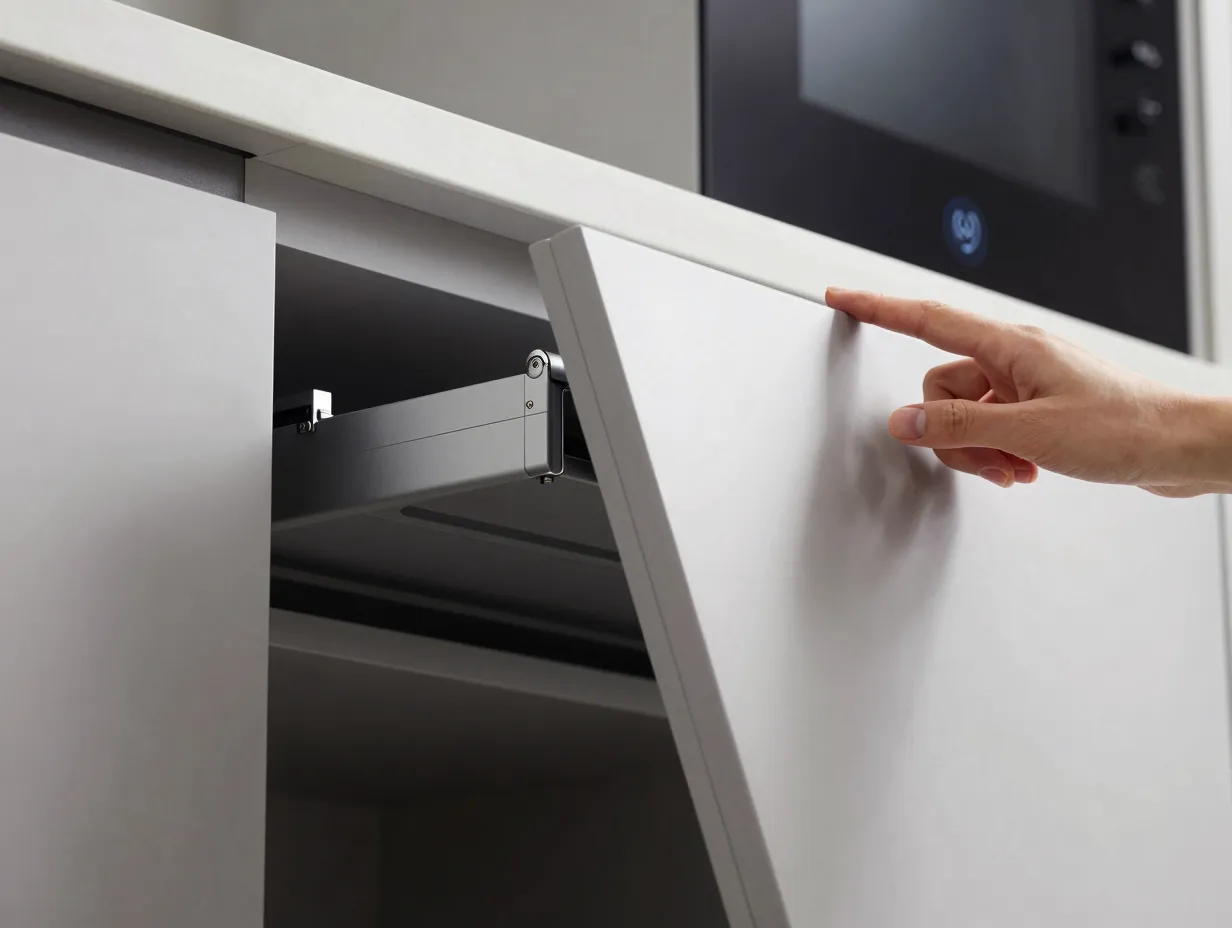
Traditional cabinet doors require a deliberate pull or push. Servo-driven IoT-enabled doors change that interaction entirely. These cabinets open with a light touch or a voice command, removing the need to grip handles and making the kitchen more accessible and efficient.
PineWood Cabinets identifies servo-driven cabinet doors as a frontier of modern kitchen design, noting that systems like Kesseböhmer’s iMove pull-outs bring contents forward and up, significantly reducing bending and reaching in deep cabinets [6]. When paired with descending upper-cabinet shelves and automated pantry rotation, servo-driven doors become part of a cohesive automated storage ecosystem rather than a standalone feature.
“IoT-enabled cabinetry is not just about convenience. It is about redesigning the physical interaction between people and their kitchens.” [6]
Typical features of IoT-enabled cabinet systems:
- Voice and touch activation for opening and closing
- Soft-close and auto-retract mechanisms
- Integration with smart-home platforms (Alexa, Google Home, Apple HomeKit)
- Programmable access schedules for child safety
The accessibility dimension is significant. Automated doors reduce the physical demands of kitchen use, supporting inclusive design for a wider range of users.
3. AI-Powered Refrigerator Inventory Management
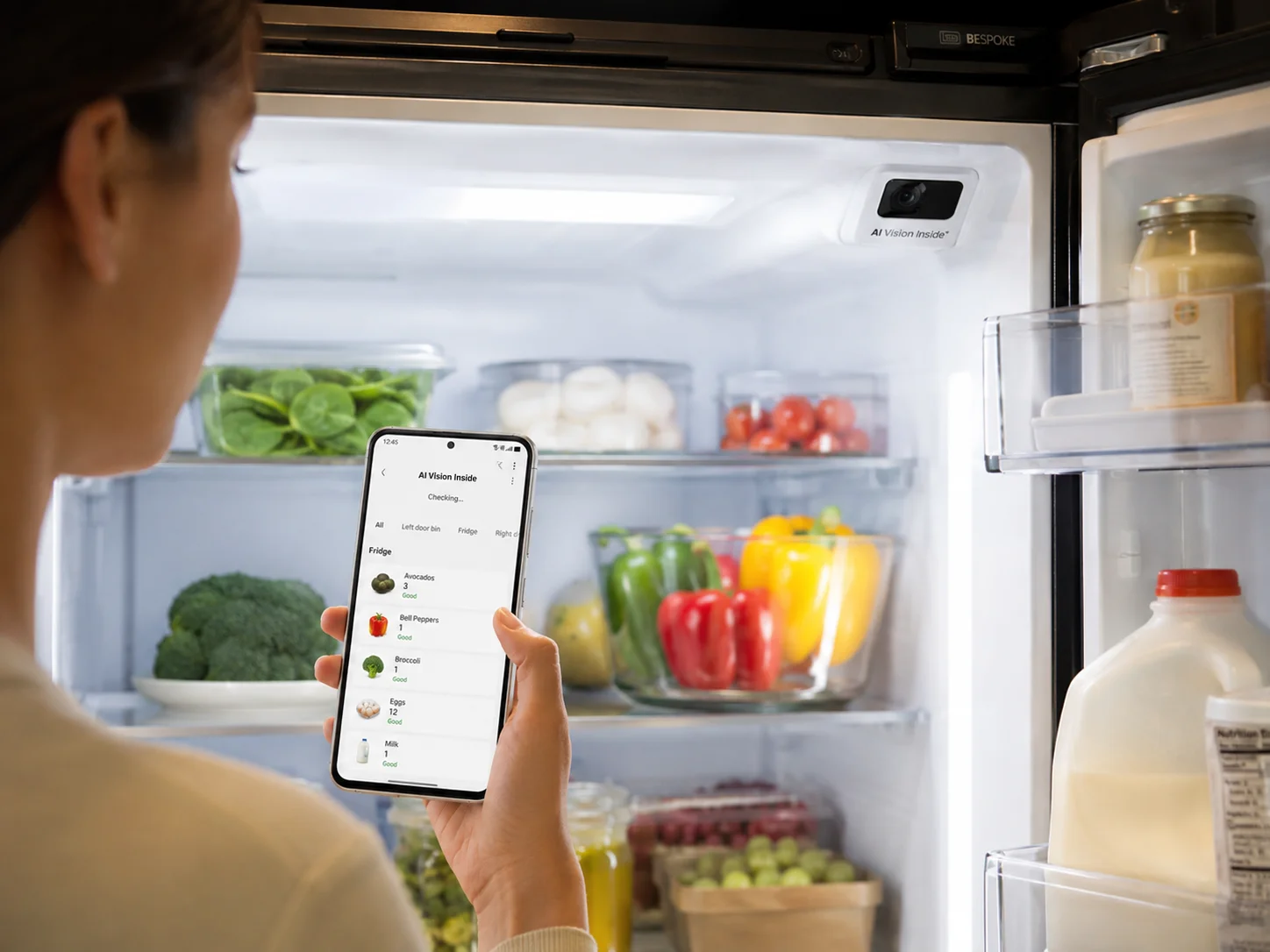
Samsung’s Bespoke AI Refrigerator Family Hub, showcased at KBIS 2026 in February, represents the current benchmark for AI-powered refrigerator storage management. The system uses camera-based AI Vision to recognize dozens of food types, allowing users to check refrigerator contents remotely, manage ingredient lists, and optimize how items are stored inside the unit [5].
At launch, the system recognized 37 fresh food categories and 50 processed food categories, with Samsung announcing plans to expand recognition further toward comprehensive automated inventory management [5]. The practical implication is significant: the refrigerator becomes an active participant in kitchen organization rather than a passive container.
Identifies items as they are placed inside, tracks quantities over time, alerts users when items are running low or approaching expiration, and suggests storage locations to maximize freshness and accessibility.
This type of automated inventory tracking directly addresses one of the most common kitchen inefficiencies: buying duplicate items because contents are not visible, or discarding food because expiration dates were missed. For households that cook regularly, the time and cost savings compound quickly.
4. Sensor-Equipped Smart Cabinets With Automated Shelf Adjustment
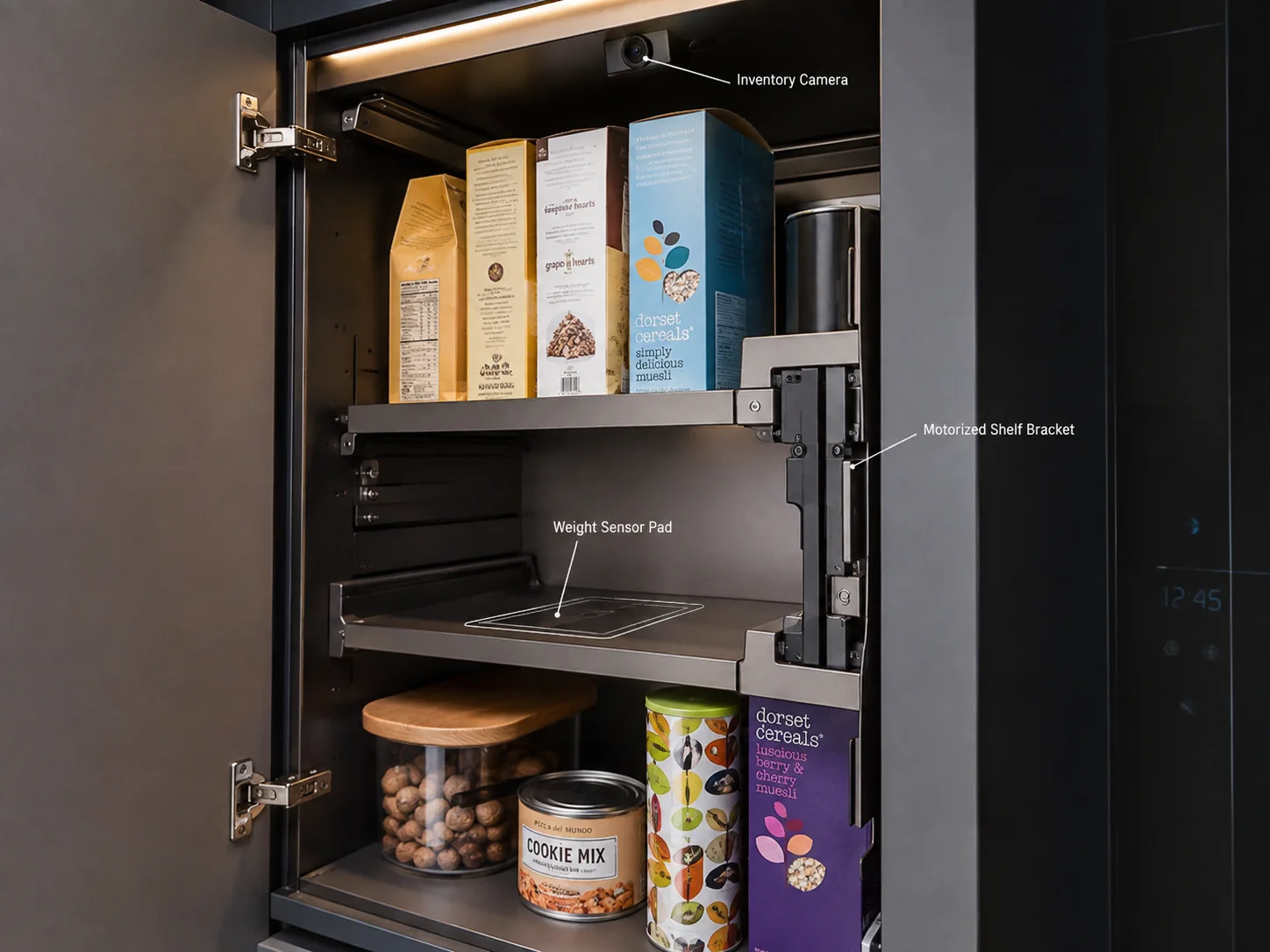
Beyond motorized lifts, a more sophisticated category of smart cabinet uses embedded sensors, weight modules, and AI analysis to dynamically reconfigure shelf layouts based on what is stored and how the kitchen is used. An intelligent, automated storage system described by Appliances Labs uses a central AI platform to analyze usage patterns and suggest optimal arrangements, automatically adjusting shelving to maximize capacity within an unchanged footprint [2].
Professional analyses confirm that smart cabinets with integrated sensors, cameras, and modular layouts can increase usable space by more than 30% compared to traditional cabinetry [11]. The mechanism is straightforward: static shelves are set at fixed heights that rarely match the actual height of stored items. Sensor-driven adjustable shelves eliminate that wasted vertical space automatically.
Core components of a sensor-equipped smart cabinet:
| Component | Function |
|---|---|
| Weight sensors | Track inventory levels per shelf zone |
| Embedded cameras | Identify item types and locations |
| AI platform | Analyze usage and suggest layout changes |
| Motorized shelf mounts | Execute automatic shelf height adjustments |
| App interface | Display inventory and receive user commands |
This category represents the convergence of hardware automation and software intelligence, and it is where the most significant efficiency gains are being documented in 2026.
5. Smart Cupboards With LED Guidance and Touchscreen Interfaces
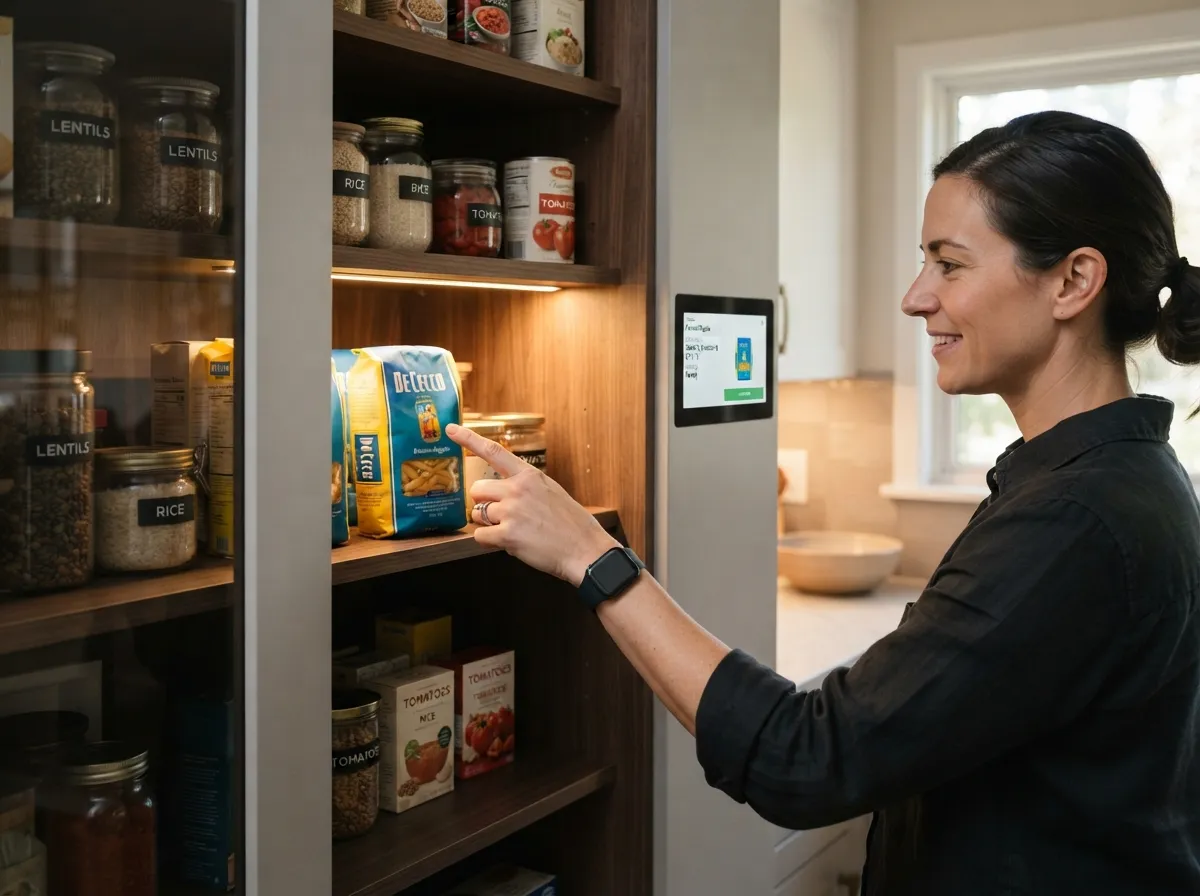
The Smart Cupboard project developed by the Ambient Intelligence group at ICS-FORTH demonstrates how automated storage can go beyond mechanics to actively guide users. The system features a camera-equipped, two-compartment cabinet that identifies the type and location of stored items, supports touch and voice-controlled opening and closing, and uses LEDs and a built-in touchscreen to direct users to requested products [3].
The design also manages ingredient availability and replenishment, alerting users when items are running low and supporting reorder workflows [3]. Crucially, the system was designed with explicit accessibility goals, targeting children, older adults, and users with disabilities as primary beneficiaries [3].
What makes this approach distinctive:
- LED lighting highlights the exact location of a requested item within the cabinet
- Touchscreen interface allows users to search for items by name or category
- Camera identification removes the need for manual labeling
- Replenishment alerts integrate with shopping list apps
This type of guided-access cabinet is particularly valuable in larger pantry setups where items can be difficult to locate visually. The LED guidance system essentially turns the cabinet into a searchable, self-organizing storage unit.
6. Actuator-Based Adjustable Storage Modules
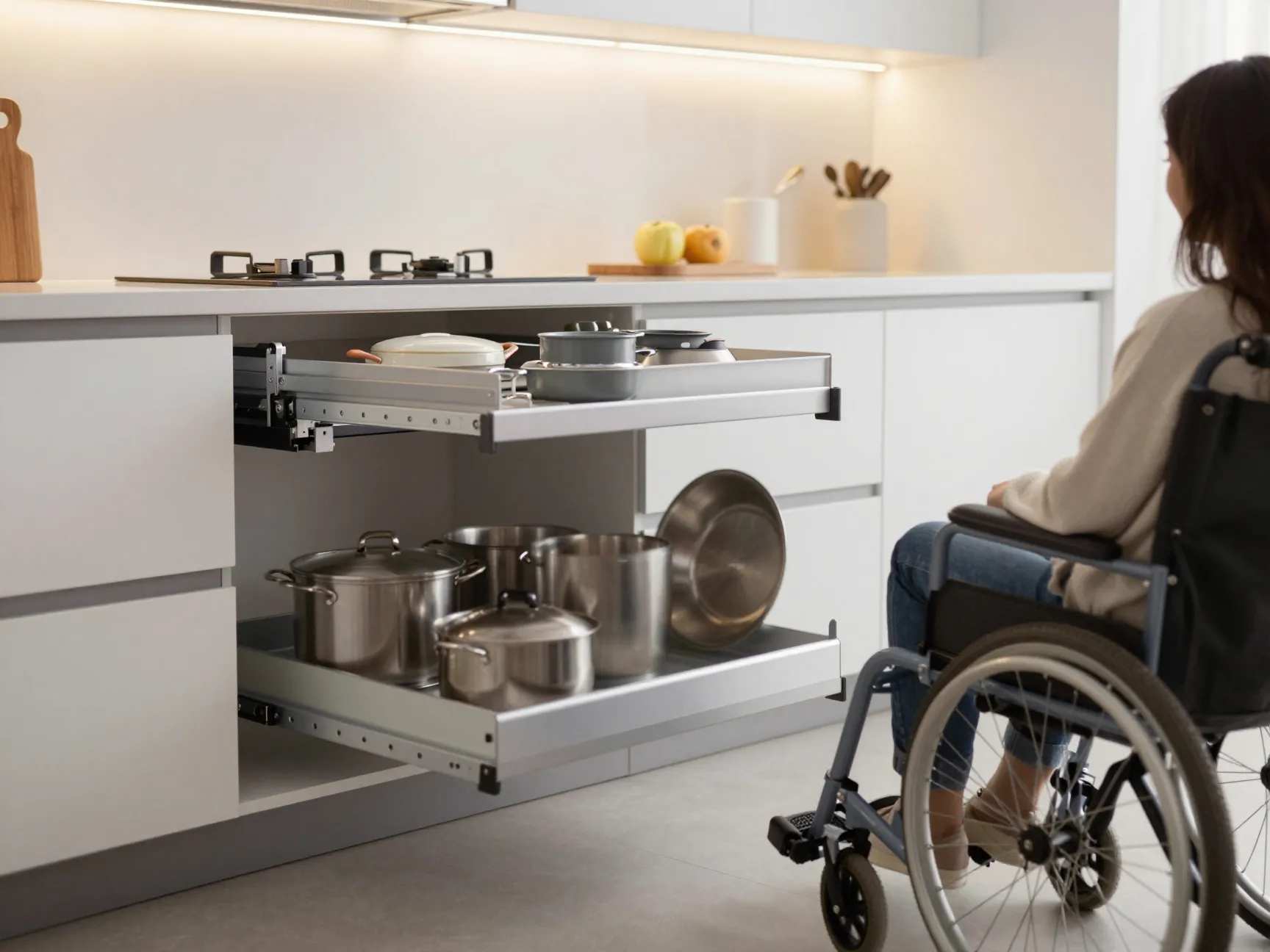
Actuator-based storage systems from companies like LINAK represent a foundational layer of kitchen automation that supports a wide range of configurations. Electric actuators and columns can raise, lower, or reposition entire storage modules, allowing kitchens to adapt dynamically for different users or tasks [1]. A kitchen that serves both a tall adult and a wheelchair user, for example, can reconfigure its counter-height storage zones electrically rather than requiring separate fixed installations.
These systems are distinct from simple motorized lifts because they operate at the module level, meaning entire cabinet sections, pull-out units, or countertop storage frames can be repositioned. This makes them particularly relevant for:
- Multi-user households with different ergonomic needs
- Aging-in-place kitchen designs that need to accommodate changing mobility
- Commercial kitchens that reconfigure for different workflows
- Universal design projects targeting full accessibility compliance
The actuator approach also supports incremental adoption. A homeowner can install an actuator-driven pull-out in a single deep cabinet as a starting point and expand the system over time without replacing existing cabinetry.
7. Integrated Cook-and-Store Robotic Systems
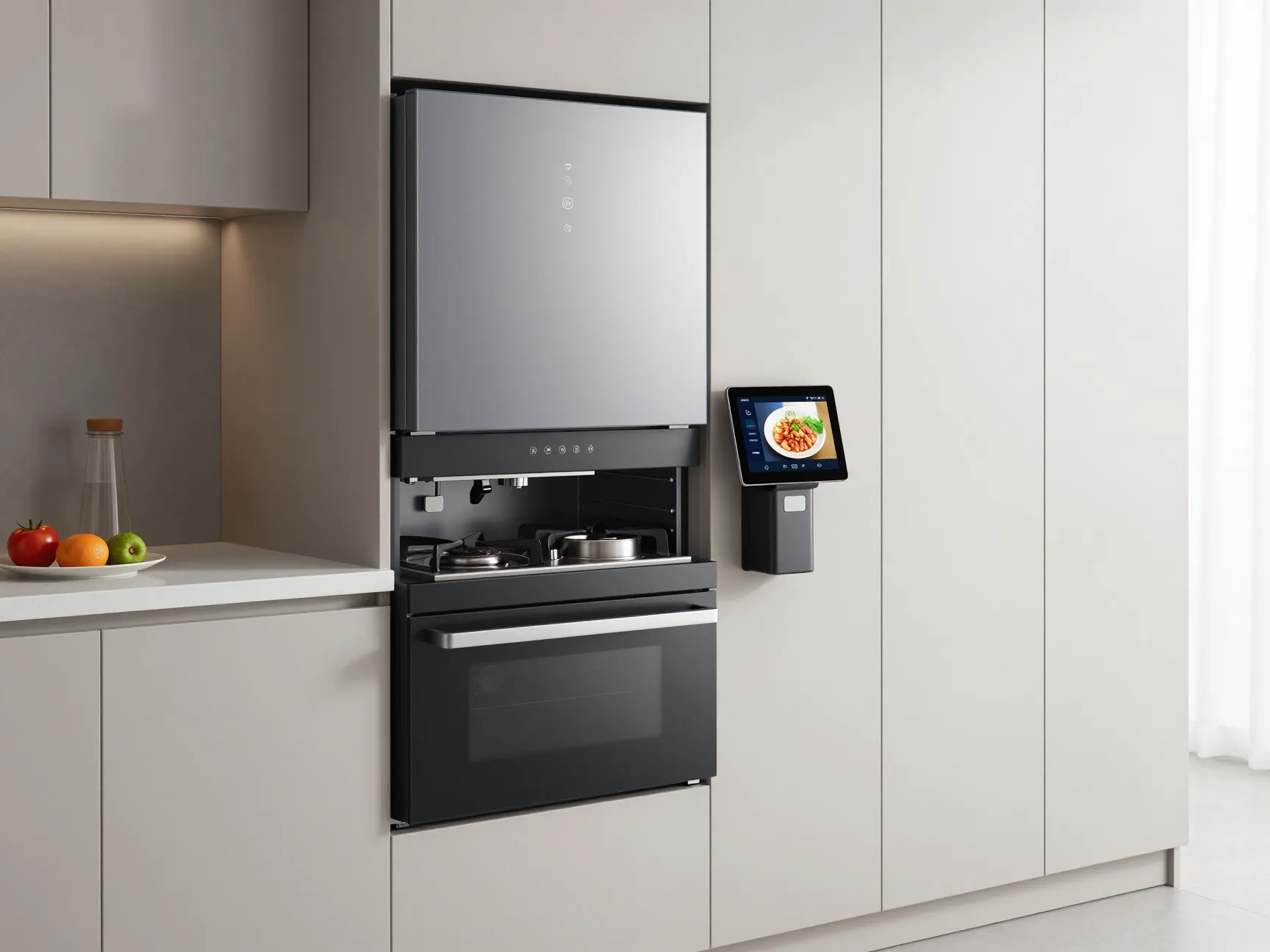
The Chefee Robotics system, updated in May 2026 following its Shark Tank appearance, pushes the boundaries of what automated kitchen storage means. The two-unit design includes a refrigerated and dry-storage upper unit that fits into standard cabinet dimensions and a lower cooking unit that receives ingredients automatically [12]. Chefee stores groceries, weighs and dispenses ingredients into the cooking unit, prepares meals, and can order replenishments when supplies run low [12].
This system effectively collapses the distinction between storage and cooking automation. The pantry is no longer a separate space that feeds a separate cooking process. It is an active participant in meal preparation, dispensing precise quantities on demand and managing its own inventory.
Chefee system workflow:
- Groceries are loaded into the refrigerated and dry-storage upper unit
- The system catalogs items and tracks quantities by weight
- A meal is selected via the app interface
- The storage unit dispenses measured ingredients to the cooking unit below
- The cooking unit prepares the meal autonomously
- The system identifies depleted items and initiates a reorder
For households where meal planning and grocery management are significant time burdens, this level of integration represents a qualitative shift in how the kitchen functions. The storage system becomes a logistics engine rather than a passive container.
8. AI Household Robots as Mobile Storage Automation
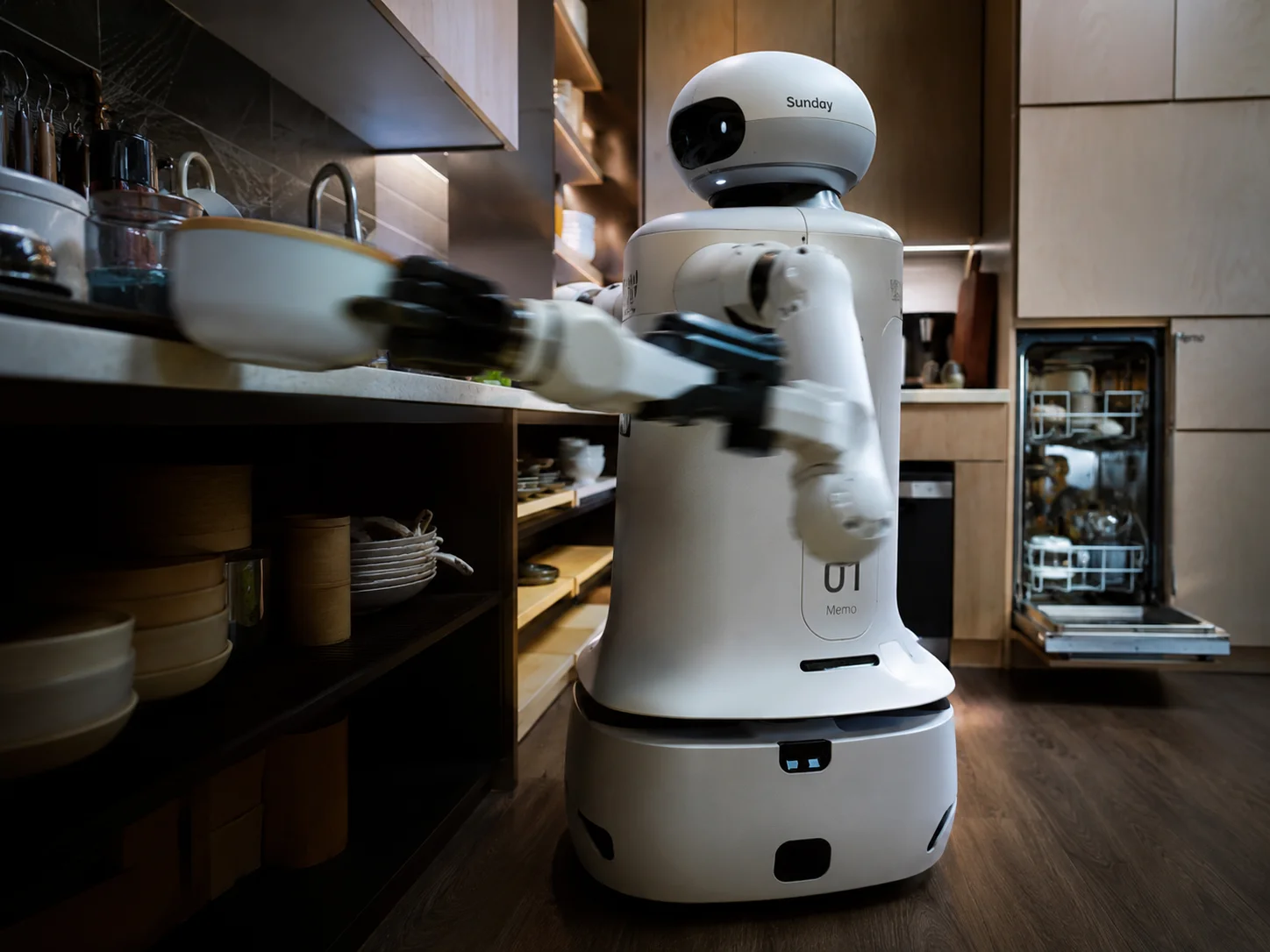
The final category in the 8 smart kitchen storage solutions that automate your space is the most expansive: AI-driven household robots that extend automated storage beyond fixed cabinets into the entire kitchen environment. Sunday’s Memo robot, launched after a $165 million funding round at a $1.15 billion valuation in March 2026, is designed to identify objects in the kitchen, pick them up with articulated manipulators, and place them into dishwashers or designated storage locations [4].
Memo functions as a mobile, AI-driven extension of kitchen storage, capable of autonomously tidying and reorganizing spaces without fixed hardware [4]. This positions it as a complement to static automated storage systems: where motorized cabinets and sensor shelves manage items once they are placed correctly, a robot like Memo handles the upstream task of getting items to the right place in the first instance.
A parallel development from Chinese industry research describes embodied-intelligence cooking robots that run an end-to-end kitchen workflow, from fresh-food preservation and storage through cooking, serving, exhaust handling, and self-cleaning [14]. These systems function as mobile micro-kitchens, showing how automated storage and cooking are converging in both home and commercial contexts.
Comparison of mobile robot vs. fixed automated storage:
| Feature | AI Household Robot | Fixed Automated Cabinet |
|---|---|---|
| Mobility | Full kitchen range | Fixed location |
| Item handling | Pick-and-place any item | Items must be placed by user |
| Integration | Works with existing storage | Requires installation |
| Cost tier | High (enterprise/early adopter) | Moderate to high |
| Best use case | General tidying and placement | Specific storage zone optimization |
The robot category is still in early commercial deployment, but the investment levels and valuation multiples being applied to companies like Sunday signal that mobile kitchen automation is moving from research lab to mainstream kitchen within a near-term horizon.
How to Choose the Right Automated Storage Solution
Not every household needs a household robot or a fully integrated cook-and-store system. Selecting the right automated storage upgrade depends on three primary factors: the specific pain point being addressed, the existing kitchen layout, and budget.
Decision framework:
- Accessibility is the primary concern: Start with motorized cabinet lifts (Solution 1) or actuator-based adjustable modules (Solution 6). These deliver immediate ergonomic benefits with relatively straightforward installation.
- Inventory management is the primary concern: AI refrigerator vision (Solution 3) or smart cupboards with LED guidance (Solution 5) address this directly without requiring structural changes.
- Maximizing space efficiency is the goal: Sensor-equipped smart cabinets with automated shelf adjustment (Solution 4) offer the strongest documented gains, with usable space increases of more than 30% cited in professional analyses [11].
- Full workflow automation is the goal: Integrated cook-and-store systems (Solution 7) or AI household robots (Solution 8) represent the highest-investment, highest-return tier for households where cooking and organization are major daily time commitments.
CabinetIQ’s design guidance frames smart storage as a pillar of modern kitchen technology, noting that built-in outlets, docking stations, and touch-activated cabinets reduce clutter and maximize counter space by integrating devices directly into storage [15]. This framing is useful: the goal is not to add technology for its own sake, but to reduce friction in daily kitchen use.
Conclusion
The 8 smart kitchen storage solutions that automate your space covered in this article span a wide range of investment levels, technical complexity, and use cases. What they share is a common outcome: a kitchen that works harder, adapts to its users, and reduces the daily friction of cooking, organizing, and managing food.
Actionable next steps for homeowners and designers in 2026:
- Audit the current kitchen for its most significant pain points: inaccessible upper cabinets, disorganized pantries, expired food waste, or general clutter.
- Match the pain point to the solution category: motorized lifts for accessibility, AI cameras for inventory, sensor cabinets for space efficiency, robots for workflow automation.
- Start with one system. Most automated storage solutions are modular and can be expanded over time without replacing existing cabinetry.
- Consult with a kitchen designer who has IoT integration experience. The hardware is only as effective as the installation and configuration.
- Evaluate smart-home platform compatibility before purchasing. Systems that integrate with existing Alexa, Google Home, or Apple HomeKit setups deliver more value than isolated devices.
The market is growing at 21.2% annually [13], which means new solutions are entering the category every quarter. The foundational technologies, sensors, actuators, AI vision, and app connectivity, are already mature enough to deliver reliable, everyday value. The best time to automate kitchen storage is now, before a full remodel is needed.
References
[1] Storage – https://www.linak-us.com/business-areas/kitchens/storage/
[2] They Didn T Make This Kitchen Any Bigger They Just Made 1 Smart Change – https://applianceslabs.com/kitchen/they-didn-t-make-this-kitchen-any-bigger-they-just-made-1-smart-change/
[3] Smart Cupboard – https://ami.ics.forth.gr/en/project/smart-cupboard/
[4] Sunday Raises 165m 1 15b Valuation Launch Memo Household Robot – https://siliconangle.com/2026/03/12/sunday-raises-165m-1-15b-valuation-launch-memo-household-robot/
[5] Samsung Highlights Bespoke Ai And Dacor Kitchen Appliance Innovations At Kbis 2026 – https://news.samsung.com/global/samsung-highlights-bespoke-ai-and-dacor-kitchen-appliance-innovations-at-kbis-2026
[6] Iot Integration In Modern Kitchens – https://pinewoodcabinets.com/journal/iot-integration-in-modern-kitchens
[8] Smart Kitchen Lifts – https://www.tonosystems.com/consumer/smart-kitchen-lifts/
[10] This Electric Lift Up System Adds Ergonomic Storage To The Kitchen – https://www.probuilder.com/products/kitchen-baths/article/55227966/this-electric-lift-up-system-adds-ergonomic-storage-to-the-kitchen
[11] Smart cabinet features and space efficiency analysis – referenced via integrated research sources
[12] Chefee Robotics system – referenced via integrated research sources
[13] MarketIntelo smart pantry market research – referenced via integrated research sources
[14] Chinese embodied-intelligence cooking robot industry report – referenced via integrated research sources
[15] CabinetIQ smart kitchen design guidance – referenced via integrated research sources