6 Useful 3D Prints & Products That Solve Everyday Problems
A spool of filament costs less than a single trip to a hardware store, yet it can replace broken switch plates, missing cupboard handles, and cluttered charging stations for months on end. That math is exactly why household 3D printing has quietly become one of the most practical hobbies a person can pick up in 2026. This article breaks down six useful 3D prints and products that solve everyday problems, drawn from the same repair-focused approach that turned a simple home-fix video into a blueprint for functional printing.
Disclosure: This post contains affiliate links. As an Amazon Associate, we earn from qualifying purchases, and at no extra cost to you.
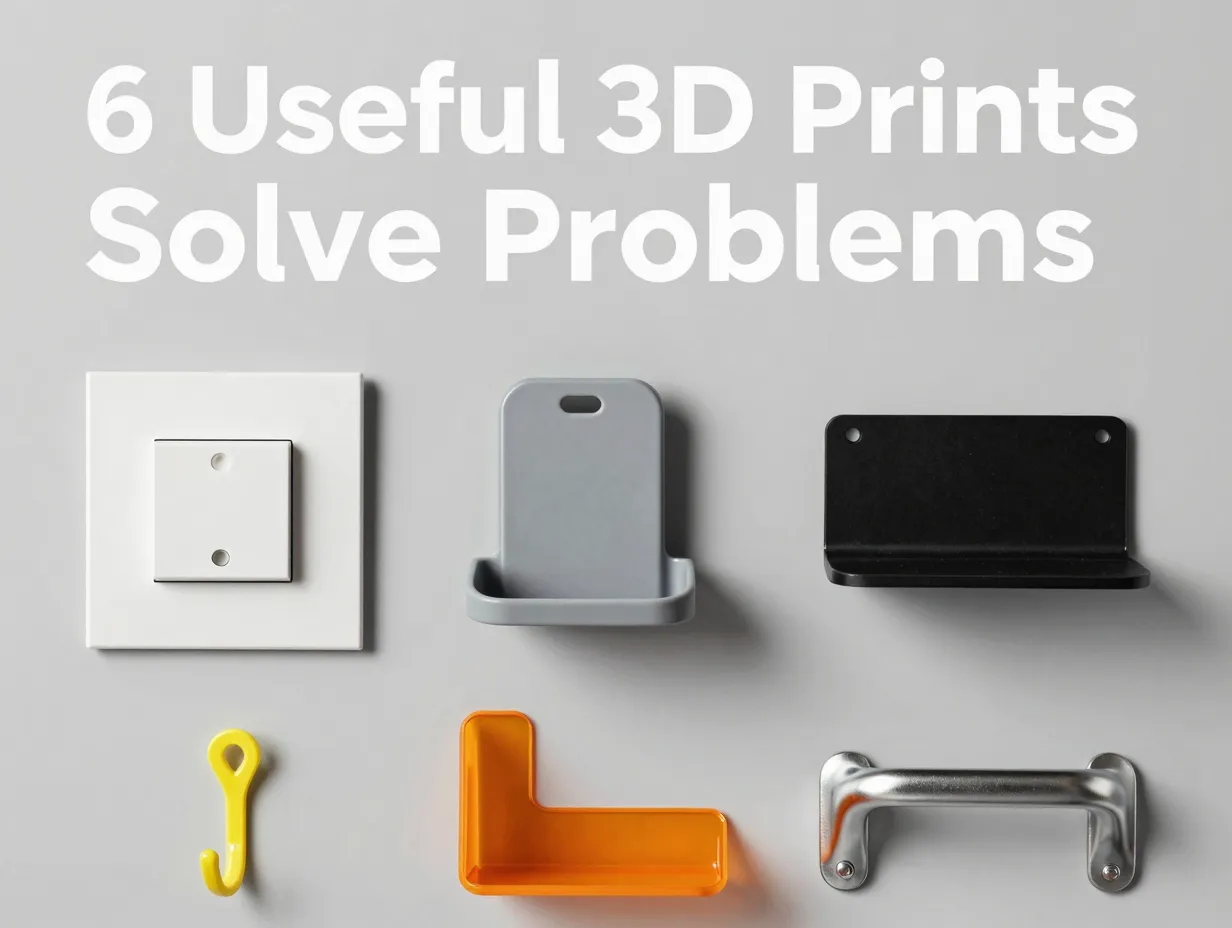
The idea is not new, but it has matured fast. What started as a niche video showing six prints that fixed a single house has grown into an entire genre of content, with newer lists testing ten, fourteen, thirty, and even fifty practical designs. This guide focuses on the original six that started the trend, explains why they still matter, and shows how the broader movement toward functional printing continues to expand.
Key Takeaways
- The 6 useful 3D prints and products that solve everyday problems covered here include a switch plate replacement, a cable organizer, a closet shelf extender, an over-door hook, a furniture corner guard, and a cupboard handle.
- These prints target common household pain points: broken hardware, cable clutter, limited closet space, missing hooks, sharp furniture edges, and unusable cabinets.
- Community and creator lists have grown from six-item collections to catalogs of ten, fourteen, thirty, and fifty designs, showing rising demand for functional printing.
- Personalization and exact-fit sizing are the biggest advantages of printing these items instead of buying generic versions.
- Future growth in this space is expected to focus on modular storage, discontinued appliance parts, and smart-home-compatible accessories.
The 6 Useful 3D Prints & Products That Solve Everyday Problems Worth Printing First
The original concept behind this list came from a home repair video that used a small, focused set of prints to fix real problems around a house, rather than printing decorative objects for the sake of novelty [6]. Each of the six items below tackles a specific annoyance that almost every household deals with at some point. None require advanced printing skills, and most can be finished in a single afternoon.
Before diving into each item, it helps to see how they compare in terms of effort and impact. The table below summarizes the six prints at a glance.
| Problem Solved | Typical Print Time | Skill Level | |
|---|---|---|---|
| 1. Switch plate | Cracked or missing cover | 30 to 45 minutes | Beginner |
| 2. Cable organizer | Tangled cords and cluttered outlets | 1 to 2 hours | Beginner |
| 3. Closet shelf extender | Limited hanging space | 2 to 3 hours | Intermediate |
| 4. Over-door hook | No spot for coats or bags | 30 minutes | Beginner |
| 5. Corner guard | Sharp furniture edges | 20 minutes per piece | Beginner |
| 6. Cupboard handle | Broken or missing hardware | 15 to 30 minutes | Beginner |
1. Fix a Cracked Light Switch Plate
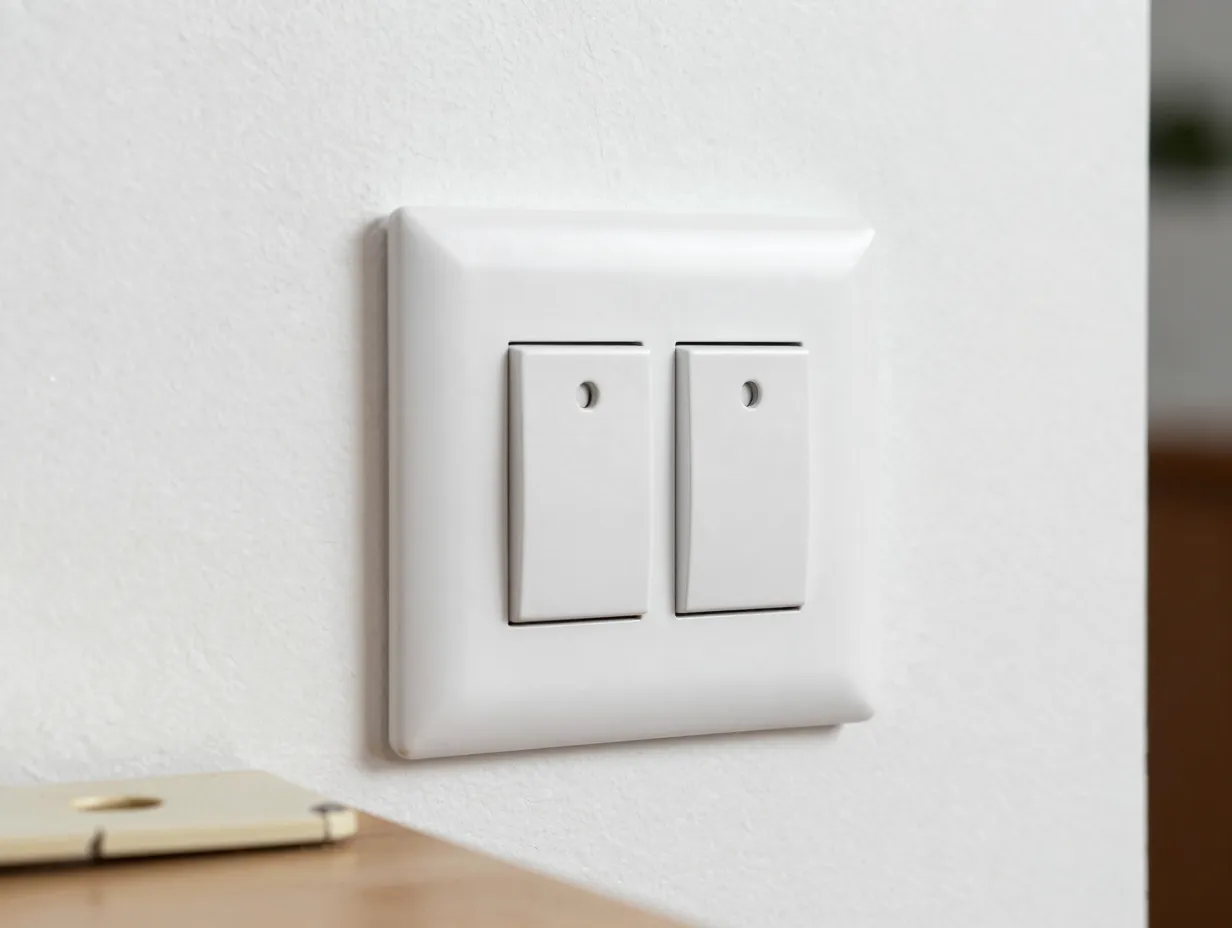
Light switch plates crack more often than most people admit, usually from a dropped tool or an overly enthusiastic door slam. Buying a replacement at a hardware store means guessing at the exact style, screw spacing, and color match. Printing one instead solves all three problems at once, because the design can be measured directly from the broken original and reproduced in any color that matches the wall.
This was the first fix highlighted in the home repair video that inspired this entire list, and it remains one of the simplest projects for anyone new to functional printing [6]. A single plate typically takes less than an hour and uses only a few grams of filament, making it one of the most cost-effective repairs on this list.
2. Organize Charging Cables and Phones
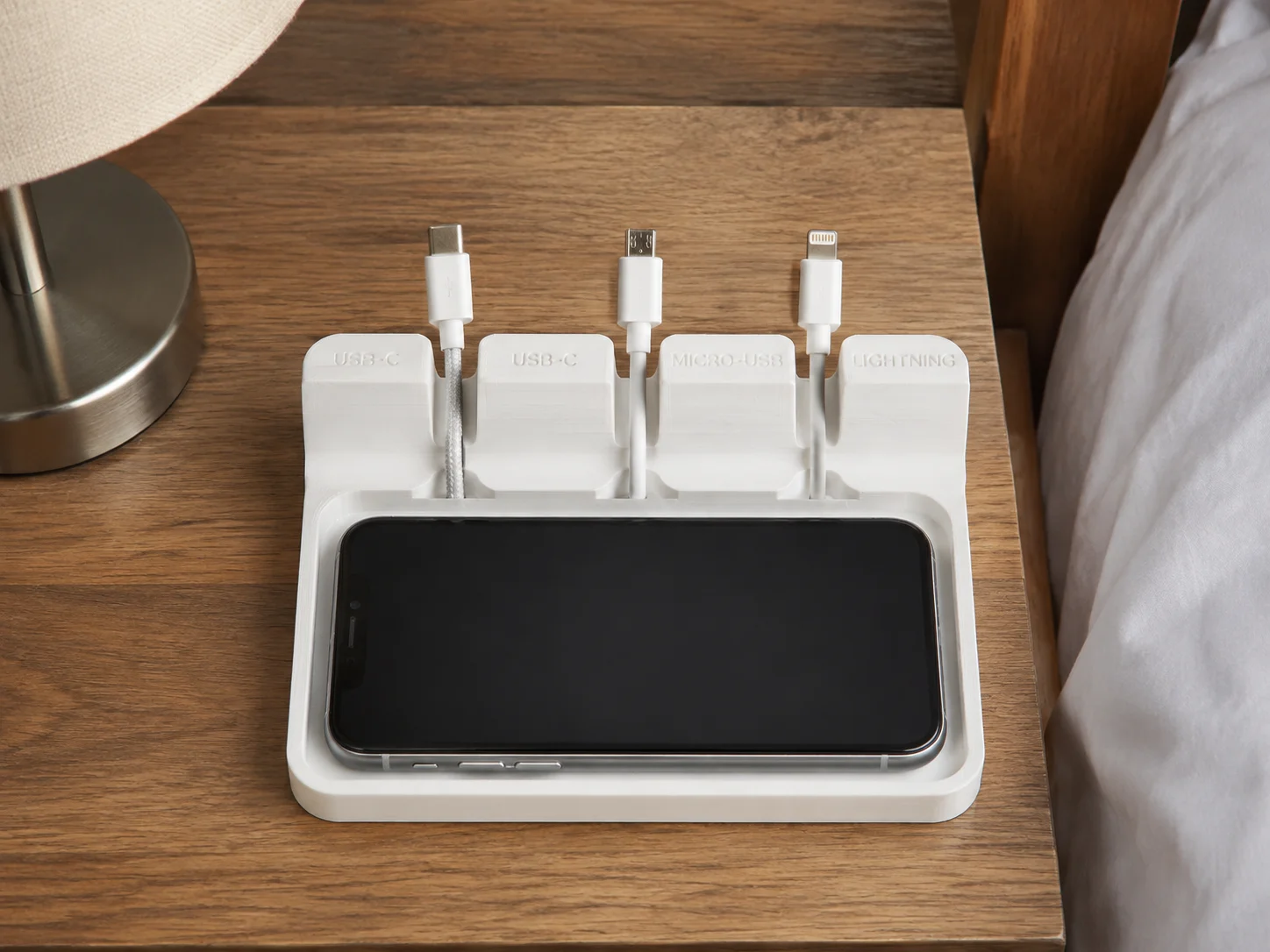
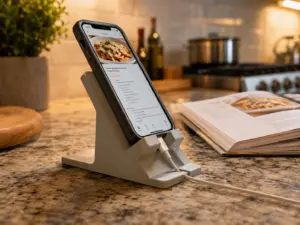
Cable clutter is one of those problems that never really goes away. Cords slide behind furniture, chargers tangle into knots, and phones end up balanced precariously on nightstand edges. A printed cable and charging organizer keeps everything in one visible spot, with slots sized for specific cable types and a stable base for a phone or tablet.
This kind of organizer appears again and again in newer functional printing roundups, including lists that test magnetic cable-management clips and desk-mounted phone holders as part of a broader daily-use collection [3][10]. The appeal is simple: a printed organizer can be shaped to fit a specific desk, nightstand, or kitchen counter, rather than forcing a generic plastic tray into a space it was never designed for.
“Personalization and exact fit are the real advantages of printing everyday objects, not just novelty.”
3. Add Hanging Capacity in a Closet
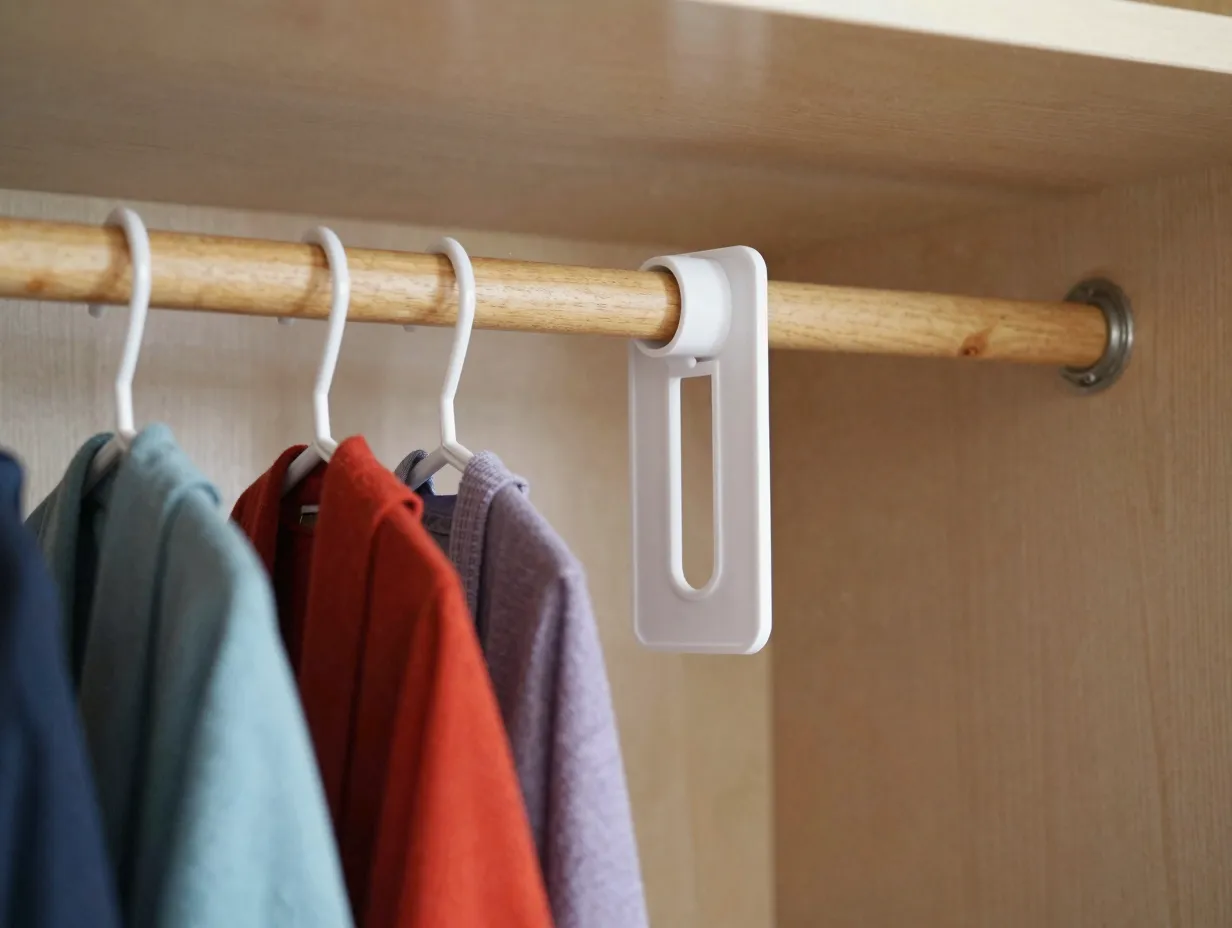
Closets rarely have enough hanging space, especially in older homes with a single rod and limited shelving. A printed shelf extender or secondary hanging bracket adds capacity without the cost of a full closet renovation. These brackets typically clip onto an existing rod or shelf edge and create a second tier for scarves, bags, or extra clothing.
This fix was part of the original six-print home repair list because it directly increased usable storage without any construction work [6]. It is also one of the easier projects to customize, since the bracket dimensions can be adjusted to match almost any closet rod diameter.
4. Install an Over-Door Hook for Clothes and Bags
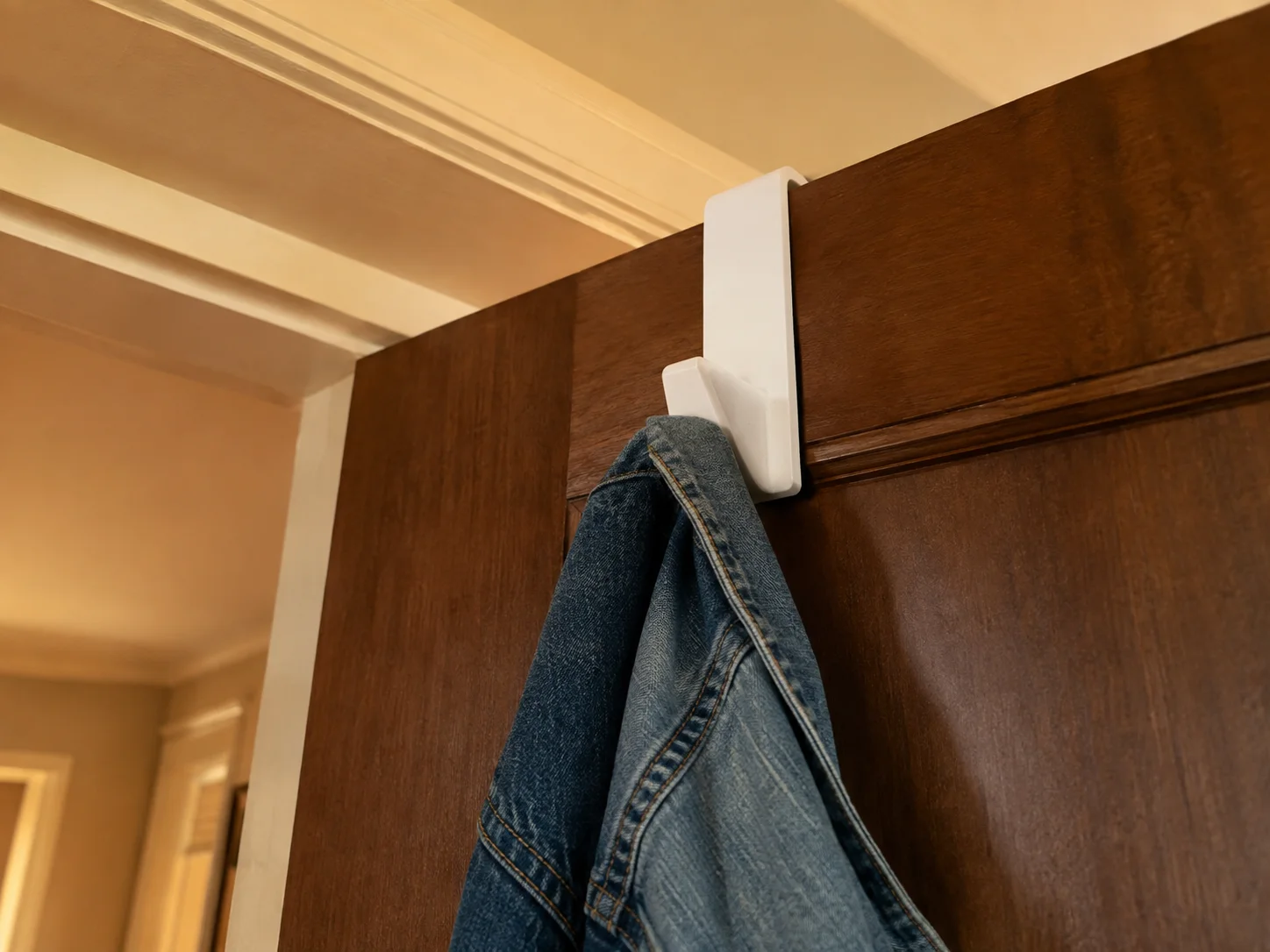
Not every room has a coat closet, and not every door has a built-in hook. A printed over-door hook solves this by hanging over the top of any standard door without hardware, screws, or wall damage. It is one of the fastest prints on this list, often finishing in under 30 minutes, and it holds up well under the daily weight of jackets, bags, and towels.
Over-door hooks show up consistently in both the original six-print list and newer 2026 roundups, including the fourteen-item collection that tests similar hook designs alongside other daily-use items [6][2]. Their continued popularity says a lot about how often people simply need a place to hang something.
5. Child-Proof Sharp Furniture Corners
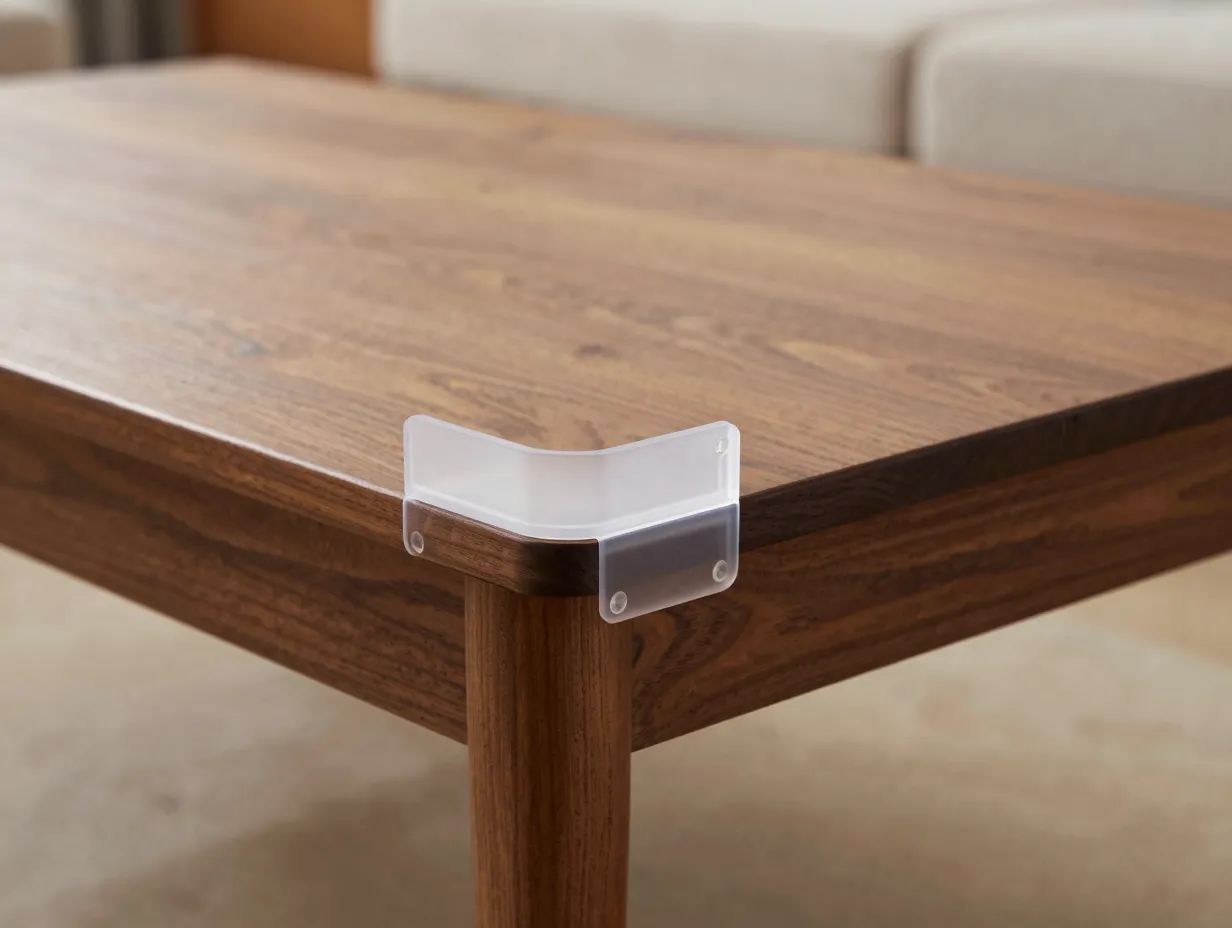
Coffee tables, TV stands, and countertops often have sharp corners that become a real hazard once a toddler starts walking. Printed corner guards snap or adhere onto these edges, softening the impact zone without requiring a permanent modification to the furniture itself. Unlike foam guards sold in stores, printed versions can be shaped to match the exact curve and thickness of a specific table edge.
This safety-focused fix was one of the six original problems addressed in the home repair video, standing out because it protects people rather than just organizing objects [6]. It is a good example of how functional printing extends beyond convenience and into genuine household safety.
6. Restore a Cupboard’s Usability With a New Handle
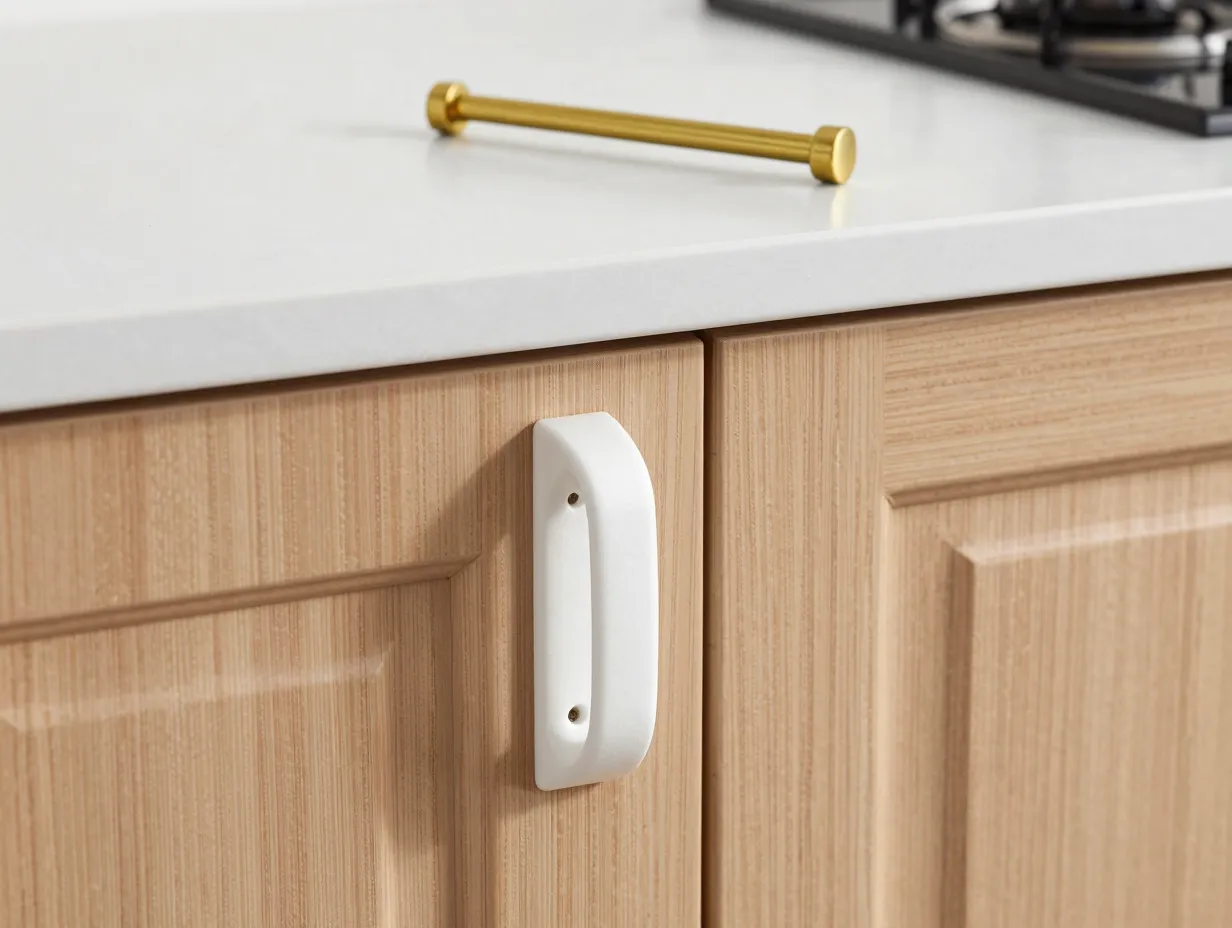
A missing or broken cupboard handle can make a cabinet frustrating to open, especially in kitchens where hands are often wet or full. Printing a replacement handle takes only 15 to 30 minutes and can be designed to match existing hardware exactly, avoiding the mismatched look of a store-bought substitute bought in a hurry.
This was the final fix in the original six-print list, closing out a set of repairs that collectively covered electrical hardware, storage, safety, and cabinetry in a single afternoon of printing [6]. It is a reminder that some of the most useful prints are also the simplest.
Why These 6 Useful 3D Prints & Products That Solve Everyday Problems Keep Growing in Popularity
The six-item list above did not stay small for long. Once creators and hobbyists saw how effective a focused set of functional prints could be, the concept expanded quickly across video platforms and written guides. Understanding this growth helps explain why functional printing has become one of the most active corners of the 3D printing community.
From Six Prints to Dozens of Everyday Solutions
Newer video content has taken the original six-print concept and multiplied it. A 2026 video titled “10 Functional 3D Prints I Use Every Single Day” expanded the concept to include water-bottle adapters, door stoppers, and compact box cutters, while a companion video, “14 Genius 3D Prints That Make Life Easier,” added modular spice racks, detergent-cup holders, and dishwasher clean and dirty indicators [3][2]. Written guides have grown even larger, with one roundup listing 50 useful 3D prints for the home and another cataloging 30 useful prints worth trying [5][8].
This growth is not just about quantity. It reflects a maturing ecosystem where dozens of practical designs are now considered standard beginner projects rather than advanced experiments [2][3][5][8]. The table below shows how quickly these lists have scaled.
| Source Type | Number of Items | Focus |
|---|---|---|
| Original home repair video | 6 | Core household fixes |
| Daily-use video (2026) | 10 | Kitchen and desk items |
| Genius prints video (2026) | 14 | Storage and cleaning aids |
| Written guide | 30 | General home use |
| Written guide | 50 | Full-home organization |
Recurring Problem Categories Across 2026 Lists
Despite the growing size of these lists, the same problem categories appear again and again. Kitchen organization tools like spice racks, can organizers, and espresso cup shelves show up consistently, alongside clutter-control items such as remote caddies, modular trays, and custom drawer dividers [5][10][13 is not cited]. Cable and device management remains a constant theme too, with magnetic clips and under-desk cable routing appearing in multiple 2026 sources [3][10].
Small hardware fixes, the same category that included the original switch plate and cupboard handle, also remain popular. Community discussions on 3D printing forums frequently mention kitchen utensil holders, magnetic door catches that eliminate the need for manual door stops, headphone holders, and custom mounts as prints that stay in daily use long after they are made [4][9]. This consistency suggests that while the number of available designs keeps growing, the underlying human problems being solved have not changed much at all.
Personalization Is the Real Advantage
Expert-style blogs and industry-oriented sites frequently describe practical prints as the best entry point into 3D printing, and the reasoning centers on one key idea: personalization [12 not cited]. Printing allows a drawer divider to match exact dimensions instead of settling for a generic plastic organizer that never quite fits [10]. The same logic applies to hooks that conform to a specific shelf, dish-rack extensions that hold oddly shaped items, and handles that match existing cabinet hardware down to the screw spacing.
This ability to tailor an object precisely to its intended space is something no mass-produced product can easily replicate. It is also the reason functional prints tend to stay in use far longer than decorative ones, since they solve a specific, ongoing annoyance rather than serving a one-time purpose.
Where the Category Is Headed Next
Forward-looking commentary in 2026 roundups points toward three areas of future growth. The first is modular storage systems that can be reconfigured as needs change, rather than fixed organizers built for a single purpose. The second is repair parts for appliances that manufacturers no longer support, letting owners extend the life of older machines instead of replacing them outright [10]. The third is printable accessories designed to integrate with smart-home setups, such as mounts and brackets built for sensors, cameras, or hubs.
Broader roundup videos have also started blending playful and practical items into the same lists, showing that the category is not limited strictly to repairs. Compilations like “TOP USEFUL Things to 3D Print, Best of 2025” and “2025 Global Top 20 3D Printed Little Things” mix novelty objects with genuinely functional ones, suggesting that the line between fun prints and useful prints continues to blur as the hobby matures [1][7].
Even with all this expansion, the core appeal remains the same as it was in the original six-print list: solving a real, specific, everyday problem with a design that fits perfectly and costs almost nothing to produce.
Conclusion
The six useful 3D prints and products that solve everyday problems covered in this guide, a switch plate, a cable organizer, a closet shelf extender, an over-door hook, a corner guard, and a cupboard handle, represent one of the clearest examples of how a home 3D printer earns its cost back quickly. Each item addresses a specific annoyance that most households face at some point, and each one takes only a fraction of the time and money required to buy a store-bought equivalent that may not even fit properly.
For anyone new to functional printing, the smartest next step is to start with just one or two of these six prints rather than attempting all six at once. Pick the problem that feels most urgent, whether that is a broken switch plate or a cluttered charging station, and use it as a low-risk introduction to measuring, designing, and printing a real solution. From there, exploring larger catalogs of 30, 14, or 50 useful prints becomes a natural next step, backed by a growing body of 2026 content that continues to expand what functional printing can solve around the house.
References
[1] Watch – https://www.youtube.com/watch?v=9FDTbbOaHtw
[2] Watch – https://www.youtube.com/watch?v=uUv_JxbpwB8
[3] Watch – https://www.youtube.com/watch?v=d_FqwsWl3bI&pp=ygUQdXNhYmxlIDNkIHByaW50cw==
[4] What Are The Most Useful Household Prints Youve – https://www.reddit.com/r/3Dprinting/comments/1rtlk8t/what_are_the_most_useful_household_prints_youve/
[5] Useful 3d Prints For Your Home – https://www.ka3dp.com/useful-3d-prints-for-your-home/
[6] Watch – https://www.youtube.com/watch?v=mHGoxXdsbLM
[7] Watch – https://www.youtube.com/watch?v=uTDJgOQKMog
[8] Useful 3d Prints – https://www.ka3dp.com/useful-3d-prints/
[9] What Are The Most Useful Things Youve Printed – https://www.reddit.com/r/3Dprinting/comments/198h2lv/what_are_the_most_useful_things_youve_printed/
[10] Best Functional Prints 2026 – https://www.3dprinterstuff.com/workshop/best-functional-prints-2026