6 Gaming Computer Desk Setup Hacks For Ultimate Ergonomics
A generic desk from a big-box store was never designed for someone who sits for four, six, or ten hours at a stretch chasing frame rates. Yet millions of gamers build entire battlestations around aesthetics, RGB strips, cable sleeves, curved monitors, while ignoring the one variable that determines whether that setup helps or hurts their body: ergonomics. Wrist pain, neck stiffness, and lower back fatigue are not badges of dedication. They are warning signs that the setup is working against the player, not for them.
Disclosure: This post contains affiliate links. As an Amazon Associate, we earn from qualifying purchases, and at no extra cost to you.
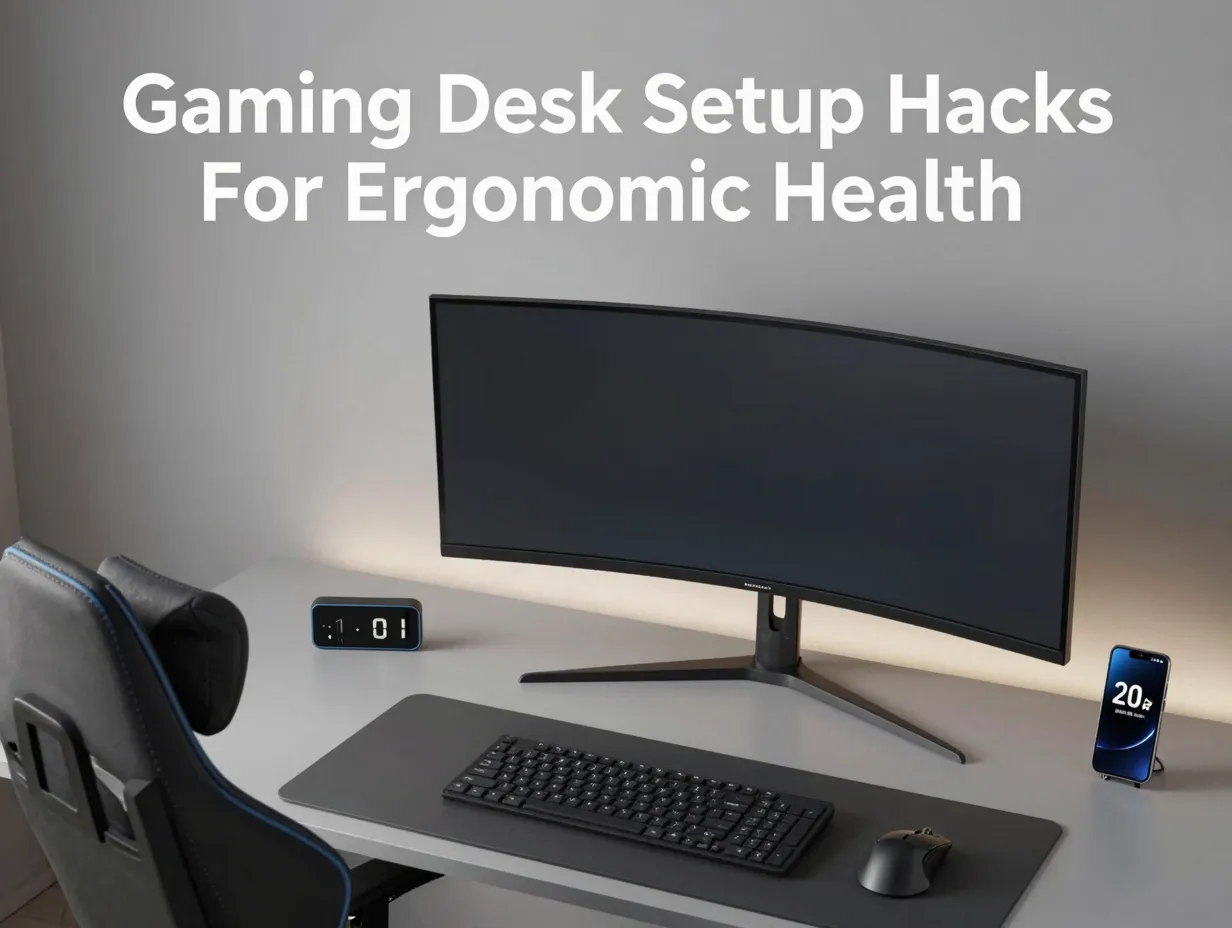
This guide breaks down 6 Gaming Computer Desk Setup Hacks For Ultimate Ergonomics that any gamer, streamer, or remote worker can apply this week, using measurements and posture principles drawn from established workplace ergonomics research rather than guesswork [6][7]. Each hack is practical, backed by real setup logic, and designed to fit both budget and premium gaming desks.
Key Takeaways
- Desk and chair height should be calibrated to individual elbow, hip, and knee angles, not to a “standard” size that assumes everyone is the same height [6][7].
- Monitor distance, height, and tilt directly affect neck strain and eye fatigue during long gaming sessions, and gaming-specific viewing needs differ slightly from general office work [1][4].
- Desk width, depth, and a clearly defined reach zone reduce shoulder and wrist strain by keeping the mouse, keyboard, and controllers within easy access [2][3].
- Sit-stand adjustability and scheduled microbreaks are two of the most evidence-backed ways to counter the health risks of prolonged sitting [6][8].
- Lighting, monitor arms, footrests, and wrist supports are not just cosmetic add-ons, they are functional ergonomic tools that measurably reduce fatigue [1][9].
The Real Cost of Skipping These 6 Gaming Computer Desk Setup Hacks For Ultimate Ergonomics
Poor desk ergonomics does not announce itself immediately. It builds slowly, showing up first as a stiff neck after a long raid, then as tingling fingers during a competitive match, and eventually as chronic pain that outlasts the gaming session itself. Health researchers have long linked static, poorly aligned sitting postures to musculoskeletal disorders affecting the neck, shoulders, wrists, and lower back [6][7]. Gamers are particularly at risk because sessions often run longer and involve more repetitive, high-speed hand movements than typical office work [1].
The financial and physical cost of ignoring ergonomics adds up quietly. A single ergonomic adjustment, like raising a monitor by four inches or swapping a fixed chair for one with adjustable armrests, costs far less than a physical therapy bill six months down the line. Industry guides increasingly frame ergonomic setup as a core part of any serious gaming desk purchase, not an optional accessory category [2][8][9].
“The desk is the foundation of the entire gaming setup. If the foundation is wrong, no amount of expensive hardware will fix the strain it causes.”
The following six hacks translate that principle into specific, measurable actions.
1. Calibrate Desk Height to Your Elbows, Not a Generic Size

Most desks sold as “gaming desks” ship at a fixed height between 28 and 30 inches, a range designed for an average adult torso. The problem is that average height does not exist in practice, a gamer at 5’2″ and one at 6’3″ have dramatically different arm lengths and torso proportions [6].
The correct calibration method uses the elbow, not the tape measure alone:
- Sit in the gaming chair with feet flat on the floor and back against the seat.
- Relax the shoulders and let the arms hang naturally at the sides.
- Bend the elbows to roughly 90 to 100 degrees.
- The desk surface should meet the forearms at this height, with wrists staying straight when reaching the keyboard.
If the desk sits too high, shoulders creep upward and stay tense for hours, contributing to shoulder and upper-back pain. If it sits too low, the wrists bend upward against gravity every time a key is pressed, a pattern strongly associated with wrist and forearm strain over time [6][7].
Quick reference for approximate desk height by seated elbow position:
| Standing Height | Approximate Ideal Desk Height |
|---|---|
| 5’0″ to 5’4″ | 24 to 26 inches |
| 5’5″ to 5’9″ | 27 to 29 inches |
| 5’10” to 6’2″ | 29 to 31 inches |
| 6’3″ and above | 31 to 34 inches |
These figures are starting points, not fixed rules. A height-adjustable desk removes the guesswork entirely by allowing real-time fine-tuning until the elbow angle feels neutral [5][8].
2. Match Chair Height and Posture to Hip-Knee Angles and Flat Feet
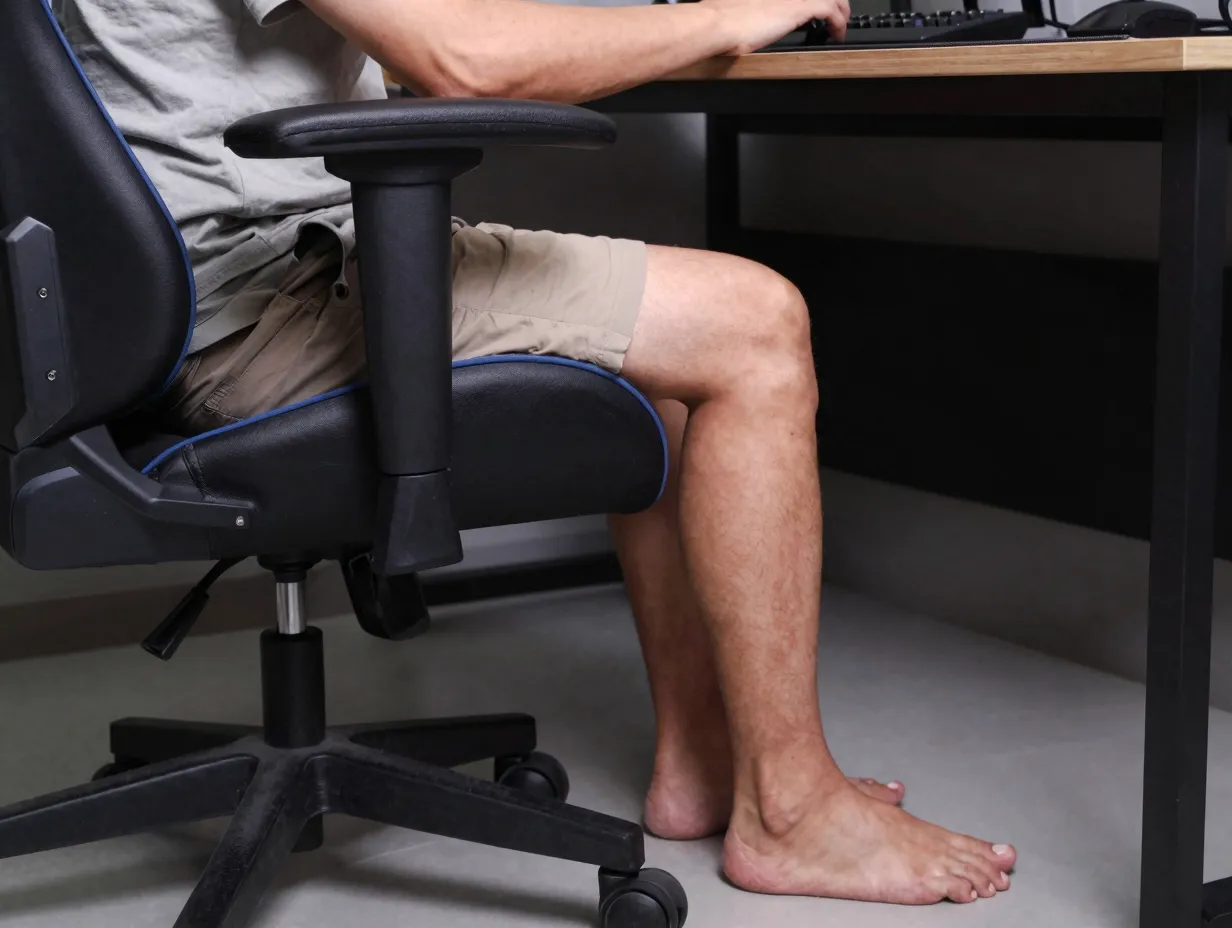
A gaming chair covered in racing-style padding means nothing if it is set at the wrong height. The seat should be adjusted so that hips sit slightly higher than or level with the knees, forming close to a 90 to 110 degree angle at both the hip and the knee joints [6][7].
Three checkpoints confirm proper chair positioning:
- Feet rest flat on the floor, or on a footrest if the chair cannot go low enough for shorter users.
- There is roughly two to three fingers’ width of space between the back of the knees and the front edge of the seat.
- The lower back is supported by the chair’s lumbar curve without needing to slouch forward to reach the desk.
Flat feet matter more than most gamers realize. When feet dangle or only the toes touch the ground, pressure concentrates under the thighs, restricting blood flow and contributing to numbness during extended sessions. A footrest solves this instantly for shorter users without requiring a full chair replacement [6].
Armrests deserve equal attention. They should be set so the shoulders stay relaxed and the elbows rest at the same height as the desk surface calibrated in Hack 1. Mismatched armrest and desk heights force one shoulder or the other to compensate, which over weeks can create asymmetrical muscle tension.
3. Lock In Monitor Distance, Height, and Tilt for Gaming-Specific Use
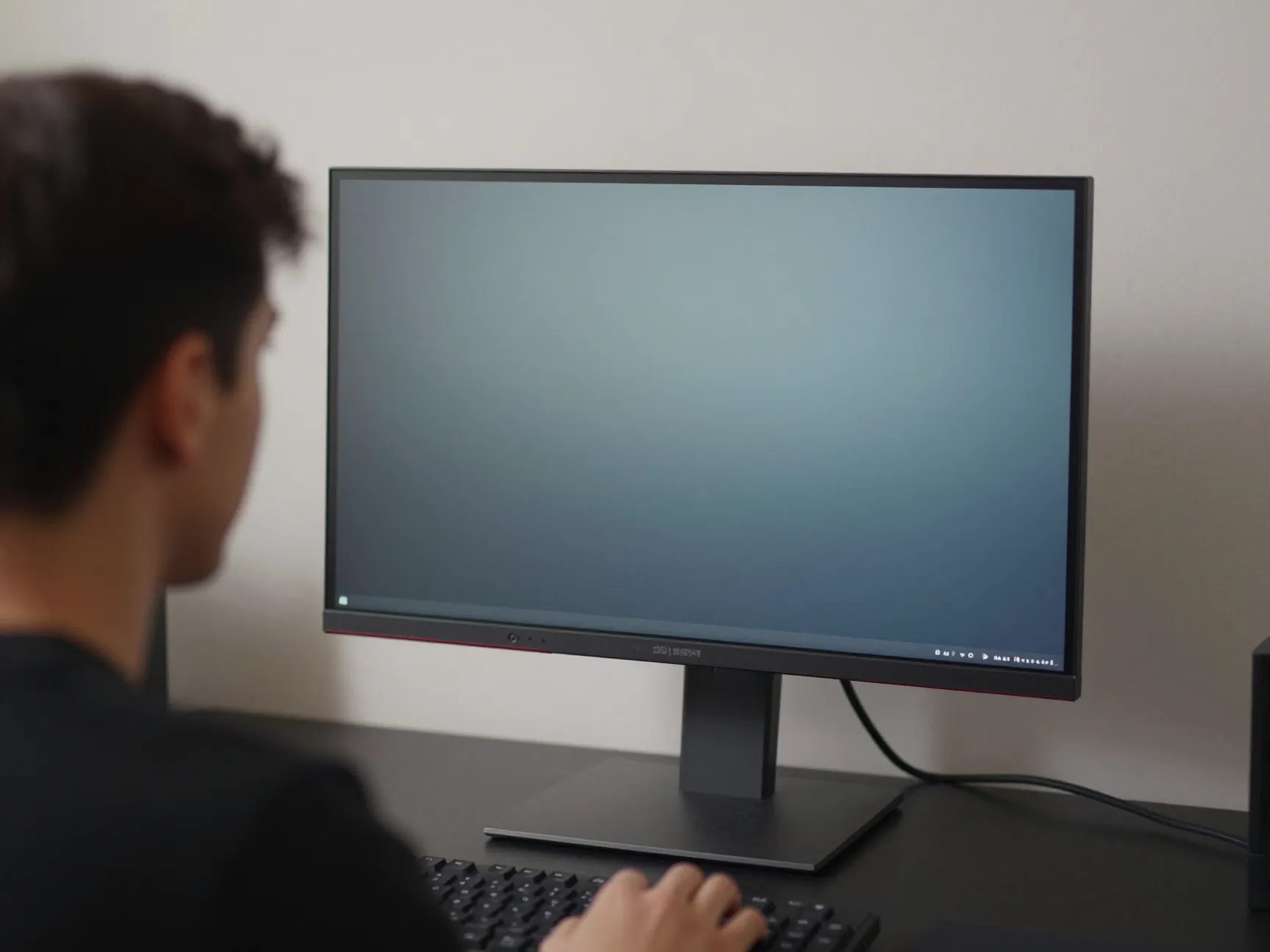
Office ergonomics guides typically recommend a monitor distance of about an arm’s length, roughly 20 to 30 inches from the eyes [7]. Gaming introduces a wrinkle: competitive titles often benefit from slightly closer viewing distances for faster target tracking, while immersive single-player titles on larger or curved monitors may call for more distance to avoid visual distortion [1][4].
A workable gaming-specific standard looks like this:
- Position the top of the monitor at or slightly below eye level, so the gaze tilts down slightly rather than up.
- Keep the screen 20 to 28 inches away for standard monitors, and increase slightly for displays over 32 inches.
- Tilt the monitor back by 10 to 20 degrees to reduce glare and keep the neck in a neutral position.
- For multi-monitor setups, angle the side screens inward so the neck does not need to fully rotate to see them.
Screen height is frequently the most overlooked adjustment. Many gamers place monitors on the desk surface directly, forcing the neck to tilt downward for hours. A monitor arm or a simple raised stand corrects this in minutes and is one of the cheapest ergonomic upgrades available [1][9]. Research on visual ergonomics consistently ties incorrect screen height and glare to increased eye strain, headaches, and neck fatigue during extended screen time [7].
4. Size the Desk for Your Layout: Width, Depth, and Reach Zone Clearance
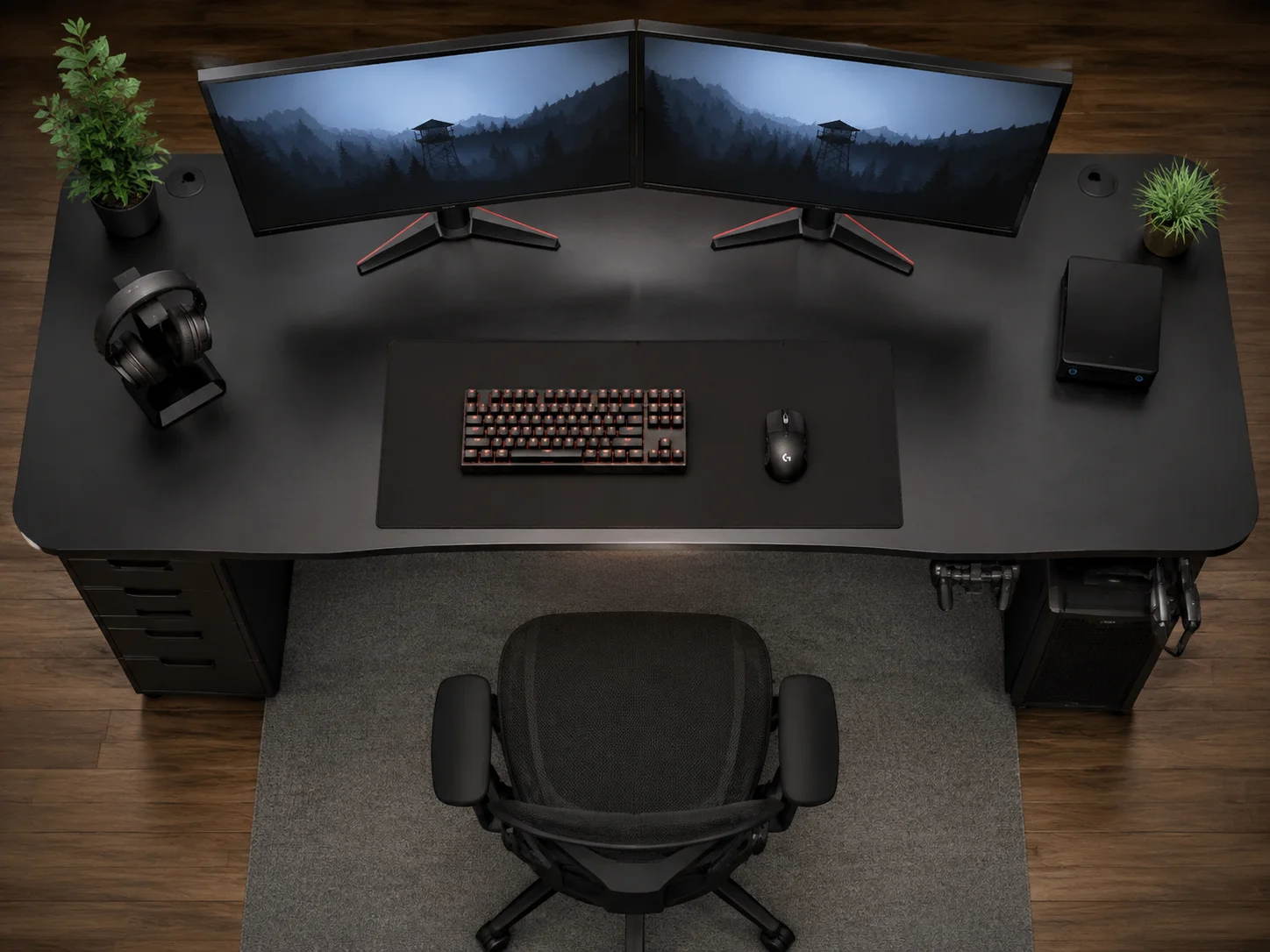
A desk that looks impressive in a showroom photo can still be the wrong size for an actual gaming layout. Desk sizing needs to account for three physical dimensions simultaneously: width, depth, and the clearance needed underneath for legs and cable management [2][3].
Width should comfortably fit the monitor setup plus a few inches of breathing room on each side. A single 27-inch monitor typically needs at least 40 inches of desk width; dual or triple monitor setups often require 55 to 70 inches to avoid crowding [2][5]. Depth matters just as much as width, a desk that is too shallow forces the monitor too close to the eyes even when it is technically positioned correctly, undermining the distance calibration from Hack 3 [3].
Beyond the surface itself, a defined primary reach zone keeps the keyboard, mouse, and any controllers within a natural arc that does not require leaning or overextending the shoulder. This reach zone is typically described as a semicircle extending about 14 to 18 inches from the body’s centerline [6]. Anything used frequently, mouse, keyboard, headset, controller, belongs inside this zone. Items used occasionally, like a webcam or a stream deck, can sit just outside it.
Desk sizing checklist by setup type:
- Single monitor gaming: minimum 40 inches wide, 24 inches deep.
- Dual monitor gaming: minimum 55 inches wide, 28 inches deep.
- Streaming setup with capture gear: minimum 60 inches wide, 30 inches deep, with a secondary shelf for cameras and lighting.
- Controller and keyboard combo setups: prioritize depth over width to keep the reach zone tight and centered.
Clearance underneath the desk is equally important. Cramped legroom forces sitting positions that twist the spine or push the chair further back, which in turn stretches the arms forward and undoes the elbow-angle work from Hack 1 [3][6].
5. Add Adjustability, Including Sit-Stand, for Posture Variation
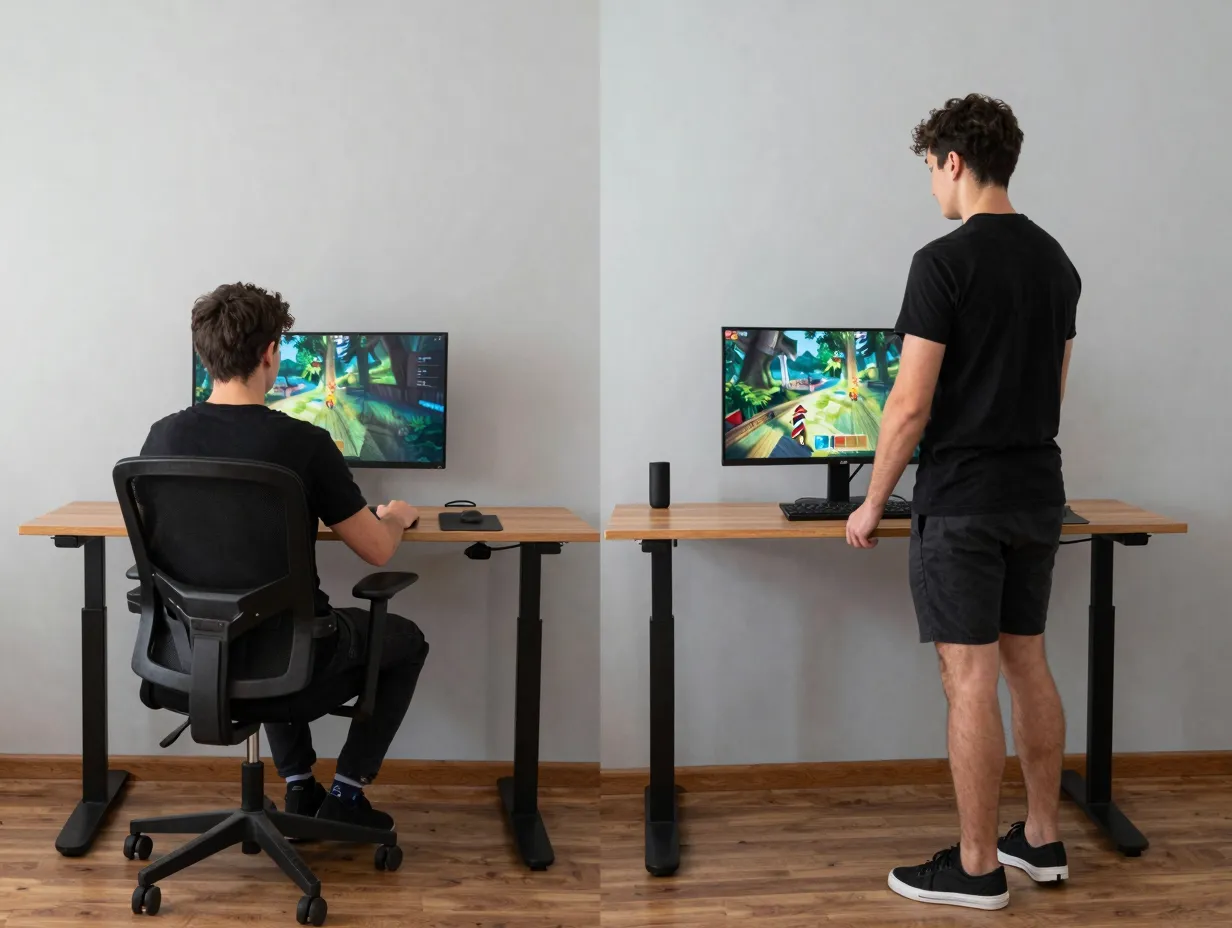
No single “perfect” posture can be held for six straight hours without some form of strain. The most effective long-term solution is not finding one ideal position, it is building in the ability to change position throughout the session [6][8].
Height-adjustable and sit-stand desks have moved from a niche office trend into mainstream gaming setups over the past few years, with motorized and crank-adjustable models now widely available at multiple price points [5][8]. The benefit is not about standing all day; it is about variation. Alternating between sitting and standing every 45 to 90 minutes reduces the sustained pressure on the spine and lower body that comes from staying in one posture for an entire session [6].
A practical sit-stand rotation for gaming sessions:
- Sit for the first 60 to 90 minutes using the calibrated elbow and chair height from Hacks 1 and 2.
- Transition to standing for 10 to 15 minutes during a natural break point, such as a loading screen or match intermission.
- Return to sitting, adjusting the chair slightly if any tension has built up.
- Repeat the cycle, treating it as part of the gaming routine rather than an interruption to it.
Adjustability is not limited to the desk itself. Monitor arms, adjustable keyboard trays, and chairs with tilting backrests all contribute to the same goal: giving the body multiple valid positions instead of forcing it into one static shape for hours [1][9].
6. Optimize Lighting, Microbreaks, and Treat Accessories as Ergonomic Tools
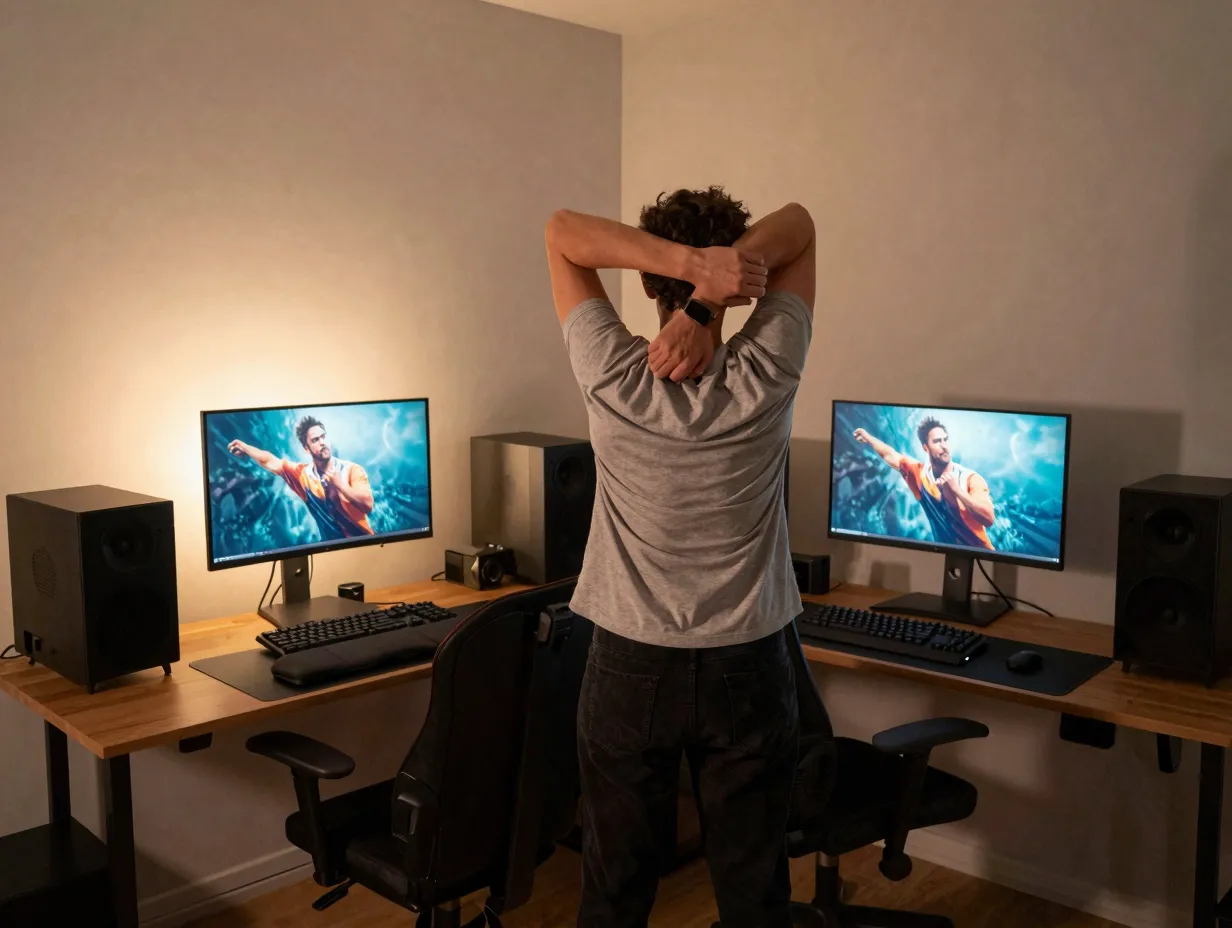
Ergonomics extends beyond furniture dimensions into the surrounding environment. Two often-overlooked factors, lighting and movement, carry as much influence over long-session comfort as the desk and chair themselves.
Lighting affects eye strain more than most gamers expect. Harsh overhead lighting or a bright window directly behind the monitor creates glare that forces the eyes to work harder to distinguish on-screen detail [1]. A few adjustments make a measurable difference:
- Position the monitor perpendicular to windows rather than facing or backing onto them.
- Use soft, indirect ambient lighting behind the monitor rather than harsh overhead lights.
- Keep screen brightness close to the brightness of the surrounding room to reduce the eyes’ constant adjustment effort.
Microbreaks are a small habit with outsized returns. Ergonomics research consistently recommends brief breaks every 20 to 30 minutes to reset posture, refocus the eyes, and reduce repetitive strain buildup in the wrists and forearms [6][7]. A widely cited guideline is the 20-20-20 approach: every 20 minutes, look at something roughly 20 feet away for at least 20 seconds. This resets eye focus and interrupts the sustained near-vision strain of staring at a monitor.
A simple microbreak routine for gaming sessions:
- Every 20 to 30 minutes, briefly look away from the screen and focus on a distant object.
- Every hour, stand up, stretch the shoulders and wrists, and shake out the hands.
- Every two to three hours, take a five-minute walk away from the desk entirely.
Finally, the accessories often marketed as purely aesthetic, wrist rests, monitor arms, footrests, cable trays, and adjustable stream deck mounts, should be reframed as functional ergonomic tools rather than decoration [1][9]. A padded wrist rest keeps the wrist neutral during long mouse-heavy sessions. A monitor arm enables the precise height and tilt calibration from Hack 3 without needing to buy a new desk. A footrest solves the flat-feet requirement from Hack 2 for anyone whose chair cannot go low enough. Treating these items as part of the ergonomic system, not the RGB aesthetic, changes how they get chosen and positioned [4][10].
How the 6 Gaming Computer Desk Setup Hacks For Ultimate Ergonomics Work Together
None of these six hacks function in isolation. Calibrating desk height without also fixing chair posture leaves the elbow angle correct but the hips misaligned. Getting monitor distance right without adjusting lighting still leaves eye strain unresolved. The real value comes from treating the desk, chair, monitor, layout, adjustability, and environment as one connected system.
Summary of the six hacks and their primary benefit:
| Hack | Primary Focus | Main Benefit |
|---|---|---|
| 1 | Desk height at elbow level | Prevents shoulder and wrist strain |
| 2 | Chair height and hip-knee angle | Improves circulation and lower back support |
| 3 | Monitor distance, height, tilt | Reduces neck and eye strain |
| 4 | Desk width, depth, reach zone | Prevents overreaching and shoulder fatigue |
| 5 | Sit-stand adjustability | Breaks up static posture over long sessions |
| 6 | Lighting, microbreaks, accessories | Reduces eye fatigue and reinforces good habits |
Setting up in this order, desk, chair, monitor, layout, adjustability, environment, mirrors how professional ergonomics assessments are typically structured [6][7], and it prevents the common mistake of fixing one element while leaving another misaligned.
Conclusion: Turning These Hacks Into a Lasting Setup
Ergonomics is not a one-time purchase decision; it is an ongoing calibration that should be revisited every time hardware, chairs, or seating habits change. The 6 Gaming Computer Desk Setup Hacks For Ultimate Ergonomics covered here, elbow-calibrated desk height, hip-and-knee-aligned chair posture, precise monitor distance and tilt, properly sized desk dimensions with a defined reach zone, sit-stand adjustability, and optimized lighting paired with microbreaks, work best when applied together rather than piecemeal.
Start with the two adjustments that cost nothing: check elbow angle at the current desk height, and confirm feet sit flat on the floor. From there, prioritize a monitor arm or footrest if either is missing, since both are inexpensive fixes with outsized comfort returns. Longer term, consider a sit-stand desk if extended sessions are a regular part of gaming or work routines. The goal is not a showroom-perfect setup, it is a desk, chair, and screen arrangement that supports hours of play without leaving the body sore afterward.
References
[1] Gaming Workstation Ergonomics – https://www.merryfair.com/latest_updates/blog/gaming-workstation-ergonomics/
[2] Gaming Desk Shopping Guide – https://www.playnforge.com/gaming-desk-shopping-guide/
[3] Best Gaming Desk – https://www.empireonline.com/gaming/hardware/best-gaming-desk/
[4] Gaming Desk Setup Guide – https://www.smartvaluelab.co/guides/gaming-desk-setup-guide
[5] Best Gaming Desk 2020 Top Standing L Shaped And Motorized Desks – https://www.techradar.com/best/best-gaming-desk-2020-top-standing-l-shaped-and-motorized-desks
[6] Ergonomics Self Setup Guide – https://ehs.psu.edu/sites/ehs/files/ergonomics_self_setup_guide.pdf
[7] Ergo12tips – https://ergo.human.cornell.edu/DEA6510/dea6512k/ergo12tips.html
[8] Best Gaming Desk Setup 2026 – https://www.computergamingworld.eu/best-gaming-desk-setup-2026/
[9] Best Gaming Desk Setup In 2026 – https://www.accesscreative.ac.uk/blog/best-gaming-desk-setup-in-2026/
[10] How To Set Up The Perfect Gaming Desk 2026 Guide – https://tiereduptech.com/blogs/gaming-knowledge-hub/how-to-set-up-the-perfect-gaming-desk-2026-guide