6 Creative Phone Photography Ideas to Spark Your Imagination
Smartphone cameras now outperform dedicated point-and-shoot cameras in blind tests more than 70 percent of the time, yet most people still tap the shutter button once, pocket their phone, and move on [2]. That gap between what modern smartphone cameras can do and what most users actually attempt is where creative opportunity lives. These 6 creative phone photography ideas to spark your imagination are designed to close that gap, whether someone is shooting indoors on a rainy afternoon or outdoors during a rare celestial event.
Disclosure: This post contains affiliate links. As an Amazon Associate, we earn from qualifying purchases, and at no extra cost to you.
The ideas below draw on the latest techniques, tools, and trends shaping mobile photography in 2026, from manual mode motion blur to storytelling composites. Each one is approachable for beginners yet deep enough to challenge experienced shooters.
Key Takeaways
- Manual or Pro mode unlocks motion blur, light trails, and cinematic effects that auto mode simply cannot produce.
- Sophisticated composition rules, rule of thirds, leading lines, and negative space, are the fastest way to elevate any phone shot.
- Soft, diffused light remains the single most reliable path to professional-looking results on a smartphone.
- Household objects and simple setups (reflections, shadows, prisms, projectors) enable creative experimentation without extra cost.
- Rare events like solar eclipses and golden-hour windows are time-sensitive opportunities that reward preparation.
Why These 6 Creative Phone Photography Ideas Work in 2026
The smartphone photography landscape has shifted dramatically. Computational photography, multi-lens arrays, and AI-assisted editing have made it easier than ever to capture technically correct images. The challenge now is not sharpness or exposure, it is imagination. Structured idea frameworks help photographers break out of repetitive habits and approach familiar subjects with fresh eyes [4].
The 6 creative phone photography ideas to spark your imagination outlined in this article are built around that principle. They combine technical technique with creative thinking, so the results feel intentional rather than accidental. They also reflect the dominant trends analysts and educators are tracking through mid-2026: story-driven prompts, at-home experimentation, cinematic hacks, and event-based creativity [2][10].
Before diving in, one foundational point deserves emphasis: the best camera is always the one in hand. These ideas are designed for the phone already sitting in a pocket, not a future upgrade.
The 6 Creative Phone Photography Ideas to Spark Your Imagination
1. Master Manual Mode for Motion Blur and Light Trails
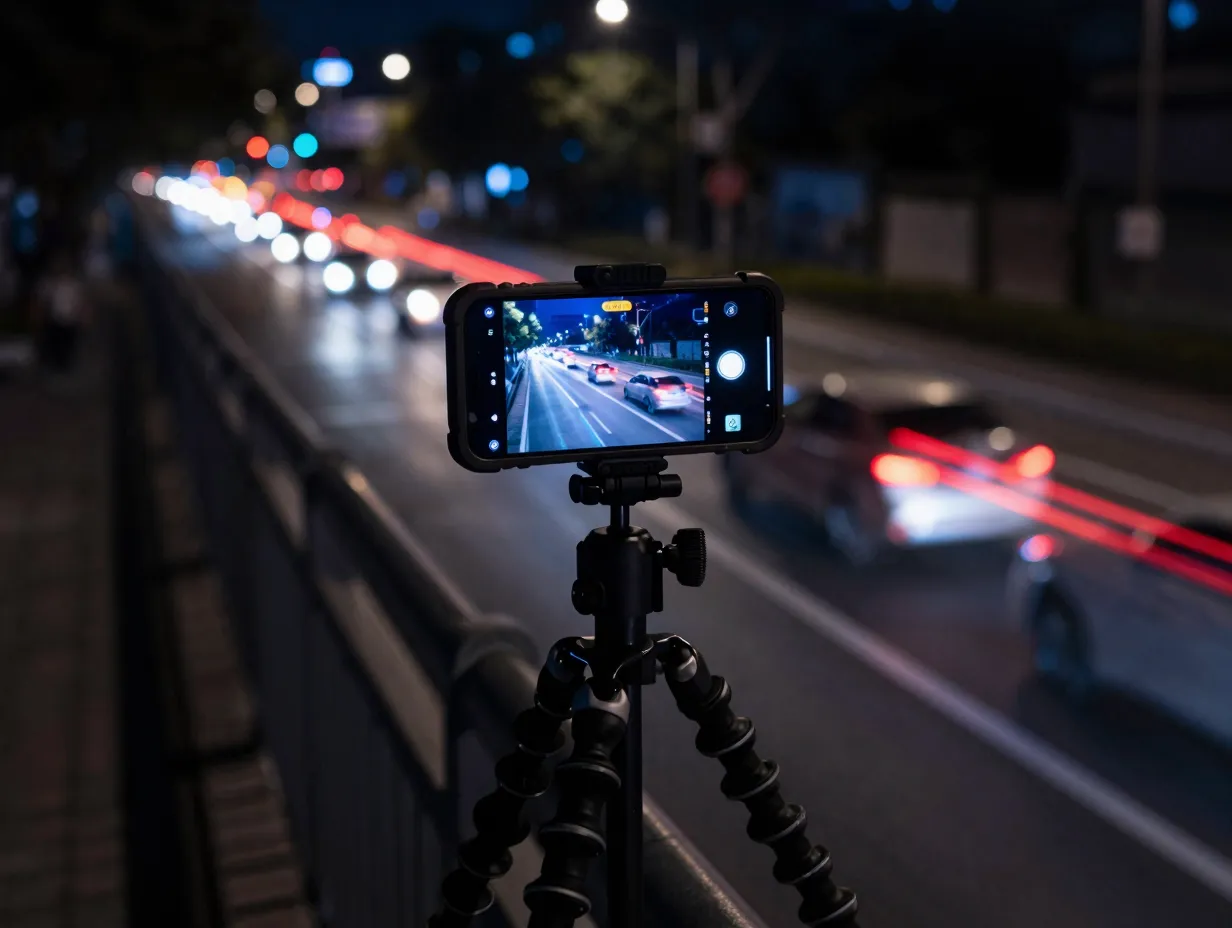
Most smartphone cameras ship with an automatic mode that prioritizes sharp, well-exposed images. That is useful for snapshots, but it eliminates an entire category of creative expression: intentional blur. Switching to Pro or Manual mode, available natively on Android devices and through third-party apps on iOS, gives direct control over shutter speed, ISO, and aperture [10].
How to do it:
- Set shutter speed to 1/15 second or slower for moving subjects like waterfalls, traffic, or spinning fans.
- Mount the phone on a tripod or prop it against a stable surface to keep the background sharp while the subject blurs.
- For light trails, find a dark environment, set shutter speed to 5-20 seconds, and photograph passing cars or a waved flashlight.
The result is a cinematic quality that auto mode cannot replicate. Long-exposure light trail shots, for example, transform a busy road at night into an abstract painting of glowing lines [2]. Motion blur applied to a dancer or athlete conveys energy and movement in a single still frame.
Pro tip: Shoot in RAW format when using Pro mode. RAW files preserve more detail in highlights and shadows, giving far more flexibility during editing.
| Shutter Speed | Best Use Case | Stabilization Needed |
|---|---|---|
| 1/500s or faster | Freeze fast action | No |
| 1/30s, 1/60s | Slight motion blur | Recommended |
| 1/4s, 1s | Water silk effect | Yes |
| 5s, 30s | Light trails, star trails | Essential |
2. Apply Sophisticated Composition Principles
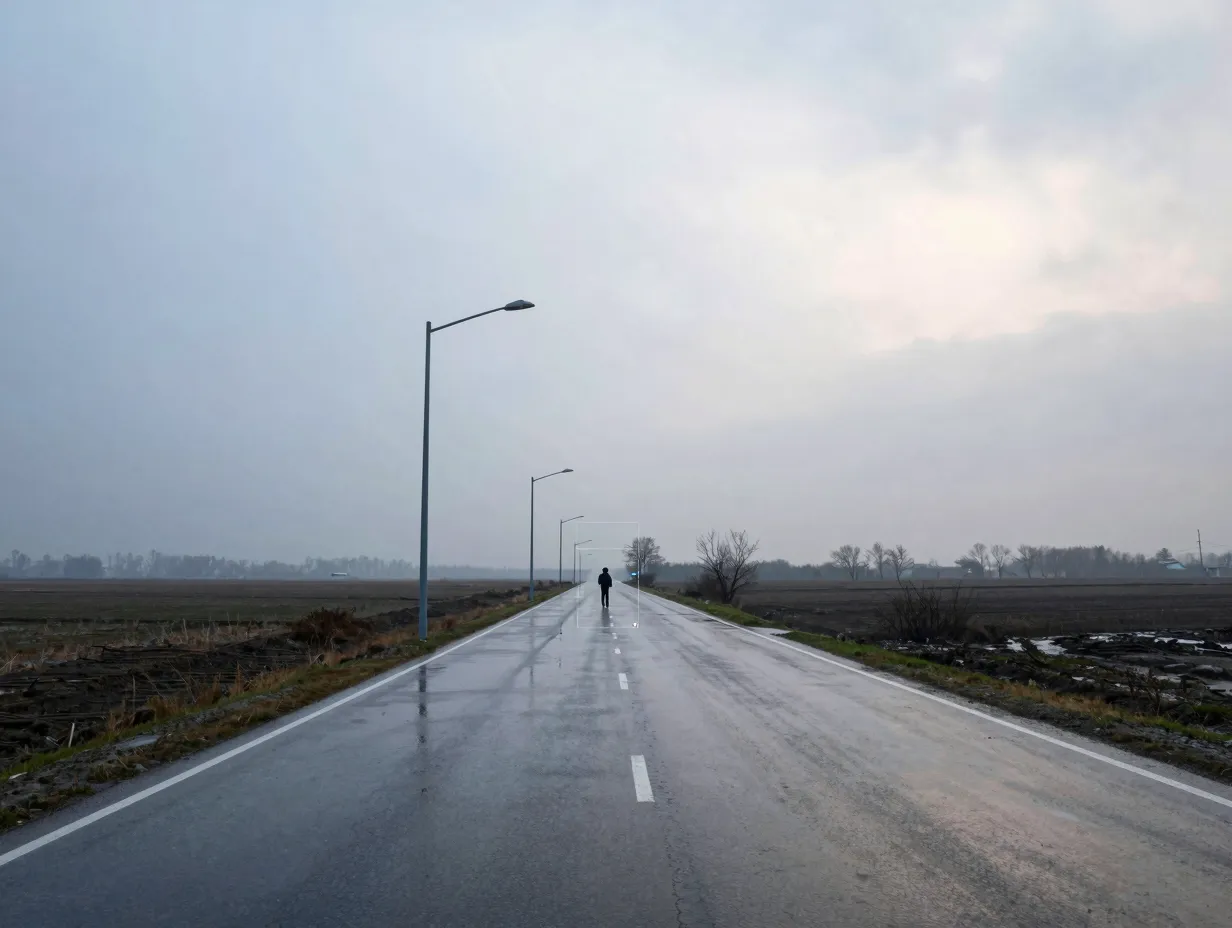
Technical settings matter, but composition is what separates a forgettable snapshot from a memorable photograph. Three principles dominate professional mobile photography instruction in 2026: the rule of thirds, leading lines, and negative space [1][5].
Rule of thirds: Most smartphone cameras include a grid overlay in their settings. Enabling this grid divides the frame into nine equal sections. Placing the main subject at one of the four intersection points, rather than dead center, creates a more dynamic, visually engaging image.
Leading lines: Roads, fences, staircases, rivers, and even shadows naturally guide the viewer’s eye through a frame. Positioning the phone so that one of these lines draws attention toward the subject adds depth and intentionality to the composition.
Negative space: Empty space around a subject is not wasted space, it is a compositional tool. A lone tree against a vast sky, or a single coffee cup on a clean white table, uses negative space to make the subject feel more powerful and isolated [9].
“Composition is the grammar of photography. Without it, even the most technically perfect image says nothing.”
These three principles work together. A street photograph might use a road as a leading line, place a pedestrian at a rule-of-thirds intersection, and leave open sky as negative space above. Practicing these principles deliberately, rather than relying on instinct, accelerates improvement faster than any camera upgrade [5].
3. Harness Soft, Diffused Light for a Professional Look

Light is the raw material of photography. Among all the variables that determine image quality on a smartphone, lighting has the greatest impact on whether a photo looks amateur or professional [5].
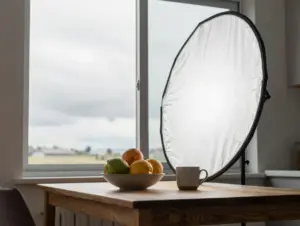
Soft, diffused light, the kind produced by an overcast sky, a north-facing window, or a sheer curtain filtering direct sun, flatters subjects by minimizing harsh shadows and reducing contrast to a manageable range. This is why portrait photographers often prefer cloudy days and why studio photographers use large softboxes [2].
Practical ways to find or create soft light at home:
- Position the subject near a large window on a cloudy day.
- Hang a white sheet or sheer curtain over a sunny window to diffuse direct sunlight.
- Bounce a lamp off a white wall or ceiling instead of pointing it directly at the subject.
- Shoot outdoors during the golden hour, the 30 to 60 minutes after sunrise or before sunset, when sunlight is naturally warm and low-angled.
What to avoid: Overhead fluorescent lighting, direct flash, and midday sun all create unflattering shadows and blown-out highlights that smartphone sensors struggle to recover. If the only available light is harsh, moving the subject into shade and using the phone’s exposure compensation slider to brighten the image is a reliable workaround [3].
Soft light also pairs exceptionally well with the other ideas in this list. Reflections, silhouettes, and macro shots all benefit from controlled, diffused illumination.
4. Experiment With Reflections, Shadows, and Household Objects
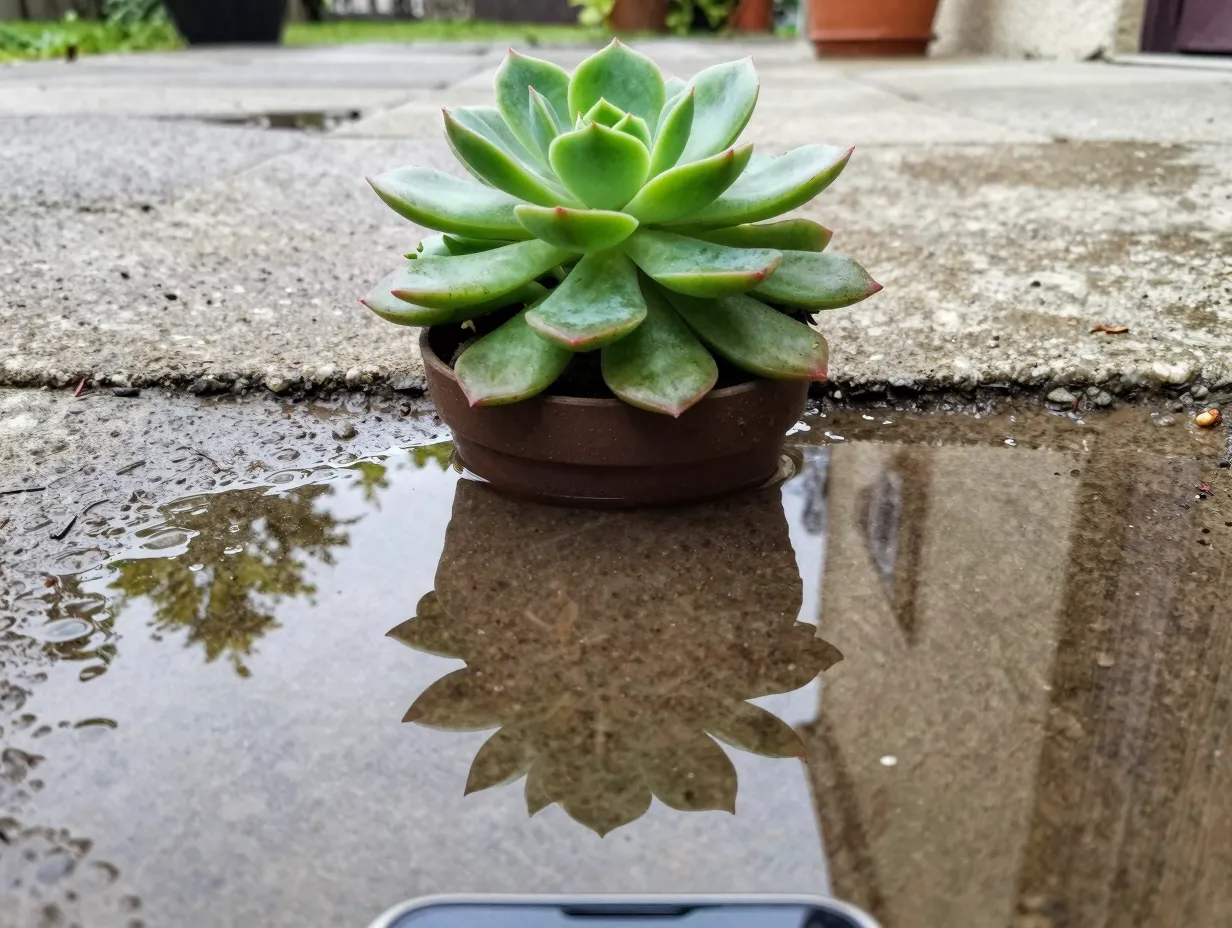
Some of the most creative phone photography ideas require nothing more than objects already found at home [7]. This category of at-home experimentation has remained one of the most popular themes in mobile photography communities through 2025 and into 2026 [3].
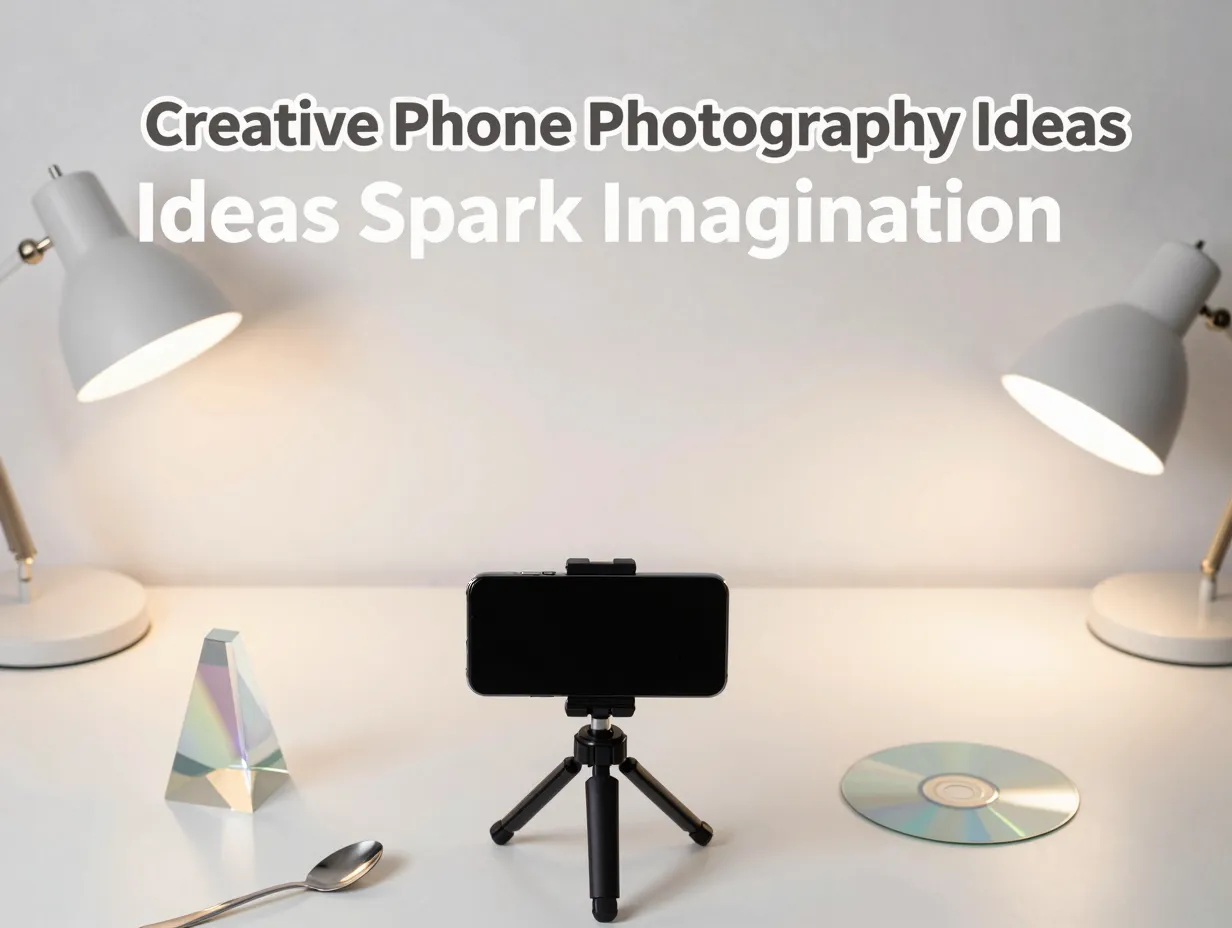
Reflections are among the most accessible and visually striking techniques. A puddle after rain, a mirror, a glass table, a phone screen, or even a spoon can produce a reflected image that doubles the visual interest of any scene. The key is to shoot from a low angle, often just a few centimeters above the reflective surface, to maximize the reflection in the frame [1].
Shadows are equally powerful. Strong directional light (a desk lamp, a sunny window, or a flashlight) cast through objects like plants, blinds, or cut paper creates dramatic shadow patterns on walls and floors. Photographing a subject within or beside these patterns adds graphic interest without any editing [7].
Shooting through objects is a cinematic hack that transforms ordinary scenes. Holding a glass prism, a wine glass, or even a magnifying glass in front of the lens creates light distortion, color dispersion, and bokeh effects that look deliberately artistic [3]. Similarly, shooting through a hole in a piece of paper or through a gap in leaves adds a natural frame within the frame.
Other household objects worth trying:
- Fairy lights placed close to the lens create soft, circular bokeh in the background.
- A CD or DVD held at an angle to a light source produces rainbow reflections.
- A glass of water placed between the lens and a subject creates a natural fisheye distortion.
- Aluminum foil crumpled and flattened creates a textured, metallic backdrop.
5. Capture Rare Events and Time-Sensitive Phenomena
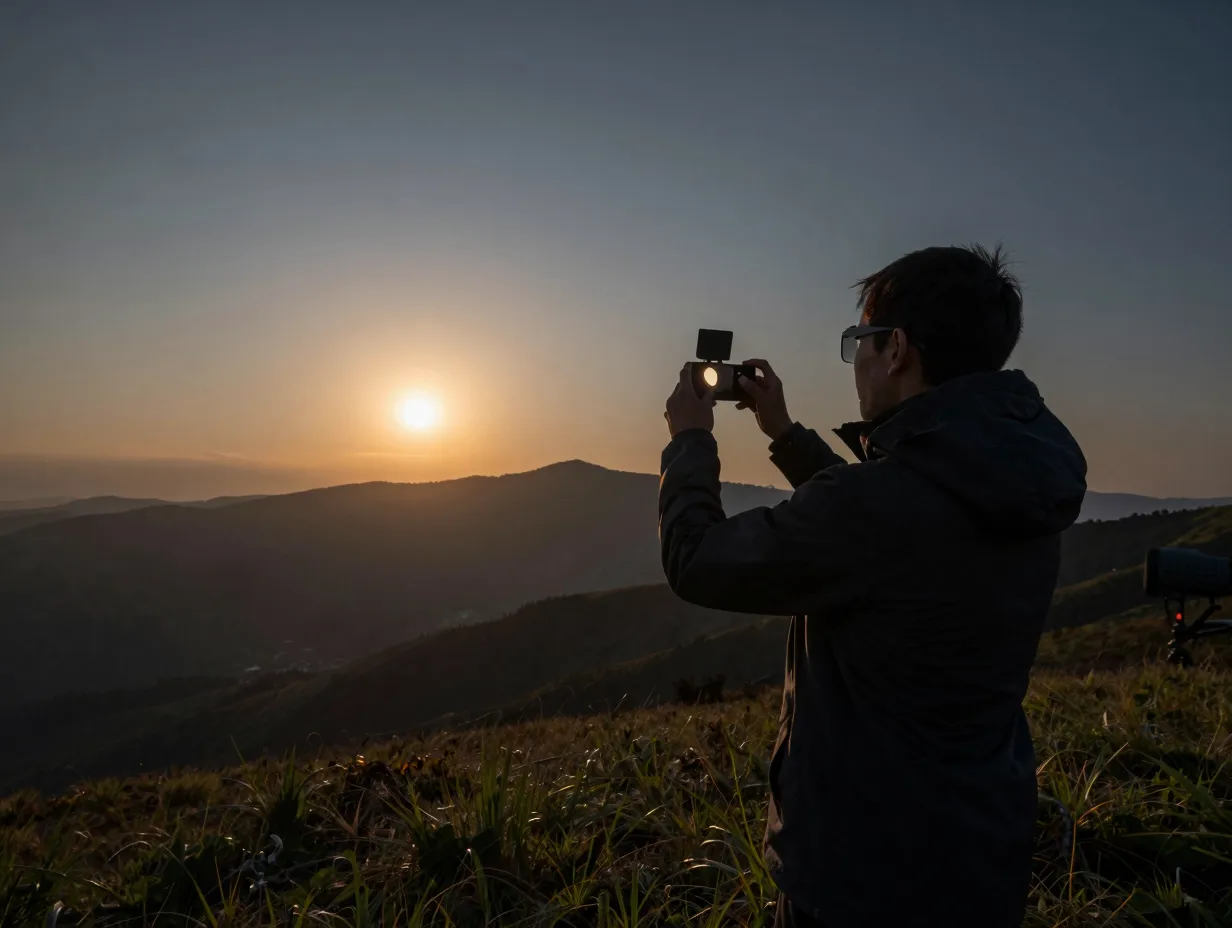
Some of the most compelling phone photography opportunities are tied to specific moments that cannot be recreated. Rare astronomical events, extreme weather, seasonal light conditions, and cultural gatherings all offer subjects that carry inherent drama and significance [6].
The August 2026 total solar eclipse visible across parts of Europe is a prime example. Smartphone photographers who planned ahead, using solar filter accessories, scouting locations with clear sightlines, and practicing long-exposure settings in advance, were positioned to capture images that no amount of post-processing can manufacture after the fact [6].
Preparation checklist for rare event photography:
- Research the event in advance: timing, location, and optimal viewing angles.
- Acquire any necessary accessories, such as solar filters for eclipse photography.
- Practice the relevant technique (long exposure, burst mode, telephoto zoom) before the event.
- Arrive early to scout the best composition and test settings in similar lighting conditions.
- Shoot in burst mode during the peak moment to maximize the chance of a sharp, well-timed frame.
Beyond astronomical events, time-sensitive opportunities include:
- First and last light of the day (golden hour and blue hour).
- Fog or mist in the early morning before it burns off.
- Snow or frost before footprints and traffic disturb the scene.
- Seasonal blooms like cherry blossoms or autumn foliage at peak color.
The common thread is preparation. Rare phenomena reward photographers who show up ready [6].
6. Create Storytelling Composites and Conceptual Shots
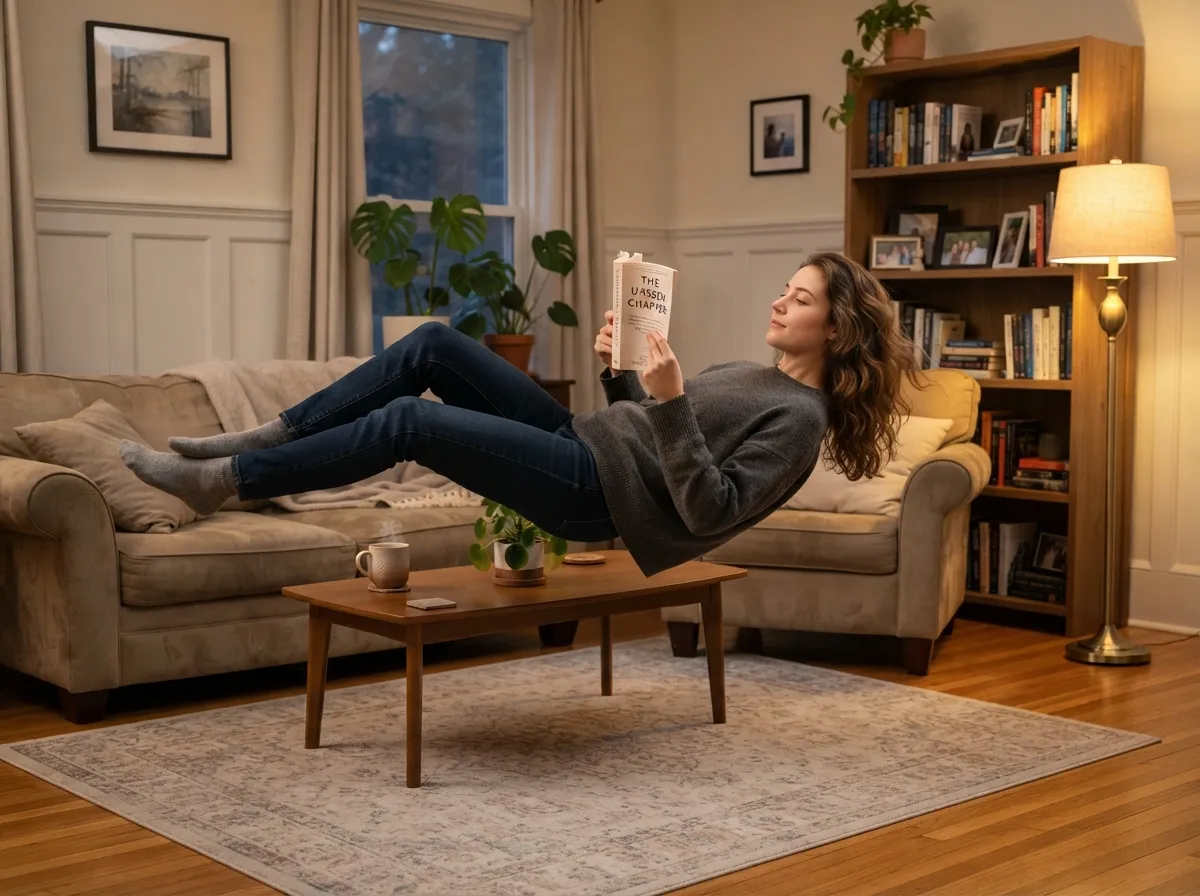
The final and perhaps most ambitious of these 6 creative phone photography ideas to spark your imagination moves beyond single-frame capture into deliberate, story-driven image-making. Conceptual photography uses the camera as a tool for visual storytelling, where every element in the frame, subject, background, light, props, and composition, contributes to a specific idea or narrative [4][9].
Levitation shots are a popular entry point. The technique involves photographing a subject jumping or lying on a surface, then photographing the background without the subject, and blending the two images in an editing app. The result shows the subject floating in mid-air [7]. Apps like Snapseed, Adobe Lightroom Mobile, and even the native Photos app on recent smartphones include the layer-blending tools needed for this effect.
Silhouette storytelling uses strong backlighting, a bright window, a sunset, or a lamp, to reduce the subject to a dark outline. The shape of the silhouette carries the narrative: a person reading, a couple embracing, a child reaching for something just out of frame. The absence of facial detail forces the viewer to project meaning onto the image [7].
Meta shots, photographs of the act of photography itself, create a self-referential narrative. Photographing a phone screen displaying a previous image, or capturing a reflection of the photographer in a window while shooting a street scene, adds a layer of conceptual depth that resonates with viewers interested in the medium itself [1].
Multi-shot techniques for composites:
- Shoot multiple exposures of the same scene and blend them for a surreal, layered effect.
- Photograph the same subject in different positions across a single frame to suggest movement or multiplicity.
- Use a projector to cast images, patterns, or text onto a subject’s face or body, then photograph the result for a striking conceptual portrait [3].
The storytelling approach also benefits from pre-visualization: deciding what the final image should communicate before picking up the phone. This shifts the creative process from reactive to intentional, which is the defining characteristic of professional-quality mobile photography [4][5].
Essential Accessories That Amplify These Ideas
Accessories extend what a smartphone camera can do without requiring a full equipment investment. The mid-2026 market offers a range of tools specifically designed for mobile photographers [10].
Recommended accessories by technique:
- Tripod or mini-tripod: Essential for motion blur, light trails, and composite shots. A flexible Gorillapod-style tripod costs under $30 and attaches to almost any surface.
- Clip-on lens kit: Wide-angle, macro, and fisheye lenses clip over the existing camera lens and dramatically expand compositional options.
- Portable LED panel: A small, rechargeable LED panel provides controllable, soft fill light for indoor portraits and product shots.
- Solar filter: Required for safe eclipse and direct-sun photography.
- Bluetooth shutter remote: Eliminates camera shake when triggering the shutter on a tripod-mounted phone.
- Reflector card: A folded piece of white foam board or a dedicated reflector bounces light back onto a shadowed subject.
None of these accessories are required to execute the ideas in this article. They are force multipliers, tools that make good techniques more consistent and less dependent on ideal conditions [10].
Building a Consistent Practice Around These Ideas
Creativity in photography, as in any discipline, is not a fixed trait. It is a skill developed through consistent practice and deliberate experimentation. Structured idea lists, like the 6 creative phone photography ideas to spark your imagination outlined here, serve as scaffolding for that practice [4].
Practical ways to build consistency:
- Assign one idea per week and shoot at least 20 frames exploring that technique.
- Keep a simple photo journal noting what worked, what did not, and what to try differently.
- Share work in mobile photography communities for feedback and exposure to other approaches.
- Revisit the same location or subject using a different technique from the list to see how the approach changes the result.
- Set a monthly challenge: one conceptual shot, one long-exposure shot, and one composition-focused shot.
The goal is not perfection on any individual image. The goal is the accumulation of creative reps that build both technical skill and visual intuition over time [1][4].
Conclusion
The 6 creative phone photography ideas to spark your imagination covered in this article, manual mode motion blur, sophisticated composition, soft diffused light, household object experimentation, rare event capture, and storytelling composites, represent a complete toolkit for elevating mobile photography from casual snapshots to intentional visual art.
Actionable next steps:
- Enable the grid overlay in the phone’s camera settings today and practice the rule of thirds on the next 10 shots taken.
- Switch to Pro or Manual mode and attempt one slow-shutter motion blur shot this week using a stable surface as a makeshift tripod.
- Identify one upcoming time-sensitive event, a weather phenomenon, a local festival, or a seasonal light condition, and prepare a shot plan in advance.
- Gather three household objects (a glass, a mirror, and a lamp) and spend 30 minutes experimenting with reflections and shadows.
- Choose one storytelling concept and pre-visualize the final image before picking up the phone.
The phone in a pocket is already capable of producing extraordinary images. What it needs is a photographer with a clear creative intention and the willingness to move beyond auto mode.
References
[1] Phone Photography Ideas – https://digital-photography-school.com/phone-photography-ideas/
[2] Smartphone Photography In 2026 Phone – https://www.onlinedesignteacher.com/2026/08/smartphone-photography-in-2026-phone.html
[3] Fun And Creative Smartphone Photography Tips You Can Easily Try At Home – https://vocal.media/photography/fun-and-creative-smartphone-photography-tips-you-can-easily-try-at-home
[4] Mobile Photography Inspiration – https://www.myclickmagazine.com/mobile-photography-inspiration/
[5] How To Use Your Phone For Professional Photography Shoots – https://thedivinemagazine.com/how-to-use-your-phone-for-professional-photography-shoots/
[6] One Tech Tip Using Your Smartphone To Capture The August Total Solar Eclipse Over Europe – https://www.thestar.com.my/tech/tech-news/2026/08/07/one-tech-tip-using-your-smartphone-to-capture-the-august-total-solar-eclipse-over-europe
[7] Turn Your Phone Into A Masterpiece Simple Photography Ideas At Home – https://thei2studio.com/turn-your-phone-into-a-masterpiece-simple-photography-ideas-at-home/
[9] Picture – https://www.adobe.com/express/discover/ideas/picture
[10] Smartphone Photography Tools Guide 2026 – https://sharedtutor.com/2026/07/04/smartphone-photography-tools-guide-2026/