6 Smart Bedroom Ideas for a More Relaxing and Efficient Space
Nearly one-third of adults in developed countries report poor sleep quality on a regular basis, and research increasingly points to the bedroom environment itself as a primary culprit. The good news is that targeted, affordable upgrades can transform any ordinary room into a restorative retreat. These 6 smart bedroom ideas for a more relaxing and efficient space draw on the latest design trends, circadian science, and accessible smart-home technology to help anyone sleep better, wake up refreshed, and move through the day with more energy.
Disclosure: This post contains affiliate links. As an Amazon Associate, we earn from qualifying purchases, and at no extra cost to you.
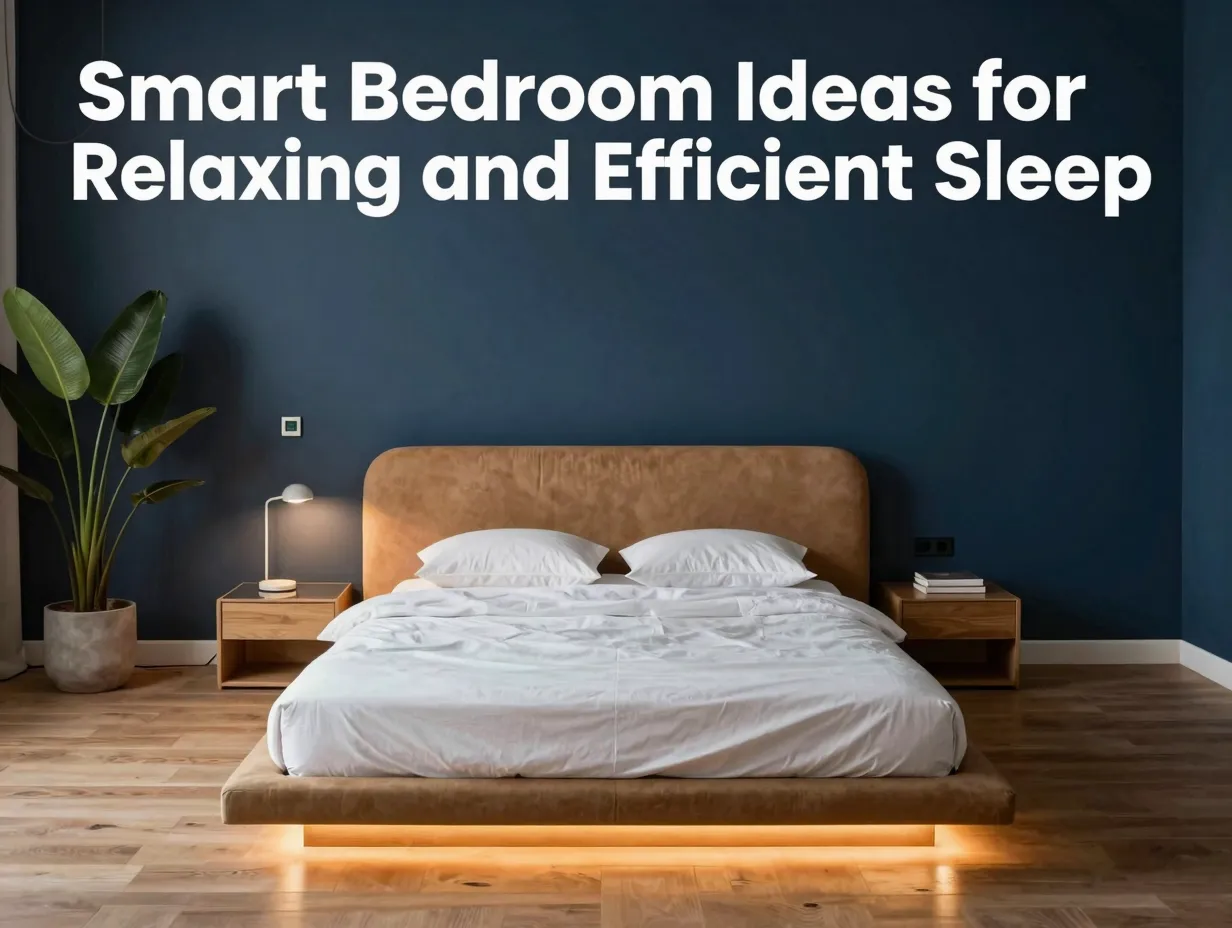
Whether the goal is a full redesign or a few strategic additions, the ideas below are ranked by impact and accessibility. Each one can be implemented independently, and together they create a layered system that works around the clock.
Key Takeaways
- Circadian-responsive lighting, shifting from cool white during the day to warm amber in the evening, is one of the highest-impact, lowest-cost bedroom upgrades available in 2026.
- Maintaining a sleep temperature of roughly 60-67°F (15-19°C) through a smart thermostat or cooling mattress is a foundational requirement for deep, restorative sleep.
- Platform beds with built-in storage, hidden cable routing, and integrated lighting merge function with visual calm, making them ideal for small or cluttered bedrooms.
- Air quality, automated shading, and biophilic design elements work together to reduce cognitive load and create an environment the body recognizes as a genuine retreat.
- Most of these upgrades can be completed for under US$300 by combining a few tunable smart bulbs, a smart plug, and a programmable thermostat, no custom installation required.
Why the Bedroom Environment Matters More Than Most People Realize
The bedroom is the only room in the home that must serve two opposing purposes: it needs to be deeply restful at night and gently energizing in the morning. Most conventional bedrooms are designed for neither. Fixed lighting, uncontrolled temperatures, and cluttered surfaces all send conflicting signals to the nervous system.
Smart bedroom design in 2026 addresses this by aligning the physical environment with the body’s natural circadian rhythm, the roughly 24-hour biological clock that governs sleep, alertness, metabolism, and mood. When the room supports that rhythm rather than fighting it, sleep quality improves without any change in bedtime habits. The 6 smart bedroom ideas for a more relaxing and efficient space outlined here are built around that principle.
The 6 Smart Bedroom Ideas
1. Install Circadian-Responsive Lighting
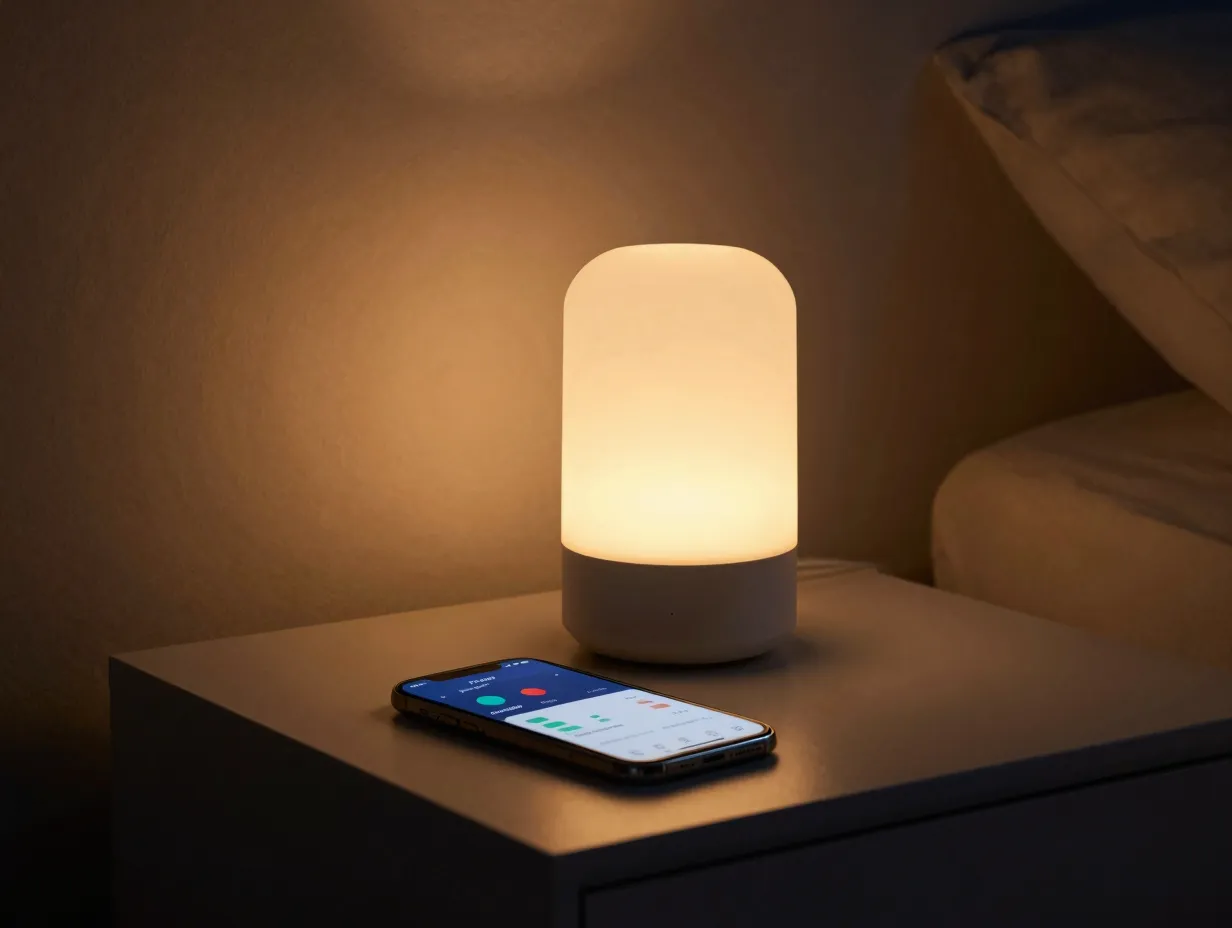
Lighting is the single most powerful environmental cue the brain uses to set its internal clock. Bright, blue-rich light in the evening suppresses melatonin and delays sleep onset. Warm, dim light does the opposite. Tunable smart bulbs, now widely available for roughly US$12-18 per bulb, make it straightforward to automate the entire transition without touching a single switch [11].
The recommended schedule for 2026:
| Time of Day | Color Temperature | Brightness Level |
|---|---|---|
| Morning (6-9 a.m.) | 4000-5000K (cool white) | 80-100% |
| Daytime | 4000-5000K | 70-100% |
| Early evening (5-9 p.m.) | 2700K (warm white) | 40-60% |
| Pre-sleep (9-10:30 p.m.) | 2200-2700K (very warm) | 20-40% |
| Overnight | 1800-2000K (amber) | 1-10% |
A 20-30 minute sunrise simulation before the alarm gradually raises light from dim amber to bright cool white, easing the body out of deep sleep without the cortisol spike of a jarring alarm tone [3]. A second automation around 10:30 p.m. dims the room to roughly 10% or switches lights off entirely, reinforcing consistent sleep hygiene without manual effort [3].
For late-night trips to the bathroom, motion-activated amber nightlights at 5-10% brightness placed in doorways provide safe navigation without fully waking the body. Setting these automations to run only between 11 p.m. and 6 a.m., and to switch off after 3-5 minutes of no motion, preserves darkness and saves energy [6].
“Blue-light-heavy lamps and screens late at night can disrupt the sleep-wake cycle. Warm lighting in the hour before bed is one of the simplest, most evidence-backed interventions available.” [12]
Circadian-responsive lighting is the foundation of every other idea on this list. It costs little, requires no renovation, and delivers measurable results quickly [6].
2. Automate Temperature Control for Optimal Sleep
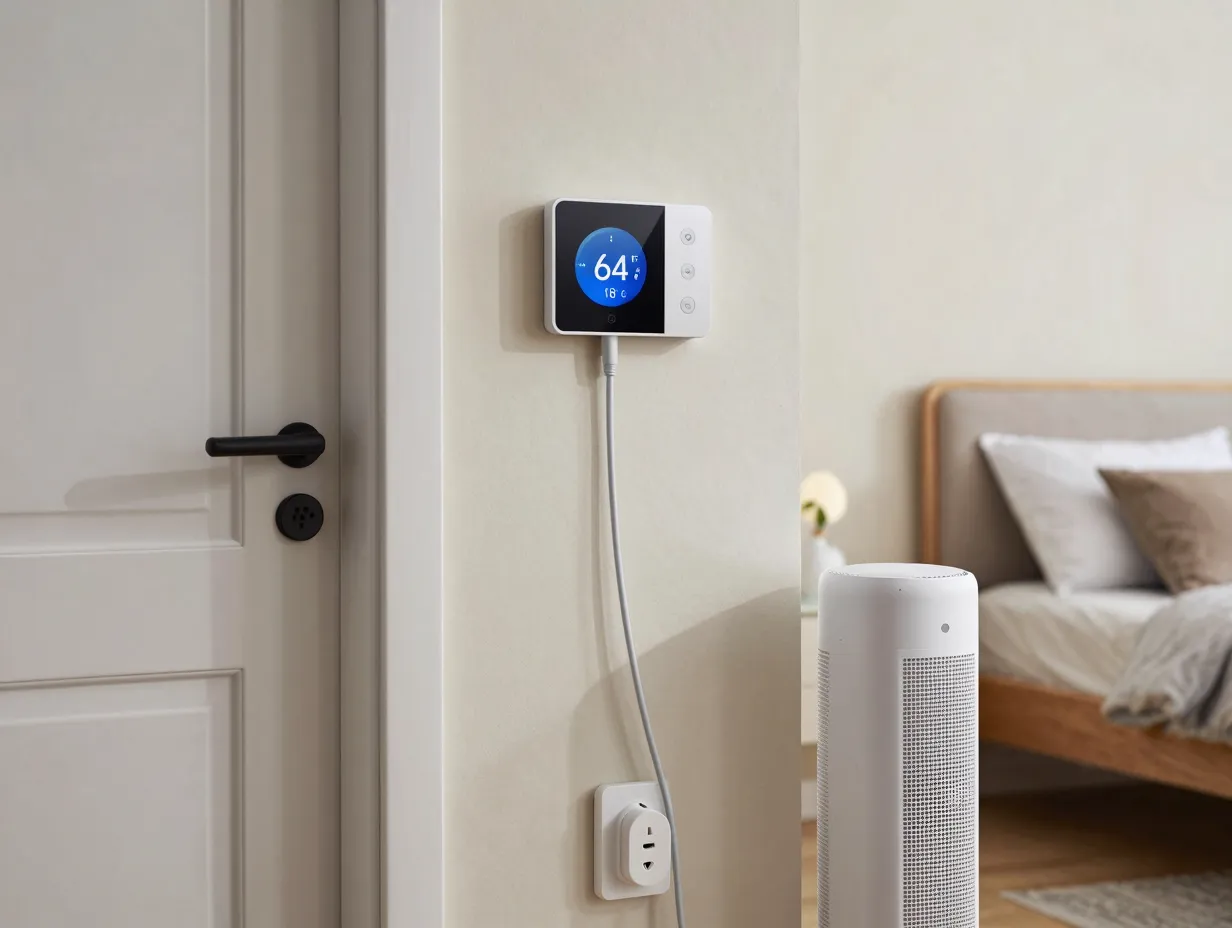
Core body temperature must drop by roughly 1-2°F for the brain to initiate and sustain deep sleep. A bedroom that stays too warm, above 67°F (19°C), makes that drop harder to achieve. Sleep-focused smart bedroom guides consistently identify a target range of 60-67°F (15-19°C) as the sweet spot for most adults [9].
A programmable smart thermostat handles this automatically by cooling the room 30-60 minutes before the scheduled bedtime and allowing a gradual warming in the morning to support natural waking. When paired with automated shading (see Idea 4), the system can also prevent afternoon sun from pre-heating the room before the thermostat compensates.
For those in apartments or homes without central HVAC control, a smart plug connected to a portable fan or window air conditioner can replicate the same effect at a fraction of the cost. Cooling mattress toppers and breathable bedding are complementary tools that work at the micro-level, regulating the temperature of the sleep surface itself, while the thermostat manages the ambient air [9][10].
Key temperature control options by budget:
- Under US$50: Smart plug with a portable fan or tower fan on a schedule
- US$100-200: Mid-range programmable smart thermostat (e.g., Google Nest or Ecobee entry models)
- US$200-400: Cooling mattress topper with dual-zone control
- US$400+: Full smart thermostat plus cooling mattress pad combination
The entire layered setup, thermostat, smart plug for a fan, and a basic cooling pad, can be assembled for roughly US$300, which aligns with the budget benchmarks cited in smart bedroom case studies for 2026 [10].
3. Upgrade to a Smart, Storage-Integrated Bed Frame
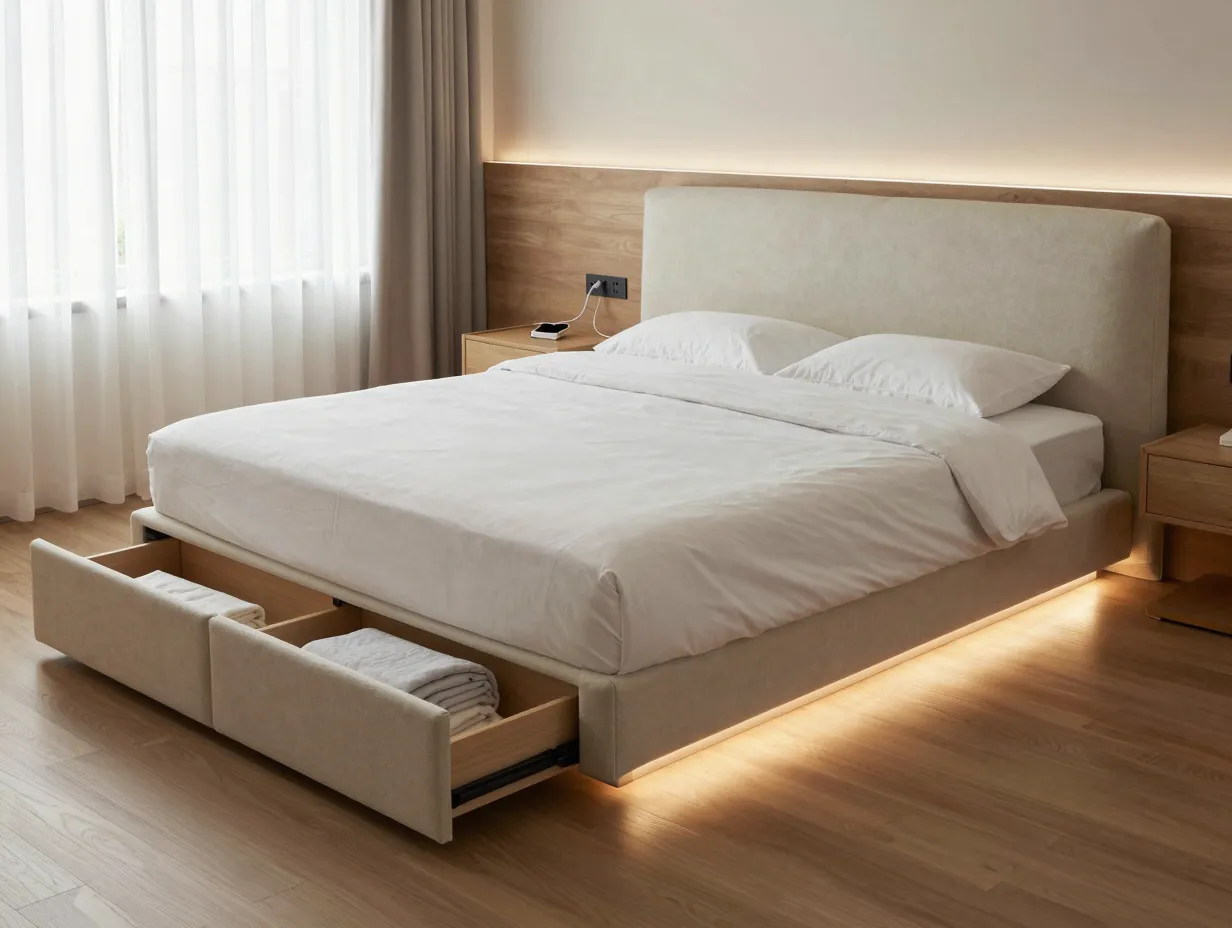
The bed is the visual and functional anchor of the bedroom. In 2026, the leading design trend is platform beds that combine ergonomic adjustability, hidden storage, and integrated ambient lighting into a single, visually calm piece of furniture [1][7].
What to look for in a smart bed frame:
- Adjustable base: Head and foot articulation supports reading, reduces snoring, and helps with acid reflux without requiring a separate wedge pillow.
- Built-in storage: Under-bed drawers or lift-storage systems eliminate the need for bulky dressers, freeing floor space and reducing visual clutter.
- Hidden cable routing: Channels built into the headboard or base keep charging cables, lighting strips, and device cords out of sight.
- Integrated ambient lighting: Low-level LED strips beneath the frame or along the headboard serve as soft nightlights and add a calming visual layer without a separate lamp.
- Curved sculptural headboard: Design analyses from early 2026 highlight curved headboards as both visually soothing and acoustically beneficial, softening sound reflections in hard-walled rooms [1].
Some premium smart beds now embed sleep-tracking sensors directly into the mattress or base, monitoring heart rate, breathing patterns, and movement without a wearable device. This approach merges comfort, ergonomics, and data collection without making the room feel like a gadget showroom [1][7].
For smaller bedrooms, a platform bed with lift storage can replace both a traditional bed frame and a chest of drawers, recovering several square feet of usable floor space. That recovered space makes the room feel larger, which itself contributes to a sense of calm.
4. Add Smart Shading and Blackout Automation
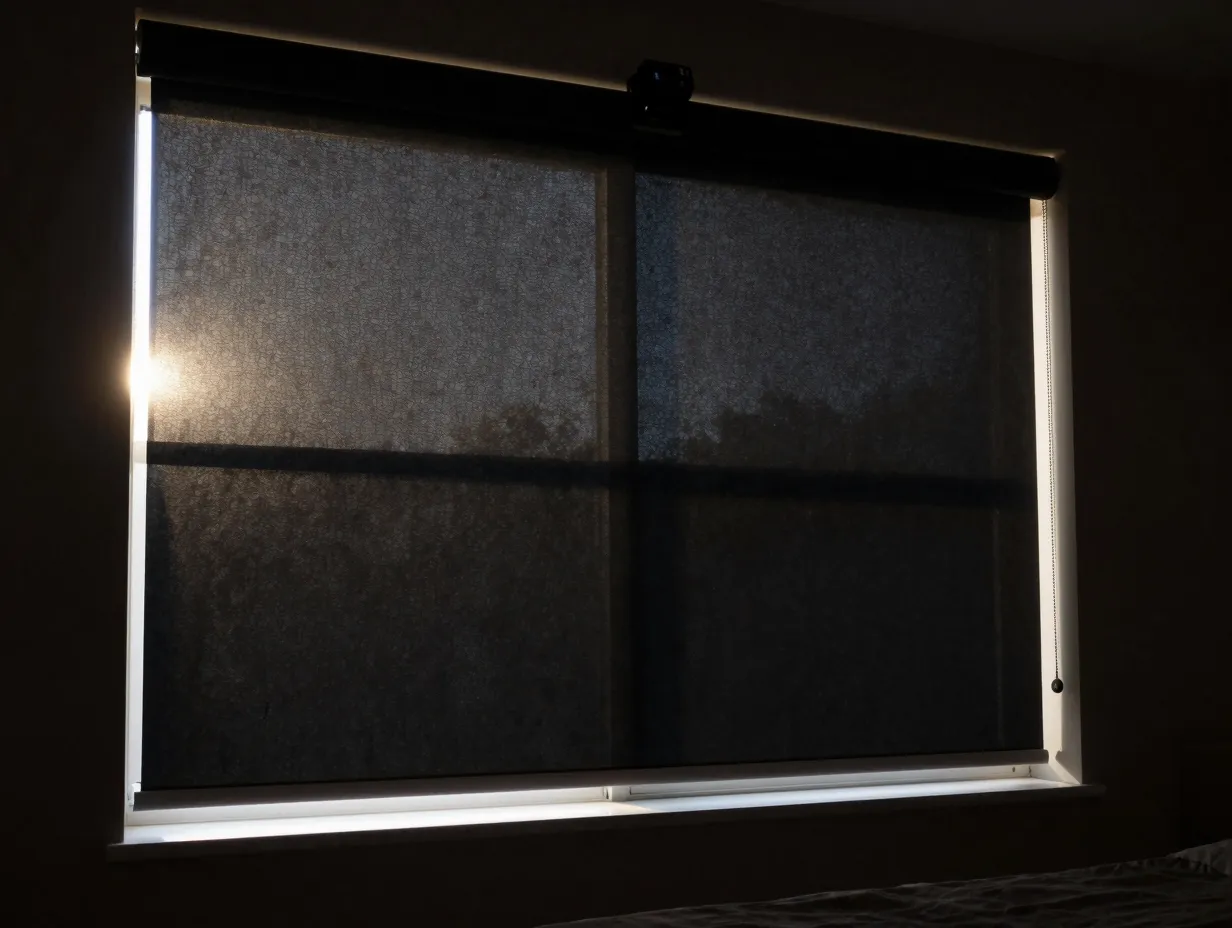
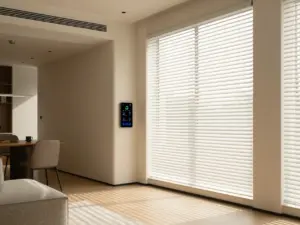
Light entering the bedroom from outside, streetlights, early morning sun, headlights, is a chronobiological disruptor. Even low-level ambient light during sleep has been linked to shallower sleep stages and more frequent micro-arousals. Smart motorized shades solve this problem by automating the open-and-close cycle to match the user’s sleep schedule rather than relying on manual adjustment.
A practical smart shading schedule:
- Sunset (automatic): Shades close fully, blocking external light sources.
- Pre-sleep (30 min before bedtime): Shades remain closed; room lighting shifts to warm amber.
- Morning wake-up (20-30 min before alarm): Shades open gradually, allowing natural light to assist the sunrise simulation from smart bulbs.
- Daytime: Shades open fully to maximize natural daylight and support daytime alertness.
When combined with circadian-responsive lighting (Idea 1), this creates a seamless light environment that the body can actually read as a reliable time cue. The smart thermostat benefits too: closed shades during summer afternoons reduce solar heat gain, lowering the cooling load and cutting energy costs [9].
Motorized shades range from budget-friendly retrofit options (battery-powered motors that clip onto existing roller blinds, starting around US$80-120 per window) to fully integrated systems. For most bedrooms, two windows can be automated for under US$250 without any wiring changes.
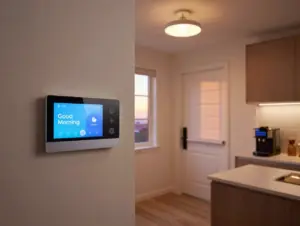
Voice routines that trigger lighting, temperature, white noise, and blinds with a single command, “Good night” or “Wake up”, are highlighted in 2026 smart bedroom guides as one of the most effective ways to reduce the friction that prevents consistent sleep habits [10][13].
5. Improve Air Quality with Smart Purification and Biophilic Design
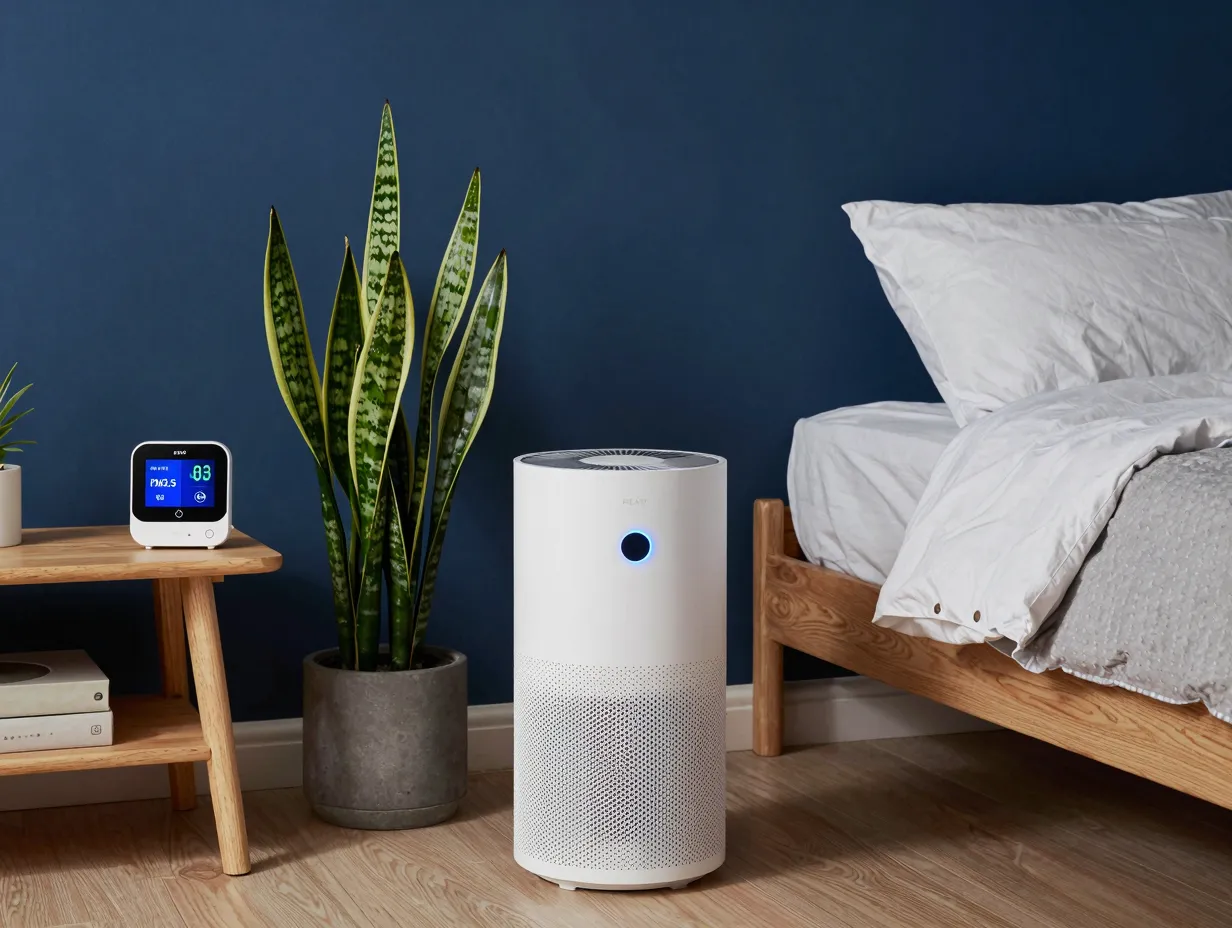
Air quality is an underappreciated dimension of bedroom comfort. Dust mites, pet dander, volatile organic compounds (VOCs) from furniture and paint, and elevated CO2 from overnight breathing all degrade sleep quality in ways that are rarely visible but consistently measurable. A bedroom with poor air quality often produces morning grogginess that is incorrectly attributed to insufficient sleep duration.
The recommended air quality toolkit for 2026:
- Three-stage HEPA air purifier: Capable of capturing particles below 0.3 microns, these units address allergens, fine dust, and some VOCs. Sleep-focused guides frame this as one of three foundational smart bedroom investments alongside temperature control and smart shading [9].
- Smart air quality monitor: Tracks CO2, humidity, particulate matter (PM2.5), and VOCs in real time. When connected to a smart home hub, it can trigger a fan or purifier automatically when levels rise above thresholds.
- Humidifier on a smart plug: Dry air (below 40% relative humidity) irritates nasal passages and disrupts breathing during sleep. A smart plug schedules the humidifier to run during sleeping hours only.
- Live plants: Pothos, snake plants, and peace lilies contribute modestly to air quality while adding a biophilic element that research associates with reduced psychological stress.
Biophilic minimalism, a design philosophy that combines natural materials, living plants, and uncluttered surfaces, is one of the defining bedroom trends of 2026 [4][6]. Deep, inky blues for walls and textiles, combined with warm wood tones and natural textures, create a calm, restorative environment that pairs well with warm smart lighting rather than bright screens [4]. Hiding electronics in built-ins, routing cables out of sight, and keeping nightstand surfaces clear reduces cognitive load and signals to the brain that the space is for rest, not work [1][5][6].
The combination of a HEPA purifier, a smart air quality monitor, and two or three well-chosen plants can be assembled for well under US$200 and delivers a measurable improvement in the sensory quality of the room overnight.
6. Consolidate Sleep Technology with Multi-Function Devices
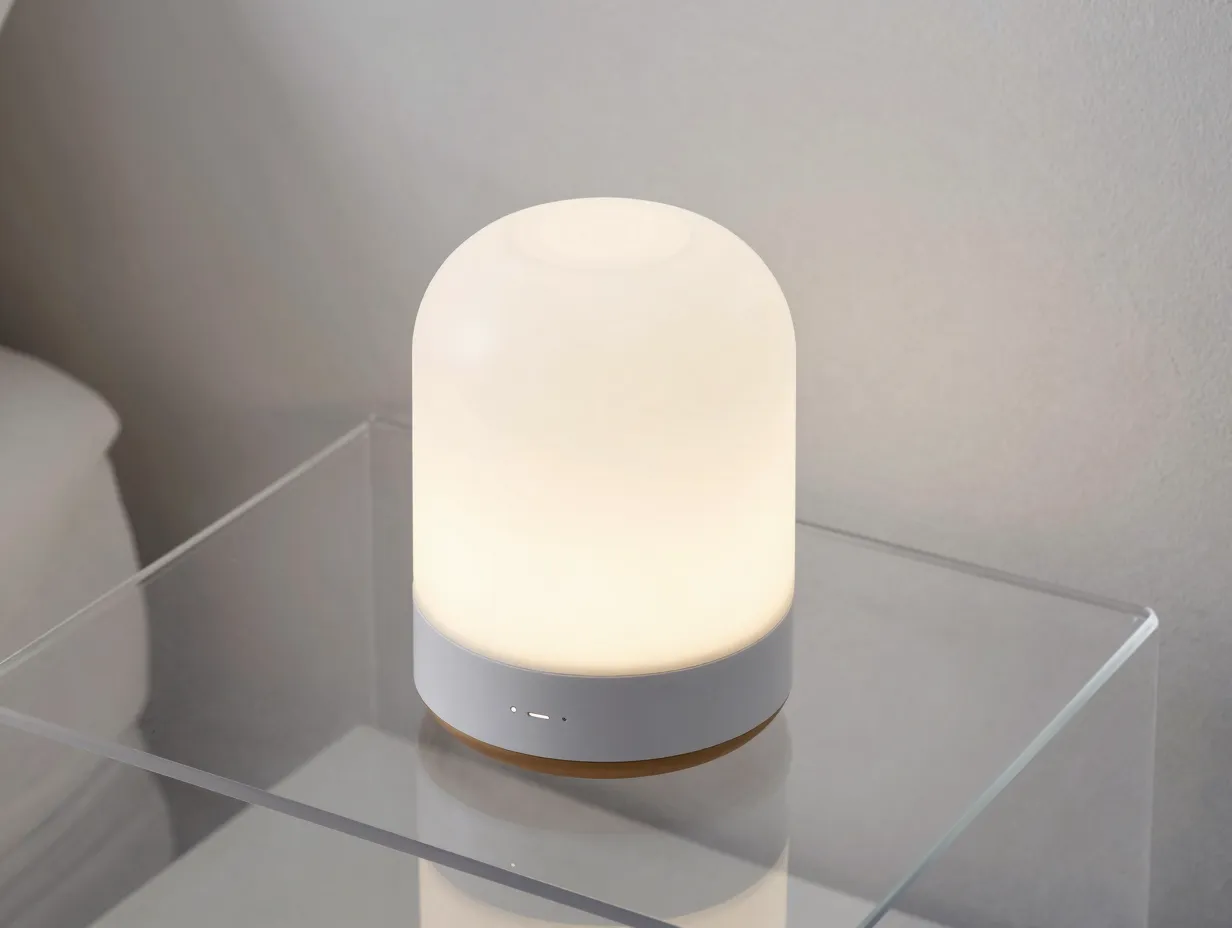
The final idea addresses a paradox at the heart of smart bedroom design: adding too many devices creates the cluttered, stimulating environment that undermines sleep. The solution is consolidation, choosing products that perform multiple functions in a single, visually quiet form factor.
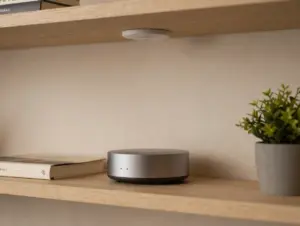
The Sleepal Smart AI Sleep Lamp, introduced in August 2026, is a representative example of this trend. It combines circadian-aware tunable lighting, environmental sensing (temperature, humidity, CO2), and contactless sleep analysis, using radar-based sensors rather than a wearable, in a single bedside lamp [2]. By embedding all of these functions into one device, it eliminates the need for a separate sleep tracker, a separate nightstand thermometer, and a separate smart bulb, while keeping the nightstand surface clear [2].
Principles for consolidating smart bedroom technology:
- Start with three core devices: A tunable smart bulb (or smart lamp), a smart thermostat (or smart plug with a fan), and a voice assistant hub. These three cover lighting, temperature, and automation control [10][13].
- Add incrementally: Introduce one device at a time, a smart air quality monitor, motorized shades, or a white noise machine on a smart plug, and verify that each addition genuinely improves the environment before adding the next.
- Prioritize multi-function products: A lamp that also tracks sleep, a bed frame that also stores linens, a thermostat that also monitors humidity, each consolidation reduces both visual clutter and the number of apps to manage.
- Use voice routines to unify the system: A single “Good night” command that dims lights, lowers the thermostat, starts white noise, and closes shades removes the need to interact with any individual device at bedtime [10][13].
The trajectory for 2026 and beyond is clear: tunable lighting, automated climate control, and basic sleep analytics are becoming standard features rather than premium add-ons. Falling prices for smart bulbs, often US$12-18 per tunable bulb in mid-2026, and mainstream brand support mean that building a relaxing, efficient bedroom no longer requires a custom installation or a large budget [2][6][11].
Putting the 6 Smart Bedroom Ideas Together
The true power of these 6 smart bedroom ideas for a more relaxing and efficient space emerges when they are layered rather than implemented in isolation. Each idea reinforces the others:
- Circadian lighting sets the biological clock; smart shading reinforces it with natural light cues.
- Temperature automation supports the body’s need for a cooler sleep environment; the bed frame’s built-in storage reduces the visual clutter that elevates stress hormones.
- Air purification ensures the environment is physically clean; biophilic design ensures it feels psychologically calm.
- Multi-function devices tie the system together without adding new sources of stimulation.
A realistic implementation path for most households:
Phase 1 (US$50-100): Replace two bedside bulbs with tunable smart bulbs. Set up a basic circadian lighting schedule using a free smart home app.
Phase 2 (US$100-200): Add a smart thermostat or a smart plug with a programmable fan. Pair with a white noise machine on a second smart plug.
Phase 3 (US$200-300): Introduce a HEPA air purifier, a smart air quality monitor, and motorized shades for one or two windows.
Phase 4 (ongoing): Upgrade the bed frame to a storage-integrated platform model at the next natural replacement cycle. Consider a multi-function sleep lamp to consolidate nightstand devices.
This phased approach keeps costs manageable while delivering noticeable improvements at each stage.
Conclusion
The bedroom environment has a direct, measurable effect on sleep quality, morning energy levels, and overall wellbeing, yet most people treat it as a passive backdrop rather than an active tool. The 6 smart bedroom ideas for a more relaxing and efficient space covered here, circadian-responsive lighting, automated temperature control, storage-integrated smart beds, motorized shading, air quality management, and consolidated sleep technology, represent the most evidence-backed, cost-effective upgrades available in 2026.
Actionable next steps:
- Audit the current bedroom for the two biggest friction points: lighting color at night and overnight temperature. Address whichever is worse first.
- Replace at least one bedside bulb with a tunable smart bulb this week and set up a basic warm-light schedule for the hour before bed.
- Download a free smart home app (Google Home, Amazon Alexa, or Apple Home) and create a single “Good night” routine that automates at least two devices simultaneously.
- Set a 30-day review: track subjective sleep quality and morning energy on a simple 1-5 scale before and after each upgrade to confirm what is actually working.
Small, deliberate changes compound quickly. A bedroom that supports the body’s natural rhythms rather than disrupting them is not a luxury, it is a practical investment in daily performance and long-term health.
References
[1] Genius Bedroom Ideas For 2026 – https://www.thecoolist.com/genius-bedroom-ideas-for-2026/
[2] Product Monday Sleepal Smart Ai Sleep Lamp – https://www.lightnowblog.com/2026/08/product-monday-sleepal-smart-ai-sleep-lamp/
[3] Smart Bulbs Circadian Rhythm Sleep Color Temperature – https://www.smarthomeexplorer.com/guides/smart-bulbs-circadian-rhythm-sleep-color-temperature
[4] Bedroom Design Trends For 2026 – https://www.dreamofhome.co.uk/2026/01/08/bedroom-design-trends-for-2026/
[5] 3 Xu Huong Thiet Ke Phong Ngu Thong Minh Dan Dau Nam 2026 197 – https://thosuanha24h.com/vi/tin-tuc/3-xu-huong-thiet-ke-phong-ngu-thong-minh-dan-dau-nam-2026-197
[6] Circadian Responsive Lighting Biophilic Minimalism Bedroom 2026 – https://mattressmiracle.ca/blogs/mattress-miracle-blog/circadian-responsive-lighting-biophilic-minimalism-bedroom-2026
[7] Modern Bed Design – https://www.homelane.com/design-ideas/bedroom-design/modern-bed-design/
[9] Ultimate Smart Bedroom Setup For Better Sleep – https://smarthomewizards.com/ultimate-smart-bedroom-setup-for-better-sleep/
[10] Sleep Optimized Smart Bedroom – https://www.pluggedinhome.com/sleep-optimized-smart-bedroom/