7 Must-Have Smart House Gadgets to Automate Your Daily Life
By 2026, the average connected home contains more than 17 smart devices, yet most homeowners use fewer than half of them to their full potential. The gap between owning smart gadgets and actually automating daily life is wider than most people realize, and it almost always comes down to choosing the wrong devices at the start. This guide on the 7 Must-Have Smart House Gadgets to Automate Your Daily Life cuts through the noise and focuses on the tools that deliver real, measurable convenience, not just novelty.
Disclosure: This post contains affiliate links. As an Amazon Associate, we earn from qualifying purchases, and at no extra cost to you.
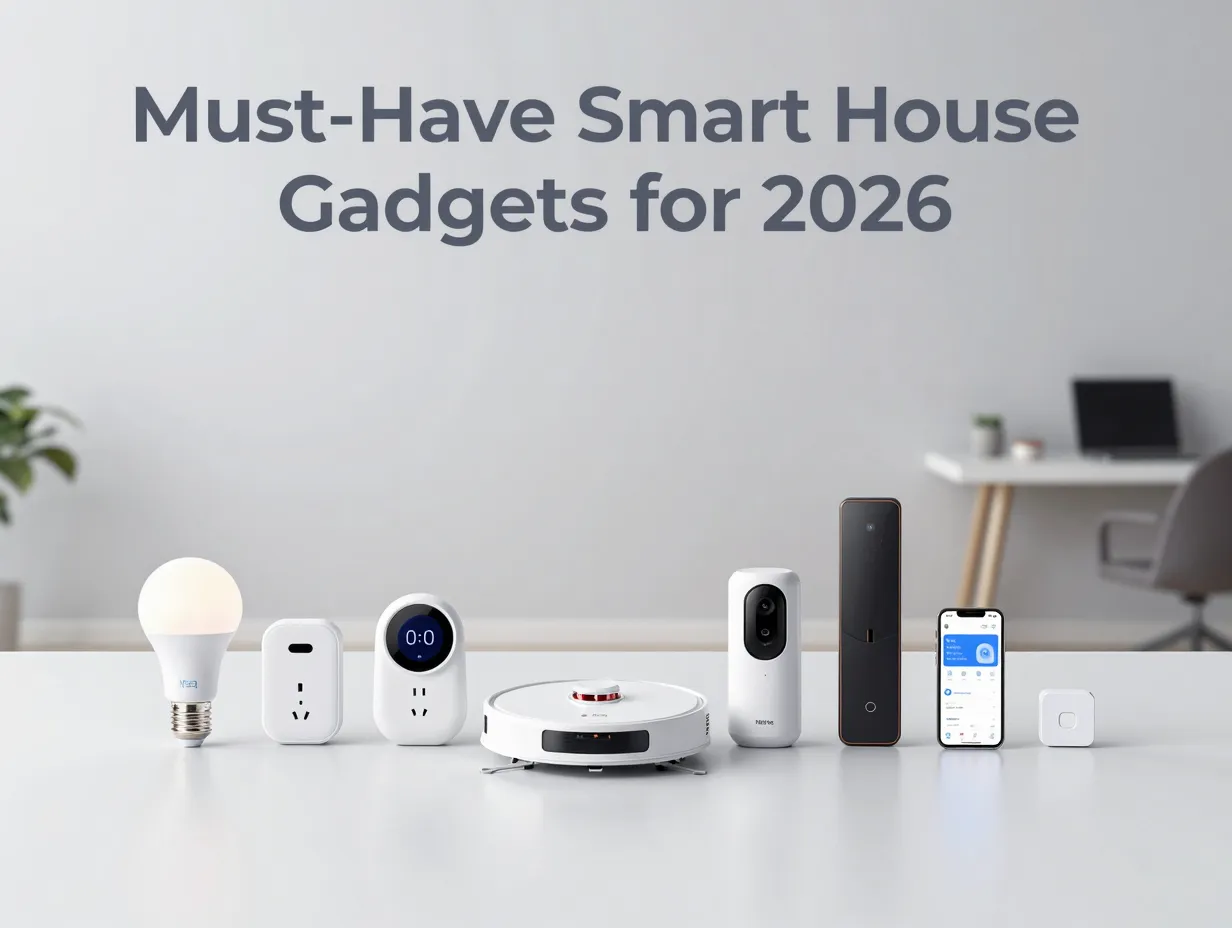
Whether you are building a smart home from scratch or upgrading an existing setup, the 7 must-have smart house gadgets to automate your daily life listed here are chosen for their practical impact, cross-platform compatibility, and long-term value. Each one addresses a specific friction point in everyday routines, from managing energy costs to keeping floors clean without lifting a finger.
Key Takeaways
- The Matter protocol (now at version 1.4) is the single most important factor in choosing future-proof smart home devices in 2026 [1]
- Smart lighting and smart plugs remain the fastest, lowest-cost entry point for home automation
- A modern robot vacuum/mop combo can replace a daily chore entirely, not just assist with it
- Smart locks and sensors are the hidden glue that makes complex automations actually work
- A smart display hub ties every device together into a single, voice-controlled command center
Why Matter Protocol Changes Everything in 2026
Before diving into the list of 7 must-have smart house gadgets to automate your daily life, one concept demands attention: the Matter protocol. Without understanding it, buyers risk purchasing devices that will not work together, or will stop receiving updates within a year or two.
Matter is an open-source connectivity standard developed by the Connectivity Standards Alliance (CSA). It allows smart home devices from different brands, Apple, Google, Amazon, Samsung, and hundreds of others, to communicate on the same local network without requiring a shared cloud account [3]. Think of it as a universal language that your smart bulb, thermostat, and lock can all speak fluently.
Matter version 1.4, released in early 2026, expanded support to include energy management devices, electric vehicle chargers, and a broader range of sensors [1]. This makes interoperability itself a must-have feature, not just a nice-to-have bonus. Any gadget purchased today that lacks Matter certification risks becoming an isolated island in your home network within a few years [2].
“Matter does not just solve today’s compatibility headaches, it future-proofs the investment homeowners make in their smart devices.” [5]
Thread, the low-power mesh networking protocol that often runs beneath Matter, is equally important. Thread-based devices do not need a dedicated hub and can relay signals to each other, creating a resilient network that keeps working even if the internet goes down [7].
What to look for on the box:
- “Works with Matter” or the Matter logo
- Thread radio support (especially for sensors and locks)
- Local processing capability (not cloud-dependent)
With that foundation in place, here are the 7 devices that will genuinely transform daily routines.
The 7 Must-Have Smart House Gadgets to Automate Your Daily Life
1. Smart Lighting and Smart Plugs
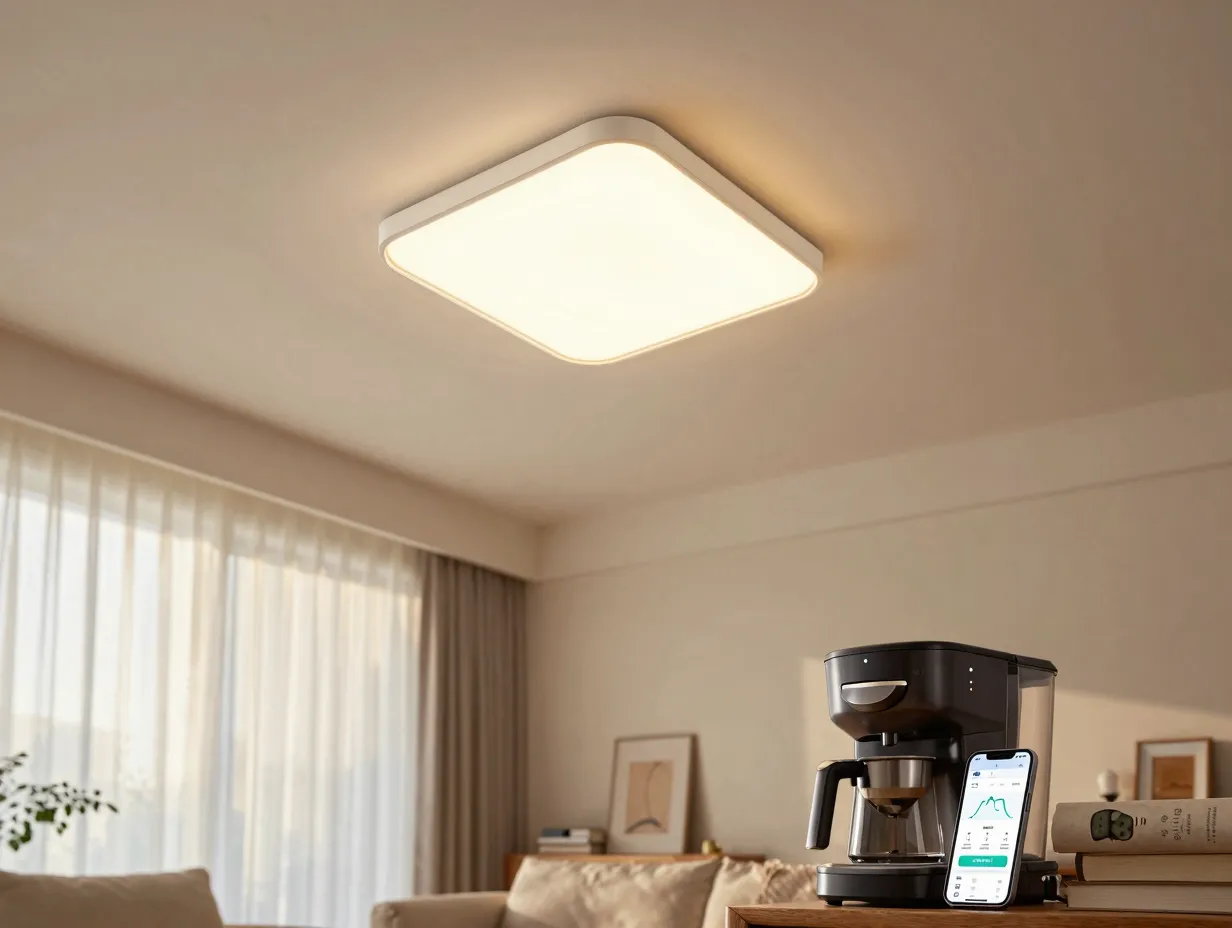
Smart lighting is the entry point for home automation, and it earns that position for good reason. A set of Matter-certified smart bulbs or a smart switch can automate morning wake-up routines, evening wind-down schedules, and security lighting without any manual effort after the initial setup [9].
Why they matter:
- Smart bulbs can be scheduled to gradually brighten in the morning, acting as a natural alarm clock
- Smart plugs turn any standard appliance, a coffee maker, a fan, a lamp, into a connected device
- Occupancy-based lighting (lights that turn on when you enter a room and off when you leave) can reduce electricity bills noticeably over a year
Modern smart plugs with energy monitoring go further. They track how much power each appliance draws in real time, helping identify energy hogs and allowing users to set automatic shutoffs for devices left on accidentally [8].
Recommended features to prioritize:
| Feature | Why It Matters |
|---|---|
| Matter certification | Works with any major platform |
| Energy monitoring | Tracks real-time power usage |
| Scheduling and scenes | Automates routines without manual input |
| Dimming capability | Supports circadian rhythm lighting |
The combination of smart bulbs and smart plugs creates the backbone of a home automation system. Every other gadget on this list benefits from having reliable, automated lighting already in place.
2. Smart Thermostat
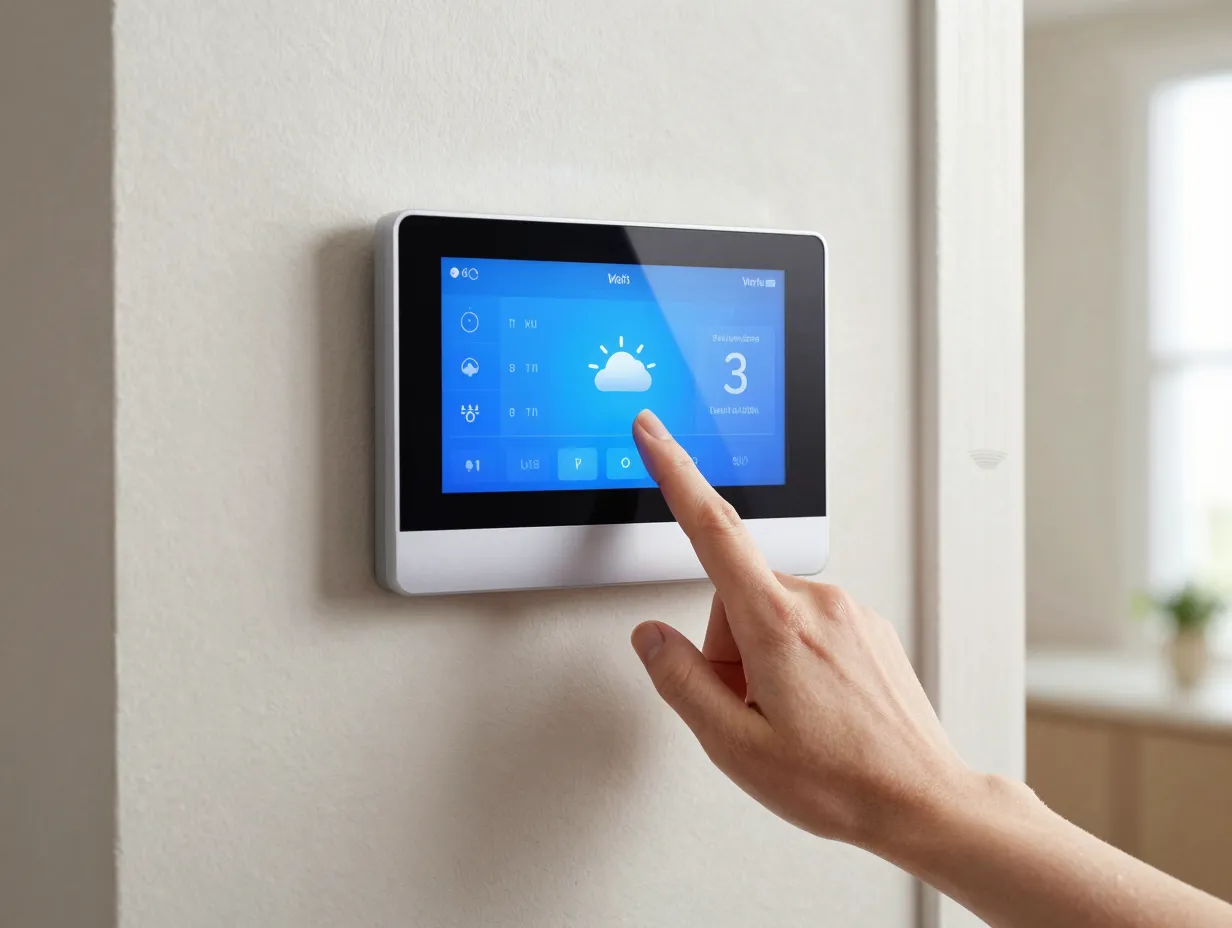
A smart thermostat is the highest-return investment in home automation. Heating and cooling account for roughly 40 to 50 percent of a typical home’s energy bill, and a well-programmed smart thermostat can reduce that figure significantly through learning algorithms and occupancy detection.
The 2026 generation of smart thermostats goes beyond simple scheduling. Matter-based energy devices now integrate directly with utility company demand-response programs, automatically adjusting temperature during peak pricing hours to lower costs without sacrificing comfort [1][2]. Some models communicate with smart plugs and sensors throughout the home to build a more accurate picture of which rooms are occupied and when.
Core automation capabilities:
- Learns household schedules and adjusts automatically within one to two weeks
- Geofencing turns heating or cooling down when everyone leaves and restores comfort settings before anyone arrives home
- Integration with weather forecasts pre-conditions the home before extreme temperatures hit
- Voice control through any Matter-compatible hub
A smart thermostat pays for itself. Independent studies consistently show energy savings of 10 to 23 percent on heating and cooling costs after installation. Over a three-year period, that return typically exceeds the device’s purchase price several times over.
When shopping, confirm that the model supports Matter over Wi-Fi or Thread, and verify compatibility with the existing HVAC system, particularly for homes with heat pumps or multi-stage systems.
3. Robot Vacuum and Mop Combo
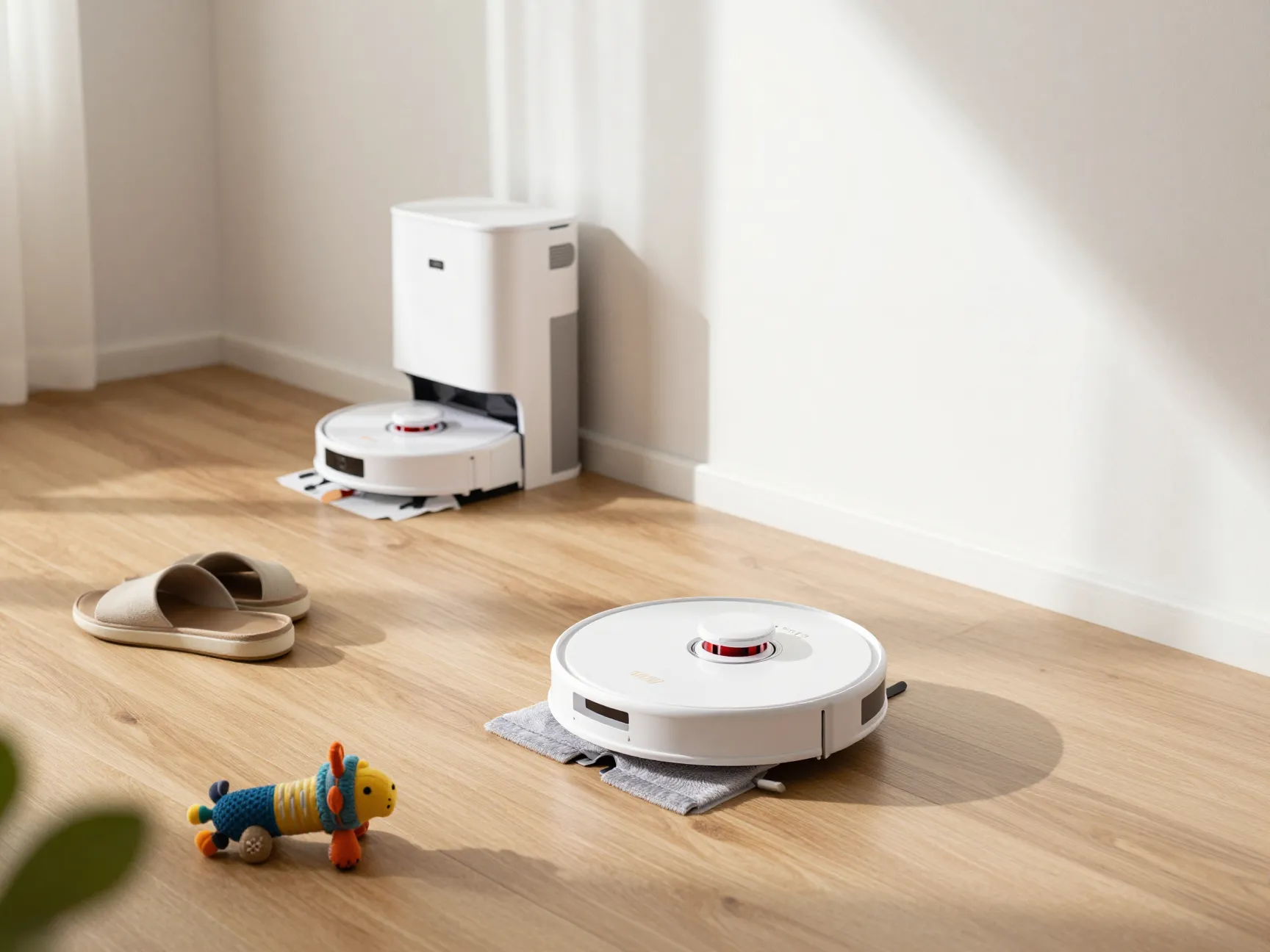
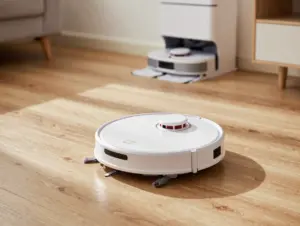
The 2026 generation of robot vacuum and mop combos has crossed a threshold. These are no longer novelty gadgets that require constant supervision, they are sophisticated autonomous systems capable of handling daily floor maintenance without human intervention [6].
CES 2026 showcased several models with capabilities that were considered premium-tier just two years ago, now available at mid-range prices [10]. The most significant advances include:
- AI-powered obstacle detection that recognizes and avoids specific objects (shoes, pet toys, cables) rather than simply bumping into them
- Self-emptying and self-cleaning bases that allow the robot to operate for weeks without manual maintenance
- Mop pad auto-washing and drying within the dock, preventing mildew and odor
- Multi-floor mapping that stores separate floor plans and switches automatically
The practical impact on daily life is significant. A robot vacuum scheduled to run every morning while the household is at work or school means floors are consistently clean without any effort. Pairing the robot with a smart plug allows the dock to be powered down during hours when the robot is not needed, extending the device’s lifespan.
What separates a daily-essential robot from a novelty:
- Reliable obstacle avoidance (not just cliff detection)
- A self-emptying base with at least a 30-day capacity
- Mop functionality that actually lifts dried stains, not just smears water
- App-based zone cleaning and room-specific schedules
The top models reviewed ahead of mid-2026 launches demonstrate that the category has matured enough to justify a place in any serious home automation setup [6].
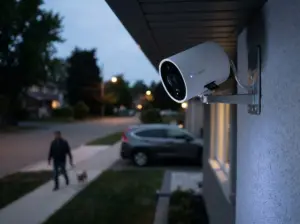
4. Smart Security Camera and Video Doorbell
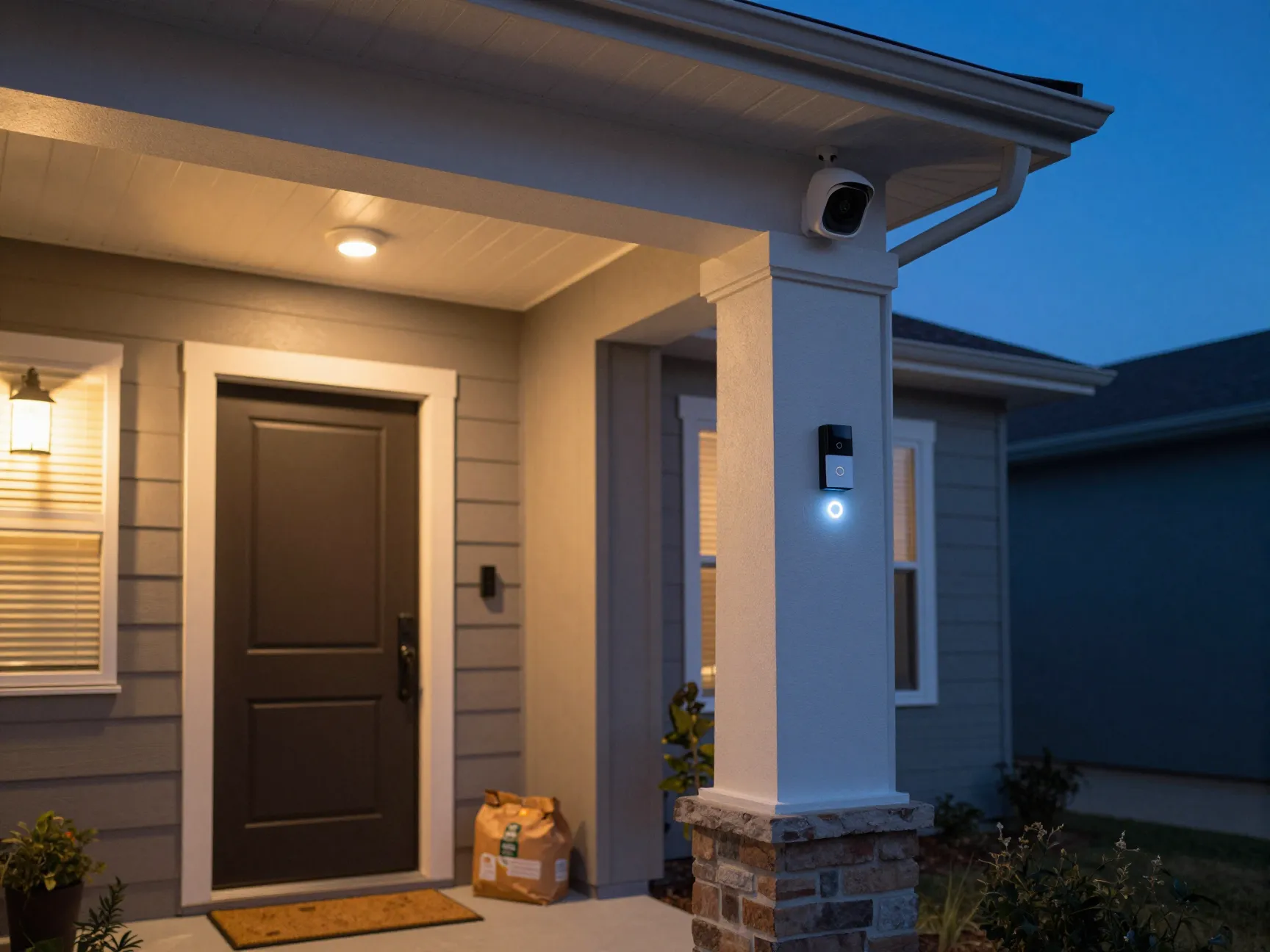
Home security is one of the most emotionally compelling reasons people invest in smart home gadgets, and video doorbells in particular have become mainstream fixtures on residential properties. The combination of a video doorbell and at least one outdoor security camera creates a monitoring system that can be checked from anywhere in the world.
The 2026 smart security camera market is evolving rapidly, though it is worth noting that Matter support in this category still lags behind lighting and thermostats [4]. Most cameras still rely on proprietary cloud platforms, which means compatibility research is essential before purchasing.
Key features to evaluate:
- Local storage option (microSD or NAS) to avoid mandatory subscription fees
- Person, vehicle, and package detection to reduce false alerts from animals or wind
- Two-way audio with noise cancellation for clear doorbell conversations
- Night vision or color night vision for usable footage in low-light conditions
- End-to-end encryption for footage privacy
Video doorbells deliver an automation benefit beyond security: package detection alerts notify homeowners the moment a delivery arrives, and smart lock integration can allow trusted delivery services to place packages inside a secure entryway automatically.
A practical note on subscriptions: Many cameras offer reduced functionality without a cloud plan. Before purchasing, map out exactly which features require a paid subscription and factor that recurring cost into the total ownership calculation.
5. Smart Lock and Contact/Motion Sensors
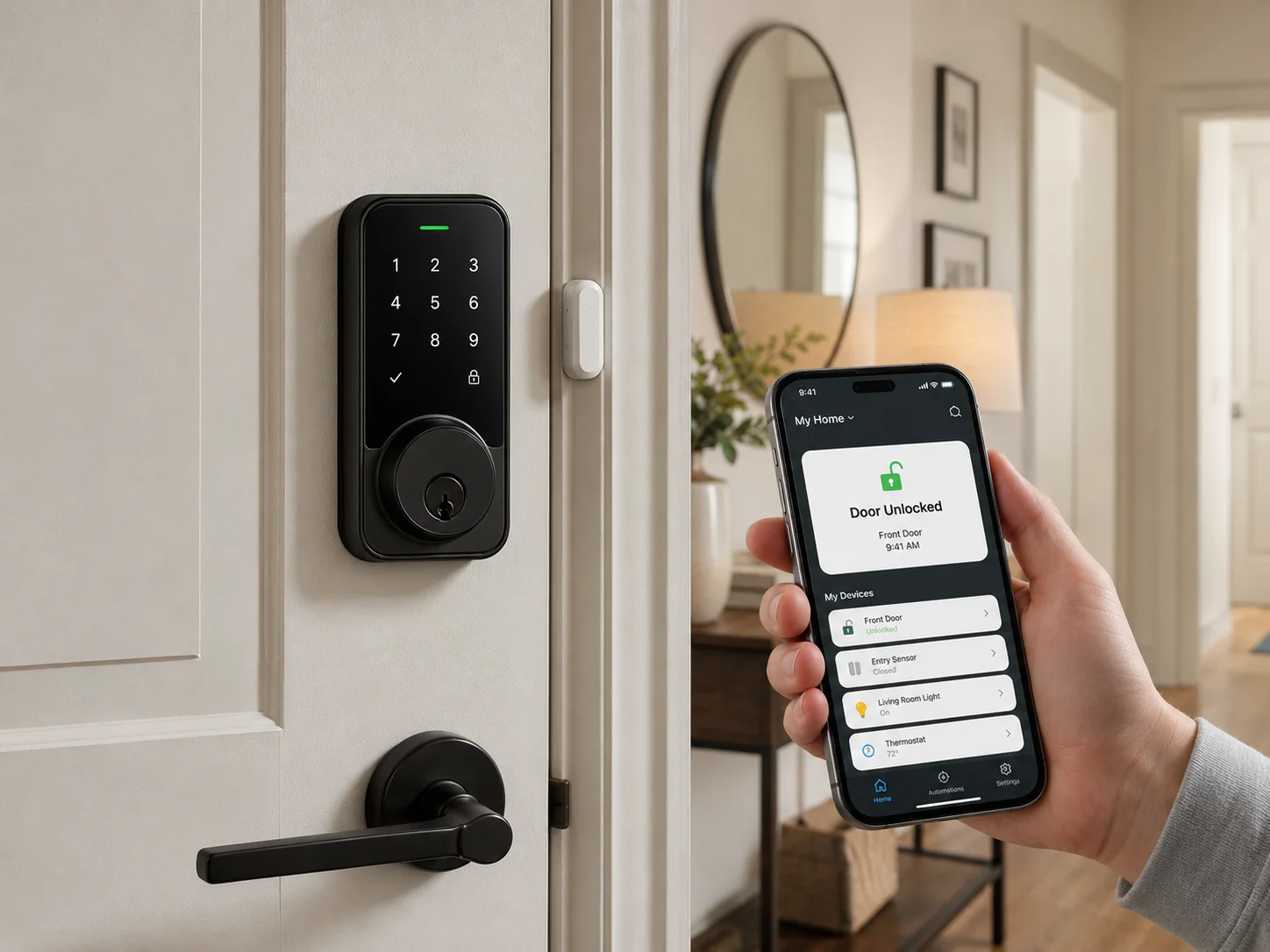
Smart locks are the quiet workhorses of home automation. They rarely get the attention of robot vacuums or smart displays, but they are the glue that holds complex automations together. A Thread-based smart lock communicates instantly with other devices on the network, triggering chains of actions the moment a door opens or closes [7][8].
Practical automation examples powered by smart locks:
- Arriving home unlocks the door, turns on lights, adjusts the thermostat, and disarms the security system simultaneously
- Leaving home locks the door, turns off all lights, lowers the thermostat, and activates cameras in a single action
- A guest code that expires automatically after a set date or number of uses
- Alerts sent to a phone if the door is left unlocked for more than a defined period
Contact sensors (door/window sensors) and motion sensors expand this capability further. A contact sensor on a medicine cabinet can send a reminder if it is not opened by a certain time. A motion sensor in a hallway can trigger night lights automatically, eliminating the need to fumble for switches in the dark [9].
Thread-based sensors are particularly valuable because they join the home’s mesh network directly, respond in under a second, and continue working during internet outages. For households with children, elderly family members, or pets, this reliability is not optional, it is essential.
Smart lock buying checklist:
- Matter and Thread certification for maximum compatibility
- Physical key backup (critical for emergencies)
- Battery life indicator with low-battery alerts
- Auto-lock timer (re-locks after a set period if left open)
- Tamper detection alerts
6. Smart Display Hub
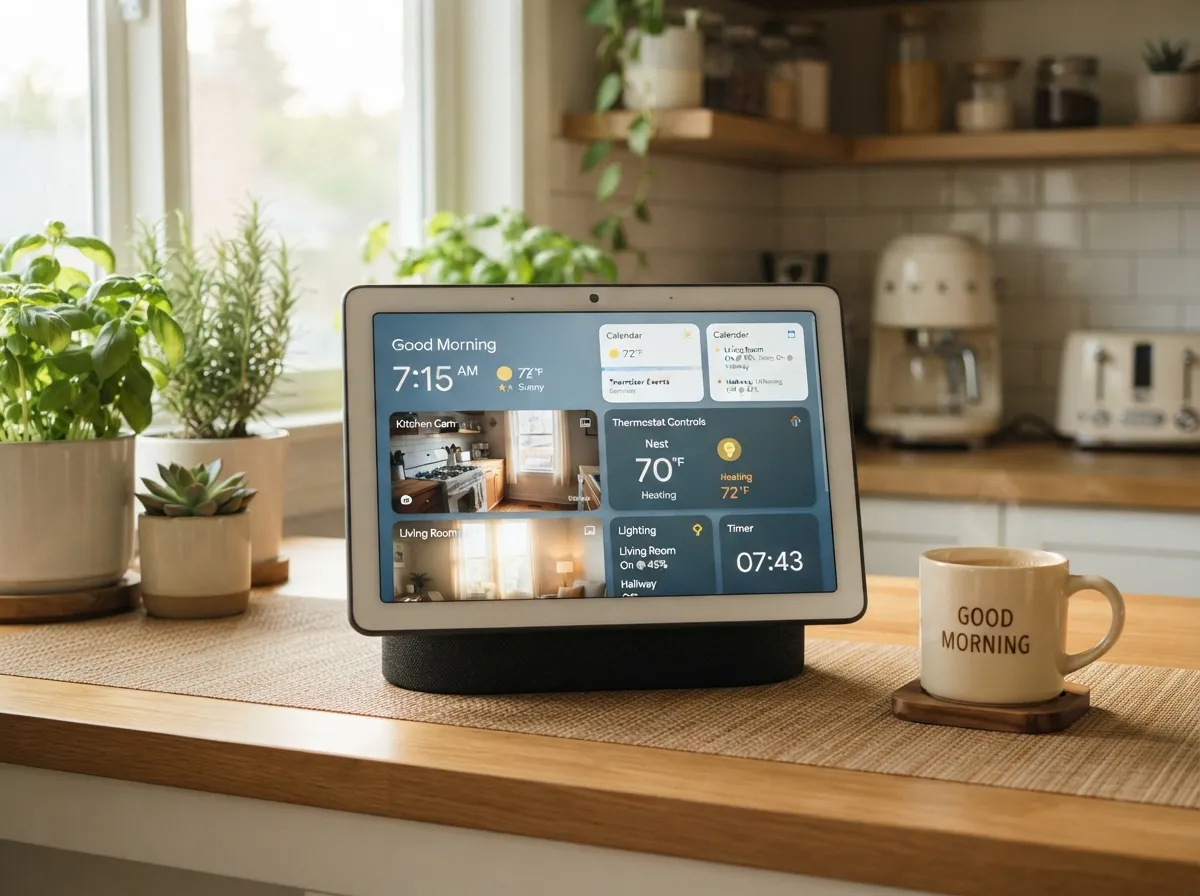
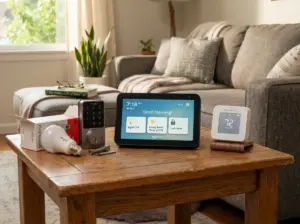
A smart display hub, a touchscreen device that acts as the central control panel for the entire smart home, is the device that transforms a collection of individual gadgets into a unified, automated system. Without a central hub, managing seven or more smart devices means juggling seven or more apps, voice assistants, and interfaces.
The leading smart displays in 2026 support Matter natively, meaning they can discover and control any certified device on the network regardless of brand [3][5]. They serve multiple roles simultaneously:
- Voice control center for hands-free commands throughout the home
- Visual dashboard showing camera feeds, thermostat settings, lock status, and energy usage at a glance
- Automation trigger point for routines that activate based on time, location, or device state
- Intercom system for homes with multiple displays in different rooms
- Entertainment hub for music, video calls, and streaming
Placement matters significantly. A smart display in the kitchen handles morning routines, weather, calendar, lighting, and coffee maker activation, while one near the front door manages arrivals and departures. The combination of voice and touch control makes the hub accessible to every member of the household, including those who are less comfortable with smartphone apps.
Compatibility note: When selecting a hub, confirm it supports Matter as a controller (not just as a device). Some displays can be controlled by Matter but cannot control other Matter devices, a critical distinction that affects the entire system’s functionality [2].
7. Smart Water Leak and Air Quality Sensors
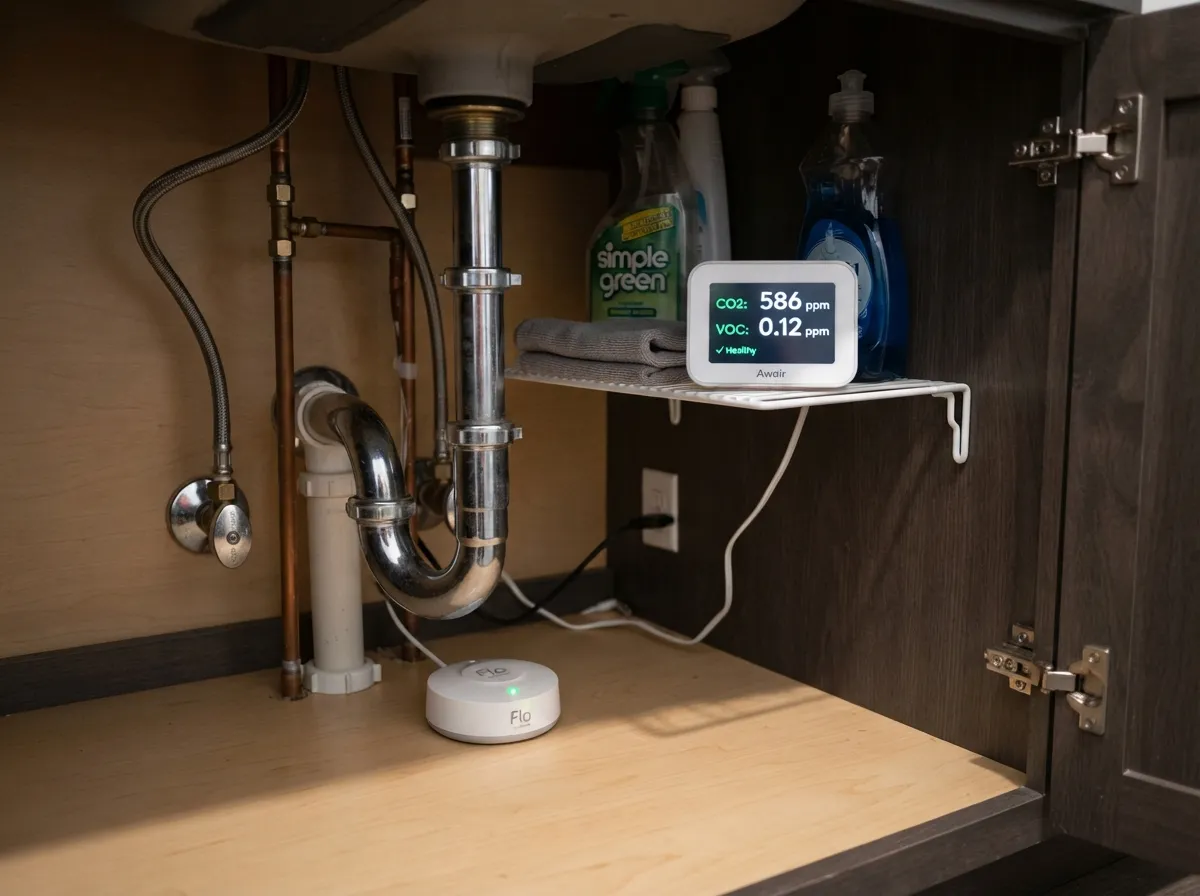
The final entry in the 7 must-have smart house gadgets to automate your daily life list addresses two of the most underestimated risks in any home: water damage and poor indoor air quality. These sensors are inexpensive, easy to install, and capable of preventing thousands of dollars in damage or serious health consequences.
Smart water leak sensors placed under sinks, behind washing machines, near water heaters, and beside dishwashers detect moisture the moment it appears. When paired with a smart water shutoff valve, the system can automatically stop the water supply before significant damage occurs. For renters and homeowners alike, a single prevented leak event can pay for an entire smart home setup.
Smart air quality monitors track:
| Metric | Why It Matters |
|---|---|
| CO2 levels | High CO2 causes fatigue and poor concentration |
| VOCs (volatile organic compounds) | Off-gassing from furniture and cleaning products |
| PM2.5 particulate matter | Fine particles linked to respiratory issues |
| Humidity | Too high encourages mold; too low damages wood and skin |
| Temperature | Baseline comfort and HVAC efficiency reference |
When an air quality sensor detects elevated CO2 or VOC levels, it can automatically trigger a smart ventilation fan, send an alert to a phone, or adjust the HVAC system to increase fresh air circulation. For households with asthma sufferers, infants, or elderly residents, this automation is not a luxury, it is a health safeguard.
Thread-enabled air quality sensors join the home mesh network seamlessly and report data in real time without requiring a separate hub or bridge [7].
How to Build Your Smart Home in the Right Order
Buying all seven devices at once is rarely practical or necessary. A phased approach delivers faster results and avoids the frustration of compatibility issues discovered after purchase.
Recommended build sequence:
- Start with smart plugs and one or two smart bulbs to learn the platform
- Add a smart thermostat for immediate energy savings
- Install a smart lock and door sensor to enable arrival/departure automations
- Add a smart display hub to unify control
- Deploy a robot vacuum to eliminate a daily chore
- Expand security with a video doorbell and camera
- Complete the system with leak and air quality sensors
This sequence ensures each addition builds on the previous layer, and that compatibility is confirmed at every step before significant investment is made.
Conclusion
The 7 must-have smart house gadgets to automate your daily life outlined in this guide are not chosen for their headline features or marketing appeal, they are chosen because each one addresses a real, recurring friction point in daily life. Together, they form a layered system where lighting, climate, security, cleaning, and safety all work in concert.
Actionable next steps:
- Audit the smart devices already in the home and identify which ones support Matter
- Replace any non-Matter devices that are due for an upgrade with certified alternatives
- Start with the smart thermostat or smart plug/lighting combination for the fastest return on investment
- Use the phased build sequence above to expand the system without compatibility surprises
- Revisit the Matter certification database at the CSA website before any new purchase to confirm interoperability
The technology is mature, the standards are stable, and the cost of entry has never been lower. The only remaining step is choosing where to start.
References
[1] Matter 1 4 Spec Released March 2026 – https://consumertechwire.com/news/matter-1-4-spec-released-march-2026/
[2] Matter 1 4 And The State Of Smart Home Interop 2026 – https://consumertechwire.com/analysis/matter-1-4-and-the-state-of-smart-home-interop-2026/
[3] Matter Protocol Smart Home Explainer 2026 – https://smarthomebrief.com/protocols-and-platforms/matter-protocol-smart-home-explainer-2026
[4] Smart Home Launches July 2026 – https://www.t3.com/home-living/smart-home/smart-home-launches-july-2026
[5] Matter Explained What It Means For Your Smart Home – https://smarthomegearhq.com/blog/matter-explained-what-it-means-for-your-smart-home
[6] Ive Seen Most Of 2026s New Robot Vacuums And These Are The 2 Models I Cant Wait To Try – https://www.techradar.com/home/robot-vacuums/ive-seen-most-of-2026s-new-robot-vacuums-and-these-are-the-2-models-i-cant-wait-to-try
[7] Matter Protocol Explained Certification – https://certifbus.com/en/guides/matter-protocol-explained-certification
[8] Matter Protocol 2026 – https://homesmartly.org/posts/matter-protocol-2026/
[9] The Best Smart Home Devices – https://www.pcmag.com/picks/the-best-smart-home-devices
[10] Ces 2026 Robot Vacuum Announcements – https://mashable.com/article/ces-2026-robot-vacuum-announcements