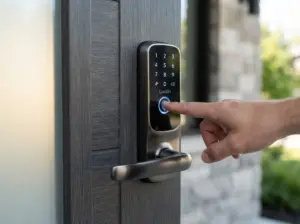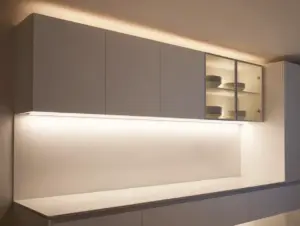
6 Smart Home Ideas Where Technology Meets Beautiful Design
By 2026, more than 4,000 devices carry Matter certification, and roughly 89% of them work across competing platforms without a single proprietary hub cluttering a countertop [1]. That number tells a bigger story than raw convenience: the smart home has finally grown up. The era of blinking routers, tangled remotes, and gadgets that looked like they belonged in a server room is giving way to something far more considered. These 6 Smart Home Ideas Where Technology Meets Beautiful Design prove that the best technology in a home is the kind you barely notice, until you need it.
Disclosure: This post contains affiliate links. As an Amazon Associate, we earn from qualifying purchases, and at no extra cost to you.
Key Takeaways
- The dominant 2026 smart home trend is technology that disappears into architecture rather than competing with it
- Circadian lighting systems now deliver measurable health benefits and up to 30% energy savings while enhancing interior ambiance
- Matter 1.3 has reached critical mass, enabling single, minimalist control interfaces that span lighting, HVAC, blinds, and security
- Beautiful smart home design prioritizes concealed hardware, integrated finishes, and standards-based platforms over proprietary gadgets
- Thoughtful integration adds measurable real estate value and daily quality of life without sacrificing aesthetic integrity
Why Technology and Design No Longer Have to Fight Each Other
For years, homeowners faced an uncomfortable trade-off: accept the visual clutter of smart technology or forgo the convenience entirely. Routers sat on bookshelves. Thermostats broke up carefully chosen wall colors. Speaker grilles competed with artwork. That tension is dissolving in 2026, driven by a convergence of better manufacturing standards, open protocols, and a new generation of designers who treat technology as a material, like timber or stone, rather than an afterthought.
Luxury integrators now describe the defining trend as “the anti-feature”: technology that performs flawlessly while remaining visually absent [4]. Design and construction firms echo this, pointing to hidden sensors, flush-mounted controls, and lighting systems that blend into finishes rather than dominating them [10]. Real estate forecasters note rising demand for concealed outlets, hidden charging stations, and TVs built into wood paneling so that technology supports interior styling rather than competing with it [9].
The six ideas below represent the clearest expressions of this philosophy in 2026. Each one demonstrates how a specific category of smart technology can be implemented in a way that is both highly functional and genuinely beautiful.
The 6 Smart Home Ideas Where Technology Meets Beautiful Design
1. Invisible Architecture: Technology That Disappears Into the Home
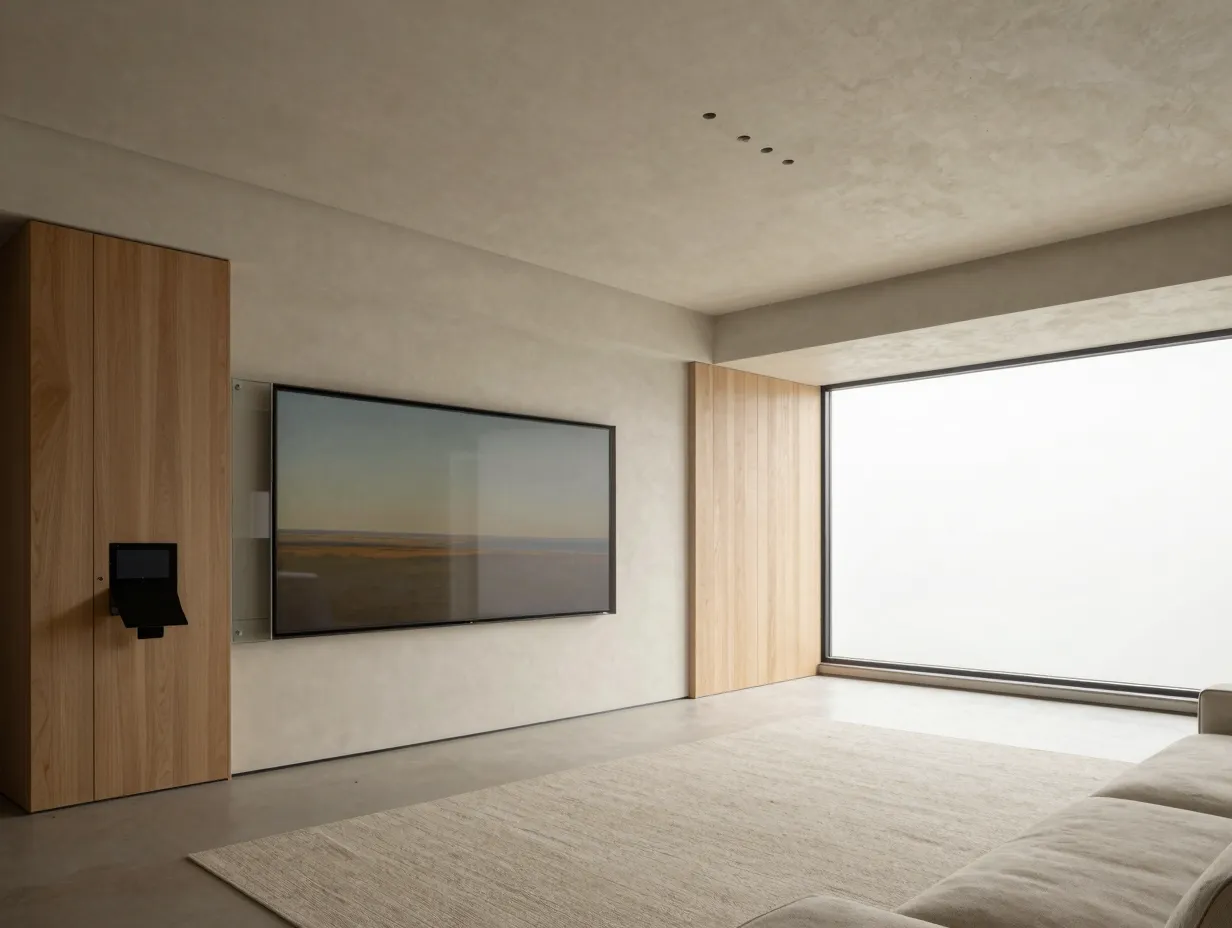
The most powerful design statement a smart home can make in 2026 is silence. Not auditory silence, visual silence. When technology is truly integrated into architecture, a room communicates calm, intention, and quality without a single device drawing the eye.
In practice, this means in-ceiling and in-wall speakers that are flush-plastered and painted to match the surrounding surface. It means motorized artwork panels that descend to reveal a display and rise to conceal it when the screen is off. It means glass control panels that read as part of the millwork rather than as gadgets mounted to the wall [4]. Touchscreens are recessed into cabinetry at angles that make them invisible from the primary seating position. Sensors are embedded in crown molding or hidden behind ventilation grilles.
Why it works aesthetically: When no single object competes for visual dominance, the room itself becomes the focal point. Furniture, materials, and light take center stage, which is precisely what skilled interior designers intend.
Practical implementation tips:
- Specify in-ceiling speaker models rated for plaster-over installation during the rough-in phase, not as a retrofit
- Work with a millwork fabricator who has experience routing conduit and mounting flush-mounted touchscreens inside custom cabinetry
- Use motorized lift mechanisms rated for the specific display weight; undersized motors are a common failure point
- Conceal charging stations inside drawer inserts with pass-through cutouts rather than surface-mounted puck chargers
“The goal is a room that feels more like itself, not a room that feels like a showroom floor.”, A recurring sentiment among luxury AV integrators in 2026 [4]
This approach requires planning at the architectural stage. Retrofitting invisible technology into an existing home is significantly more expensive than specifying it during construction or a full renovation. However, even partial implementations, concealing a single TV behind artwork, for example, deliver a disproportionate visual improvement.
2. Circadian Lighting Systems as a Design and Wellness Anchor
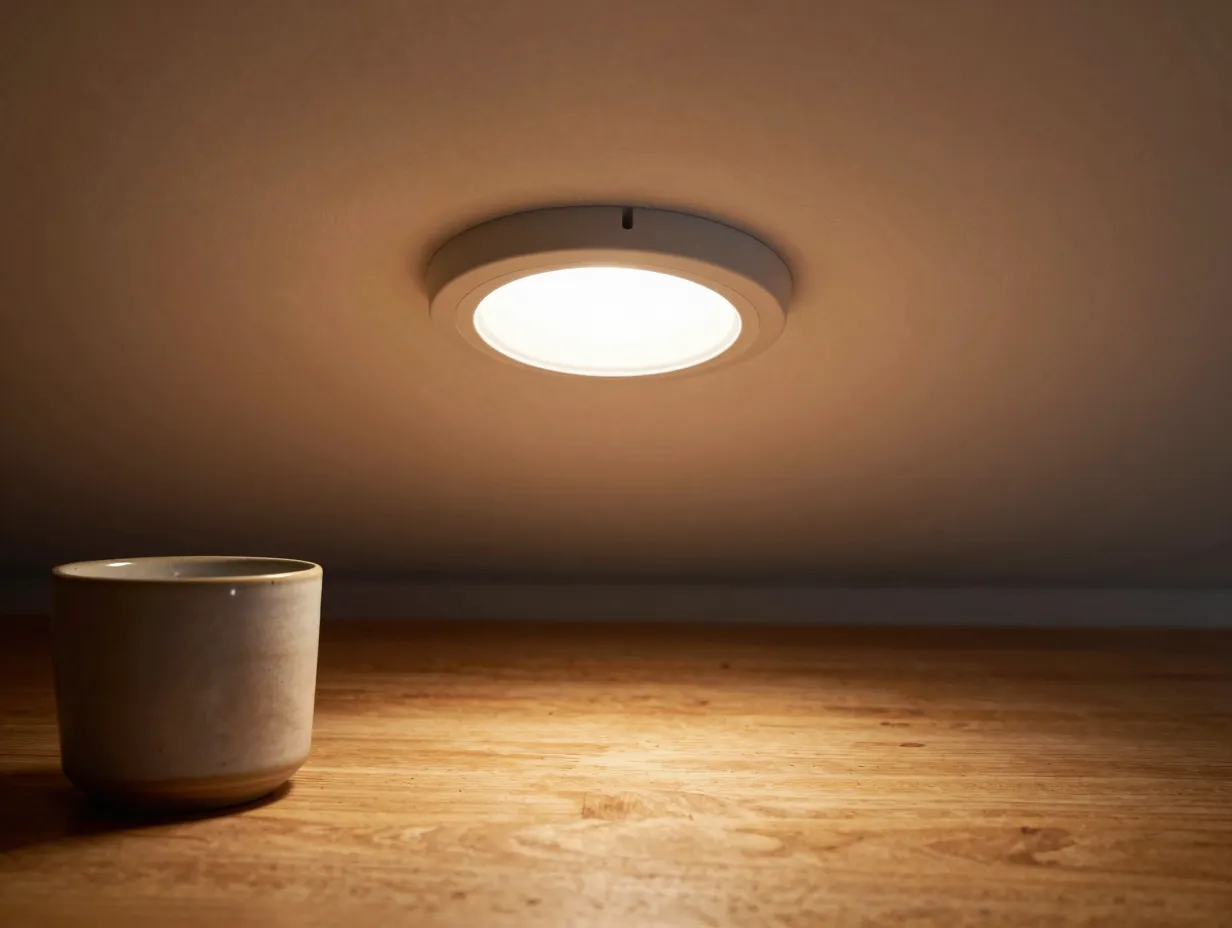
Lighting is the single most powerful tool in an interior designer’s kit. It defines mood, makes spaces feel larger or more intimate, and determines whether materials look alive or flat. Circadian smart lighting systems take that power and add a biological dimension that makes them arguably the highest-value smart home investment available in 2026.
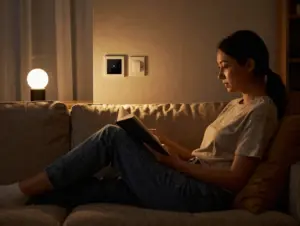
Circadian lighting automatically adjusts color temperature and brightness across the day to mirror the natural arc of sunlight. In the morning, the system delivers cooler, bluer light in the 6,000-6,500K range to support alertness. Through the afternoon it shifts toward neutral white. By evening it transitions to warm amber tones in the 2,700-3,000K range that signal the body to prepare for sleep [14]. Platforms pioneered by Ketra and expanded across the industry have moved this technology from niche luxury to a mainstream specification in high-end residential projects [4].
The numbers are compelling. Pilot projects documented at building and interior expos report up to approximately 30% energy savings when responsive lighting systems combine circadian programming with occupancy sensing and daylight harvesting [3]. The same systems maintain a visually cohesive lighting scheme throughout the day, no jarring transitions, no zones that look mismatched.
Key design benefits of circadian lighting:
| Time of Day | Color Temperature | Design Effect |
|---|---|---|
| Early Morning | 5,500-6,500K | Crisp, activating, reveals true material colors |
| Midday | 3,500-4,500K | Balanced, neutral, flattering for social spaces |
| Evening | 2,700-3,200K | Warm, intimate, enhances wood tones and textiles |
| Late Night | 1,800-2,200K | Amber, minimal, preserves sleep hormones |
Design publications for 2026 highlight circadian smart lighting as a defining “beautiful and functional” appliance trend, specifically because the emphasis is on architectural ambiance rather than flashy color-changing effects [2]. The goal is not a light show. The goal is a home that feels right at every hour of the day without the occupant ever consciously adjusting a dimmer.
For maximum design integration, specify tunable white fixtures in the same form factors used for standard architectural lighting, recessed downlights, linear coves, wall washers. The intelligence is in the driver and the control system, not in the fixture itself. This means the ceiling remains clean and consistent.
3. Unified Control Interfaces That Eliminate Visual Clutter
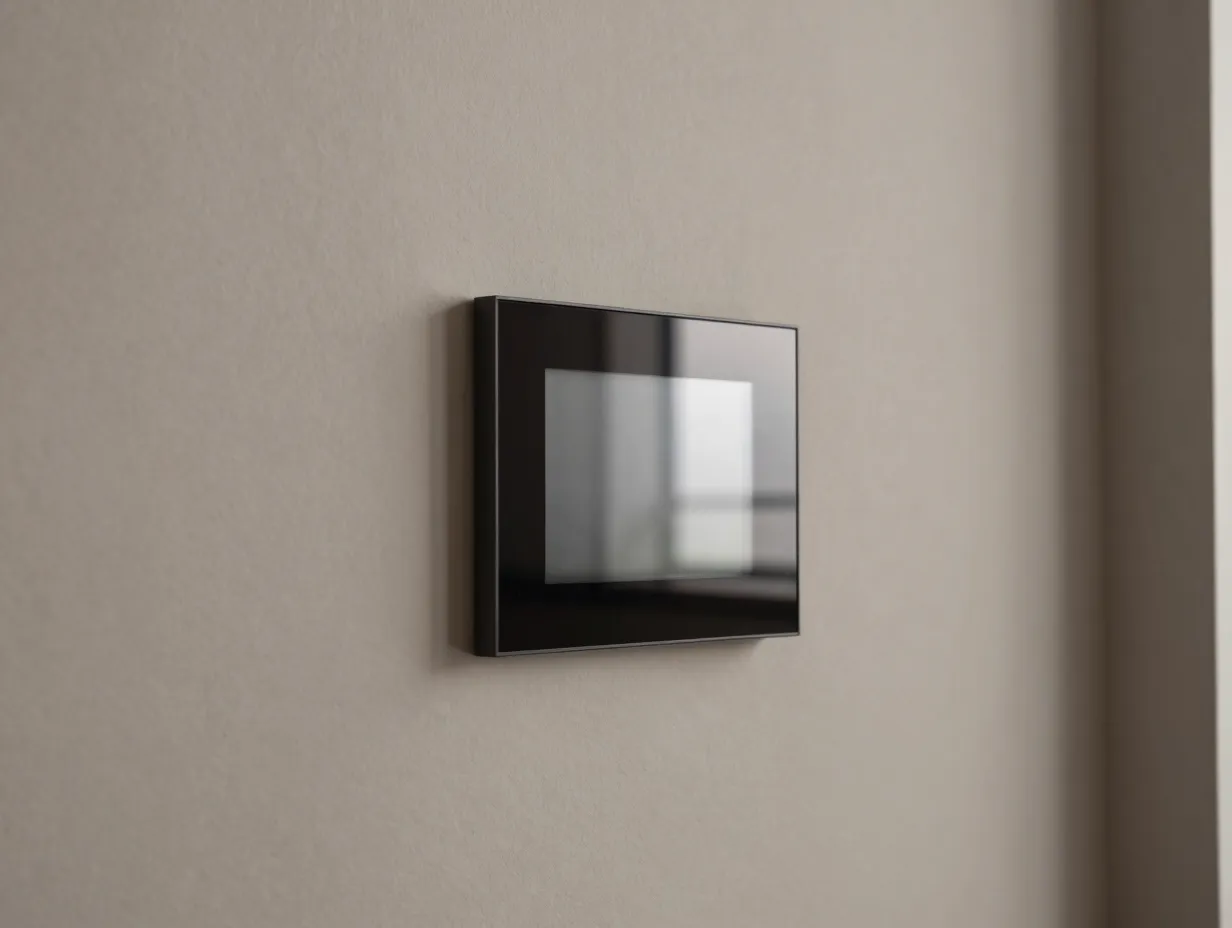
Every hub, remote, keypad, and app that a smart home requires represents a small visual tax on the interior. Multiply that across lighting, HVAC, motorized shades, security, and entertainment systems and the cumulative effect is a home that feels managed rather than lived in. The arrival of Matter 1.3 at critical mass in 2026 is changing this calculus fundamentally.
Matter 1.3 strengthens interoperability for appliances, energy management, and new device categories, making it genuinely practical to control an entire home’s systems through a single interface [8]. With more than 4,000 certified devices and approximately 89% cross-platform compatibility, the standard has eliminated the primary technical barrier to unified control [1]. Homeowners no longer need separate apps for their lighting brand, their thermostat brand, and their security brand.
From a design perspective, this matters enormously. A single, well-designed wall panel, or a single mobile-first interface, replaces a row of proprietary keypads. Several 2026 trend analyses document the move from proprietary hubs to standards-based platforms that tie lighting, blinds, HVAC, and security into one minimalist interface, shortening commissioning time for installers and simplifying the visual environment for homeowners [3][6].
What a unified interface looks like in practice:
- A single flush-mounted touchscreen in a neutral finish controls all systems
- The screen is dark and mirror-like when not in use, reading as a design element rather than a device
- Scenes, “Morning,” “Movie,” “Away,” “Sleep”, activate multiple systems simultaneously with one tap
- The same scenes are accessible from a single mobile app with no brand-switching required
The design principle here is reduction. Every eliminated device, every removed remote, every deleted app icon represents a cleaner, calmer environment. Matter 1.3 makes that reduction technically achievable without sacrificing capability [8].
4. Motorized Window Treatments Integrated With Architecture
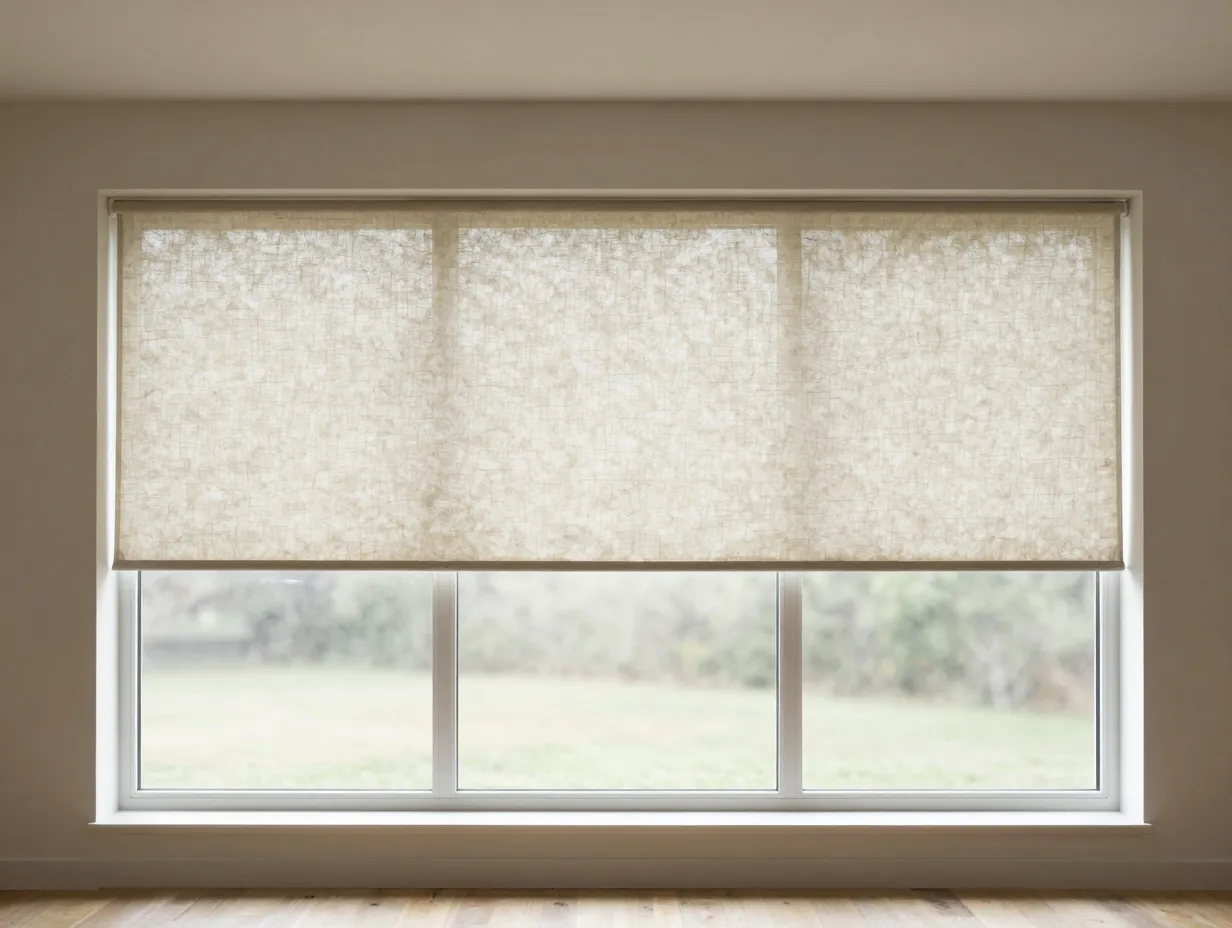
Window treatments are one of the most underestimated elements in residential design. They control light, privacy, thermal comfort, and the perceived scale of a room. When motorized shades and blinds are integrated thoughtfully into the architecture, rather than added as an afterthought, they become a powerful design tool that also happens to be smart.
The key distinction is between motorized treatments that are visible and those that are concealed. Pocket installations, where the shade rolls into a recess built into the ceiling or soffit, produce a completely clean window opening when the shade is retracted. No hardware, no cassette, no brackets, just glass and frame. This approach requires coordination between the architect, the millwork fabricator, and the shade installer during the design phase, but the result is a window wall that looks like a piece of furniture rather than a product installation.
Integration with smart home systems adds several layers of value:
- Shades respond automatically to sunlight intensity, closing partially when direct glare would otherwise require occupants to squint or move
- Circadian lighting scenes can be paired with shade positions so that morning light enters gradually rather than flooding a room at sunrise
- Energy management programs use shade position to reduce HVAC load, closing south-facing windows during peak afternoon heat
- Security modes lower all shades when the home is unoccupied, providing privacy without manual intervention
From a materials perspective, the 2026 market offers motorized shade fabrics in textures and weaves that are indistinguishable from premium manual treatments. Linen-look openweave, blackout in matte finishes, and sheer solar fabrics are all available in motorized form. The motor is the invisible component; the fabric is the design statement.
Unified platforms like those enabled by Matter 1.3 mean motorized shades can be grouped with lighting and HVAC into single-tap scenes without requiring a separate proprietary hub [6]. This is a direct example of where interoperability standards translate into tangible design cleanliness.
5. Biophilic Technology: Embedding Wellness Sensors Into Living Spaces
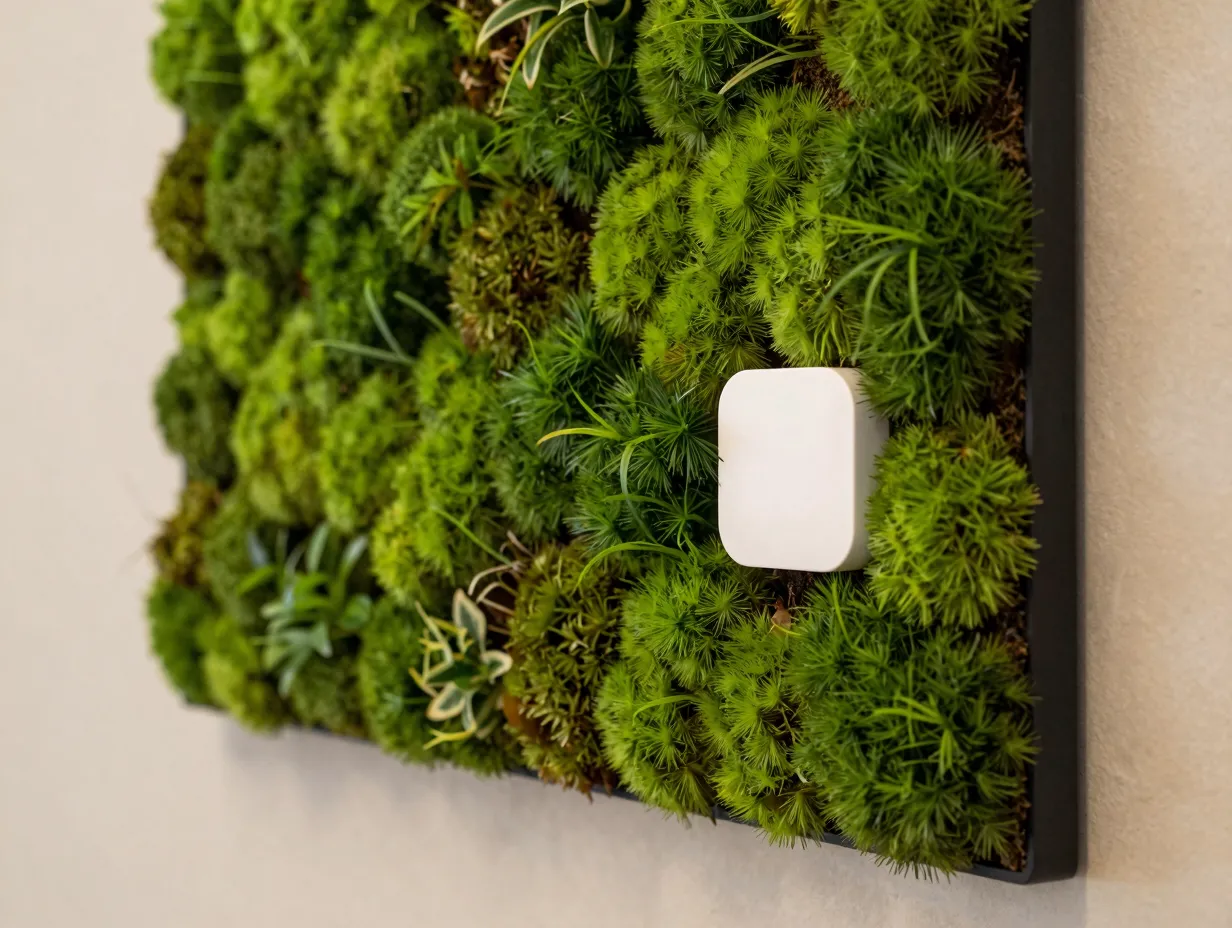
Biophilic design, the practice of connecting interior spaces to natural systems, materials, and rhythms, has been a dominant trend in high-end residential and commercial interiors for several years. In 2026, smart home technology is deepening that connection by embedding wellness-monitoring sensors into living walls, natural material surfaces, and architectural elements in ways that are functionally powerful but visually undetectable.
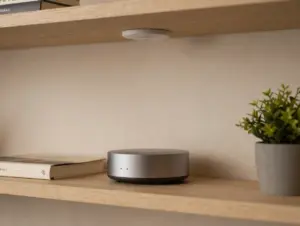
Air quality monitors concealed behind living wall panels track CO2 levels, volatile organic compounds, humidity, and particulate matter in real time. When levels drift outside optimal ranges, the system responds automatically: ventilation rates increase, humidifiers activate, or a notification prompts the occupant to open a window. The sensor hardware is invisible. The living wall, moss panels, vertical gardens, or preserved plant installations, remains the visual focal point [5].
This category also includes thermal comfort sensors embedded in flooring systems, occupancy sensors integrated into ceiling materials, and acoustic sensors that adjust speaker output based on room occupancy and background noise levels. None of these require visible hardware.
Design principles for biophilic tech integration:
- Specify sensor hardware during the installation of the host material (flooring, wall panel, ceiling tile) rather than retrofitting
- Choose sensor enclosures that match the host material’s finish, matte white sensors in white ceilings, for example
- Ensure wireless communication protocols are specified so that sensor data feeds into the unified control platform without requiring additional hubs
- Use sensor data to inform lighting and HVAC scenes, creating a feedback loop between the environment and the home’s response
The wellness data these systems generate has a secondary benefit: it makes the case, in measurable terms, for the design choices that support human health. A home that demonstrably maintains optimal air quality, thermal comfort, and lighting conditions is a home that commands premium value in the real estate market [9].
6. AI-Powered Energy Management With a Minimal Footprint
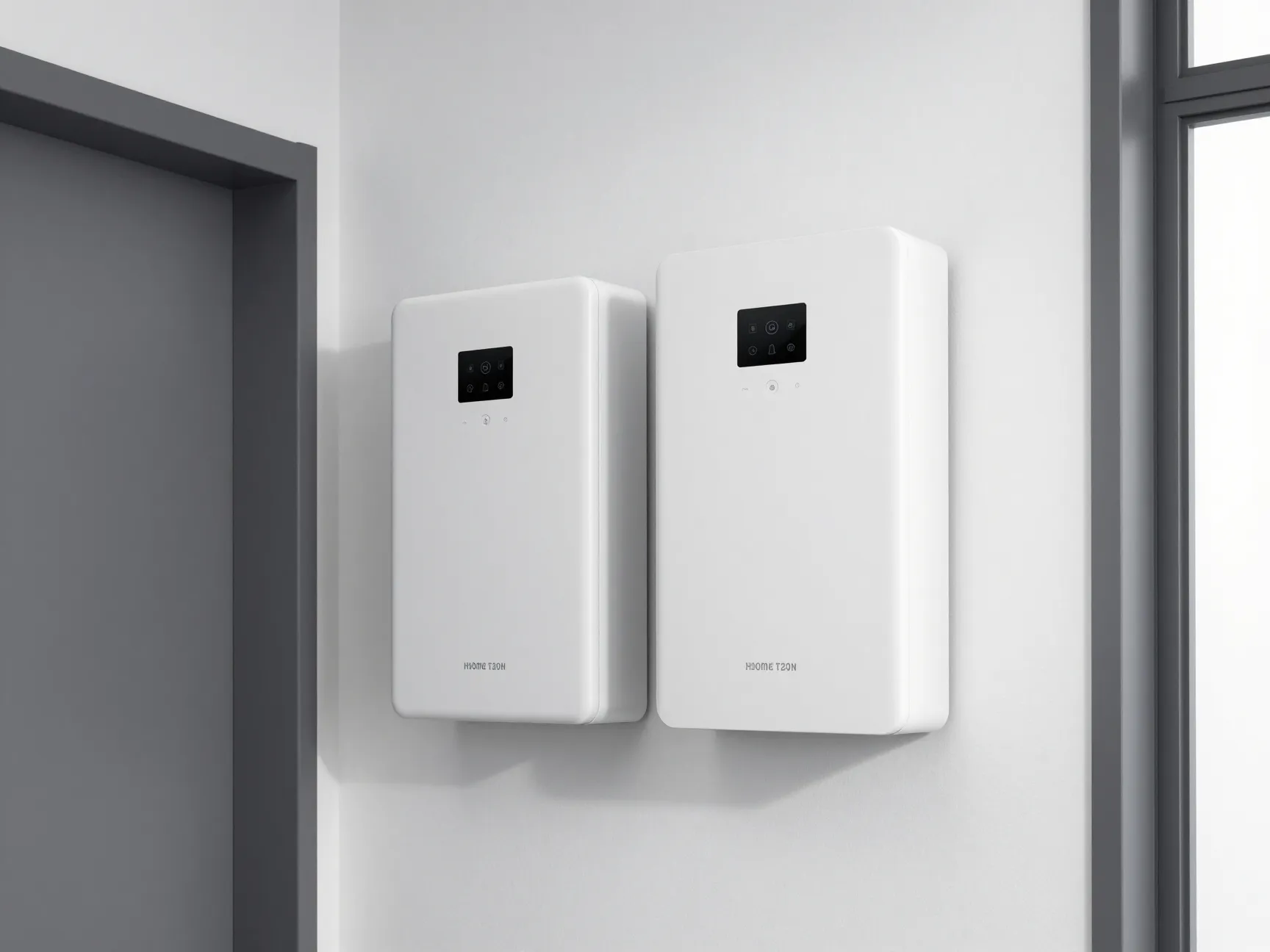
Energy management is often presented as a utilitarian smart home function, something that saves money but has nothing to do with design. That framing misses a significant opportunity. When AI-powered energy management is implemented thoughtfully, it eliminates the visible infrastructure that traditional energy monitoring requires: the dashboard displays, the meter readers, the banks of switches, and the circuit-level monitors that turn utility rooms into control centers.
Modern AI energy management operates entirely in the background. The system learns occupancy patterns, weather forecasts, utility rate schedules, and appliance usage cycles to optimize consumption without requiring any input from the occupant [9]. Solar generation, battery storage, EV charging, and grid interaction are all coordinated automatically. The home becomes more efficient and more responsive without adding a single visible device to any living space.
From a design perspective, this means:
- No dashboard displays mounted in kitchens or hallways showing real-time energy data
- No manual override panels for HVAC zoning that break up wall surfaces
- No visible battery storage units in living areas, these are specified for utility rooms or garages with proper ventilation
- Fewer circuit breakers and sub-panels visible in finished spaces, as smart panels consolidate monitoring at the electrical level
The aesthetic benefit compounds when AI energy management is integrated with the unified control platform discussed in idea 3. Energy optimization scenes run silently alongside comfort and lighting scenes, with no separate interface required [8]. The home manages itself. The occupant experiences the result, lower bills, consistent comfort, reduced carbon footprint, without interacting with the mechanism.
Real estate analysts note that AI energy management features are increasingly cited by buyers as a primary value driver, particularly when the implementation is clean and the interface is simple [9]. A home that is demonstrably efficient and demonstrably beautiful is a rare combination, and in 2026, it is an achievable one.
How to Approach These 6 Smart Home Ideas Where Technology Meets Beautiful Design
Implementing one or more of these ideas requires a different planning process than a standard smart home installation. The following framework applies across all six categories.
Phase 1: Design Integration (Before Construction or Renovation)
- Engage a technology integrator at the same stage as the architect and interior designer
- Specify conduit runs, power locations, and network infrastructure in the architectural drawings
- Identify which technologies require pocket installations or in-wall mounting and coordinate with the millwork fabricator
Phase 2: Platform Selection
- Prioritize Matter 1.3 certified devices to ensure long-term interoperability and reduce hub count [8]
- Select a single control platform that covers lighting, HVAC, shades, security, and energy management
- Confirm that the platform supports the specific circadian lighting fixtures and motorized shade brands specified
Phase 3: Installation and Commissioning
- Require the technology integrator to coordinate directly with the finishing trades (painters, plasterers, millwork installers) to ensure flush-mounted hardware is installed before final finishes
- Commission the circadian lighting system with a lighting designer present to tune color temperatures to the specific materials and finishes in each room
- Test all unified scenes before occupancy and document them clearly for the homeowner
Phase 4: Ongoing Optimization
- Schedule an annual review of AI energy management performance data
- Update Matter firmware across all certified devices to maintain compatibility as the standard evolves
- Adjust circadian lighting schedules seasonally to account for changes in natural daylight duration
Conclusion
The 6 Smart Home Ideas Where Technology Meets Beautiful Design outlined here share a single underlying principle: the best technology in a home is the kind that serves human experience without announcing itself. Invisible architecture removes the visual tax of exposed hardware. Circadian lighting supports biology and ambiance simultaneously. Matter 1.3 unification eliminates the clutter of competing interfaces. Motorized window treatments become architectural elements. Biophilic wellness sensors disappear into living materials. AI energy management optimizes consumption without demanding attention.
Actionable next steps for homeowners and designers in 2026:
- Engage a technology integrator at the design stage, not after construction begins
- Audit the current smart home for visible hardware that could be concealed or replaced with flush-mounted alternatives
- Prioritize Matter 1.3 certified devices for any new purchases to ensure long-term platform flexibility
- Specify circadian lighting in at least one primary living space as a starting point for the broader system
- Request a unified control demonstration from an integrator before committing to any proprietary platform
Technology and beautiful design are no longer in competition. In 2026, they are the same conversation.
References
[1] Smart Home Trends 2026 – https://haznos.org/2026/smart-home-trends-2026/
[2] Trend Forecast 2026 Smart Home Technology – https://www.midwestdesignmag.com/building-remodeling/trend-forecast-2026-smart-home-technology/
[3] Interior Futures Smart Home Tech Trends To Watch From Mos Build Expo – https://mosbuildexpo.com/articles/interior-futures-smart-home-tech-trends-to-watch-from-mos-build-expo/
[4] Smart Home Trends 2026 – https://restrepoinnovations.com/blog/smart-home-trends-2026.html
[5] Modern Home Technologies 6 Ideas To Design A High Tech Smart House – https://www.architechne.net/insights/modern-home-technologies-6-ideas-to-design-a-high-tech-smart-house
[6] Five Smart Home Trends 2026 How Nice Shaping Future Smart Living – https://www.niceforyou.com/en/magazine/five-smart-home-trends-2026-how-nice-shaping-future-smart-living
[8] Smart Home Trends 2026 – https://promwad.com/news/smart-home-trends-2026
[9] Ces 2026 How Ai Will Power The Next Wave Of Smart Home Tech – https://www.nar.realtor/news/styled-staged-sold/ces-2026-how-ai-will-power-the-next-wave-of-smart-home-tech
[10] Smart Home Trends 2026 – https://dcstructures.com/blog/smart-home-trends-2026/