6 FlashForge 3D Printer Projects To Showcase Its Power
A four-nozzle desktop printer that swaps materials in under a second without a purge tower sounds like something from an industrial factory floor, not a home workshop. Yet that is exactly what FlashForge shipped in 2026 with the Creator 5 series, and it is only one piece of a lineup that now spans wax jewelry printing, full-color resin-free prototyping, and AI-generated multi-material parts [7][14]. For anyone weighing whether a FlashForge machine is worth the investment, the best evidence is not a spec sheet. It is what people are actually building with these machines. This guide walks through 6 FlashForge 3D Printer Projects To Showcase Its Power, drawn from real 2026 product launches, trade show demonstrations, and creator workflows, so you can see the ecosystem in action before committing bench space or budget to it.
Disclosure: This post contains affiliate links. As an Amazon Associate, we earn from qualifying purchases, and at no extra cost to you.
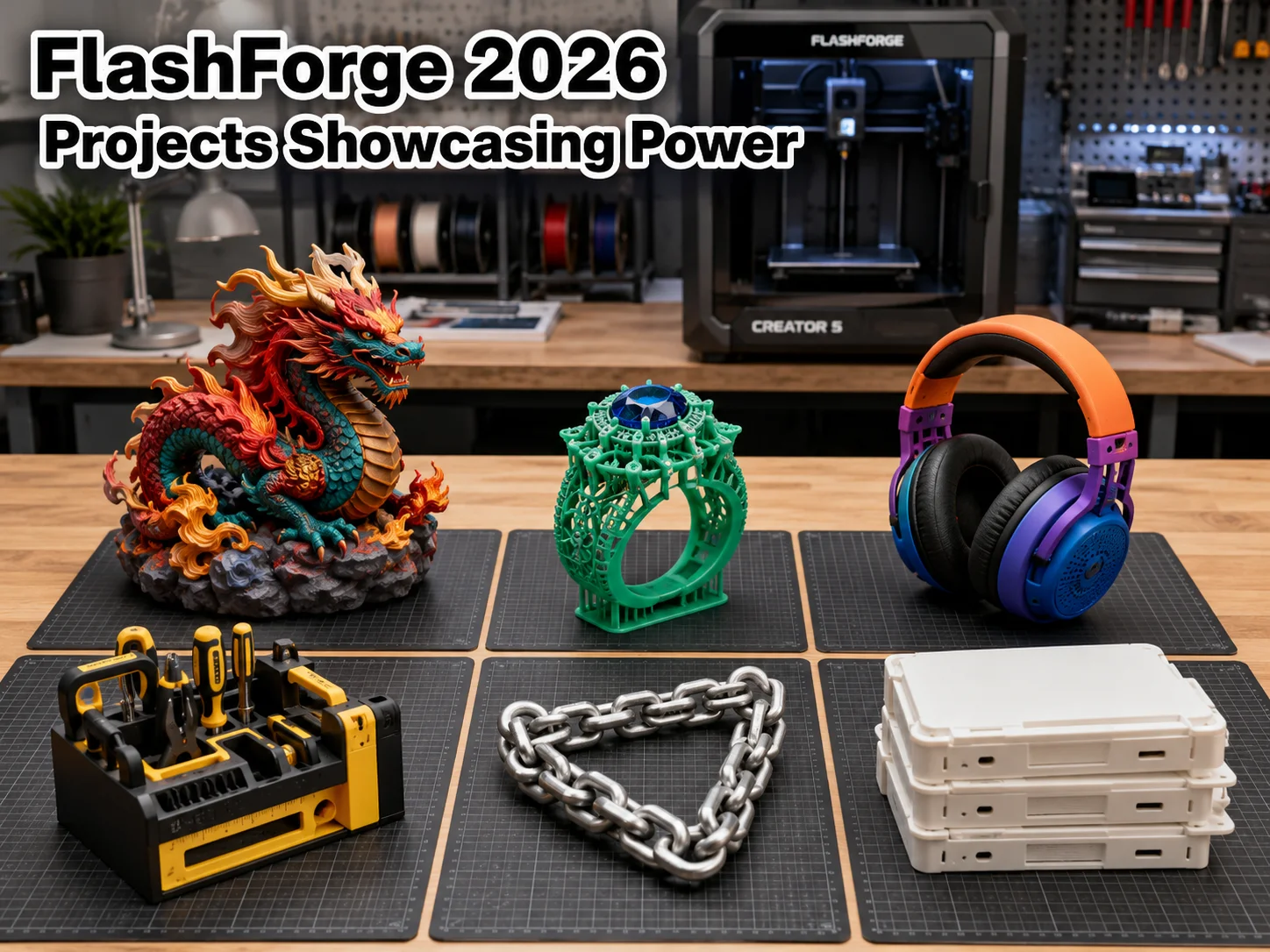
Each project below reflects a documented capability from FlashForge’s 2026 rollout, not a hypothetical use case. Some are jewelry-grade production runs. Others are practical workshop builds. Together they paint a clear picture of what this brand’s hardware and software stack can realistically deliver.
Key Takeaways
- The Creator 5 series’ four-nozzle toolhead enables true multi-material and multi-color prints without purge towers, running roughly three to four times faster than single-nozzle machines on complex color jobs [6][11][7].
- FlashForge’s WaxJet and WJ51C printers bring jewelry-grade precision to desktop hardware, with layer thicknesses as fine as 15 microns and dimensional accuracy of plus or minus 0.04 mm per 20 mm [4][5].
- The CJ270 desktop full-color printer supports more than 10 million color combinations at layer thicknesses down to 7 microns, making it a strong fit for display-quality prototypes [2].
- A May 2026 integration between Flash Studio and Meshy AI lets users generate 3D models from text or image prompts and print them with automatic color-to-filament mapping [6][11].
- Real-world creator projects, from Gridfinity storage systems to amateur radio enclosures, show FlashForge printers functioning as daily production tools rather than novelty devices [8].
Why FlashForge’s 2026 Lineup Sets the Stage for Powerful Projects
FlashForge did not arrive at 2026 with a single flagship printer. It arrived with an ecosystem. At TCT Asia 2026, held March 24, the company headlined its booth with multi-extruder FDM printing and desktop full-color solutions built around the Creator 5 series and the CJ270 [2]. That pairing matters because it shows two very different problems being solved at once: speed and material complexity on one side, and color fidelity on the other.
The Creator 5’s four independent nozzles are the mechanical heart of most advanced FlashForge projects. Instead of a single nozzle purging and reloading filament every time a color or material changes, four toolheads sit ready, each pre-loaded with its own spool. This is why the machine can run multi-color jobs roughly three to four times faster than conventional single-nozzle printers, according to FlashForge’s own May 2026 announcement about its Flash Studio and Meshy AI integration [6][11]. It is also why the design supports what the company calls zero-waste color changes, since there is no purge tower eating filament and print time [6][11].
On the other end of the precision spectrum sits the WaxJet series and its newer sibling, the WJ51C, unveiled at JCK Las Vegas 2026 between May 29 and June 1 [4]. Marketed as the world’s first desktop wax 3D printer for jewelry applications, the WJ51C reaches resolutions up to 2900 by 2900 by 1700 DPI, a minimum layer thickness of 15 microns, and dimensional accuracy of plus or minus 0.04 mm per 20 mm [4]. Those numbers are not marketing filler. They translate directly into wax patterns fine enough to hold intricate stone-setting geometry, which is a hard requirement in fine jewelry manufacturing.
Rounding out the trio is the CJ270, a desktop full-color printer capable of layer thicknesses as fine as 7 microns and access to more than 10 million color options [2]. FlashForge brought all three systems together again at Formnext Asia Shenzhen, held August 26 through 28, framing them as covering different stages of professional 3D printing: multi-material batch production, jewelry wax prototyping, and vivid full-color visual modeling [12]. That framing is useful context for the projects below, because each one leans on a specific strength from this same interconnected lineup.
It is worth noting that this power comes with trade-offs. A May 22, 2026 commentary piece pointed out that recent firmware updates push users toward FlashForge’s own Flash Studio slicer, and that the software has begun displaying ads during print setup [10]. Anyone planning to rely heavily on third-party slicers or fully open workflows should weigh that shift before buying in.
6 FlashForge 3D Printer Projects To Showcase Its Power
The following six projects are organized from consumer-facing builds to professional production work, so you can match a project to your own goals, whether that is a weekend hobby build or a small manufacturing run.
1. AI-Generated Multi-Color Figurines Using Flash Studio and Meshy
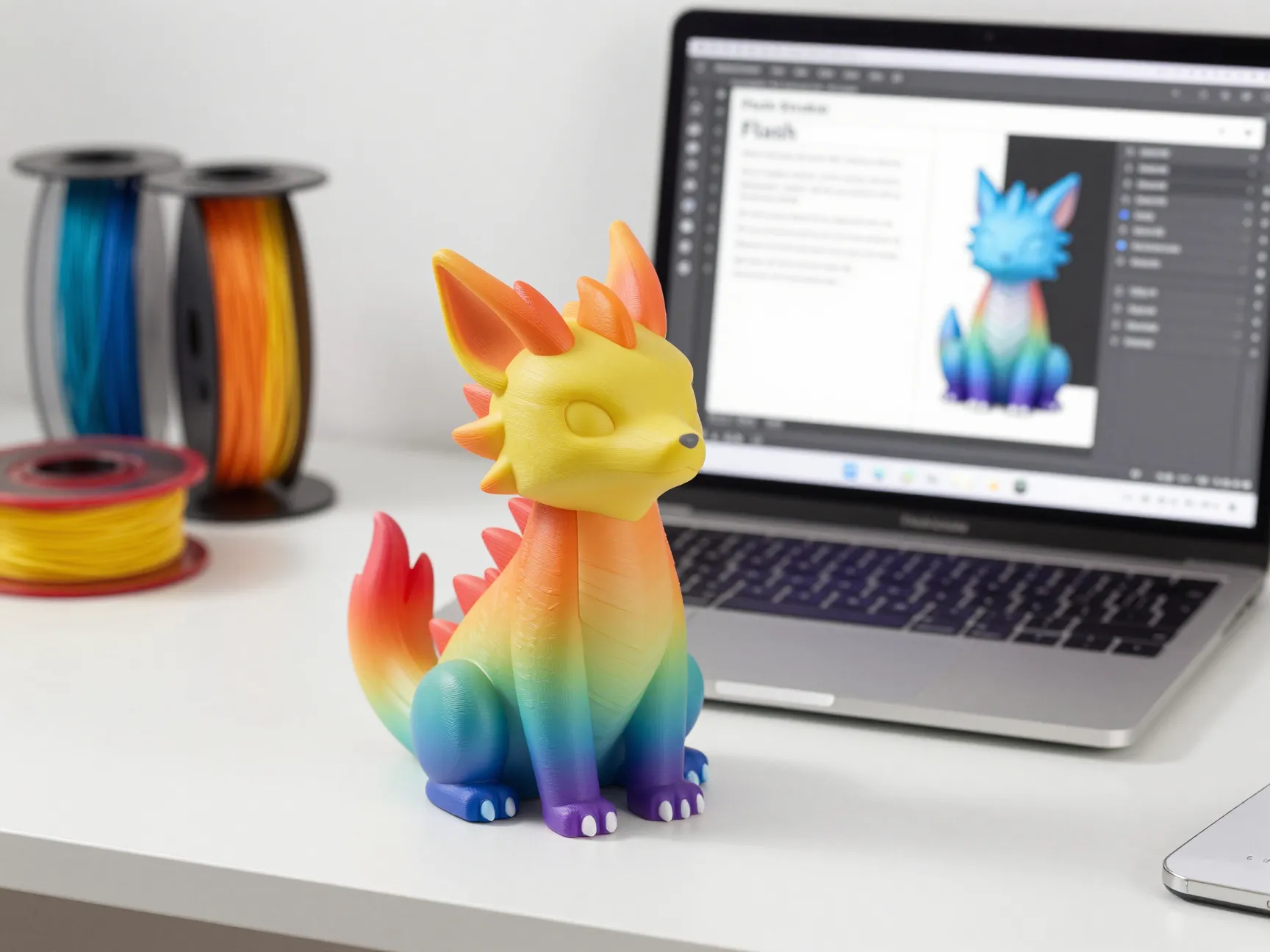
The fastest way to see what the Creator 5 can do is to skip modeling software entirely. On May 21, 2026, FlashForge announced a direct integration between Flash Studio and Meshy AI, letting Creator 5 owners type a text prompt or upload an image and receive a ready-to-print 3D model with automatic texture-to-filament color mapping [6][11]. The workflow removes the traditional bottleneck of manually assigning colors to different parts of a model.
Paired with the Creator 5’s four-nozzle system, this pipeline supports complex, full-color models printed in a fraction of the time a single-nozzle machine would need [6][11]. A user might generate a stylized animal figurine or a small architectural model from a text description, watch Flash Studio auto-map the colors to available filament spools, and start printing within minutes. This project matters as a showcase piece because it compresses a process that once required CAD skills, texture painting, and manual slicer configuration into a workflow anyone can run from a laptop.
2. Cuban Link Chain and Stone-Setting Jewelry Production
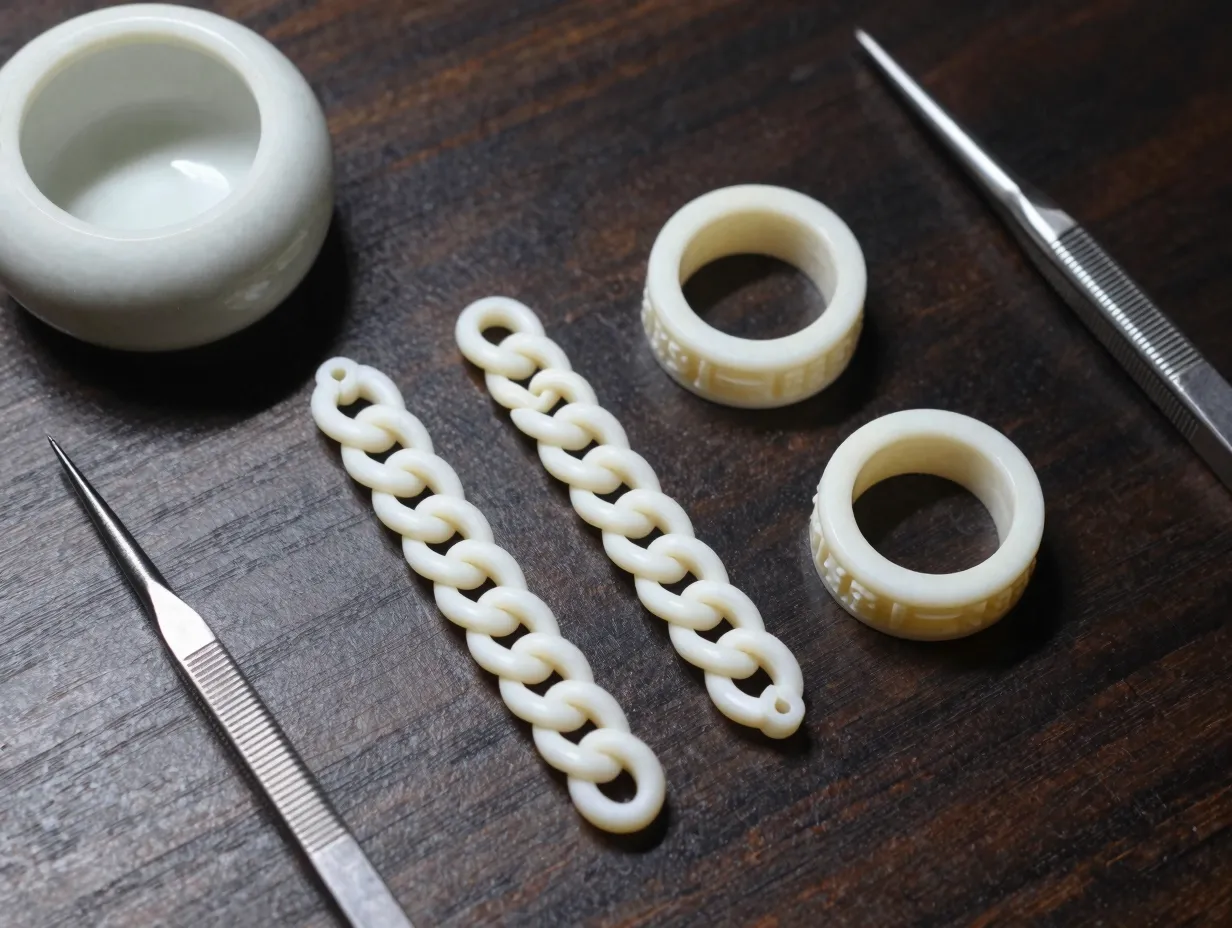
FlashForge’s enterprise blog published detailed application cases in May 2026 covering small-batch jewelry production using its WaxJet series, including Cuban link chain manufacturing, stone inlaying in wax, and enamel craft projects [5]. These are not one-off prototypes. They are repeatable, production-grade workflows where a high-precision wax print becomes the master pattern for lost-wax casting.
A Cuban link chain, with its dense interlocking loops, demands consistent wall thickness and tight tolerances across every link. Wax printers built for jewelry, like those in the WaxJet line, are engineered specifically for this kind of repetitive precision work rather than one-time display pieces [5]. This project shows FlashForge functioning inside an actual manufacturing pipeline, not just a maker’s workbench, which is a meaningful distinction for jewelers evaluating desktop wax printing as a real production tool.
3. Intricate Stone-Setting Ring Patterns With the WJ51C
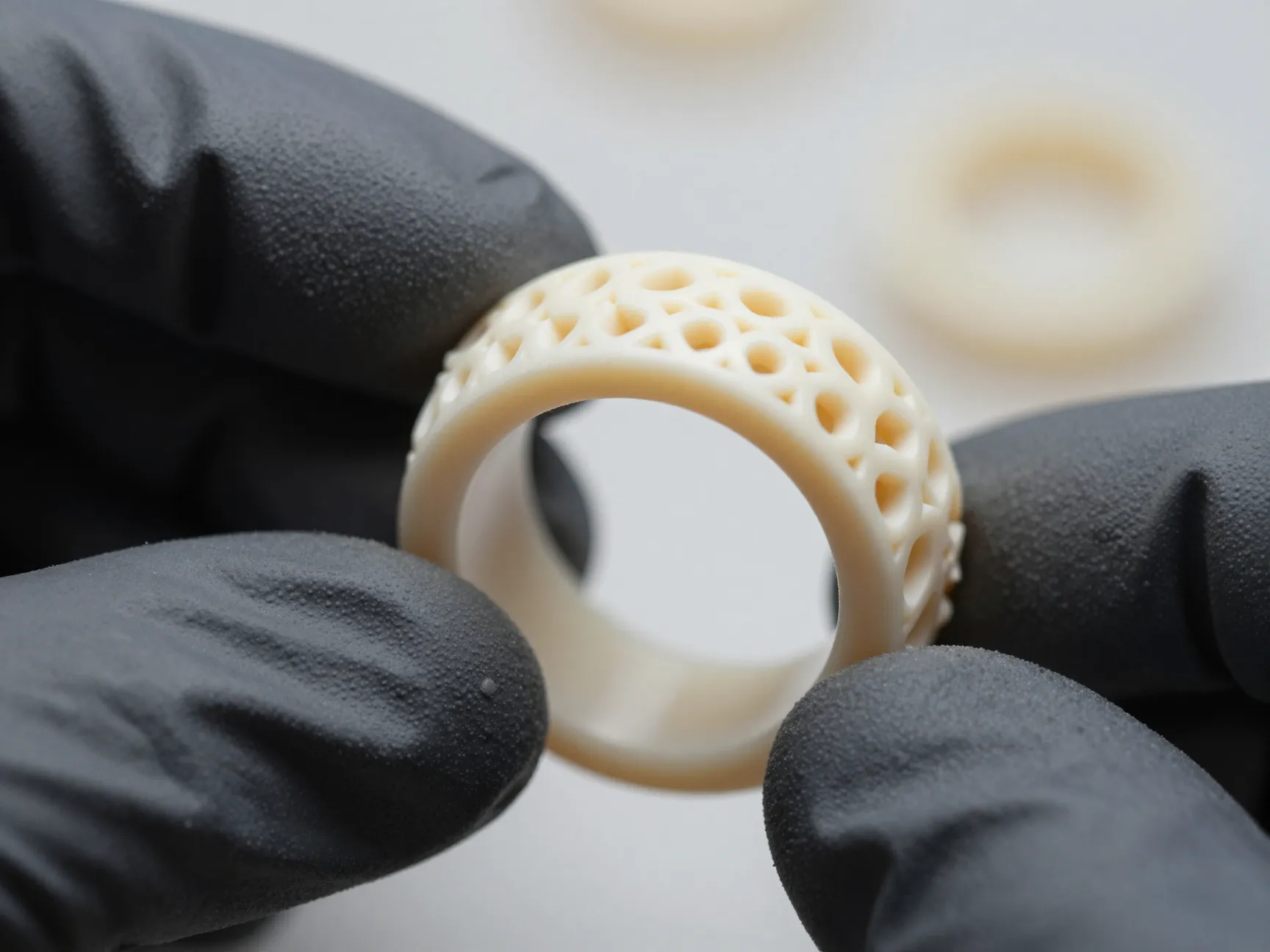
Building on the same jewelry focus, the WJ51C pushes precision even further. Unveiled at JCK Las Vegas 2026, this desktop wax printer reaches a minimum layer thickness of 15 microns and dimensional accuracy of plus or minus 0.04 mm per 20 mm [4]. Those specifications matter most on rings and pendants with complex stone-setting structures, where even a small deviation can prevent a gemstone from sitting correctly in its bezel.
A jeweler using the WJ51C can print a ring pattern with fine prong details, textured surfaces, and undercut geometry that would be difficult to carve by hand in a comparable timeframe. Because the resulting wax pattern goes straight into a casting flask, accuracy at the printing stage directly determines how much hand-finishing the final metal piece needs. This project is a strong showcase because it demonstrates FlashForge extending its footprint from hobbyist 3D printing into a specialized, high-value craft industry.
4. Full-Color Concept Models and Display Prototypes on the CJ270

Not every showcase project needs to end in a factory. The CJ270 desktop full-color printer, highlighted at TCT Asia 2026, is built for visually rich concept models and display pieces rather than functional parts [2]. With layer thicknesses as fine as 7 microns and access to over 10 million color combinations, it can render gradients, logos, and shaded surfaces directly in the print itself, without post-print painting [2].
Consider a product designer who needs a client-ready mockup of a new consumer gadget, complete with brand colors and shaded highlights on curved surfaces. Instead of printing a plain gray model and hand-painting it, the CJ270 produces a presentation-ready piece straight off the print bed. This project is a strong pick for anyone in design, marketing, or education who needs models that communicate an idea visually, not just structurally.
5. Multi-Material Workshop Organization and Field Gear
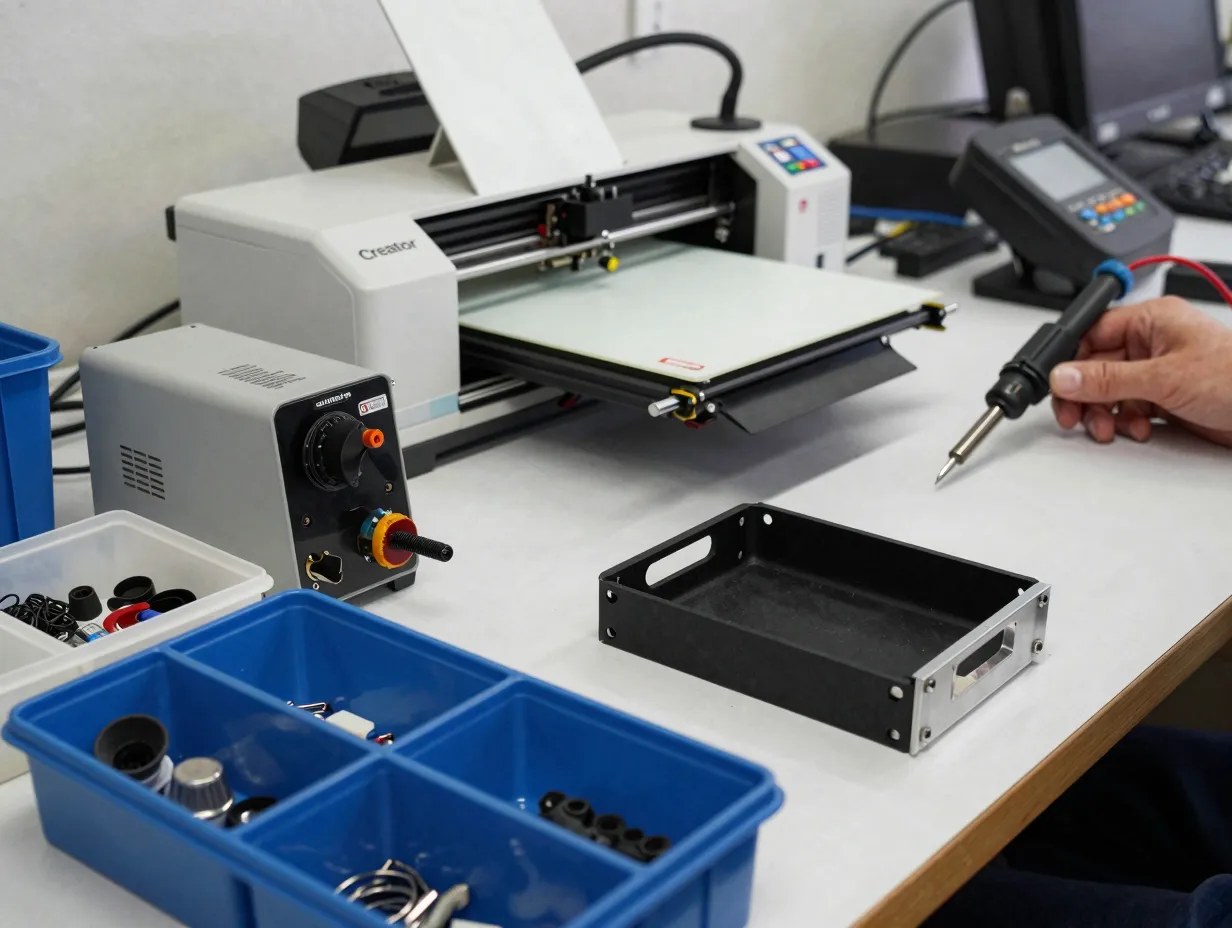
A July 31, 2026 creator video moved the spotlight from trade shows to a real workshop, documenting the Creator 5 producing rugged Gridfinity storage cases, a custom Dremel Lite tray, a purpose-built soldering station, modular storage bins, stackable 4 by 6 photo trays, and multiple amateur radio interfaces and enclosures [8]. None of these are flashy showpieces. They are practical, everyday tools, and that is precisely why the project matters.
The video demonstrated multi-material and multi-part jobs being produced for electronics organization and field-ready radio gear, treating the printer as a full-time fabrication tool rather than a hobby novelty [8]. A radio enclosure might combine a rigid PETG shell with a softer TPU gasket for weatherproofing, printed in a single job on the four-nozzle system without swapping filament by hand. For makers who want proof that a FlashForge printer can handle daily, unglamorous production work as well as it handles headline demos, this is the project to study.
6. High-Speed Batch Production With the Adventurer 5M Pro
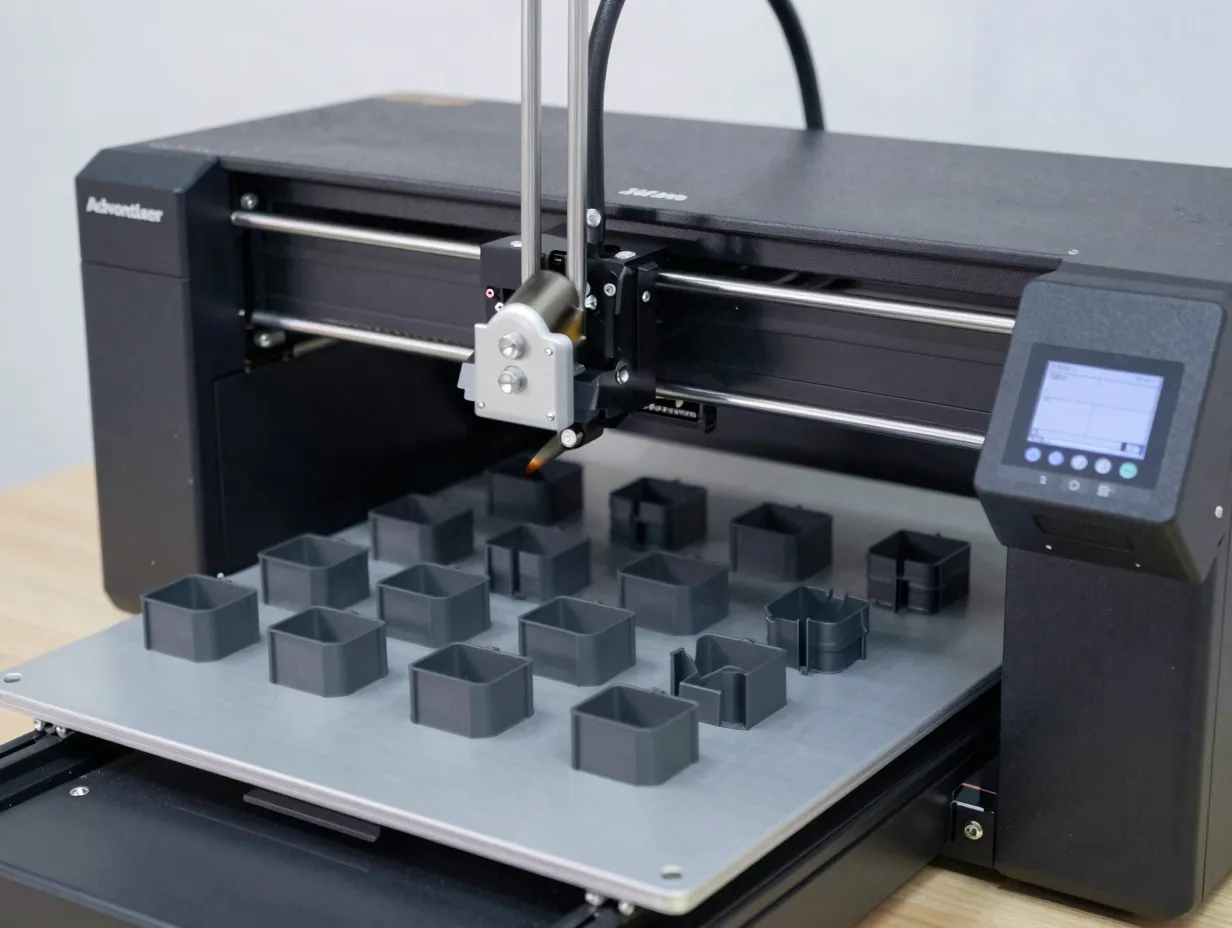
The final project centers on throughput rather than color or precision. The Adventurer 5M Pro is a fully enclosed CoreXY printer capable of 600 mm per second print speeds and accelerations up to 30,000 mm per second squared, with a 256 by 256 by 256 mm build volume and a heated bed reaching 120 degrees Celsius [9][13]. Independent coverage highlights automatic bed leveling and quick-swap nozzles as key features for rapid iteration [9][13].
Picture a small business needing to print 20 identical enclosures overnight for a product launch. The Adventurer 5M Pro’s speed and automatic leveling mean less manual setup between jobs and faster turnaround per part. European pricing for the campaign started around 699 euros before April 19, 2026, with standard pricing listed around 799 US dollars and shipments beginning in May 2026 [9][13]. This project earns its place on the list because it shows FlashForge is not only chasing precision and color, it is also solving for raw speed, which matters most when volume, not detail, is the priority.
How to Match These FlashForge 3D Printer Projects To Your Goals
Not every project fits every person. A jeweler has different needs than a workshop hobbyist, and a small business chasing throughput cares about different specs than a designer chasing color accuracy. The table below breaks down which FlashForge system supports which type of work, based on the same 2026 product data covered above.
| Project Type | Best-Fit Printer | Key Capability | Typical User |
|---|---|---|---|
| AI-generated multi-color figurines | Creator 5 | Four-nozzle toolhead, Meshy AI integration [6][11] | Hobbyists, designers |
| Jewelry chains and inlay work | WaxJet series | Repeatable wax casting patterns [5] | Small jewelry manufacturers |
| Fine stone-setting ring patterns | WJ51C | 15-micron layers, plus or minus 0.04 mm accuracy [4] | Professional jewelers |
| Full-color display prototypes | CJ270 | 7-micron layers, over 10 million colors [2] | Product designers, marketers |
| Workshop organization and field gear | Creator 5 | Multi-material, multi-part single jobs [8] | Makers, engineers, hobbyists |
| High-volume batch production | Adventurer 5M Pro | 600 mm/s speed, automatic leveling [9][13] | Small businesses, prosumers |
A few practical notes worth factoring into that decision. First, regional availability matters. In Japan, reservations for the Creator 5 Pro opened domestically starting April 9, 2026, signaling an official rollout of advanced multi-head systems in that market to support local design prototyping and small-batch production [3]. Second, pricing accessibility is improving quickly. Consumer promotions such as AliExpress’s late-August 2026 “828 sale” have featured FlashForge devices, including the Adventurer 5M Pro and Creator 5, as marquee discounts, lowering the barrier for home and prosumer users to access high-speed and multi-color printing [15]. Third, anyone leaning heavily on custom slicers or third-party software pipelines should factor in the ecosystem shift noted earlier, since recent firmware updates and in-app advertising in Flash Studio suggest FlashForge is tightening control over its software stack [10].
Looking ahead, the direction is fairly clear. Given the pace of AI integration through Meshy, the expansion of multi-toolhead Creator 5 systems, and the precision push behind the WJ51C and CJ270, industry watchers expect FlashForge to keep layering generative design tools, color-aware slicing, and cross-device workflows into its ecosystem over the next one to two years [2][4][6][11]. That trajectory hints at future showcase projects where a design generated by AI moves automatically into a jewelry wax pattern, a full-color prototype, and a multi-material production part, all inside one connected pipeline [2][4][6][11]. That is speculative, but it is grounded in a company that has spent 2026 methodically connecting exactly those pieces.
Conclusion
The six projects covered here, from AI-generated figurines to jewelry-grade wax patterns to high-speed batch production, are not disconnected experiments. They are proof points from the same 2026 FlashForge ecosystem, each one demonstrating a different strength: speed, color accuracy, material versatility, or manufacturing-grade precision. Together, they answer the practical question anyone shopping for a serious 3D printer actually has, which is not “what are the specs” but “what can I realistically build with this.”
If a next step is needed, start narrow. Match one project type from the table above to a real goal, whether that is a jewelry side business, a workshop upgrade, or a design portfolio piece. Then choose the FlashForge system built for that specific job rather than the one with the flashiest headline spec. That approach, more than any single feature comparison, is what actually determines whether a 3D printer earns its place on a workbench or ends up gathering dust.
References
[1] Notice – https://flashforge.jp/notice/
[2] Flashforge Headlines Tct Asia 2026 With Multi Extruder Fdm And Desktop Full Color Solutions – https://www.globenewswire.com/news-release/2026/03/24/3261224/0/en/flashforge-headlines-tct-asia-2026-with-multi-extruder-fdm-and-desktop-full-color-solutions.html
[3] News – https://flashforge.jp/category/news/
[4] Flashforge Unveils The World S First Desktop Wax 3d Printer Wj51c At Jck 2026 1036202881 – https://markets.businessinsider.com/news/stocks/flashforge-unveils-the-world-s-first-desktop-wax-3d-printer-wj51c-at-jck-2026-1036202881
[5] News – https://enterprise.flashforge.com/id/blogs/news
[6] Flashforge And Meshy Partner To Bring Ai Image To 3d Directly Into Consumer Multi Color Printing – https://www.morningstar.com/news/pr-newswire/20260521cn64594/flashforge-and-meshy-partner-to-bring-ai-image-to-3d-directly-into-consumer-multi-color-printing
[7] Watch – https://www.youtube.com/watch?v=vQMw-fQY55g
[8] Watch – https://www.youtube.com/watch?v=AYx6EGyyECQ
[9] Watch – https://www.youtube.com/watch?v=pgZuqtkvlx4
[10] Watch – https://www.youtube.com/watch?v=higSOW0-N24