6 Smart Home Technology Ideas That Elevate Your Interior Design
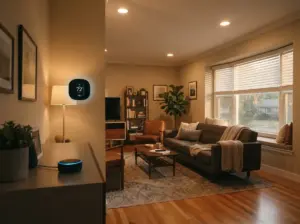
By 2026, nearly 70% of new luxury home builds in major markets specify that technology must be invisible before a single device is selected. That single statistic reshapes everything about how homeowners, architects, and interior designers approach connected living. The conversation has shifted away from gadgets on display and toward a design philosophy where the home itself is the interface. The 6 Smart Home Technology Ideas That Elevate Your Interior Design explored in this guide reflect that shift, each one chosen because it enhances a space aesthetically while delivering genuine functional value.
Disclosure: This post contains affiliate links. As an Amazon Associate, we earn from qualifying purchases, and at no extra cost to you.
Key Takeaways
- Invisible technology is now the defining standard of luxury interior design in 2026, with devices treated as architectural finishes rather than add-ons.
- Smart lighting has evolved into a full architectural tool, capable of reshaping the perceived scale, warmth, and mood of any room.
- Audio, screens, and controls can all be fully concealed within walls, ceilings, and millwork without sacrificing performance.
- Interoperability standards such as Matter and Thread reduce device clutter and simplify the user experience, which is itself a design benefit.
- Over-automation is a real risk; the most successful smart interiors prioritize simple, intuitive controls over complexity.
Why “Invisible Technology” Is the New Definition of Luxury
The old model of smart home design placed devices on pedestals, large speakers on stands, routers on shelves, control panels bolted to walls. That era is over. Across high-end residential projects in Houston, Dubai, and Barcelona, the consistent message from leading design studios is the same: technology must disappear into the architecture [1][3][9].
This is not simply an aesthetic preference. When devices are treated as finishes, chosen for their material quality, their proportions, and their ability to integrate with surrounding surfaces, the result is a home that feels calmer, more considered, and more livable. A flush-mounted sensor in a plaster ceiling reads as intentional. A white plastic hub sitting on a countertop reads as an afterthought.
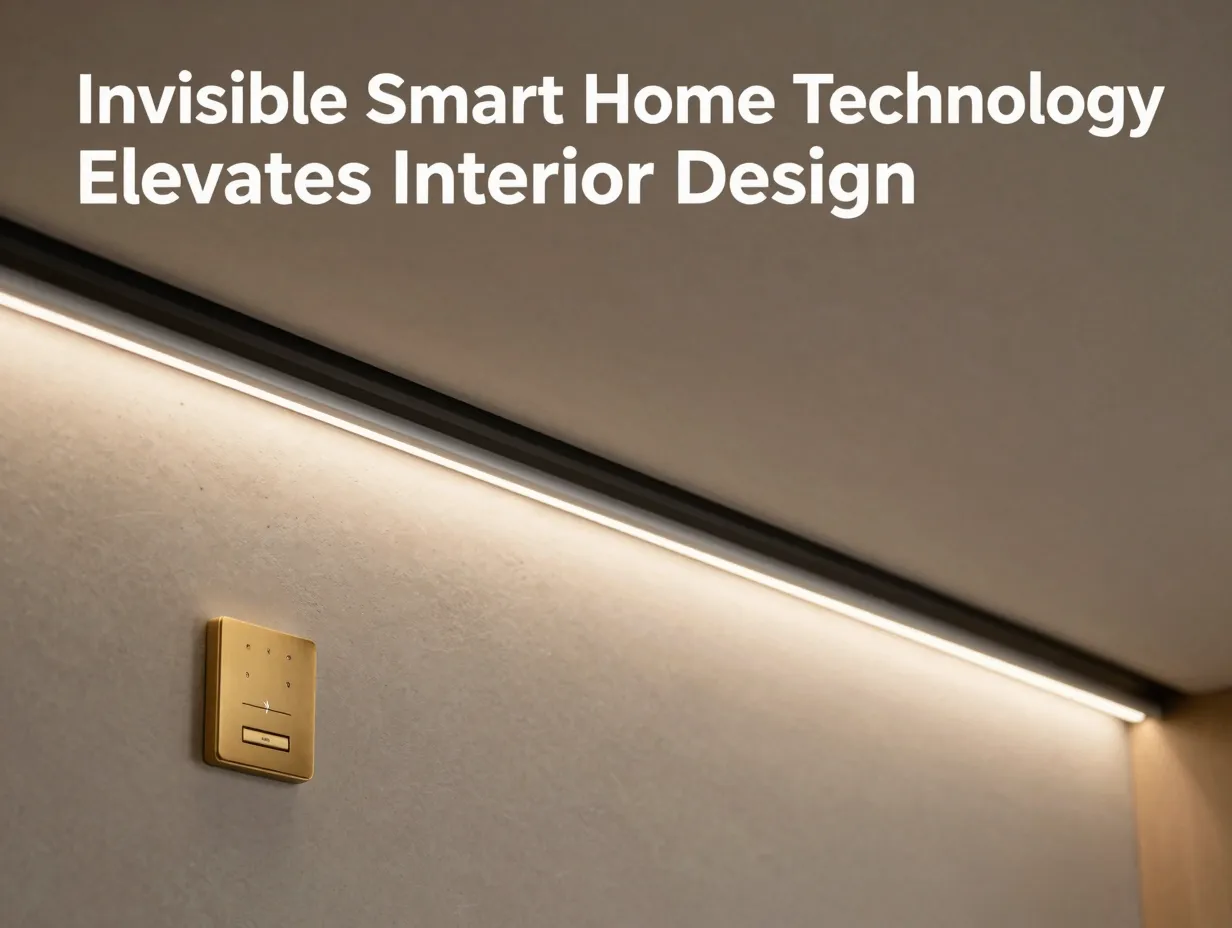
The concept of “invisible smart home technology” has become so central to luxury residential design that it now appears in briefs from architects and interior designers before any technology specification is written [8][9]. The six ideas below are the most impactful ways to apply this philosophy in practice.
The 6 Smart Home Technology Ideas That Elevate Your Interior Design
1. Architectural Smart Lighting as a Design Tool
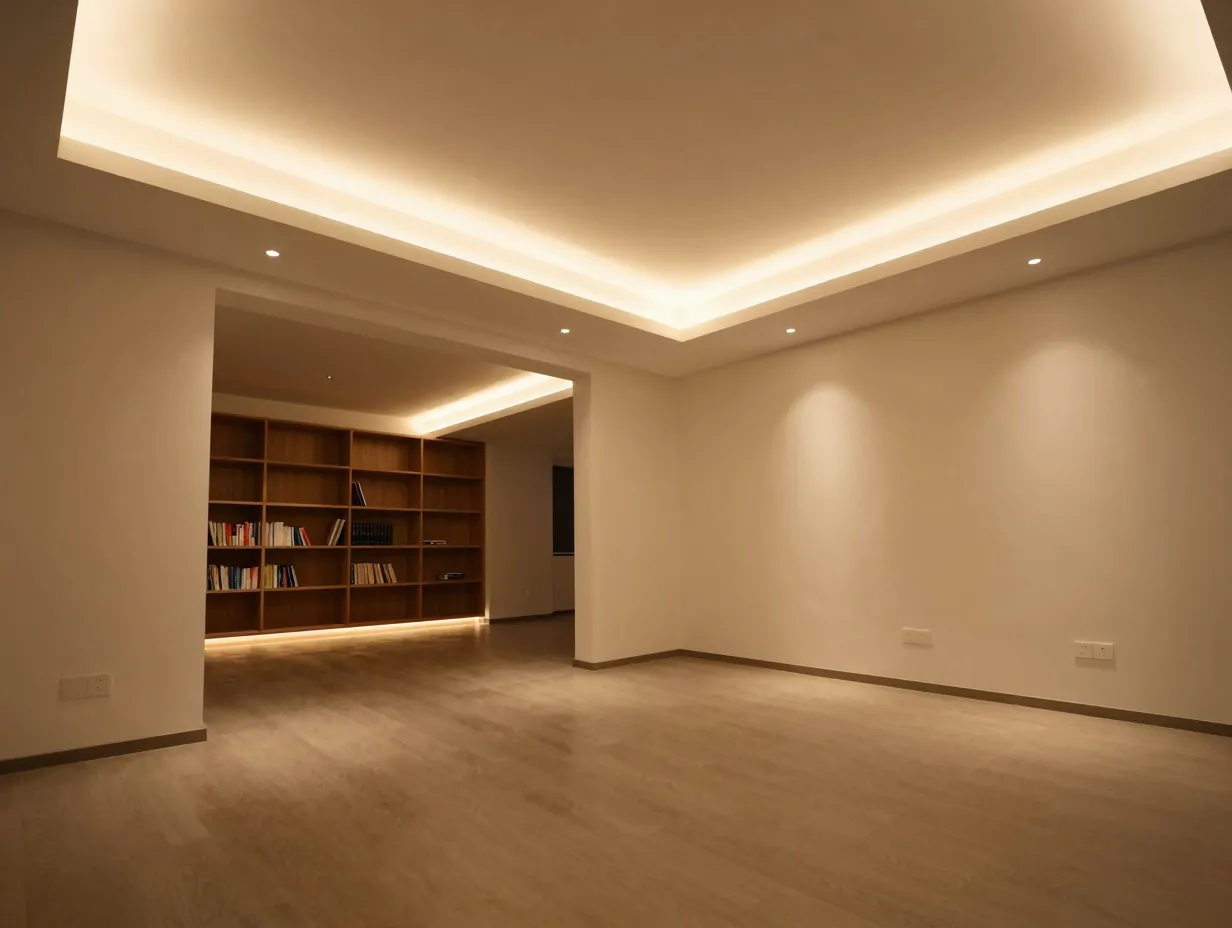
Smart lighting is no longer a convenience feature, it is an architectural instrument. In 2026, the highest-impact upgrade any homeowner can make to an interior is a well-designed, AI-driven lighting system that responds to presence, time of day, and activity [5][6][7].
The key distinction is between lighting that is installed and lighting that is designed. Installed lighting fills a room. Designed lighting sculpts it. Recessed LED strips inside ceiling coffers, tunable white downlights that shift from cool daylight to warm amber as evening arrives, and accent channels cut into millwork joinery all serve the same purpose: they make the architecture itself glow, rather than illuminating it from the outside.
What makes smart lighting an interior design tool in 2026:
- Tunable white and full-spectrum color temperature adjustment (2700K, 6500K) allows a single room to serve multiple functions across the day
- Presence-based sensors eliminate switches entirely, keeping walls clean and uninterrupted
- Scene programming ties lighting states to activities, dining, reading, entertaining, without requiring manual adjustment
- Integration with motorized blinds creates a unified daylight management system
AI-driven presence detection is now considered the single highest-impact upgrade available in the smart home category [6][7]. Systems that learn household routines and adjust lighting automatically remove the friction between technology and daily life, which is precisely what good interior design does.
“The best lighting design is the kind you never consciously notice, you simply feel comfortable, alert, or relaxed depending on where you are and what you are doing.”
A practical starting point is to audit every fixed switch position in a home and ask whether each one could be replaced by a sensor, a scene controller, or a motorized solution. In most cases, the answer is yes, and the result is cleaner walls and a more refined finish [5].
2. Disappearing Audio: Speakers Built Into the Architecture
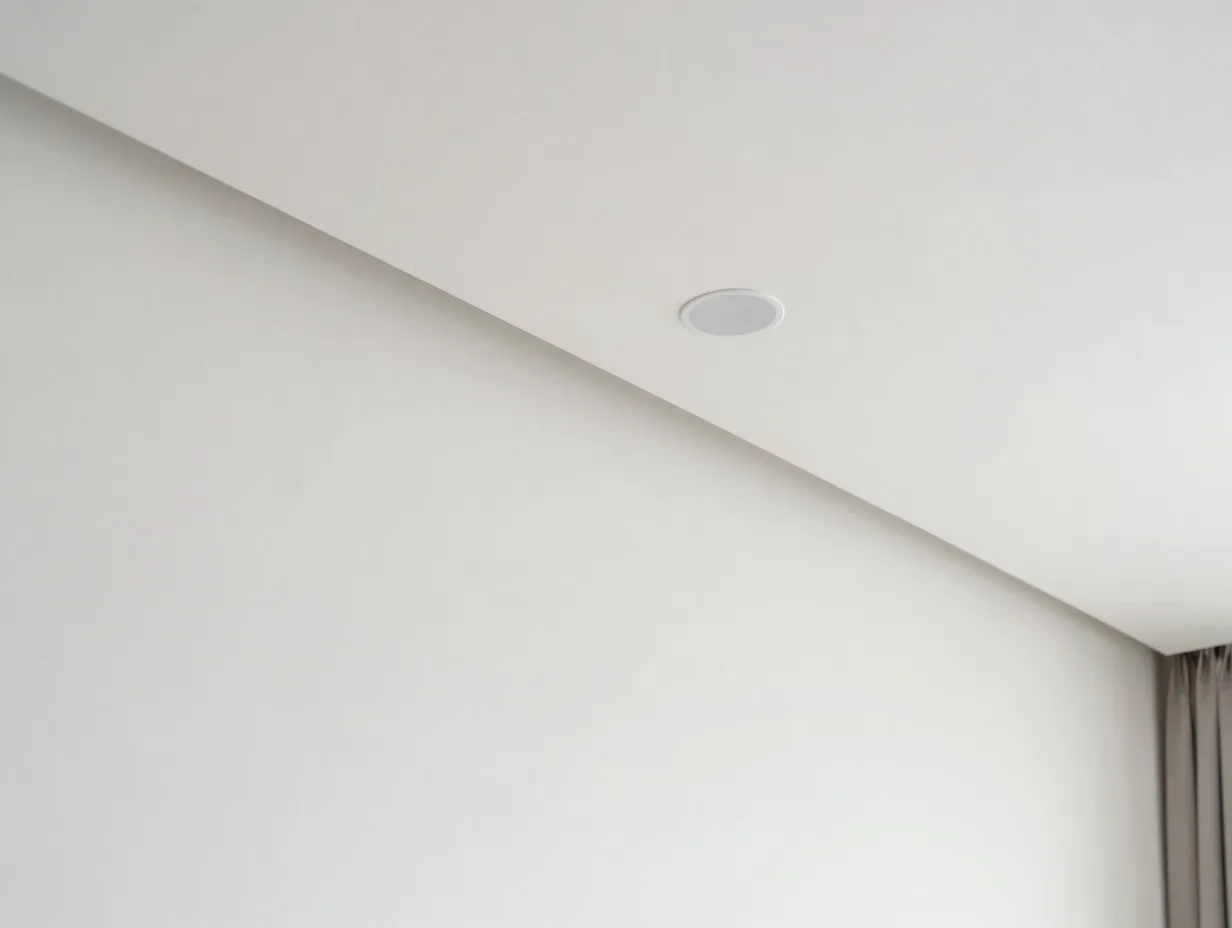
The standard bookshelf speaker is a design compromise. It delivers sound, but it also occupies visual space, requires cables, and competes with the furniture and art around it. Architectural audio, speakers built into walls, ceilings, and even stretched fabric panels, eliminates that compromise entirely [1][3].
In-wall and in-ceiling speakers have been available for decades, but the quality gap between architectural audio and freestanding speakers has closed dramatically. Current high-performance in-wall systems from specialist manufacturers deliver full-range sound that rivals dedicated listening room setups, while remaining completely invisible behind a skim-coated plaster or fabric surface [4][8].
Architectural audio options by integration level:
| Format | Visibility | Best Use Case |
|---|---|---|
| In-ceiling round speaker | Minimal (grille only) | Whole-home background audio |
| In-wall plaster-over speaker | Zero | High-end living and dining rooms |
| Fabric-panel speaker system | Zero | Home cinemas, media rooms |
| Outdoor landscape speaker | Minimal | Garden and terrace zones |
The most refined installations use plaster-over or fabric-covered drivers that leave no visible grille at all. Sound appears to come from the room itself rather than from a device [3][9]. This approach requires planning at the construction or renovation stage, as speaker cavities, wiring runs, and amplifier locations must be built into the fabric of the home.
For retrofit projects, slim in-wall speakers with paintable grilles offer a significant improvement over freestanding alternatives without requiring structural work. The key design principle is the same in both cases: audio infrastructure should be decided at the same time as wall finishes, not added afterward.
3. Motorized Window Treatments Integrated Into the Architecture
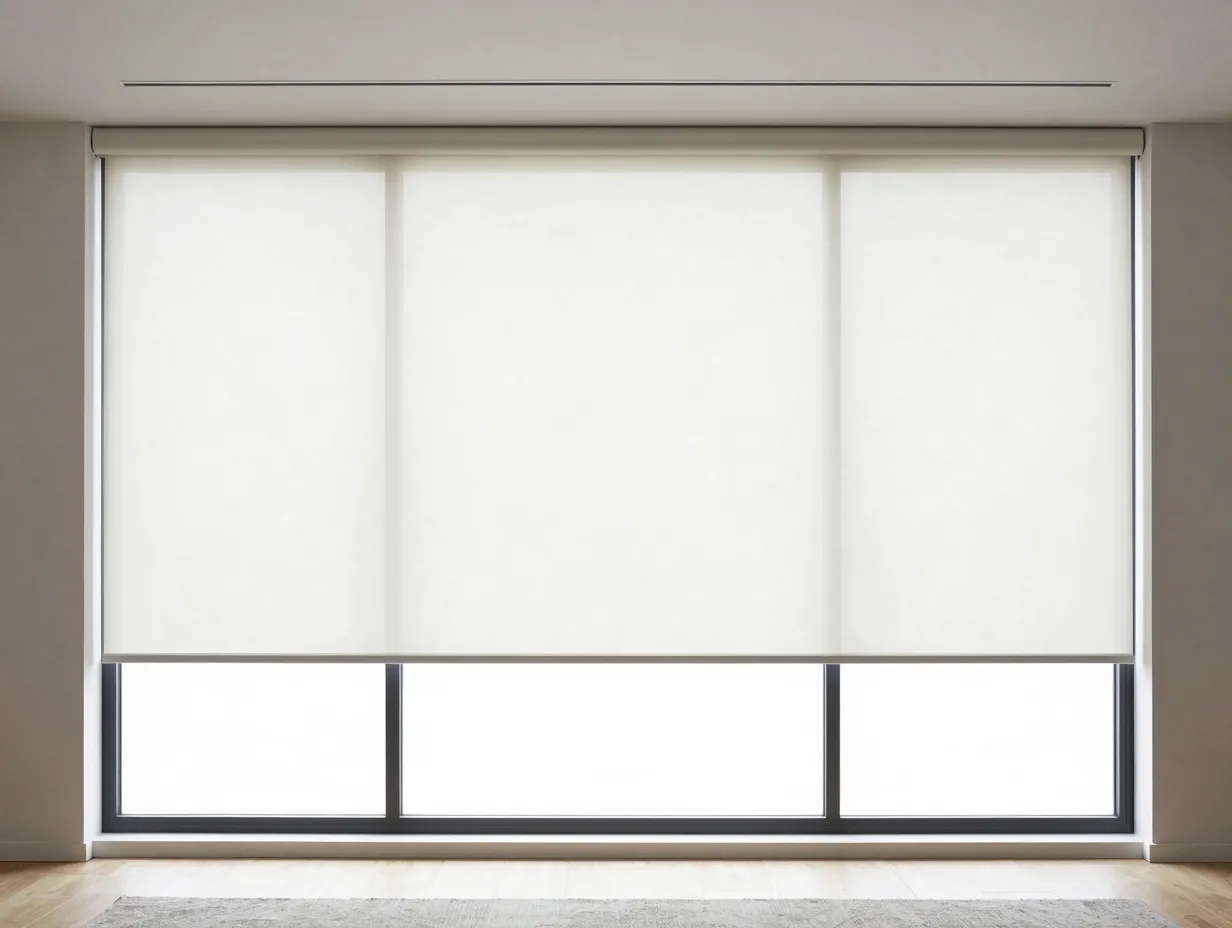
Window treatments are one of the most visible elements in any room, and they are also one of the most frequently overlooked opportunities for smart integration. Motorized blinds, shades, and curtain tracks that disappear into ceiling pockets or slim cassettes within the window reveal represent a significant upgrade in both function and finish [2][10].
The design benefit is immediate. A motorized shade that retracts fully into a ceiling recess leaves the window frame completely clear when the shade is up, no bunched fabric, no visible hardware, no brackets. When the shade is down, it presents a perfectly flat, wrinkle-free surface that reads as part of the wall rather than an accessory hung in front of it.
Functional benefits beyond aesthetics:
- Automated schedules that open shades at sunrise and close them at sunset reduce solar heat gain without manual intervention
- Integration with smart lighting systems creates a unified approach to daylight management
- Privacy glass and electrochromic glazing can replace physical blinds entirely in some applications, switching from clear to opaque on command
- Voice and app control allows adjustment from anywhere in the home
The connection between motorized window treatments and smart lighting is particularly powerful. When both systems are controlled by the same platform and respond to the same presence and daylight sensors, the home manages its own environment with minimal input from occupants [7][10]. That level of seamless automation is what separates a smart home from a genuinely intelligent one.
4. Screens and Media Walls That Vanish When Off
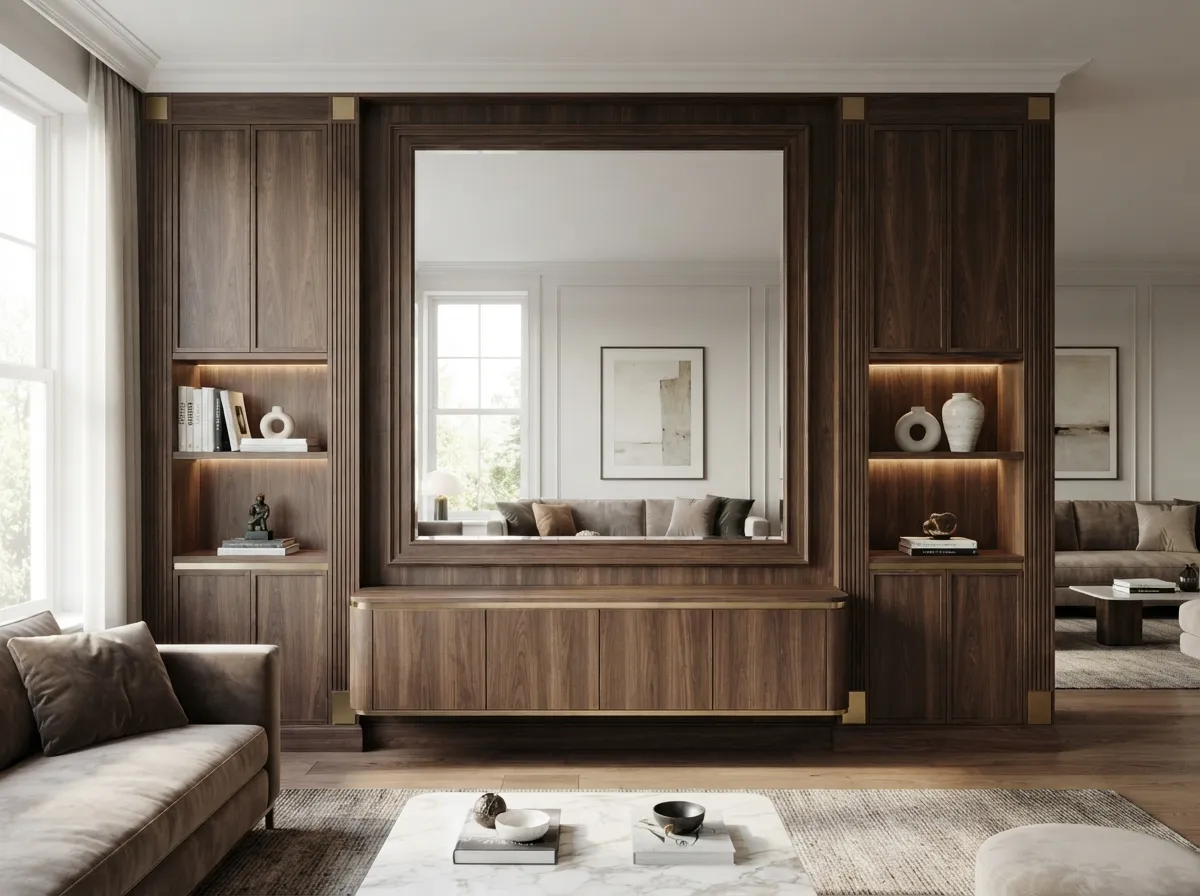
A large television is one of the most disruptive objects in a living room. When switched off, a black rectangle dominates a wall that might otherwise display art, paneling, or a carefully considered material finish. The solution, screens designed to disappear when not in use, has become one of the defining ideas in luxury residential interiors for 2026 [1][3][8].
The most sophisticated approach is the mirror television: a display that functions as a standard mirror when off and reveals a full HD or 4K screen when on. Installed within a custom frame that matches surrounding joinery, a mirror television is indistinguishable from a decorative mirror at rest. Similar logic applies to art-mode displays, which show high-resolution artwork when not in use, effectively turning the television into a rotating gallery.
Screen concealment options at a glance:
- Mirror TV, reflective surface when off, full display when on; suits bedrooms and bathrooms
- Art-mode display, shows curated digital art when idle; suits living rooms and studies
- Motorized panel, a framed artwork or joinery panel slides or pivots to reveal a screen behind it
- Projector and motorized screen, screen drops from ceiling recess; wall is clear when not in use
- Flush-frame installation, television sits within millwork at exact depth, eliminating visible bezels
The motorized panel approach is particularly effective in high-end interiors because it allows the concealment mechanism to become a design feature in its own right. A panel of book-matched veneer that slides aside to reveal a cinema-quality display is a moment of theater that reinforces the quality of the whole interior [4][8].
For media walls, the principle extends further. A full wall of built-in cabinetry that houses a screen, speakers, and all associated equipment, with every cable and device hidden behind closed doors, reads as a piece of furniture rather than a technology installation.
5. Smart Infrastructure Hidden in False Ceilings, Millwork, and Service Voids
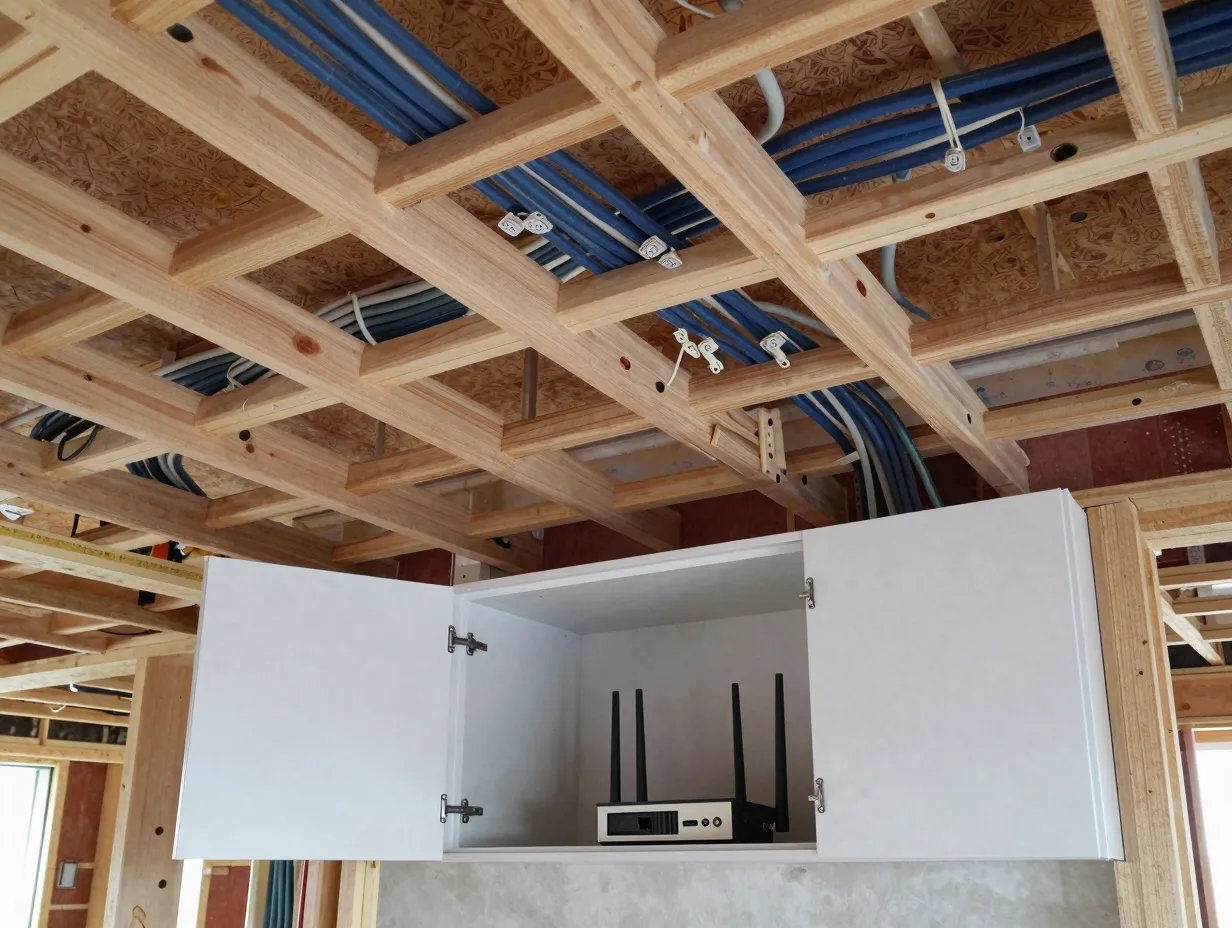
The single most important decision in any smart home project is not which devices to buy, it is where to hide the infrastructure that supports them. False ceilings, millwork cavities, and service voids have become the core “smart infrastructure layers” of high-end residential design [1][3][9].
This shift in thinking, from device selection to infrastructure planning, is what separates projects that age well from those that look dated within three years. A home with well-planned service voids can accommodate new technology as it emerges without disruption to finishes. A home where devices were added without infrastructure planning shows every cable, every hub, and every adapter.
The three core infrastructure layers:
- False ceiling void, houses wiring runs, network cables, speaker cables, motorized blind mechanisms, and HVAC sensors without any surface penetration
- Millwork cavities, built-in joinery designed with internal compartments for routers, amplifiers, smart home hubs, and media equipment, all ventilated and accessible via hinged panels
- Service risers and floor voids, in multi-story homes, dedicated vertical and horizontal routes for data and power cabling that allow future upgrades without opening walls
The practical implication for homeowners undertaking renovation is straightforward: before any plastering or joinery is fixed, a technology consultant should walk the space and mark every cable route, every device location, and every equipment housing position. That conversation costs very little at the planning stage and saves significant expense later [8][9].
Interoperability standards, particularly Matter, Thread, and Zigbee, have become a design concern as well as a technical one [2][10]. A home where all devices communicate on a single protocol requires fewer hubs, fewer apps, and fewer visible control points. Reducing the number of physical interfaces on walls and surfaces is itself an interior design benefit.
6. Design-Led Controls: Keypads, Scenes, and Intuitive Interfaces
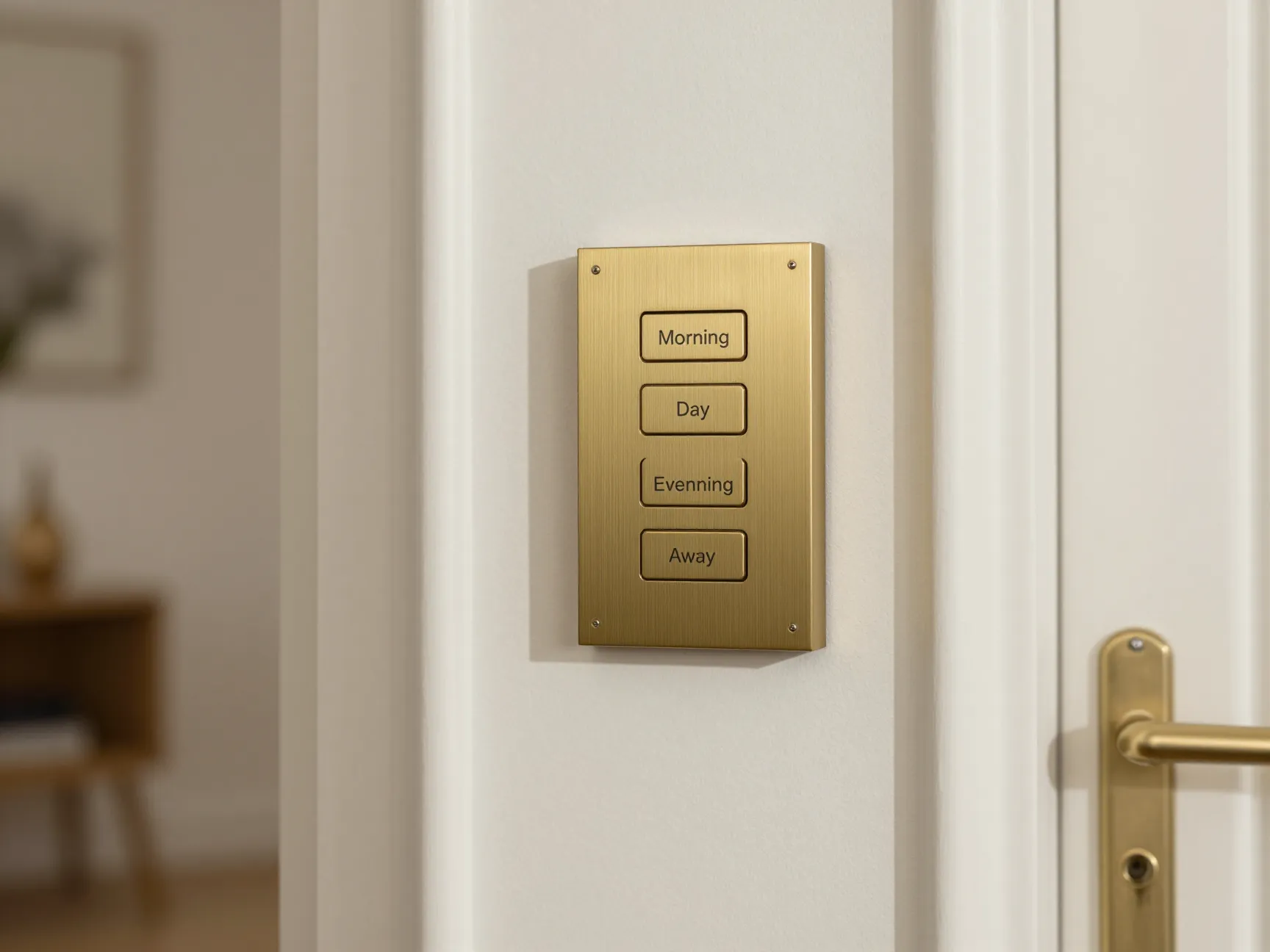
The final element in the 6 Smart Home Technology Ideas That Elevate Your Interior Design is the one most often handled poorly: the control interface. Every smart system needs a way for occupants to interact with it, and the quality of that interface, its physical design, its placement, and its simplicity, determines whether the technology enhances or disrupts the interior.
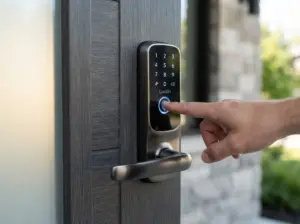
The worst outcome is a wall covered in mismatched switches, app icons, and voice assistant devices. The best outcome is a single, beautifully made keypad that controls lighting, audio, blinds, and climate from one location, with a finish that matches the surrounding hardware [4][8].
Principles for design-led smart controls:
- Match the finish, keypads and dimmers are available in brushed brass, satin nickel, matte black, and bespoke colors; the finish should be specified alongside door handles and light fittings, not selected from a technology catalog
- Limit the scenes, a keypad with four scene buttons (Morning, Day, Evening, Away) is more useful and more elegant than a system with forty individual controls
- Prioritize physical controls over apps, touchscreens and smartphones are convenient, but a physical button on a wall is faster and more reliable for daily use
- Automate the routine, control the exception, the system should handle predictable patterns automatically; manual controls exist for the moments when something different is needed
Design-led guidance from leading studios consistently cautions against over-automation [1][8]. A home that requires a smartphone to turn on a light is not a smart home, it is a complicated one. The goal is a system so well-calibrated to the household’s routines that it rarely needs to be controlled at all, and when it does, the interface is immediate and intuitive.
Predictive “invisible homes”, systems that learn individual routines and adapt without programming, represent the next evolution of this idea [3][9][10]. These platforms use occupancy patterns, calendar data, and environmental sensors to anticipate needs before they are expressed. The result is a home that feels responsive and alive without requiring any conscious interaction from its occupants.
A practical checklist for design-led controls:
- Specify keypad finishes at the same time as all other hardware finishes
- Limit each keypad to four to six scene buttons maximum
- Position keypads at natural pause points, room entrances, beside the bed, at the main staircase
- Ensure every automated function also has a manual override
- Test every scene in the actual space before finalizing programming
How to Prioritize These Ideas for Your Home
Not every project will implement all six ideas at once. Budget, timeline, and the existing condition of the home all influence what is possible. The table below offers a framework for prioritizing based on impact and complexity.
| Smart Home Idea | Design Impact | Best Time to Install | Retrofit Difficulty |
|---|---|---|---|
| Architectural Smart Lighting | Very High | New build or full renovation | Medium |
| Disappearing Audio | High | Before plastering | High |
| Motorized Window Treatments | High | Any stage | Low, Medium |
| Disappearing Screens | High | Any stage | Low, Medium |
| Hidden Infrastructure | Very High (long-term) | New build or renovation | Very High |
| Design-Led Controls | Medium, High | Any stage | Low |
The two ideas with the lowest retrofit difficulty, disappearing screens and design-led controls, offer the fastest path to a more refined interior without structural work. Motorized window treatments sit in the middle and can often be added to existing window reveals with minimal disruption. Architectural lighting, disappearing audio, and hidden infrastructure deliver the highest long-term design value but require early planning.
Conclusion
The 6 Smart Home Technology Ideas That Elevate Your Interior Design share a single underlying principle: technology serves the space, not the other way around. When lighting is designed rather than installed, when audio disappears into the architecture, when screens vanish at rest, when infrastructure is hidden before finishes are applied, and when controls are chosen with the same care as door hardware, the result is a home that feels exceptional, not because of what it contains, but because of what it conceals.
Actionable next steps for homeowners and designers in 2026:
- Engage a technology consultant at the same stage as the architect and interior designer, not after finishes are fixed.
- Audit every visible device in the current space and ask whether each one could be recessed, concealed, or replaced with an architectural equivalent.
- Specify keypad and control finishes alongside all other hardware at the material selection stage.
- Plan service voids, false ceiling heights, and millwork cavities before any structural work is completed.
- Choose a single interoperability platform (Matter-compatible systems are the current standard) to minimize hubs, apps, and visible equipment.
- Start with the two lowest-friction upgrades, design-led controls and disappearing screens, to build momentum and demonstrate the value of the invisible technology approach before committing to larger infrastructure investments.
The homes that will define luxury living in 2026 and beyond are not the ones with the most technology. They are the ones where technology is least visible and most felt.
References
[1] Invisible Smart Home Tech Quiet Automation Houston 2026 – https://www.modernacrestudio.com/articles/invisible-smart-home-tech-quiet-automation-houston-2026
[2] Smart Home Design Trends – https://www.re-design.app/articles/smart-home-design-trends
[3] Invisible Smart Home Technology Solutions The 2026 Guide To Hidden Luxury – https://www.premieresystemsdesign.com/2026/06/19/invisible-smart-home-technology-solutions-the-2026-guide-to-hidden-luxury/
[4] Ise Barcelona Smart Home Tech Finally Designed For Beauty – https://www.homesandgardens.com/solved/ise-barcelona-smart-home-tech-finally-designed-for-beauty
[5] Smart Lighting Ideas For 2026 And How To Upgrade Your Home – https://www.simplelighting.co.uk/blogs/guides/smart-lighting-ideas-for-2026-and-how-to-upgrade-your-home
[6] Ces 2026 S Most Exciting Smart Lighting Ideas To Bring Home – https://lamps.live/ces-2026-s-most-exciting-smart-lighting-ideas-to-bring-home
[7] Smart Home Lighting Explained 2026 – https://the-gadgeteer.com/2026/05/29/smart-home-lighting-explained-2026/
[8] Blog Invisible Home Automation – https://www.chalkstudio.design/blog-invisible-home-automation
[9] Invisible Smart Home Dubai 2026 – https://radyinterior.ae/invisible-smart-home-dubai-2026/
[10] Smart Home Design Trends 2026 – https://blogs.foaidindia.in/smart-home-design-trends-2026/