6 Useful 3D Printed Objects For A More Organized Kitchen
Most kitchen clutter problems are not storage problems. They are printing problems. Cabinets overflow, drawers jam shut, and spice jars topple over not because homes lack space, but because generic plastic bins never quite fit the exact gap they were bought for. A growing number of home cooks are solving this with a 3D printer instead of another trip to a home goods store, and the results are catching on fast.
Disclosure: This post contains affiliate links. As an Amazon Associate, we earn from qualifying purchases, and at no extra cost to you.
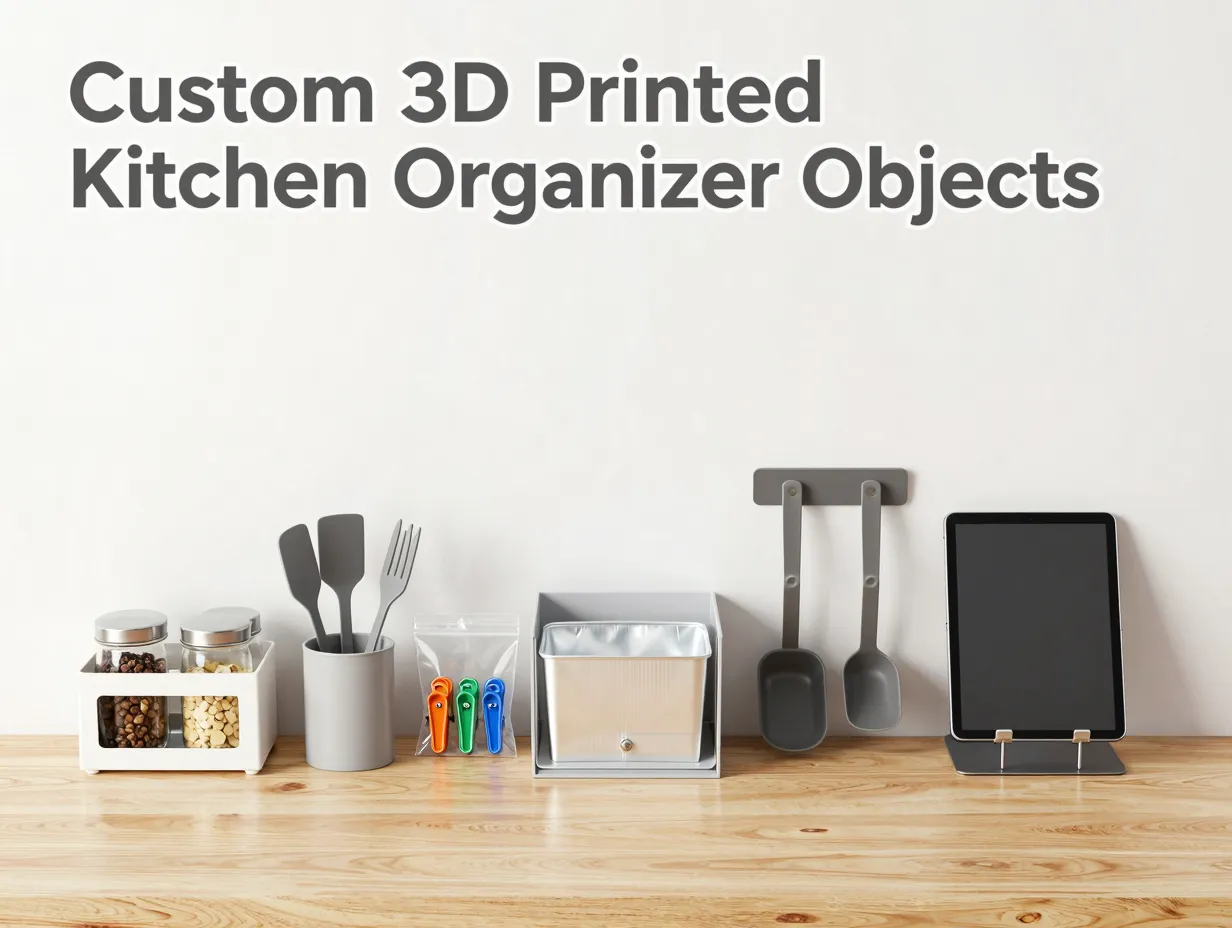
By early 2026, dedicated organizer bundles, creator video guides, and massive online model libraries had turned kitchen organization into one of the most popular categories in the 3D printing world. This article breaks down 6 Useful 3D Printed Objects For A More Organized Kitchen, drawn from a widely tested STL bundle and cross-checked against real-world creator reviews, community feedback, and major model repositories. Each object is practical, printable on common home printers, and designed to solve a specific clutter problem rather than just look impressive on a shelf.
Key Takeaways
- A dedicated six-model kitchen organization bundle released in late February 2026 packages a spice jar rack, utensil caddy, bag clip set, cabinet door organizer, wall mounted scoop holder, and tablet stand into one tested file set.[4]
- Creators who use these prints daily consistently rank utensil holders and sink area organizers as the most valuable long-term additions to a kitchen.[7][1]
- Stackable and modular designs, including Gridfinity systems, are the clearest 2026 trend for maximizing drawer and cabinet space.[2][5][6]
- Recommended print settings across most tested kitchen organizers are 0.2 mm layer height, 15 to 20 percent infill, using PLA or PETG filament.[4]
- Large repositories like Printables and Cults3D maintain constantly updated kitchen organizer tags, giving printer owners dozens of free alternatives to try.[8][12]
Why 3D Printed Kitchen Organizers Are Having a Moment in 2026
Kitchen organization used to mean buying whatever plastic bin fit close enough to a drawer or shelf. That approach wastes space and rarely feels custom. A 3D printer flips the process. Instead of shopping for a near-match, users design or download a file sized for their exact cabinet, drawer, or counter gap, then print it in an afternoon.
This shift became especially visible in early 2026. A dedicated Kitchen Storage and Organization bundle containing six core organizer models was released in late February, packaged with STL, 3MF, and OBJ files plus a print guide covering tested settings for machines like the Ender 3 V2, Prusa MK3S+ and MK4, Bambu X1C and P1S, and the Elegoo Mars 3.[4] That level of cross-printer testing signals a maturing category, not a niche hobby experiment.
Around the same time, creators published video guides showing which organizers they personally kept using months after printing them, rather than just what looked good on camera once.[1] Community discussion threads echoed the same theme, with experienced makers naming utensil holders and sink organizers as the household prints that deliver lasting value.[7] Meanwhile, major STL repositories kept expanding their kitchen categories, with one leading platform updating its kitchen tag as recently as mid-2026, reflecting continuous demand for new organizer designs.[8]
Three forces are driving this trend together. First, printers themselves have become more reliable and affordable, so testing a design costs little more than a spool of filament. Second, repositories now offer thousands of free, pre-tested files, removing the need to design from scratch. Third, kitchens are one of the few rooms where irregular shapes, tight cabinet gaps, and oddly sized drawers make generic storage products a poor fit, which is exactly where custom printed parts shine.
The 6 Useful 3D Printed Objects For A More Organized Kitchen
The following list highlights 6 Useful 3D Printed Objects For A More Organized Kitchen, based primarily on a widely tested six-model bundle designed specifically for kitchen storage.[4] Each entry also notes where community favorites or alternative designs from other creator guides can serve a similar purpose.
1. Spice Jar Rack
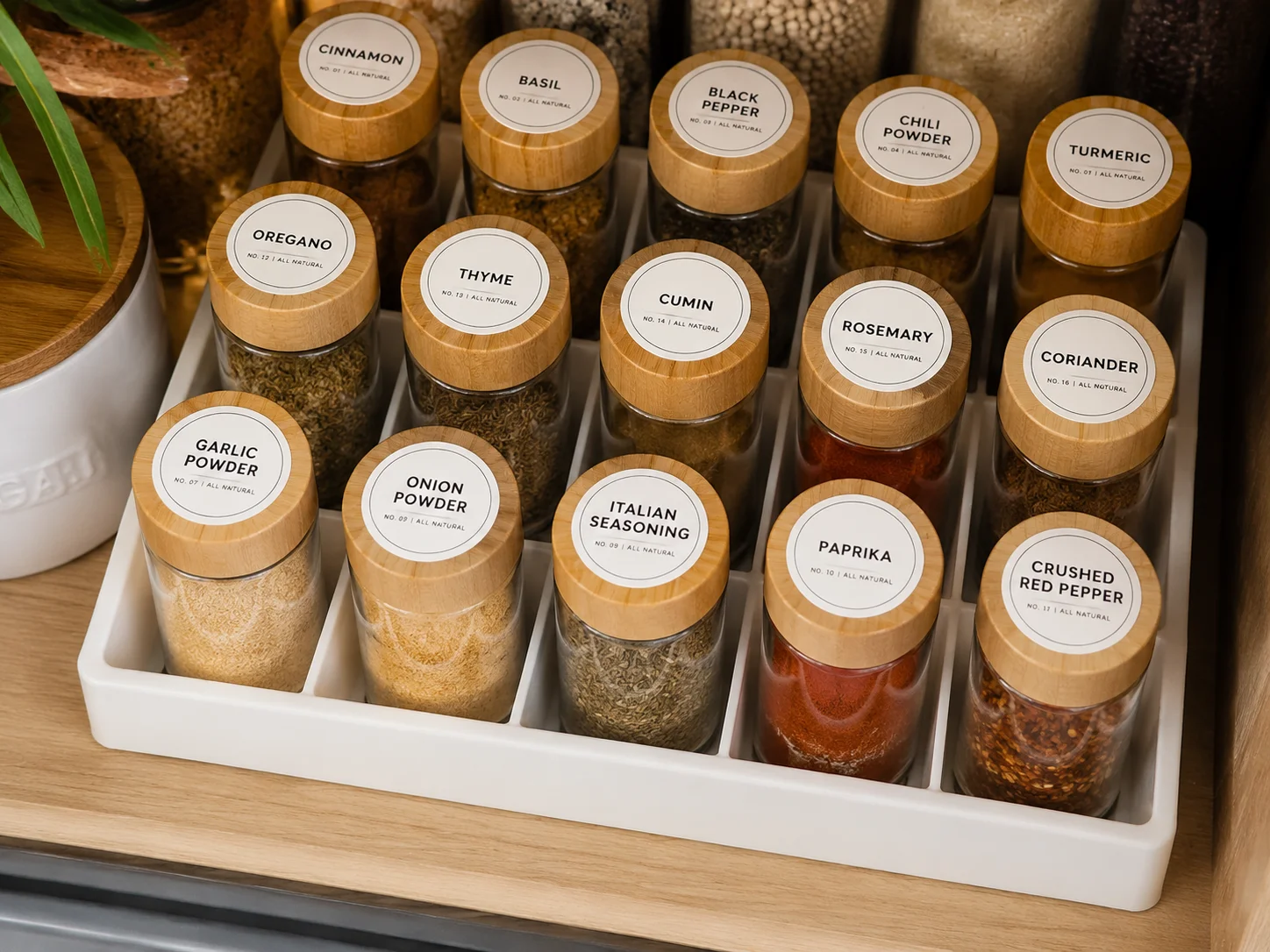
A spice jar rack solves one of the most common kitchen annoyances: jars that tip over, roll to the back of a shelf, or get lost behind bigger containers. The tested rack design from the 2026 kitchen bundle holds jars upright in a fixed grid, so labels stay visible and nothing rolls when a drawer or cabinet door opens.[4] This style pairs well with uniform printed jars or snap-on labels, an approach also highlighted among top kitchen-organization prints for keeping a pantry looking consistent rather than mismatched.[6]
Because spice jars vary in diameter across brands, it helps to measure a few jars before printing, then choose a rack sized to that diameter rather than assuming a universal fit.
2. Utensil Holder Caddy
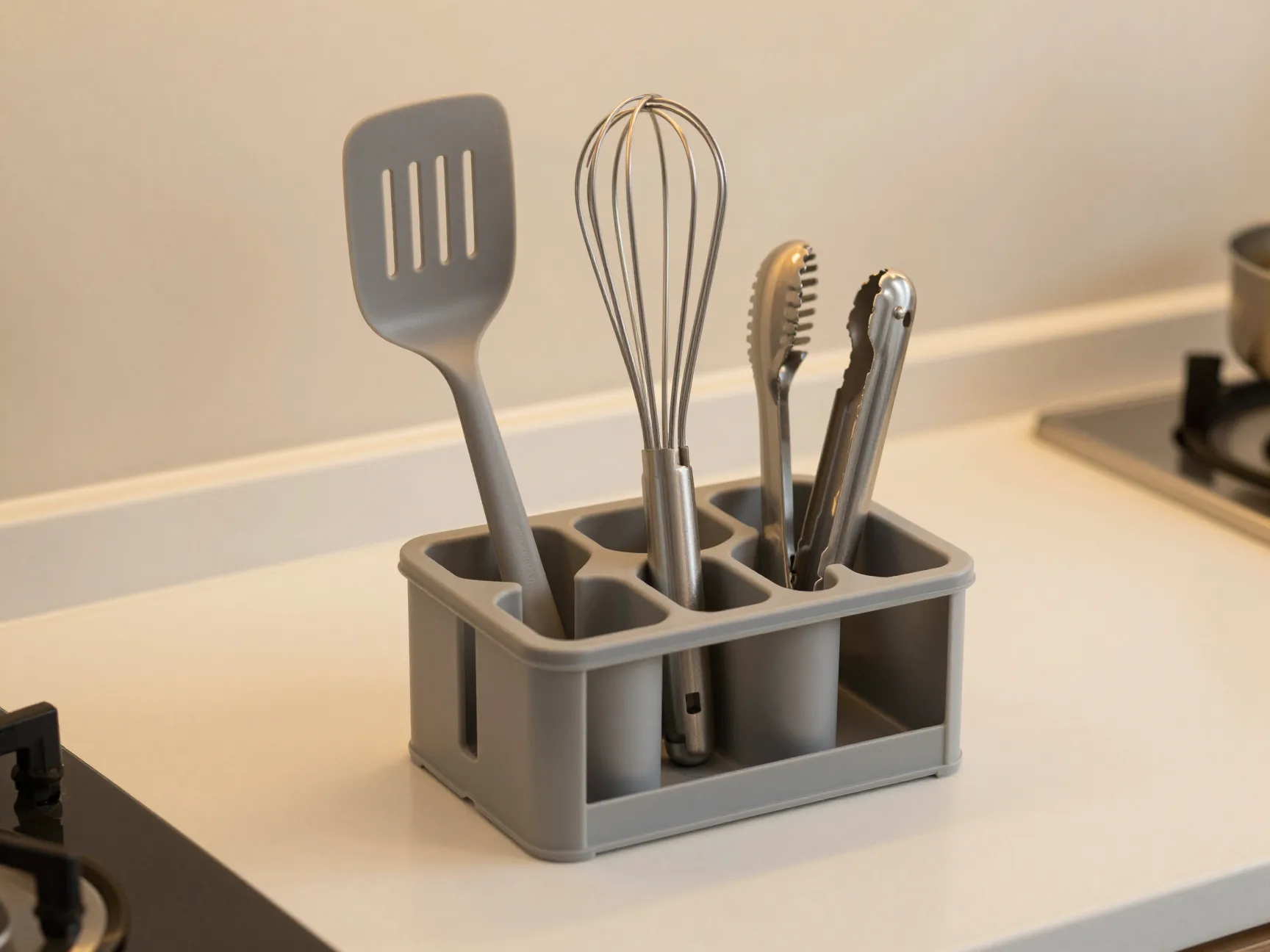
Utensil holders consistently rank among the most-used 3D printed kitchen objects, according to both dedicated video reviews and long-running community discussions.[1][7] A caddy design keeps spatulas, whisks, and tongs upright and separated by handle type, instead of tangled together in a single crock. The tested caddy in the 2026 bundle uses divided compartments so tools do not slide together when moved.[4]
For households with more tools than one caddy can hold, a second unit or a companion silverware organizer, a design also praised in creator guides for keeping drawers tidy, can extend the same system to drawer storage.[1]
3. Bag Clip Set
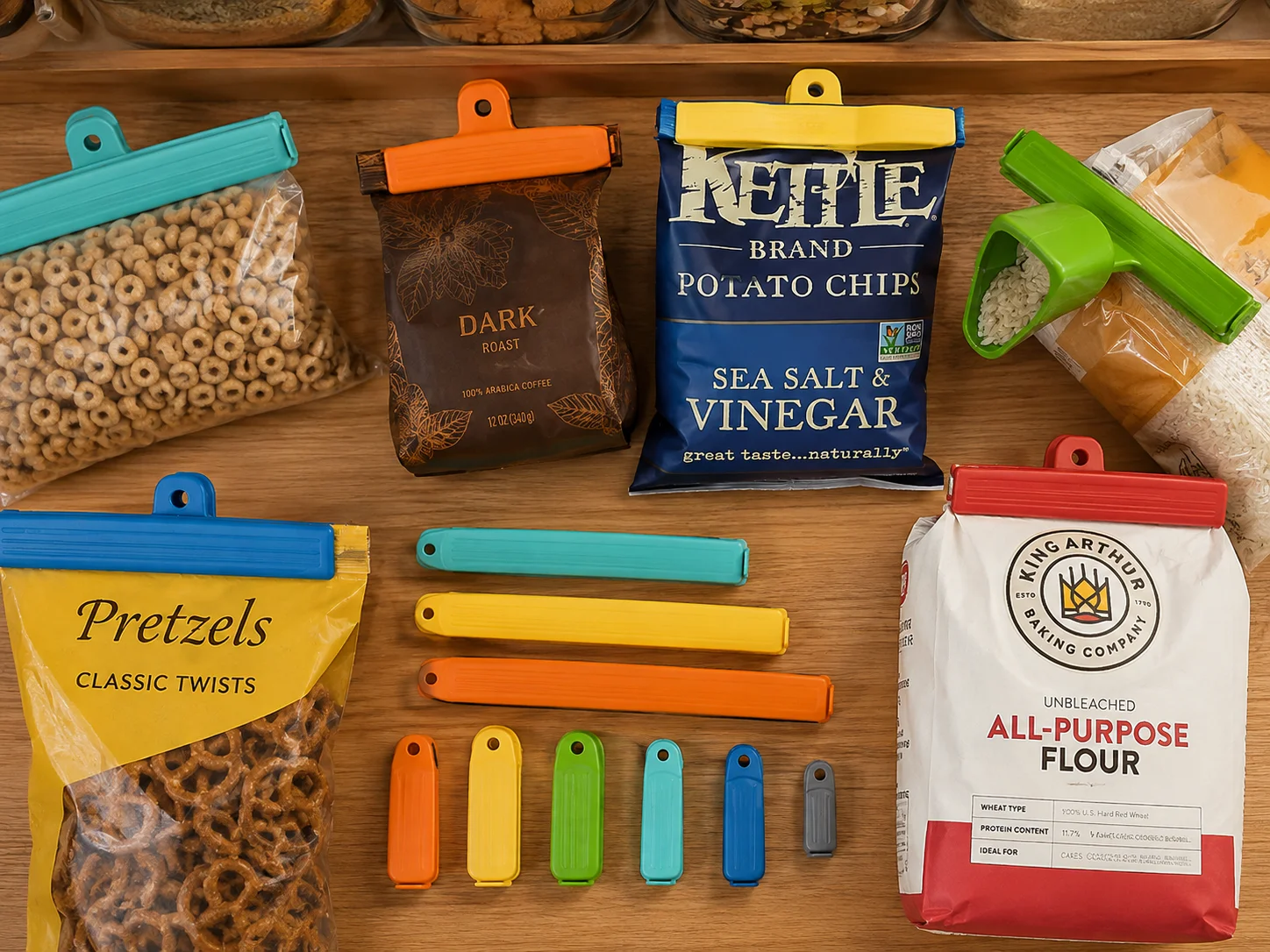
Loose chip bags, cereal boxes, and coffee pouches are a classic source of pantry clutter, and bag clips are one of the simplest prints to solve it. The 2026 bundle includes a set of clips designed to seal a variety of bag widths.[4] Several other guides go a step further, recommending bag clips with built-in pour spouts specifically for rice, coffee, and cereal, since a spout controls flow and prevents spills during pouring.[6][10]
Clip-style designs that double as measuring scoops are another popular variation, since they combine two pantry tools into a single printed object rather than requiring separate purchases.[10]
4. Cabinet Door Organizer
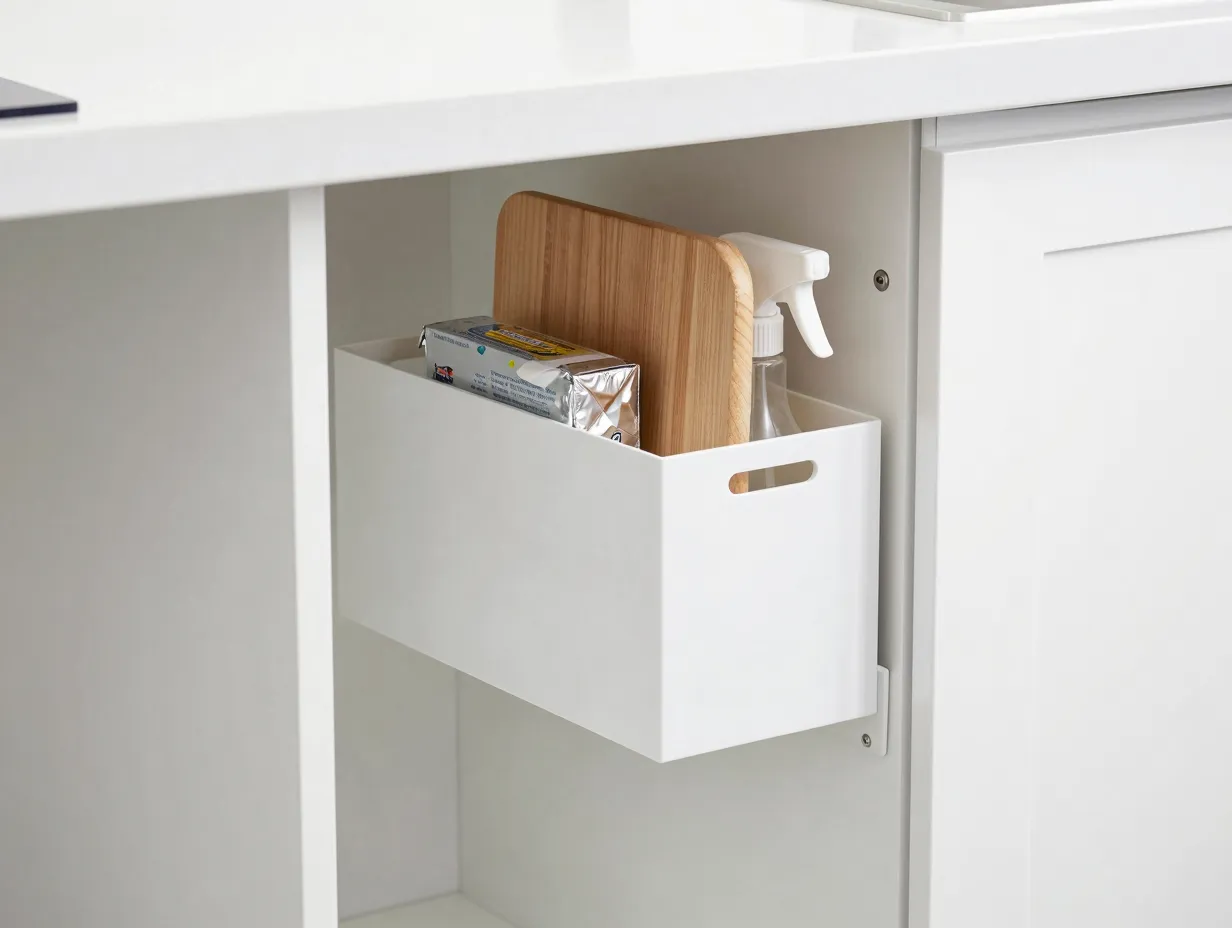
Cabinet doors are often wasted vertical space. A cabinet door organizer mounts to the inside of a door and holds small items like foil boxes, cutting boards, or cleaning supplies that would otherwise take up shelf space. The tested version in the 2026 bundle was designed to mount securely without damaging cabinet finishes, using lightweight brackets suited to PLA or PETG prints.[4]
This kind of vertical-space solution reflects a broader pattern seen across 2026 organizer collections, where stackable and wall-mounted designs are favored specifically because they free up flat surfaces for other storage.[2]
5. Wall Mounted Food Scoop Holder
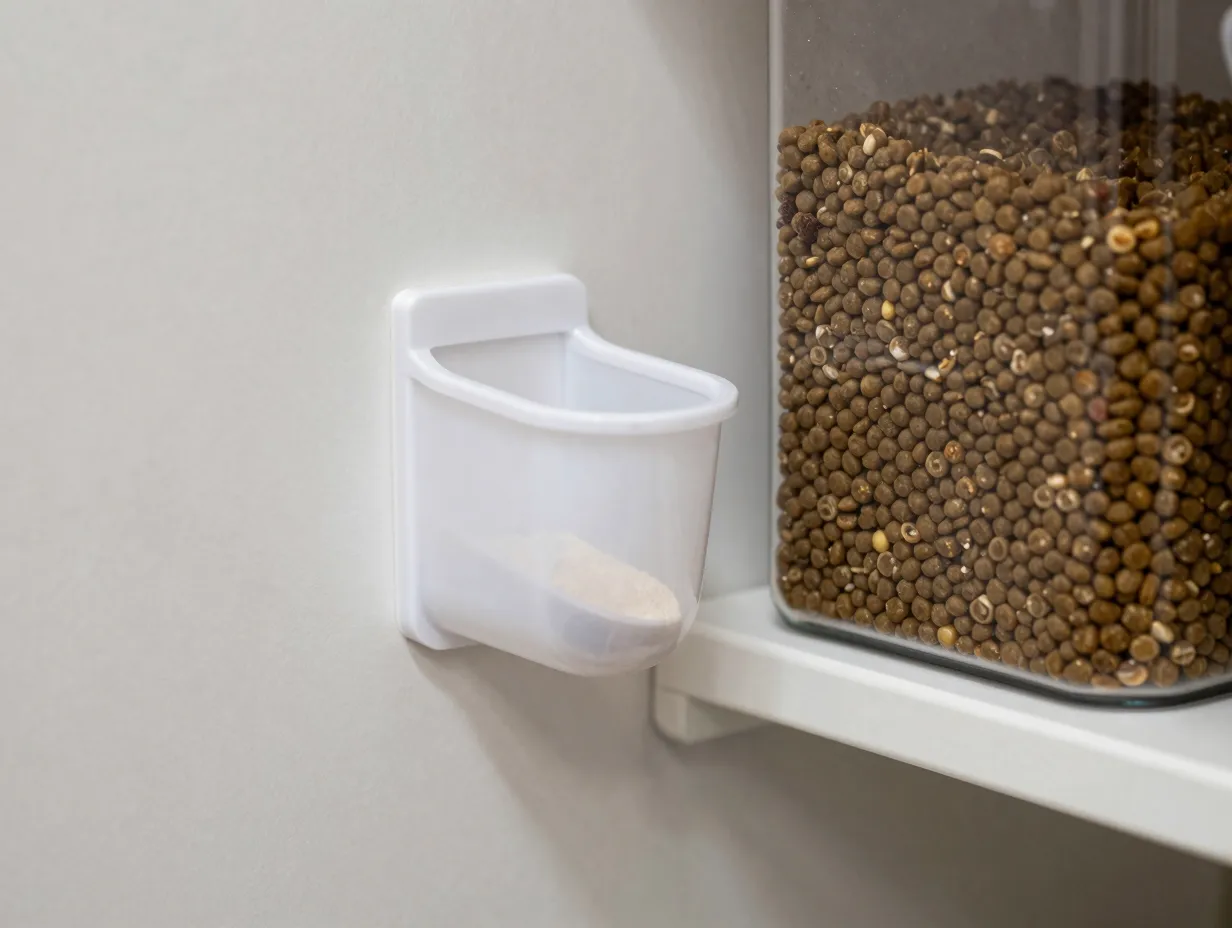
Scoops for pet food, flour, or bulk grains tend to get buried inside containers or left loose on a counter. A wall mounted scoop holder keeps the scoop visible and within reach near the container it belongs to. The bundle’s version was built to mount near a pantry shelf or cabinet wall, keeping the scoop off the counter entirely.[4]
This is a smaller, simpler print compared to the others on this list, but it solves a specific daily friction point that larger organizers do not address.
6. Tablet or Cookbook Stand
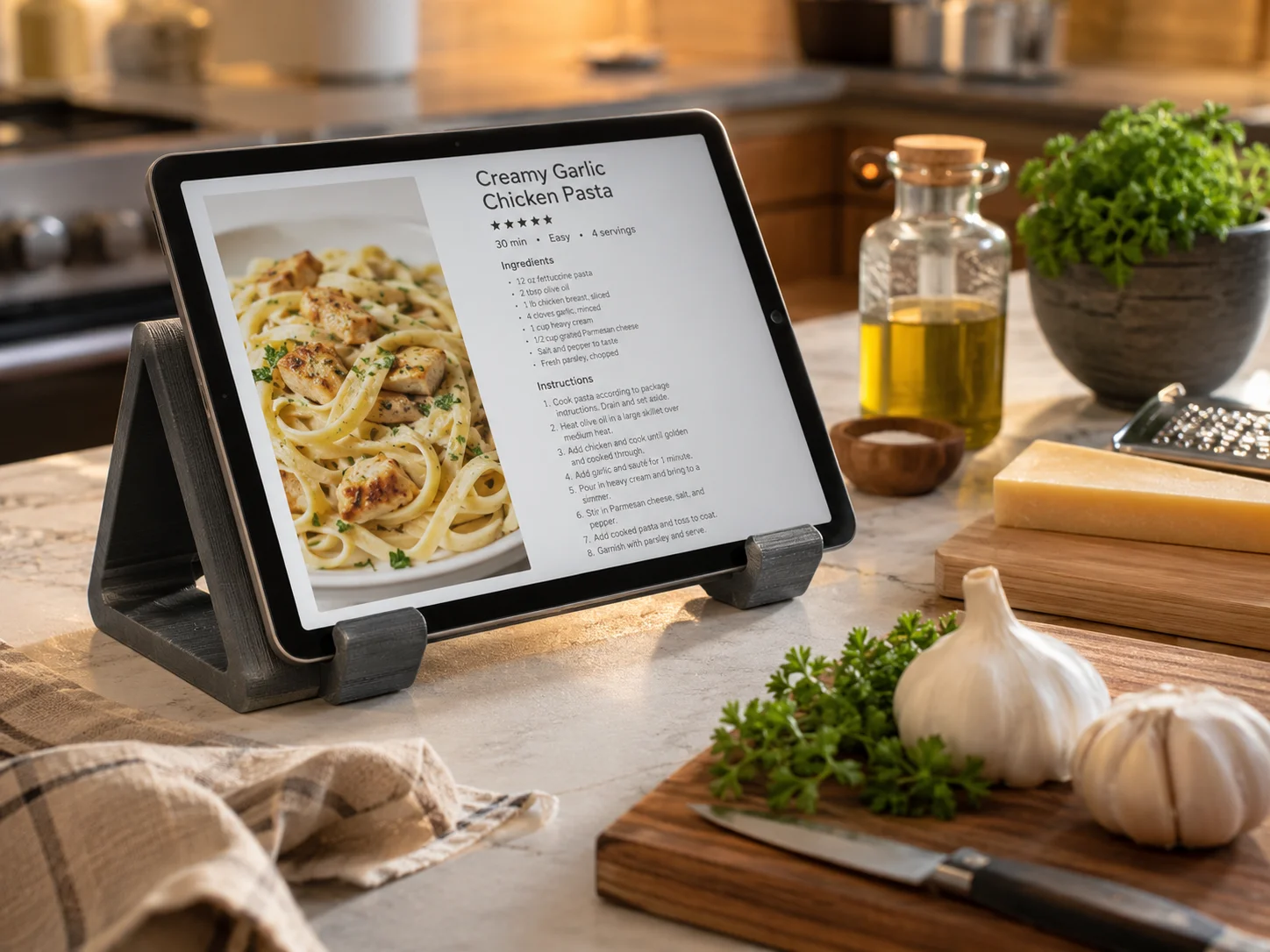
A tablet or cookbook stand rounds out the 2026 bundle as the one item not focused purely on storage.[4] Instead, it solves a workflow problem: keeping a recipe visible at counter height without holding a phone or propping a heavy cookbook against a wall of ingredients. Given how many cooks now follow recipes on a phone or tablet, this stand functions as an organization tool in a different sense, keeping counters clear of props while a recipe stays readable during cooking.
Together, these six objects form a complete beginner set for anyone starting to organize a kitchen with a 3D printer, covering spice storage, tool storage, pantry sealing, cabinet space, scoop access, and recipe visibility in a single coordinated bundle.[4]
How to Choose the Right Kitchen Organizer Prints for Your Space
Not every kitchen needs all six objects, and not every printed design fits every kitchen the same way. Before printing an entire bundle, it helps to match designs to actual pain points rather than printing everything available.
Start with the areas that cause the most daily frustration. If jars keep falling over, prioritize a spice rack. If drawers are the mess, a utensil caddy or silverware organizer solves that first. Community feedback consistently points to utensil holders and sink organizers as the prints people keep using long after the initial excitement of a new hobby fades, which makes them a safer starting point than more specialized gadgets.[7][1]
Consider stackability next. Several 2026 creator guides emphasize stackable bins, stackable bottle drying racks, and compact stackable measuring cups specifically because they let a single design multiply across a cabinet without needing separate files for each size.[2] A tiered pantry can organizer follows the same logic, turning flat shelf space into layered storage for canned goods.[1]
For anyone with irregular drawer shapes, a fully custom approach may work better than a pre-made bundle. Some tutorials document measuring each drawer compartment individually, then designing custom-fit boxes in CAD software to match those exact dimensions, achieving a near-professional insert without buying a commercial organizer at all. This approach takes longer but produces a perfect fit every time, which matters most in drawers with unusual dividers or appliances built into cabinetry.
Gridfinity-style systems deserve special mention. This modular baseplate and bin format has become a foundational method for organizing drawers because a single baseplate design accepts many different bin sizes, letting a household reconfigure storage without reprinting the base each time.[6][5] A full Gridfinity kitchen collection can cover tea storage, spice drawers, medicine drawers, and can dispensers using one consistent modular system, which reduces the number of separate files a household needs to track.[5]
The table below summarizes how to match common kitchen problems to specific printed solutions.
| Kitchen Problem | Recommended Printed Object | Best For |
|---|---|---|
| Spice jars falling over | Spice jar rack | Pantry shelves, cabinet interiors |
| Tangled utensils in a drawer | Utensil holder caddy or silverware organizer | Countertops, drawers |
| Bags going stale | Bag clip set with pour spouts | Pantry, cereal and coffee storage |
| Wasted cabinet door space | Cabinet door organizer | Small item storage |
| Loose scoops in bulk containers | Wall mounted scoop holder | Near pantry shelves |
| Irregular drawer shapes | Custom-fit measured boxes | Cutlery and gadget drawers |
| Multiple bin sizes needed | Gridfinity baseplate system | Drawers and cabinets |
Printing Settings and Materials for These 6 Useful 3D Printed Objects For A More Organized Kitchen
Print quality matters more in a kitchen than in most other rooms, since organizers get bumped, wiped down, and loaded with weight daily. The 2026 kitchen bundle’s print guide recommends a consistent set of settings tested across several mainstream printers, which is a useful baseline for anyone printing similar organizers.[4]
A layer height of 0.2 millimeters gives a good balance between print speed and surface strength for most of these objects. Infill between 15 and 20 percent is enough for items that hold light to moderate weight, such as spice racks and utensil caddies, without wasting filament or adding excessive print time. Heavier-duty parts, like cabinet door organizers holding several pounds of items, can use higher infill percentages if extra strength is needed.
Material choice depends on where the object will live. PLA is easy to print and works well for dry areas like pantry shelves, spice racks, and tablet stands. PETG holds up better against moisture and mild heat, making it the better choice for anything near a sink, dishwasher, or stovetop, such as sponge trays, dish scraper holders, or self-draining sponge holders.[1][2]
“Practical value comes from choosing the right material for the right location, not from choosing the most exotic filament available.”
The bundle was specifically validated on the Ender 3 V2, Prusa MK3S+ and MK4, Bambu X1C and P1S, and Elegoo Mars 3, covering both budget and premium printer categories.[4] This broad testing matters because it confirms these designs are not tuned to one specific machine’s quirks, making them a reasonably safe first print for anyone new to kitchen organization projects.
Where to Find Files and Alternative Designs
Beyond the core six-model bundle, several other sources offer strong alternatives or supplementary pieces worth exploring. A February 2026 video guide walks through six everyday-use organizers the creator personally kept using long-term, including a dish scraper, sponge tray, appliance cord wrap, pot lid holders, tiered pantry can organizer, and silverware organizer, all hosted on MakerWorld and Printables.[1]
Another guide from the same period focuses specifically on stackable and space-efficient designs, covering stackable countertop bins, a stackable bottle drying rack, self-draining sponge holder, compact stackable measuring cups, a two-sided measuring spoon, and a general kitchen utensil holder.[2] These designs emphasize vertical storage, which matters most in smaller kitchens where counter space is limited.
A separate video showcase from 2026 highlights a slightly different set of modular options, including a tea bag dispenser, bottle rack, a full Gridfinity kitchen collection, a spice drawer organizer, a medicine drawer organizer, and a can or drink dispenser.[5] For anyone who prefers browsing a large searchable library instead of a curated bundle, major repositories maintain extensive kitchen organizer tags. One platform’s dedicated tag lists dozens of files ranging from taco stands to assorted storage accessories, offering a broad reference set that newer 2026 bundles continue to build on and refine.[8]
Pantry and coffee-station specific gadgets are covered separately in an updated 2026 practical gadgets list, which highlights clip-on bag sealers to prevent stale snacks, coffee spoon clips that double as measuring scoops and bag clips, and stackable can holders designed to maximize pantry shelf space.[10] These smaller clip-style prints are quick to produce and make a good starting project for anyone new to kitchen printing before committing to a larger bundle.
Additional video content continues to expand this space, with creators regularly publishing new organizer demonstrations and comparisons that build on the same core designs described above.[3][9]
Frequently Asked Questions
Do these organizers need special filament?
No. Most of the six featured objects print reliably in standard PLA. PETG is recommended only for parts exposed to moisture or heat, such as sponge trays or items near a sink.[1][4]
Can beginners print an entire six-model bundle successfully?
Yes, provided the printer is calibrated correctly. The 2026 bundle was tested across budget printers like the Ender 3 V2 and premium machines like the Bambu X1C, confirming the designs are not overly sensitive to one specific setup.[4]
Are Gridfinity systems worth learning for kitchen use?
For anyone organizing multiple drawers or cabinets, yes. Gridfinity’s modular baseplate and bin format lets one system cover spice drawers, medicine storage, and can dispensers without redesigning the base each time.[5][6]
Which single object should someone print first?
Community feedback and creator reviews both point to utensil holders or sink area organizers as the most consistently useful starting project, since they solve a daily friction point almost every kitchen has.[7][1]
Are custom-measured designs better than pre-made bundles?
Custom designs fit unusual drawer shapes more precisely, but they take longer to create. Pre-made bundles like the 2026 six-model set are faster to print and still solve most common organization problems effectively.[4]
Conclusion
Kitchen clutter rarely comes from a lack of storage. It comes from storage that does not match the actual shape of a drawer, cabinet, or shelf. The 6 Useful 3D Printed Objects For A More Organized Kitchen covered in this guide, a spice jar rack, utensil holder caddy, bag clip set, cabinet door organizer, wall mounted food scoop holder, and tablet or cookbook stand, offer a tested, coordinated way to solve six distinct problems using one downloadable bundle.[4]
For readers ready to start, the most practical next step is choosing one or two objects that match the biggest current frustration in the kitchen, printing them using the recommended 0.2 mm layer height and 15 to 20 percent infill settings, and evaluating how well they hold up after a few weeks of daily use before committing to a full organizer system.[4] From there, exploring stackable designs, Gridfinity baseplates, or custom-measured drawer inserts can extend the same approach to the rest of the kitchen, one printed piece at a time.
References
[1] Watch – https://www.youtube.com/watch?v=BedaQ3k4MQY
[2] Watch – https://www.youtube.com/watch?v=O-Df2xXrMgQ
[3] Watch – https://www.youtube.com/watch?v=Gp9RgyC4jj0
[4] 1620123 Kitchen Storage Organization 6 Model Stl Bundle – https://www.printables.com/model/1620123-kitchen-storage-organization-6-model-stl-bundle
[5] Watch – https://www.youtube.com/watch?v=9wK7sTUVYwk
[6] Most Useful 3d Printed Objects – https://www.3d-printed.org/most-useful-3d-printed-objects/
[7] What Are The Most Useful Household Prints Youve – https://www.reddit.com/r/3Dprinting/comments/1rtlk8t/what_are_the_most_useful_household_prints_youve/
[8] Kitchen%20organizer – https://cults3d.com/en/tags/kitchen%20organizer
[9] Watch – https://www.youtube.com/watch?v=4fVq71bLoMc
[10] 3d Printed Kitchen Gadgets – https://ilove3dprinting.com/3d-printed-kitchen-gadgets/