8 Future Tech Gadgets That Will Revolutionize Your Smart Home
By 2026, the average connected home contains more than 20 smart devices, yet most of them still cannot talk to each other without a workaround. That fragmentation is finally ending. A wave of new hardware built on open standards, biometric sensors, and AI-driven automation is rewriting what a smart home can actually do. The 8 future tech gadgets that will revolutionize your smart home covered in this article are not concept-stage prototypes. They were announced, demonstrated, or launched at CES 2026, and several are already shipping to consumers right now.
Disclosure: This post contains affiliate links. As an Amazon Associate, we earn from qualifying purchases, and at no extra cost to you.
Key Takeaways
- The Matter 1.5 standard is becoming the universal language of the smart home, enabling devices from dozens of brands to work together seamlessly.
- Ultra-affordable smart lighting and plugs, some priced under 10 USD, are making whole-home automation accessible to mainstream buyers, not just early adopters.
- Biometric smart locks, including palm-vein scanners and wireless optically charged locks, are eliminating both security vulnerabilities and battery-maintenance headaches.
- AI-powered robot vacuums and automated smart shades are moving beyond simple scheduling to deliver genuine, context-aware automation.
- Choosing gadgets that support open standards today protects your investment as the ecosystem continues to expand.
Why 2026 Is the Tipping Point for Smart Home Technology
For years, the smart home promised seamless convenience but delivered fragmented frustration. Devices from different brands lived in separate apps, required separate hubs, and rarely cooperated. That story is changing fast. The Matter protocol, now at version 1.5, has reached critical mass, with dozens of major brands committing to it simultaneously [10]. At CES 2026, the sheer volume of Matter-certified announcements from companies including Amazon, IKEA, Aqara, Govee, Roborock, and Savant signaled that multi-platform interoperability is no longer a selling point, it is the baseline expectation [1][10].
At the same time, price compression is democratizing the category. When a smart bulb costs roughly the same as a cup of coffee, the barrier to entry disappears. Add biometric authentication, AI-driven automation, and maintenance-free hardware design, and the conditions for mass adoption are finally in place.
The 8 future tech gadgets that will revolutionize your smart home listed below represent the most impactful innovations emerging from that convergence.
The 8 Future Tech Gadgets That Will Revolutionize Your Smart Home
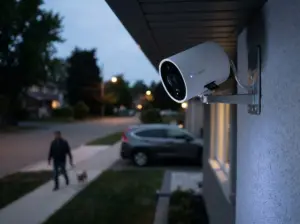
1. Matter 1.5 Multi-Function Camera Hubs
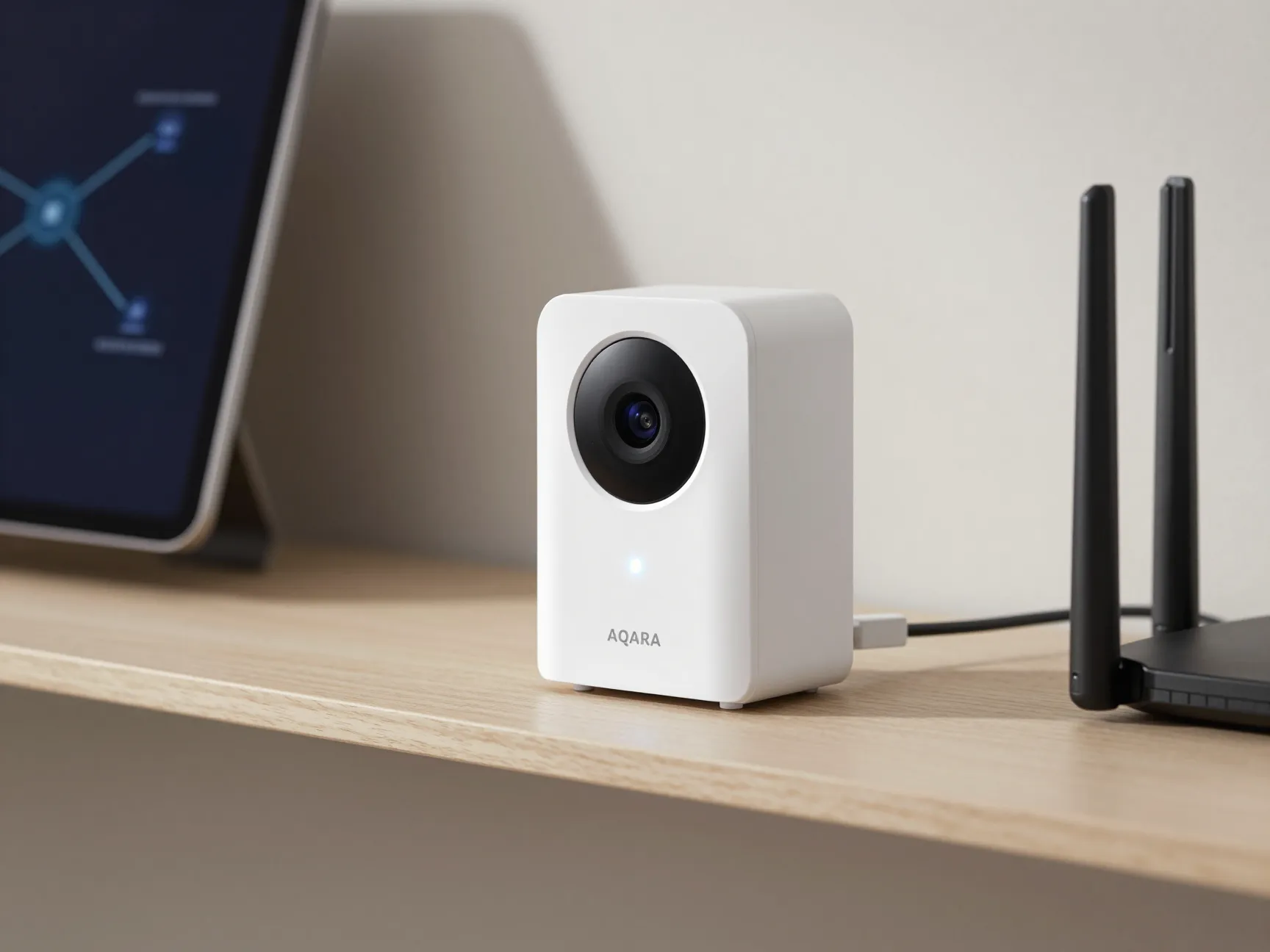
The traditional smart home required one device to be a camera, another to be a hub, and yet another to bridge protocols. Aqara’s Camera Hub G350, unveiled at CES 2026, collapses all three roles into a single unit [12]. It is the company’s first Matter-certified camera and also a full Matter Controller that complies with the Matter 1.5 specification, meaning it can manage and communicate with every other Matter device on the network from one piece of hardware [1].
Why this matters:
- Reduces the number of devices needed to run a complete smart home
- Eliminates the latency and failure points that come with multi-hub setups
- Provides a future-proof foundation as Matter 1.5 support expands across brands
For anyone building or upgrading a smart home in 2026, a Matter 1.5 camera hub is the logical starting point. It is the backbone that makes everything else on this list work better.
2. Ultra-Affordable Matter Smart Bulbs
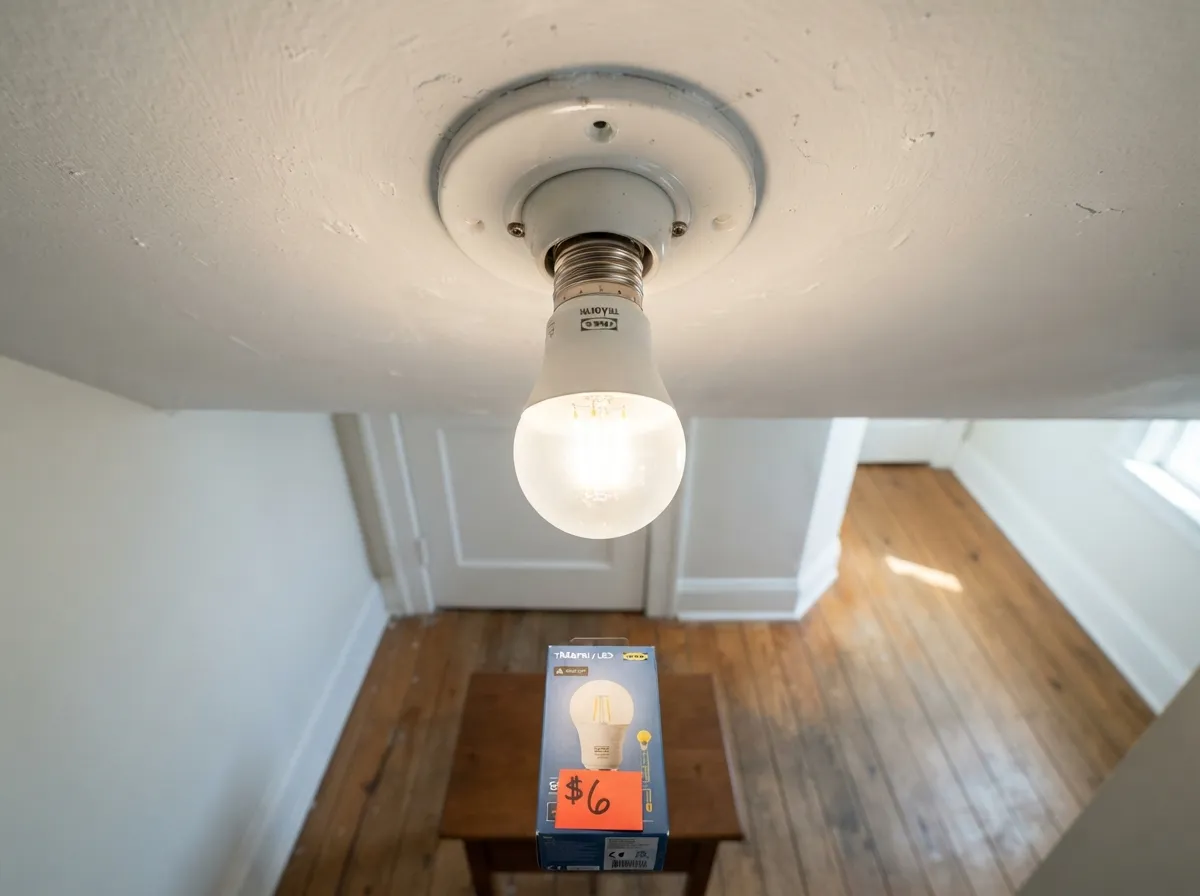
IKEA made its formal debut in the smart home section at CES 2026, and the headline was not a flagship product, it was a price tag [10]. The Swedish retailer announced a Matter-compatible smart bulb priced at approximately 6 USD, a smart plug at around 8 USD, and a smart remote at roughly 6 USD, with a rollout scheduled for the weeks immediately following the January 2026 show [1][10].
“When core smart home components drop to single-digit dollar prices, whole-home automation stops being a luxury and starts being a default.”
That shift has profound implications. Analysts covering the CES 2026 announcements noted that price compression at this level is what moves smart lighting from early adopter territory into mainstream households [1][9][10]. A family that previously balked at spending 15 to 20 USD per bulb can now automate every room in the house for less than the cost of a single traditional smart bulb from a few years ago.
Key specifications to look for in affordable Matter bulbs:
| Feature | Why It Matters |
|---|---|
| Matter 1.5 certification | Works with Alexa, Google Home, Apple Home, and SmartThings |
| Tunable white color temperature | Supports circadian lighting routines |
| Local processing | Continues working if the internet goes down |
| No hub required | Connects directly to a Matter controller or Thread border router |
3. Design-Forward Smart Lighting Ecosystems
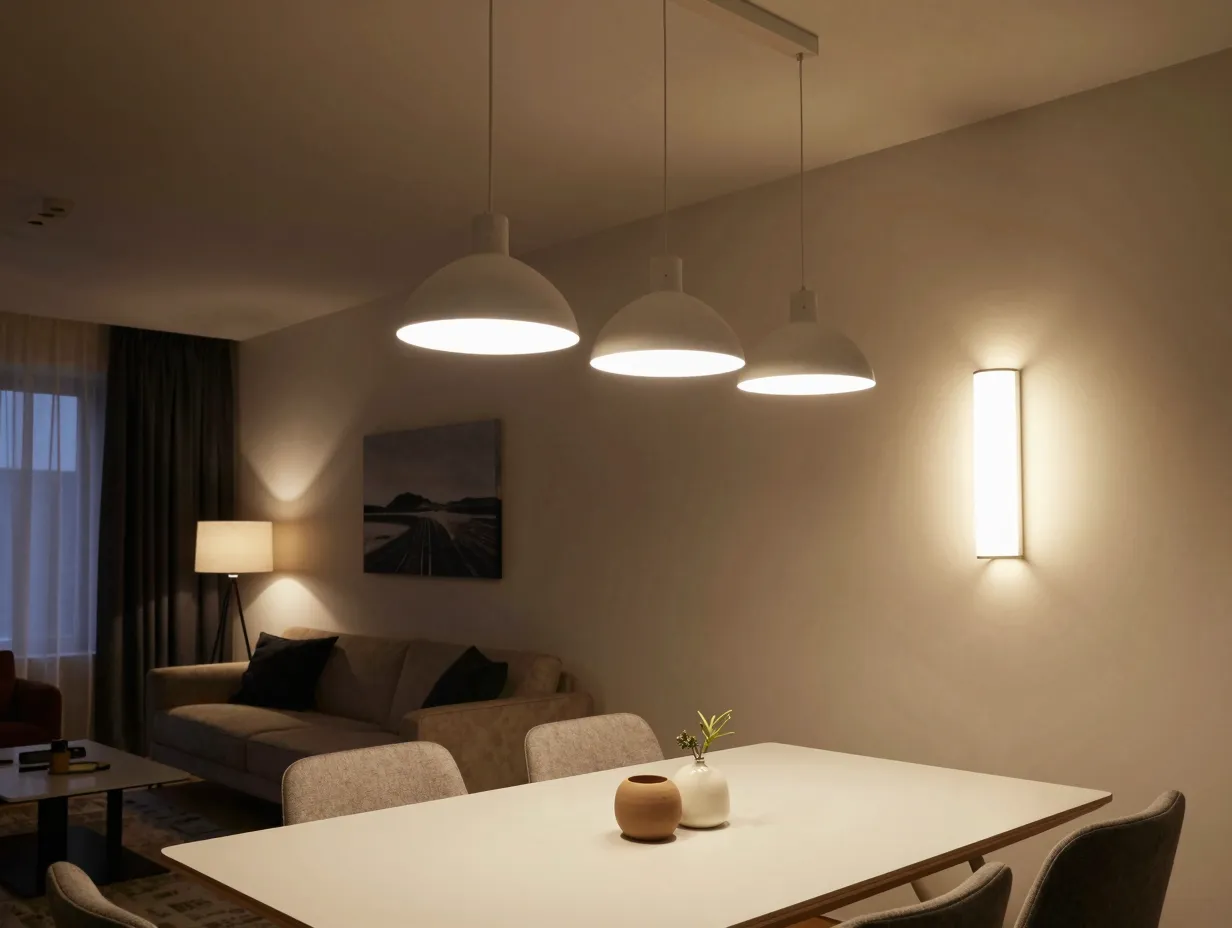
Affordability is one axis of the smart lighting revolution. Design is the other. IKEA’s Varmblixt smart lighting collection, priced at 99.99 USD and scheduled to launch in April 2026, demonstrates that Matter-compatible lighting no longer has to look like a utilitarian tech product [1]. These fixtures are designed to function as interior design elements first and smart devices second, while still integrating fully into modern smart home ecosystems.
This trend matters because aesthetic resistance has been one of the most underreported barriers to smart home adoption. Homeowners who invest in quality interior design have historically been reluctant to install hardware that looks out of place. Design-forward smart lighting removes that objection entirely.
The practical result is a two-tier market: ultra-affordable bulbs for utility spaces and design-led fixtures for living areas, both running on the same Matter backbone, both controllable from the same app.
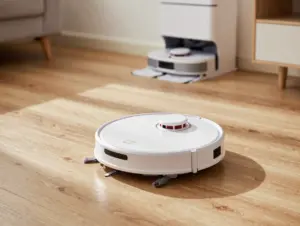
4. AI-Powered Robot Vacuums with Obstacle Intelligence
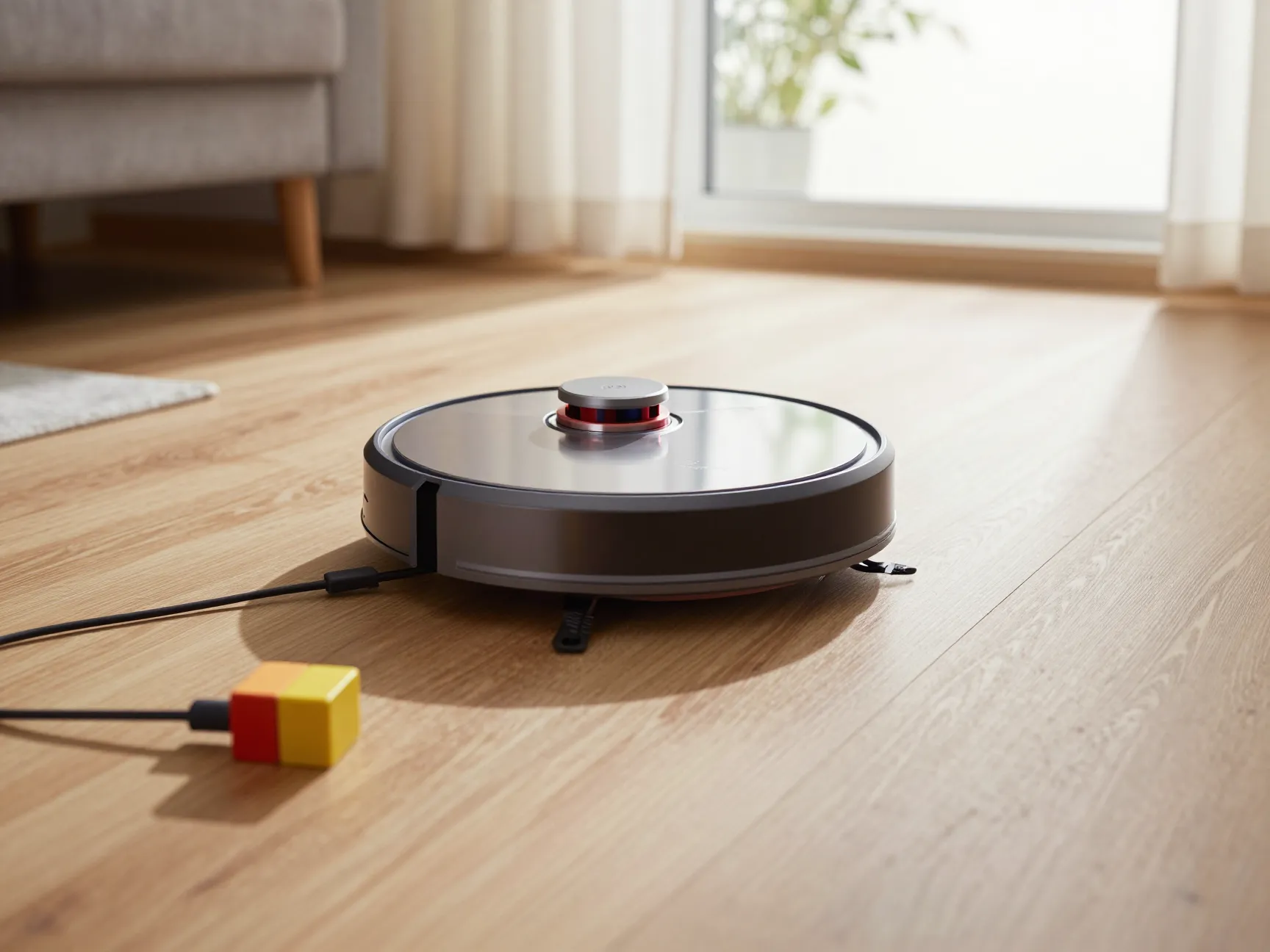
Roborock was among the brands announcing new Matter-compatible devices at CES 2026, continuing a broader trend of robot vacuums evolving from simple scheduled cleaners into genuinely intelligent home automation agents [10]. The newest generation of AI-powered robot vacuums uses on-device machine learning to identify and avoid obstacles in real time, distinguishing between a charging cable, a child’s toy, and a pet with enough accuracy to navigate complex floor plans without human intervention.
What separates next-generation robot vacuums from their predecessors:
- Object recognition trained on millions of household item images
- Real-time floor plan updates that adapt to furniture changes
- Matter integration that allows the vacuum to coordinate with other devices (for example, starting a cleaning cycle when the smart lock signals that everyone has left the house)
- Multi-surface detection that automatically adjusts suction and brush speed
The Matter integration piece is particularly significant. A robot vacuum that can receive a signal from a smart lock, a motion sensor, or a calendar event is no longer just a cleaning appliance, it is a participating node in a broader home automation network.
5. Automated Smart Shades for Energy and Comfort
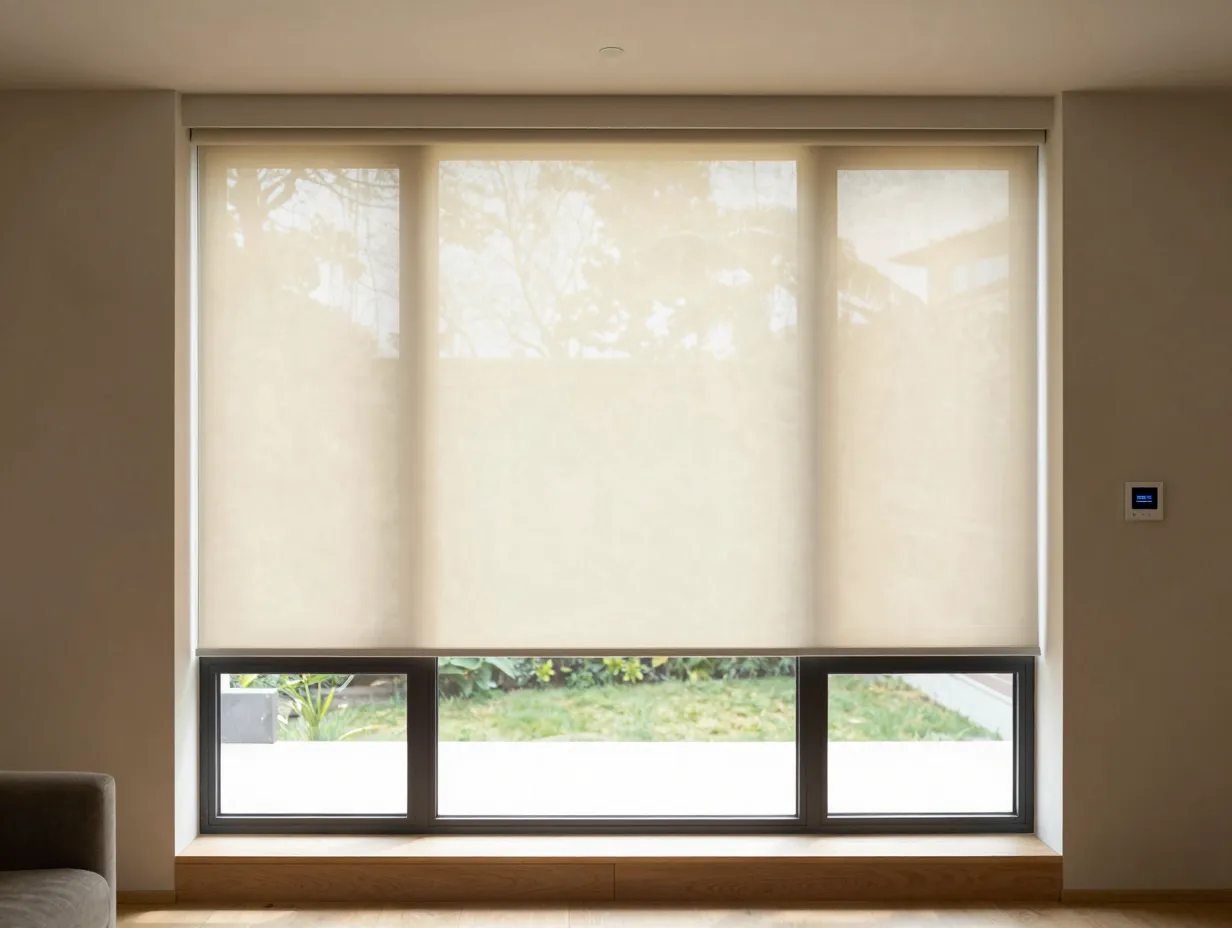
Savant’s Coulisse-branded battery-powered Smart Shades, shown at CES 2026, bring motorized window coverings into the Matter 1.5 ecosystem [12]. This is a category that has existed for years in high-end custom installations but has remained largely inaccessible to mainstream consumers due to cost and installation complexity. Battery-powered operation eliminates the need for hardwired electrical work, and Matter certification means these shades can coordinate with thermostats, lighting, and occupancy sensors without custom programming.
Practical automation scenarios enabled by smart shades:
- Shades open gradually in the morning to serve as a natural alarm, synchronized with smart lighting
- South-facing shades close automatically during peak afternoon heat to reduce air conditioning load
- Shades close when the security system is armed in away mode for privacy
- Shades adjust based on real-time weather data fed through a smart home hub
The energy savings potential is measurable. Window coverings that respond intelligently to solar gain and outdoor temperature can reduce heating and cooling costs in a meaningful way, making smart shades one of the few smart home gadgets that can pay for themselves over time.
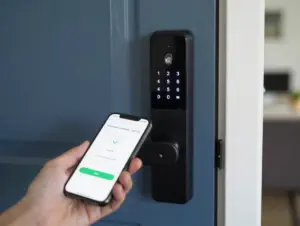
6. Biometric Smart Locks with Palm-Vein Recognition
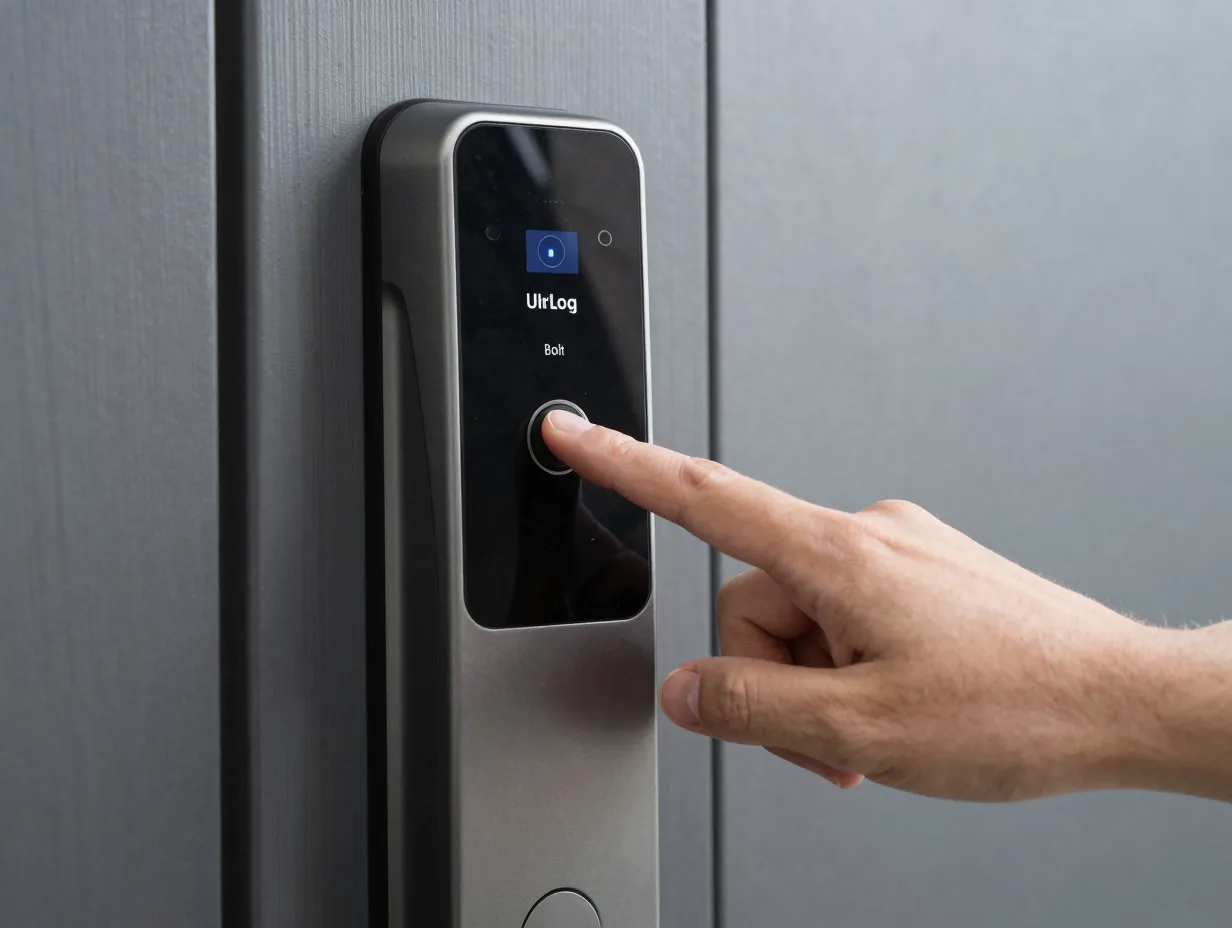
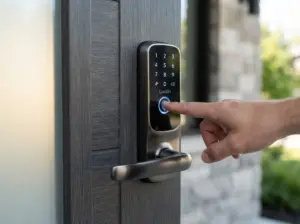
The smart lock category is undergoing its most significant upgrade since fingerprint sensors replaced keypads. The Ultraloq Bolt Sense, highlighted in PCWorld’s CES 2026 smart home and security roundup, uses palm-vein recognition to authenticate users in approximately 0.5 seconds [6]. Unlike fingerprint sensors, which can be fooled by a lifted print, palm-vein authentication reads the unique vascular pattern beneath the skin’s surface, a biometric that cannot be replicated from a photograph or a discarded object.
Biometric authentication methods compared:
| Method | Speed | Spoofability | Works in Cold/Wet Conditions |
|---|---|---|---|
| PIN code | Slow | High | Yes |
| Fingerprint | Fast | Medium | Limited |
| Palm-vein | Very fast (~0.5s) | Very low | Yes |
| Facial recognition | Medium | Medium | Variable |
For households with children, elderly family members, or frequent guests, palm-vein recognition also solves the usability problem. There are no codes to remember, no cards to carry, and no app to open. A wave of the hand is the key.
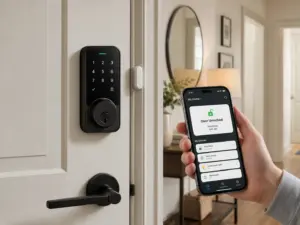
7. Smart Locks with the Aliro Digital Key Standard
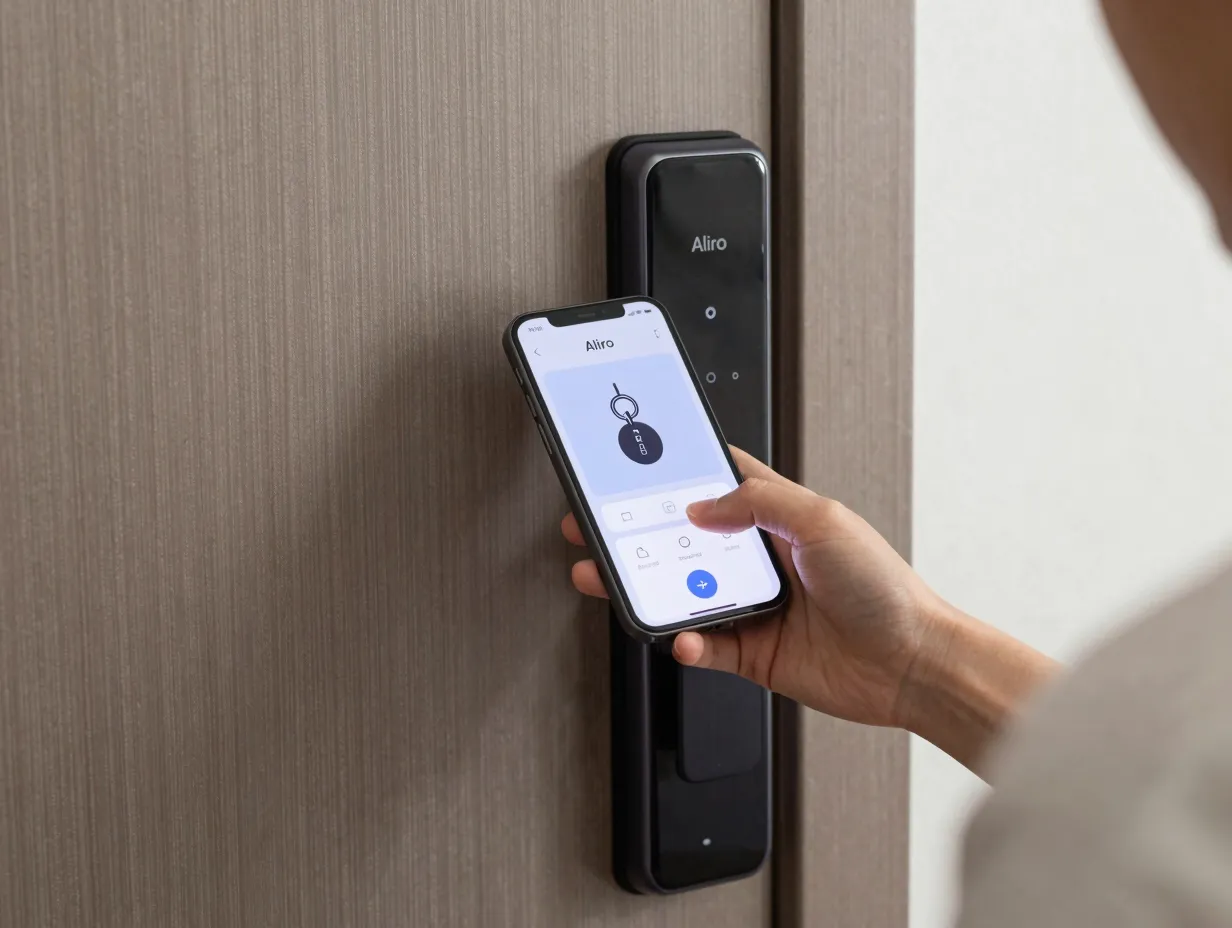
Biometrics address the physical authentication challenge. The Aliro digital key standard addresses the interoperability challenge. Gizmodo’s coverage of the best smart home tech at CES 2026 highlighted smart locks that support Aliro, a new open framework designed to provide a universal, brand-agnostic system for smartphone-based access control [5].
Before Aliro, digital keys were locked to specific ecosystems. An Apple Wallet key did not work with an Android phone. A Samsung SmartThings lock could not share a key with a HomeKit user. Aliro changes that by establishing a common protocol that works across platforms, devices, and lock brands.
What Aliro-compatible smart locks enable:
- Share a digital key with a guest regardless of whether they use iOS or Android
- Revoke access instantly from any device
- Set time-limited access windows for service providers, cleaners, or contractors
- Receive real-time access logs without a proprietary cloud subscription
Combined with palm-vein biometrics, an Aliro-compatible lock represents the most complete residential access control solution available to consumers in 2026.
8. Wireless Optically Charged Smart Locks
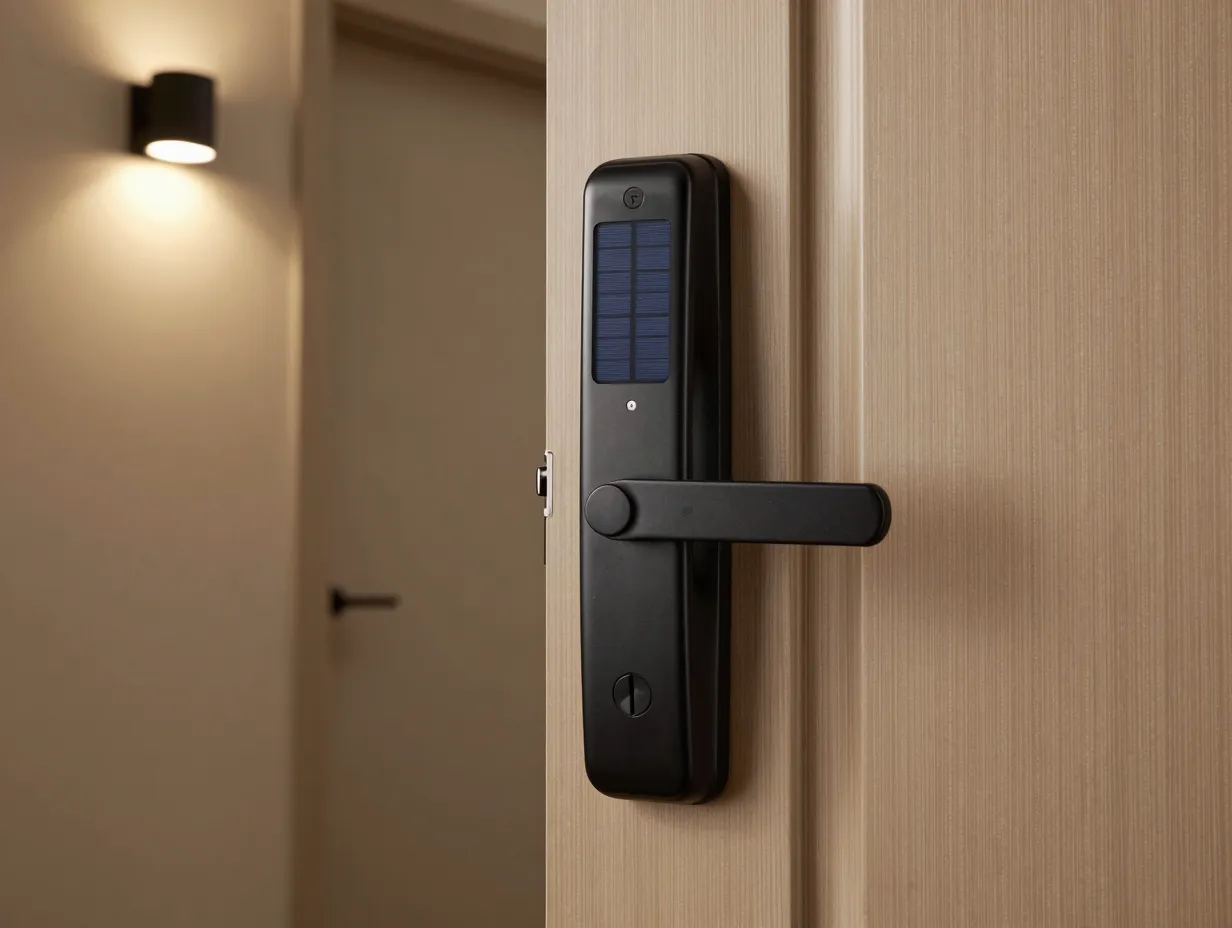
The single most common complaint about smart locks is battery life. A lock that fails because its batteries died is worse than a conventional lock, it is a security liability and a source of genuine anxiety for homeowners who travel. PCMag’s CES 2026 coverage describes a smart lock that uses wireless optical charging so it effectively never runs out of power [8], pointing toward a future where door hardware can be considered maintenance-free.
Wireless optical charging harvests ambient light, including indoor artificial light, and converts it into enough energy to keep the lock’s electronics running indefinitely under normal conditions. There are no charging cables, no battery compartments to open, and no low-battery alerts to ignore.
This innovation is significant beyond the convenience factor. A lock that never loses power is a lock that never fails to log an entry, never drops off the smart home network, and never prompts a homeowner to prop a door open while they hunt for AA batteries. In the context of a fully integrated smart home, reliability is not a luxury, it is a prerequisite.
Maintenance comparison: traditional vs. next-gen smart locks
- Traditional battery-powered lock: battery replacement every 6 to 12 months, risk of lockout if batteries die unexpectedly
- Wireless optically charged lock: no scheduled maintenance, continuous operation, no lockout risk from power failure
How These 8 Future Tech Gadgets Work Together
The most important insight from CES 2026 is not any single device, it is the ecosystem logic that connects all of them. The 8 future tech gadgets that will revolutionize your smart home described above are designed to interoperate, and the practical benefits compound when they do [1][5][10].
Consider a realistic morning routine enabled by this hardware stack:
- Smart shades open gradually at a preset time, letting natural light into the bedroom
- Matter-compatible smart bulbs shift from warm to cool white, signaling the body to wake
- The robot vacuum starts a cleaning cycle in the kitchen, triggered by the bedroom occupancy sensor detecting movement
- The smart lock logs the time when a family member leaves, automatically arming the security mode
- Smart shades on south-facing windows close as outdoor temperature rises, reducing cooling load
None of these actions require manual input. All of them run on local processing through a Matter 1.5 hub, meaning they continue to function even if the internet connection drops. That combination of intelligence, interoperability, and resilience is what separates the 2026 smart home from its predecessors.
What to Consider Before Buying
Not every gadget on this list will be the right fit for every home. Before investing, consider the following:
Compatibility checklist:
- Does the device carry a Matter certification badge?
- Which Thread border routers or hubs are already in the home?
- Does the device support local processing, or does it require a cloud connection?
- Is the manufacturer committed to long-term software support?
Budget allocation guidance:
Start with the backbone, a Matter 1.5 hub or camera hub, before adding peripheral devices. Ultra-affordable bulbs and plugs are low-risk entry points that deliver immediate value. Smart locks and shades represent larger investments but offer measurable returns in security, energy savings, and convenience.
Future-proofing principle: Any device that supports Matter 1.5 today will continue to work as the standard evolves. Devices that rely on proprietary ecosystems carry the risk of becoming obsolete if the manufacturer discontinues support.
Conclusion
The 8 future tech gadgets that will revolutionize your smart home in 2026 share a common thread: they are built on open standards, designed for real-world usability, and priced for mainstream adoption. The era of the fragmented, frustrating smart home is ending. What is replacing it is a genuinely interoperable ecosystem where a 6 USD smart bulb and a palm-vein biometric lock speak the same protocol language and work together without friction.
Actionable next steps:
- Audit the smart devices already in the home and identify which ones support Matter. Those that do not may be candidates for replacement as affordable Matter alternatives become available.
- Invest in a Matter 1.5 hub or camera hub first. Everything else on this list performs better with a solid backbone in place.
- Start with ultra-affordable Matter bulbs and plugs in high-traffic areas to build familiarity with the ecosystem before committing to larger purchases like smart locks or motorized shades.
- Check for Aliro compatibility when evaluating any smart lock purchase in 2026. The standard is gaining momentum rapidly, and a lock without it may already be behind the curve.
- Monitor manufacturer update commitments. The best smart home hardware is only as good as the software support behind it.
The technology is ready. The standards are in place. The prices have finally come down. The only remaining question is where to start.
References
[1] Best Smart Home Devices Ces 2026 Matter Ikea Aqara Amazon – https://www.theverge.com/tech/860241/best-smart-home-devices-ces-2026-matter-ikea-aqara-amazon
[4] Ces 2026 Best Smart Home Gadgets – https://www.reviewed.com/smarthome/features/ces-2026-best-smart-home-gadgets
[5] The Best Smart Home Tech At Ces 2026 2000708333 – https://gizmodo.com/the-best-smart-home-tech-at-ces-2026-2000708333
[6] Best Of Ces 2026 The Smart Home Home Security Gear Edition – https://www.pcworld.com/article/3024705/best-of-ces-2026-the-smart-home-home-security-gear-edition.html
[8] 7 Smart Home Gadgets From Ces 2026 That Actually Improve Your Routine – https://www.pcmag.com/news/7-smart-home-gadgets-from-ces-2026-that-actually-improve-your-routine
[9] The Best Smart Home Devices – https://www.pcmag.com/picks/the-best-smart-home-devices
[10] All The Tech And Gadgets Announced At Ces 2026 130124023 – https://www.engadget.com/general/all-the-tech-and-gadgets-announced-at-ces-2026-130124023.html